Artwork
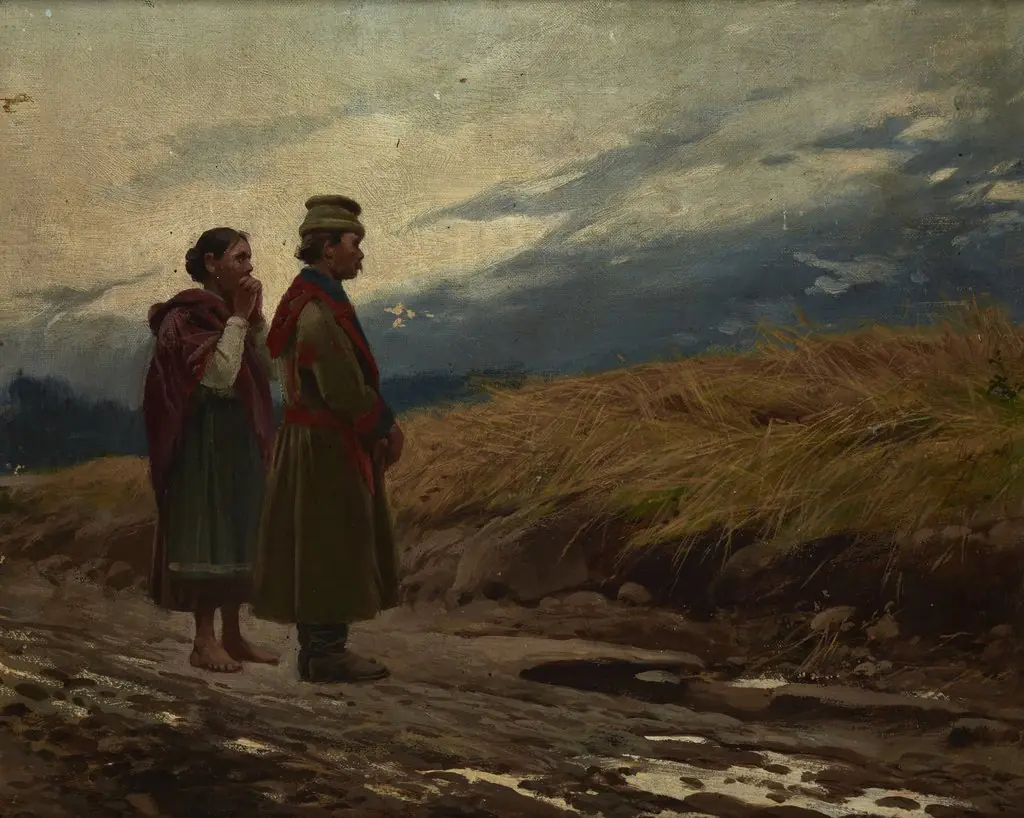
After the Storm
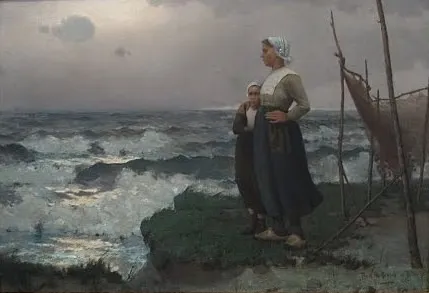
After the Storm is an oil painting by the American Impressionist artist Frank Weston Benson. It dates from 1892 and is held in the collection of the Peabody Essex Museum.
About this work
Overview
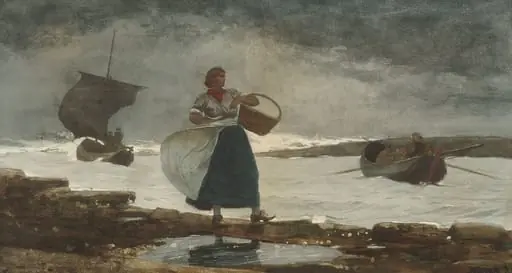
Frank Weston Benson’s 1892 oil painting After the Storm captures a quiet moment on a coastal bank following a recent squall. The composition centers on a woman and a child standing beside the sea, bathed in the diffused light of a sky where clouds of gray and blue part to reveal the sun. The work is part of the Peabody Essex Museum’s collection.
Subject & Meaning
The figures, an adult female in a long dress and headscarf and a child in dark attire, appear to be surveying the shoreline after the weather has cleared. Their stance, together with the scattered sticks embedded in the ground, suggests a brief pause in daily activity, emphasizing themes of renewal and calm that follow turbulent conditions.
Technique & Style
Benson employs soft, blended brushwork characteristic of American Impressionism, favoring muted tonal values to convey atmospheric effects. The delicate handling of light on the water and sky, combined with a restrained palette, creates a sense of stillness while still suggesting the lingering presence of the recent storm.
History & Provenance
Created while Benson was active in the late 19th‑century American art scene, the painting reflects his interest in outdoor subjects and family life. It entered the holdings of the Peabody Essex Museum, where it remains on display as part of the institution’s representation of American Impressionist works.
Artist & collection
Artist
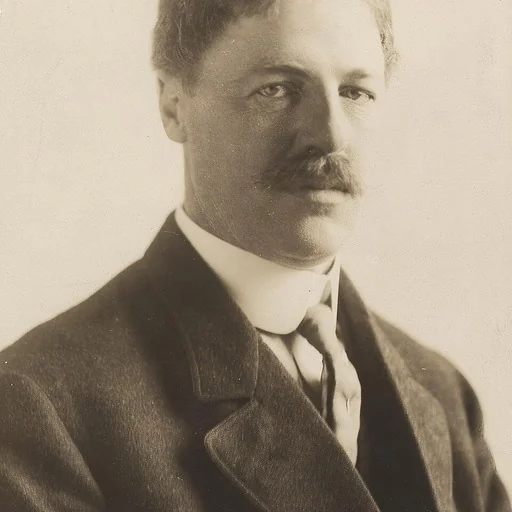
Frank Weston Benson, frequently referred to as Frank W. Benson, (March 24, 1862 – November 15, 1951) was an American artist from Salem, Massachusetts, known for his Realistic portraits, American Impressionist paintings,…