Artwork
Portrait of a man
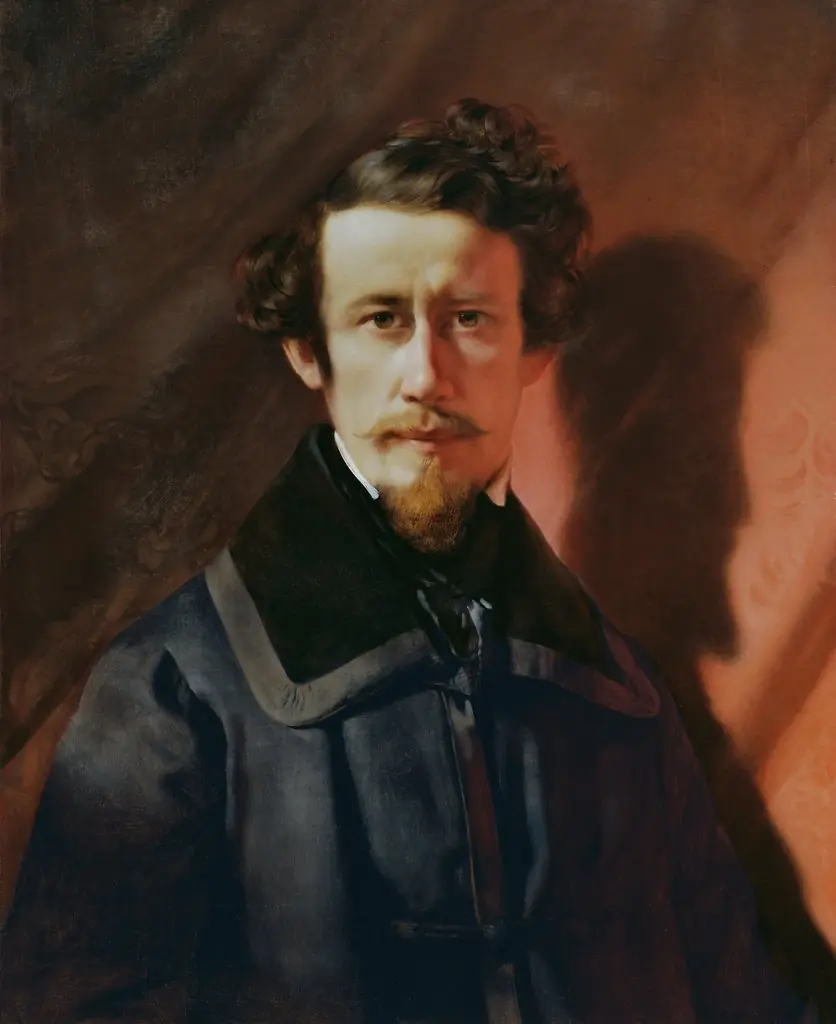
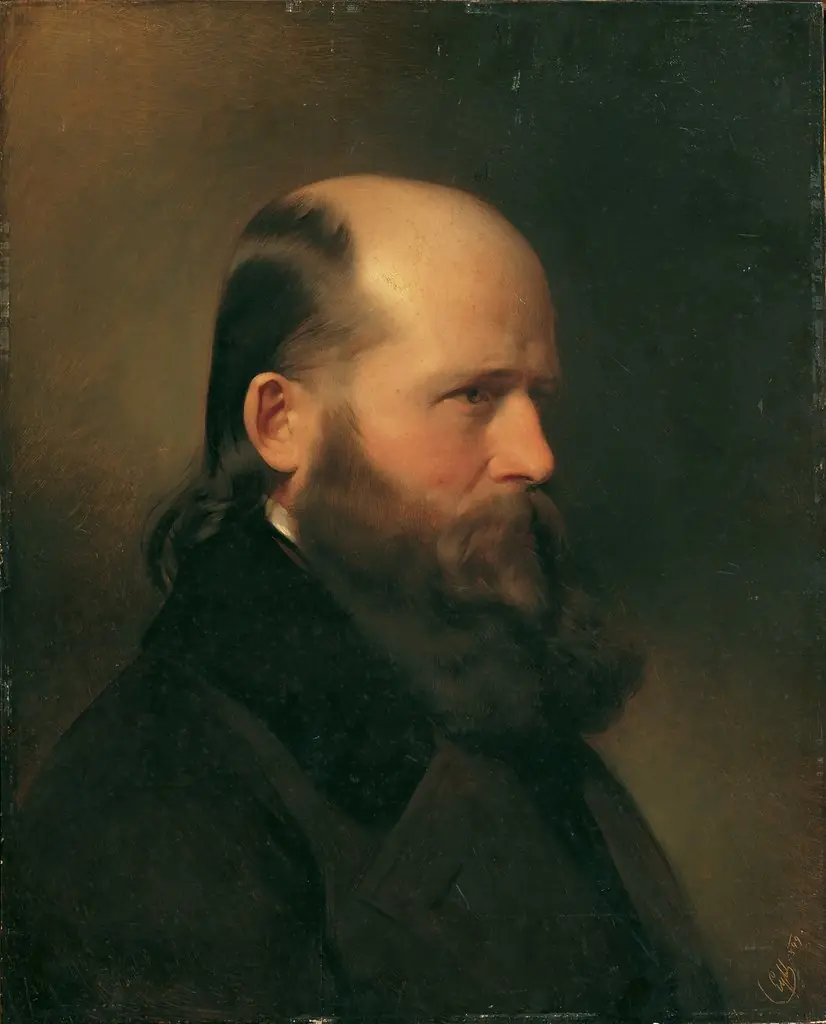
Portrait of a man is an oil painting by the Biedermeier artist Franz Eybl. It dates from 1841 and is held in the collection of the National Museum in Warsaw.
About this work
The label on the frame provides some information about the painting, including the title, artist, and year it was created.
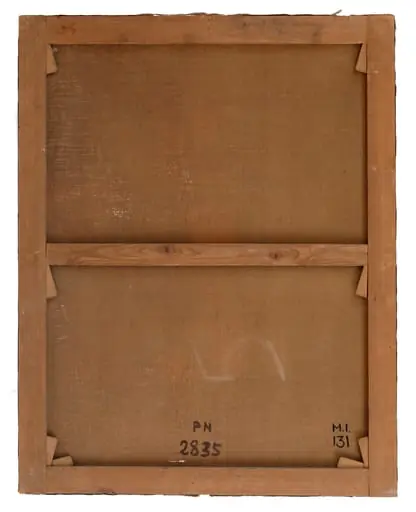
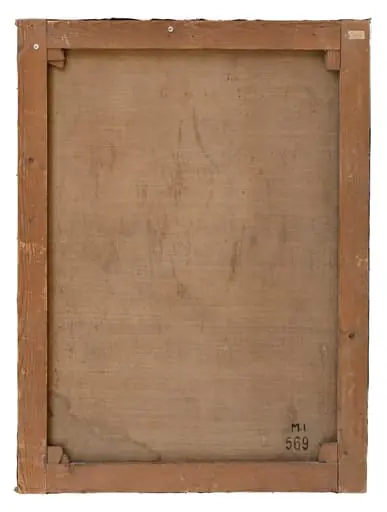
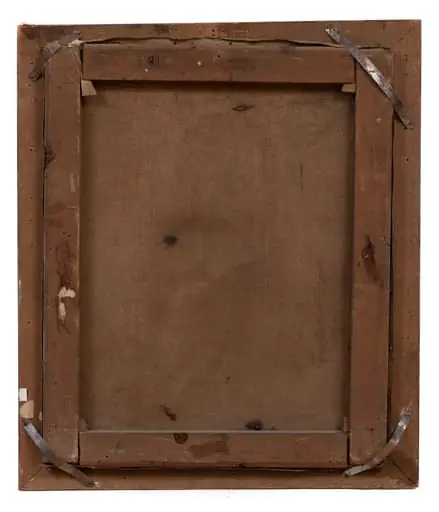
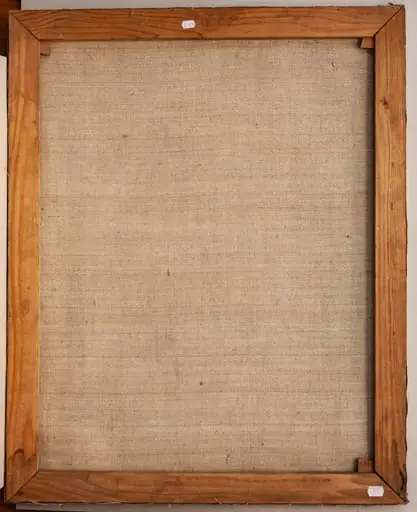
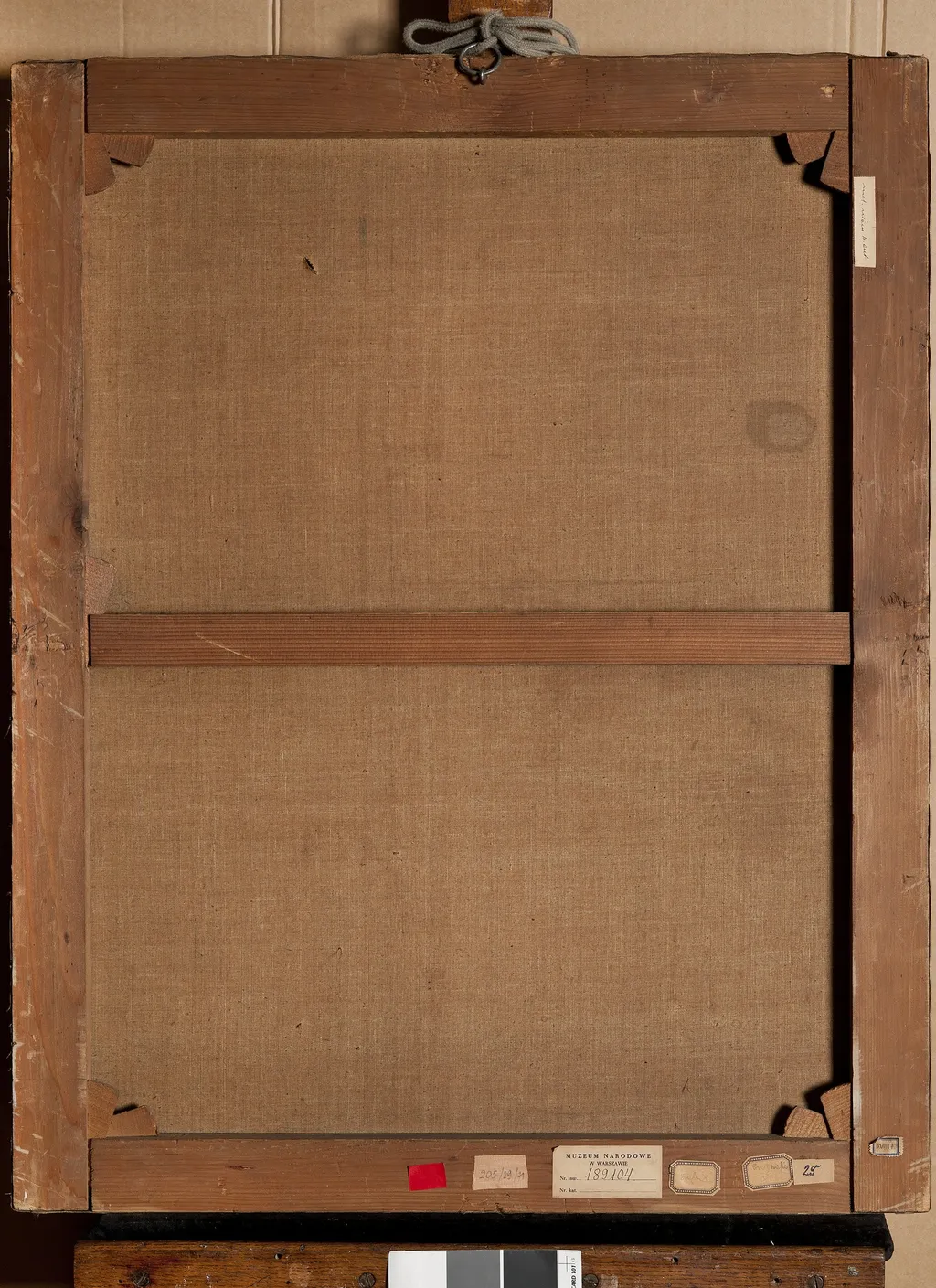
The image shows the back of a painting, with a wooden frame and a canvas stretched across it. The frame is made of light-colored wood and has a simple design, with a small label attached to the bottom. The canvas is a light brown color and appears to be made of a coarse weave.
The label on the frame provides some information about the painting, including the title, artist, and year it was created. The title is "Portrait of a man," the artist is Franz Eybl, and the year is 1841. This suggests that the painting is a portrait of a man created by Eybl in the mid-19th century.
If you're interested in learning more about the artist who created this painting, you might want to look up Franz Eybl.
Overview
Portrait of a man is an oil on canvas painting created by the Austrian artist Franz Eybl in 1841. Measuring 86.5 cm in height and 58 cm in width, the artwork is a portrait of an unidentified male subject. It is currently held in the collection of the National Museum in Warsaw, where it is cataloged with the accession number 189104 and the artwork ID 502698. As a product of the 19th-century Austrian school, the painting exemplifies the era's academic portraiture, combining realistic observation with a polished technique to convey both physical likeness and psychological depth.
Subject & Meaning
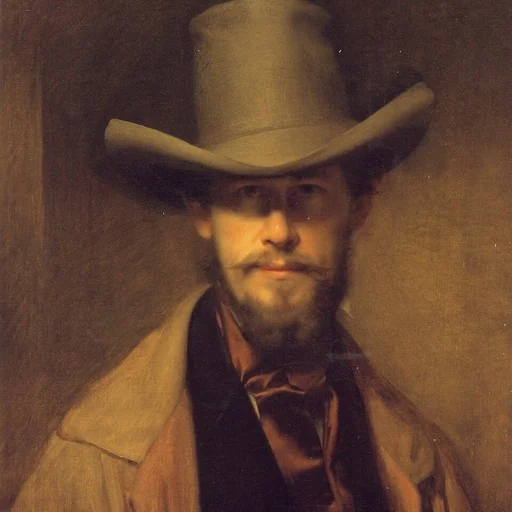
The painting depicts a formally dressed man positioned centrally against a dark, indistinct background. He wears a tall, broad-brimmed hat that casts shadows across his face, along with a dark cloak or shawl draped over his shoulders. A neatly trimmed beard and mustache contribute to his dignified appearance. The subject's complex expression appears both contemplative and slightly melancholic. His gaze is directed toward the viewer, establishing a sense of direct engagement, yet a certain reserve in his eyes prevents easy access to his inner thoughts. The hat and somber attire may be interpreted as symbols of authority or intellectualism, hinting at a figure who values knowledge and independence. The overall effect conveys quiet intensity and self-possession, prioritizing the subject's inner life and character over mere physical representation.
Technique & Style
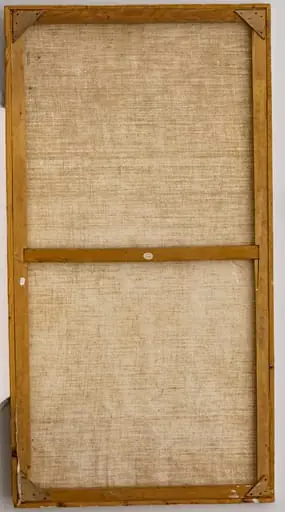
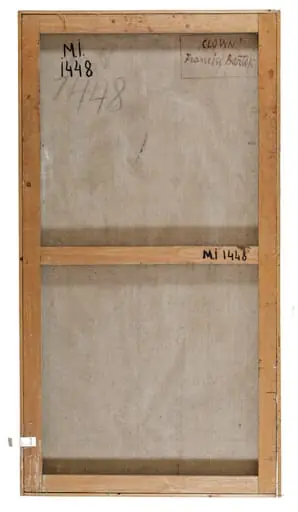
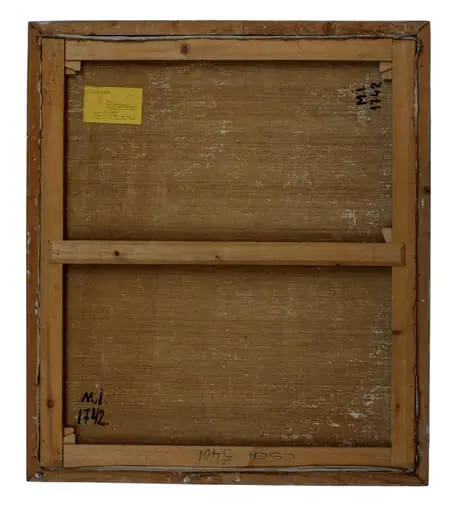
Executed in oil on canvas, the painting demonstrates the academic art focus on realism and polished technique characteristic of its era. Eybl employed dramatic lighting, utilizing strong contrasts between light and shadow to sculpt the man's face and highlight the textures of his clothing. The color palette is limited and subdued, dominated by browns, grays, and blacks, which reinforces the serious and introspective tone of the work while deliberately avoiding vibrant hues. The physical structure of the painting includes a wooden stretcher frame with a horizontal central crossbar. The stretcher's corner joints are secured by triangular wooden wedges, and the canvas on the reverse appears unprimed or lightly toned, revealing a coarse woven texture in muted brown. The frame shows signs of age, including scratches and wear.
History & Provenance
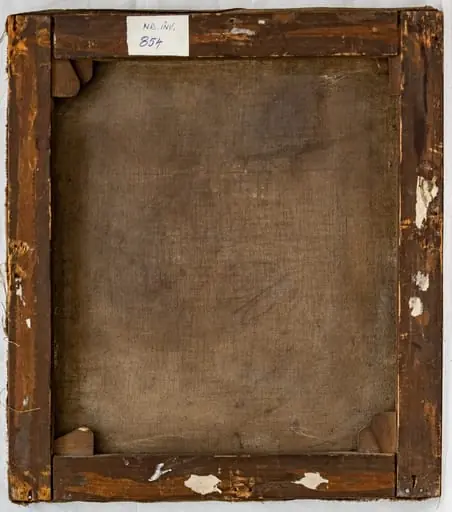
The painting was created in 1841 during Franz Eybl's mature period. While the original commission and early ownership history remain unspecified in available records, the work's current provenance is documented through physical evidence on the stretcher bar. Affixed to the bottom edge of the reverse are several paper labels and inventory tags, including one reading MUZEUM NARODOWE W WARSZAWIE alongside the number 189104, and a small red square sticker. A gray cord with a metal ring attached to the top center serves as a hanging mechanism. The painting is now part of the collection of the National Museum in Warsaw, identified by accession number 189104 and artwork ID 502698. A color photograph of the artwork was digitized by the museum in September 2018.
Context
Franz Eybl was an Austrian painter born in the Viennese suburb of Gumpendorf in 1806. He entered the Academy of Fine Arts in Vienna at the age of ten in 1816, studying under Josef Klieber, Josef Mossmer, Johann Baptist von Lampi, and Franz Caucig before focusing on history painting under Johann Peter Krafft until 1828. He won the Academy's Gundel-Prize in 1825 and the Lampi Prize in 1828, becoming a member of the Academy in 1843. Initially devoted to landscape, genre, and history painting, Eybl shifted toward portraiture after 1840, heavily influenced by Ferdinand Georg Waldmuller's use of light. He became one of the most important portrait painters in 19th century Austria alongside Friedrich von Amerling, producing over 400 lithographic portraits, a output comparable to the prolific Josef Kriehuber. Eybl died in 1880 and was buried in Vienna's Zentralfriedhof.
Legacy
The painting resides in the public domain, and high-resolution photographic reproductions have been made available by the National Museum in Warsaw. These images have been distributed through digital platforms such as Wikimedia Commons, ensuring global access to the work. The painting continues to be recognized as a representative example of 19th-century Austrian academic portraiture, illustrating the stylistic shift toward realism and luminism influenced by Waldmuller. Eybl's broader legacy is cemented by his substantial output of lithographic portraits, which preserved the likenesses of numerous contemporary figures. In 1933, his contributions to Austrian art were commemorated when Eyblweg in Leopoldau, Vienna, was named in his honor.
Own this work as a print
Artist & collection