Artwork
Franz Roubal. Wolharige mammoet op de toendra
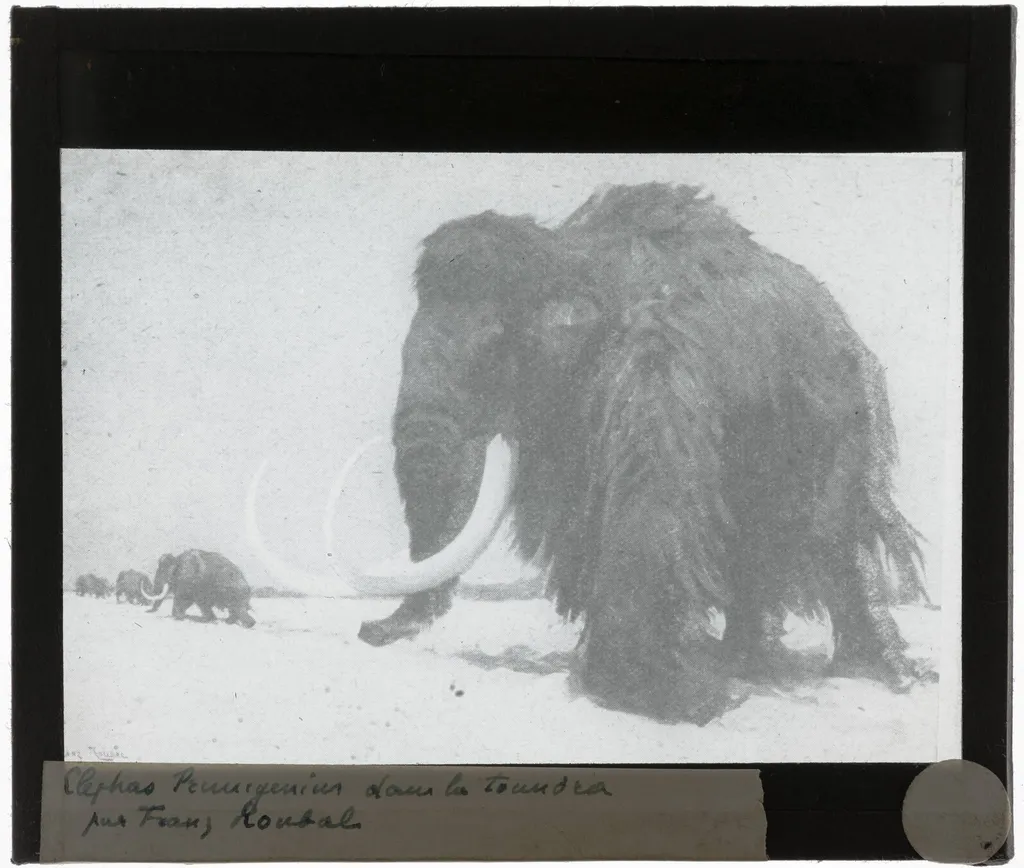
Franz Roubal. Wolharige mammoet op de toendra is a photography by Franz Roubal. It dates from 1938 and is held in the collection of the Catholic University of Leuven. The image, catalogued under the title “Wolharige mammoet op de toendra,” depicts a shaggy mammoth set against a stark, icy landscape.
About this work
You can learn more about this style by looking at the work of artist: Franz Roubal.
This painting shows a hairy mammoth in a cold landscape. It's an animal scene from prehistory. The image is quite old and was added to a collection of glass slides for art history, which is interesting because it shows how people used to learn about art and history.
The photographer is unknown, but the slide was created between 1910 and 1967. This was a time when people were very interested in prehistory and archaeology. The image is part of a larger collection from the Université de Louvain.
You can learn more about this style by looking at the work of artist: Franz Roubal.
Overview
The image, catalogued under the title “Wolharige mammoet op de toendra,” depicts a shaggy mammoth set against a stark, icy landscape. Rendered as a painted illustration, it belongs to a series of visual resources assembled for art‑historical study. The work is housed within the glass‑slide collection of the Université de Louvain (KU Leuven), a repository that served educational purposes throughout the twentieth century.
Subject & Meaning
The composition presents a solitary mammoth, its fur rendered in coarse brushwork, standing amid a frozen tundra. By portraying a prehistoric creature, the image functions as a visual conduit to the deep past, reflecting early‑twentieth‑century fascination with paleontology and the reconstruction of ancient ecosystems for scholarly and public audiences.
Technique & Style
Executed in a painted medium suitable for reproduction on glass slides, the illustration employs a limited palette of muted whites, grays, and earthy tones to convey the chill of the environment. The brushstrokes are deliberately textured, emphasizing the animal’s hair and the barren ground, aligning the piece with the documentary illustration style common in archaeological publications of the era.
History & Provenance
The slide’s creator remains unidentified, but its production is dated between roughly 1910 and 1967, a period marked by heightened interest in prehistory and archaeological documentation. Integrated into the EuroPhot collection, the image was part of a broader effort by the Université de Louvain to compile visual aids for art‑history and archaeology curricula, preserving it for future scholarly reference.
Artist & collection
Artist
Franz Roubal (born 25 July 1889 in Vienna; died 9 February 1967 in Irdning) was an Austrian landscape and animal painter, sculptor and palaeoartist who worked with the palaeontologist Othenio Abel.
 Pieter Brueghel de Oude. Nederlandse spreekwoorden Detail: Twee spreekwoorden
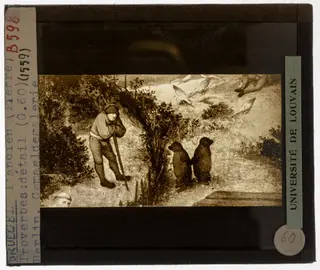 Pieter Brueghel de Oude. Nederlandse spreekwoorden Detail: Wilde beeren, die zijn bij den ander gheeren
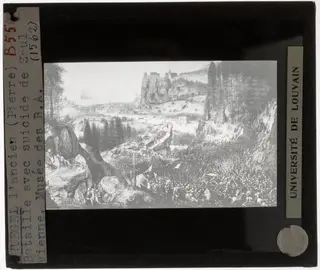 Pieter Brueghel de Oude. Zelfmoord van Saul
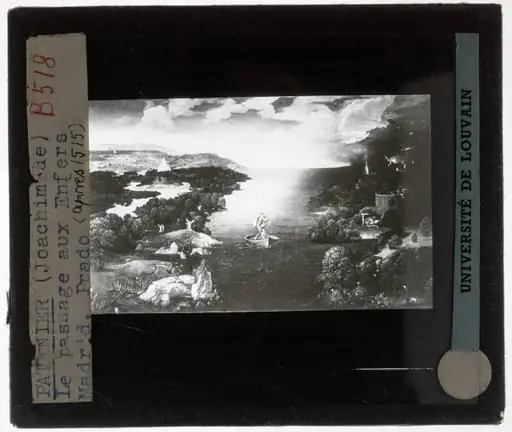 Joachim Patinir. De oversteek naar de onderwereld
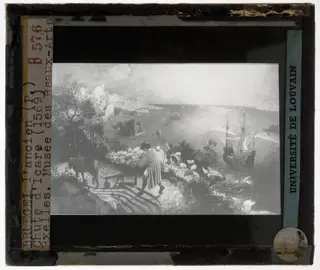 Pieter Brueghel de Oude. De val van Icarus
 Pieter Brueghel de Oude. Strijd tussen Carnaval en Vasten Detail: Allegorie van Liefdadigheid en Boete