Artwork
Pieter Brueghel de Oude. Strijd tussen Carnaval en Vasten Detail: Allegorie van Liefdadigheid en Boete
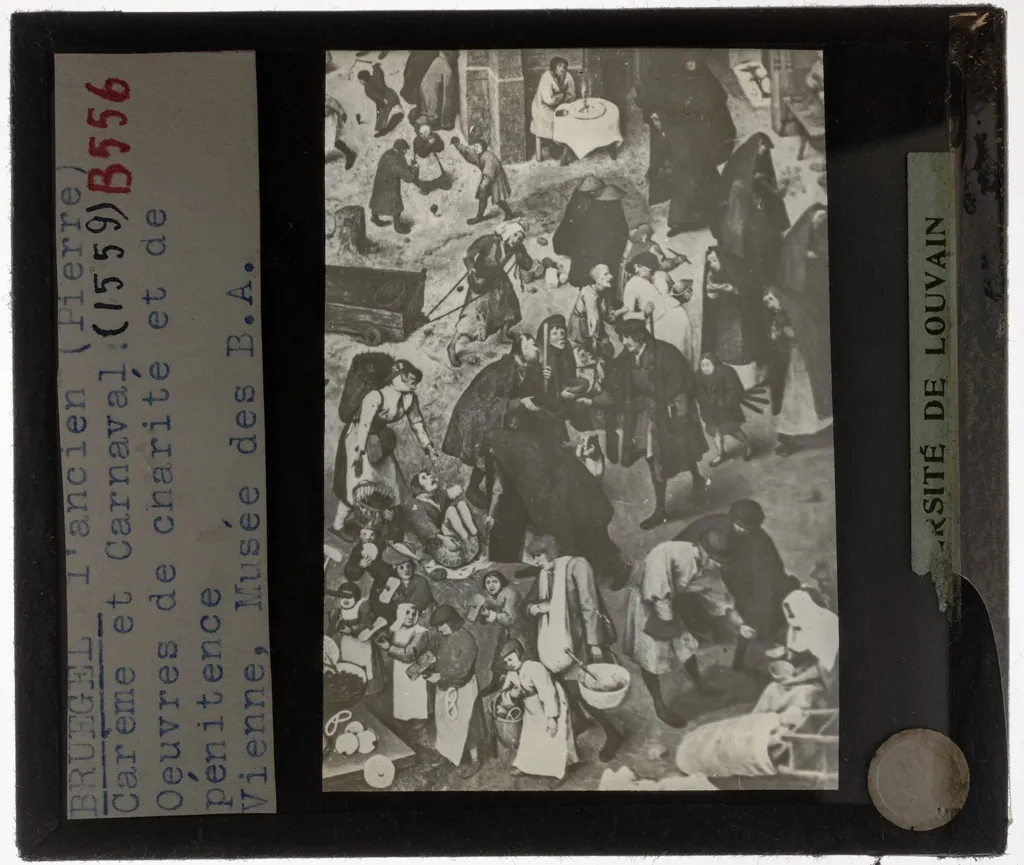
Pieter Brueghel de Oude. Strijd tussen Carnaval en Vasten Detail: Allegorie van Liefdadigheid en Boete is an unspecified painting by the Northern Renaissance artist Pieter Brueghel I. It dates from 1559 and is held in the collection of the Catholic University of Leuven.
About this work
Overview
Pieter Bruegel the Elder’s 1559 oil on panel presents a bustling tableau that juxtaposes the exuberance of Carnival with the austerity of Lent. Executed in the Northern Renaissance style, the work functions as an allegorical commentary on societal contrasts, employing a dense crowd of figures to illustrate themes of generosity and penitence.
Subject & Meaning
The composition contrasts opulent revelry, embodied by a corpulent rider perched on a barrel, with the stark deprivation of gaunt beggars. These opposing groups symbolize the tension between indulgence and restraint, inviting reflection on the moral obligations of charity amid festive excess.
Technique & Style
Bruegel employs meticulous brushwork and a rich palette characteristic of the Northern Renaissance, rendering intricate details that animate the crowded scene. The use of oil on panel allows for subtle tonal variations, enhancing the depth of the bustling environment and the individual expressions of the figures.
History & Provenance
Created in 1559, the painting entered the collection of the Kunsthistorisches Museum in Vienna, Austria, where it remains on display. Its provenance includes documentation in the KU Leuven glass slide archive, though the original photographer of the slide is unknown.
Context
The work reflects 16th‑century European preoccupations with the cyclical contrast between Carnival’s permissiveness and the penitential season of Lent. Bruegel’s allegorical approach aligns with contemporary moralizing art, using everyday scenes to convey broader ethical messages.
Legacy
As a complex visual narrative, the painting continues to serve as a reference point for studies of social commentary in Renaissance art, illustrating Bruegel’s capacity to embed layered symbolism within lively, populist scenes.
Own this work as a print
Artist & collection

Artist
Pieter Bruegel (also Brueghel or Breughel) the Elder ( BROY-gəl, US also BROO-gəl; Dutch: ; c.
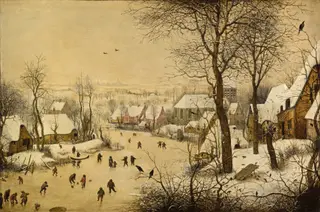
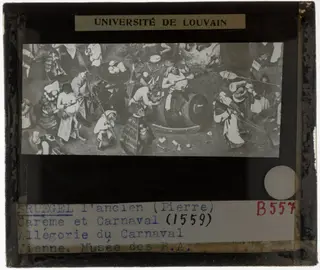
- Pieter Brueghel de Oude. Strijd tussen Carnaval en Vasten Detail: Allegorie van Carnaval
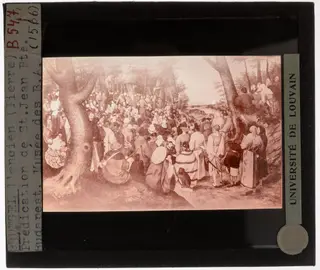 Pieter Brueghel de Oude. Prediking van Johannes de Doper
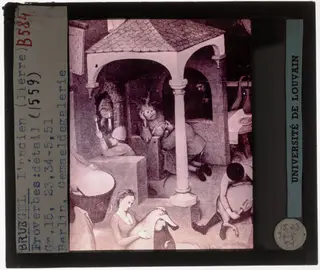 Pieter Brueghel de Oude. Nederlandse spreekwoorden Detail: Vijf spreekwoorden
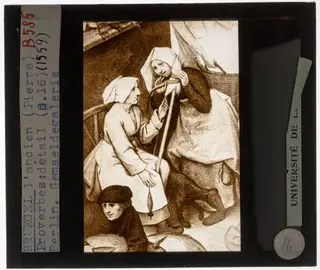 Pieter Brueghel de Oude. Nederlandse spreekwoorden Detail: De ene rokkent wat de andere spint
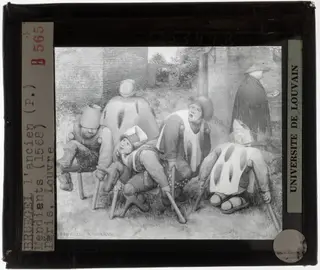 Pieter Brueghel de Oude. De Kreupelen
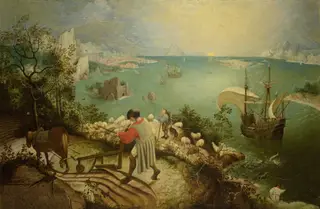
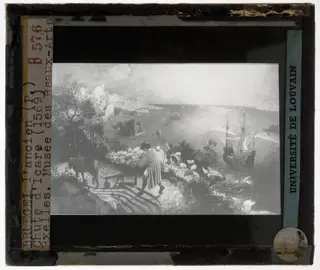 Pieter Brueghel de Oude. De val van Icarus
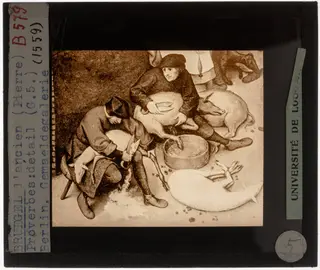 Pieter Brueghel the Elder. Dutch Proverbs Detail: One shears the sheep, the other the pigs
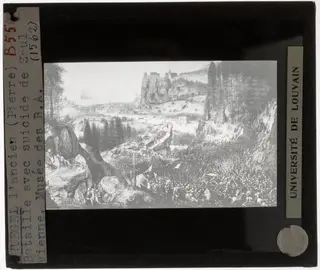 Pieter Brueghel de Oude. Zelfmoord van Saul
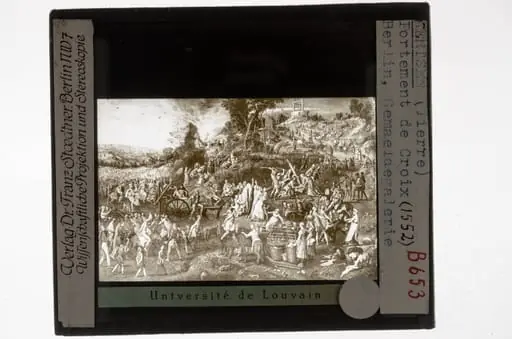 Pieter Aertsen. Crucifixion
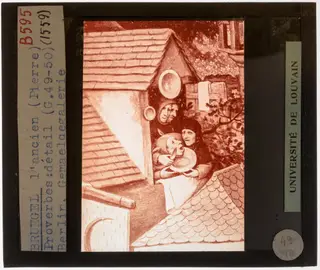 Pieter Brueghel the Elder. Dutch proverbs Detail: Two proverbs
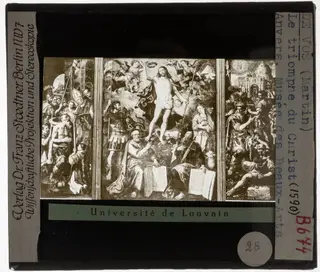 Maarten de Vos. Altaarstuk van de gilde van de oude voetboog