Artwork
In a Shipyard
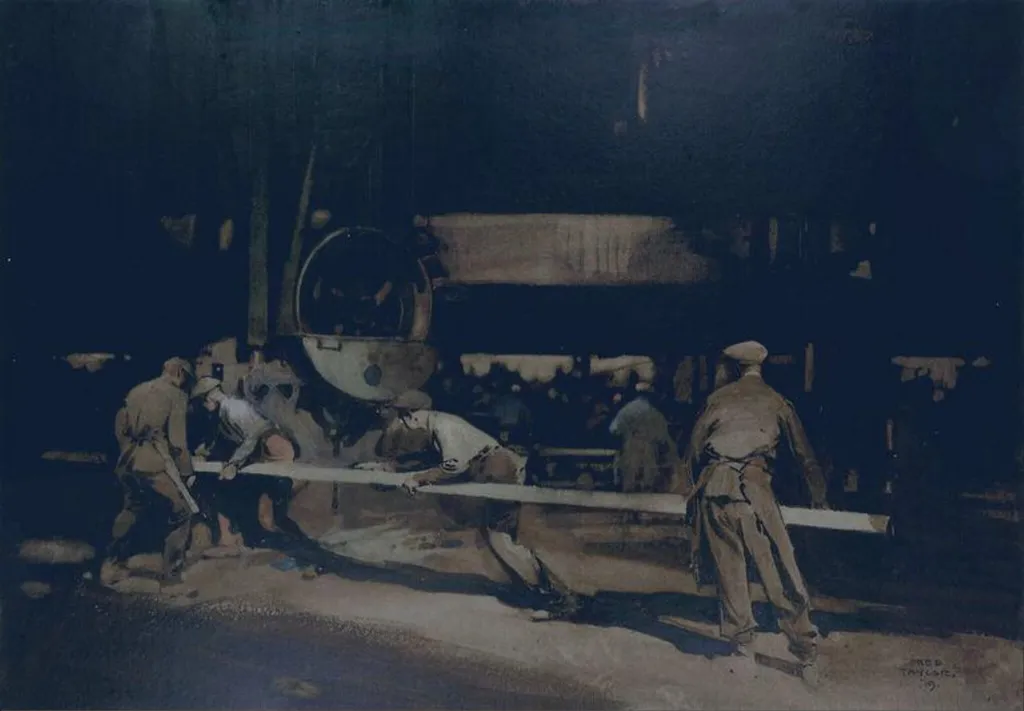
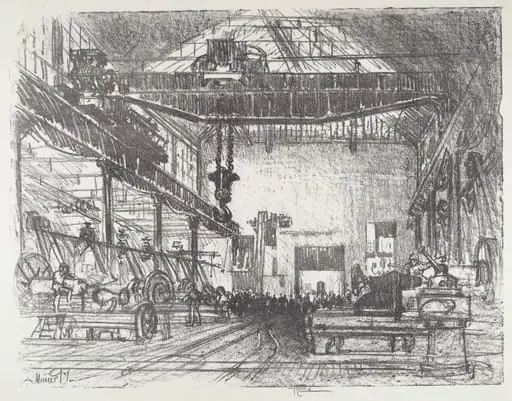
In a Shipyard is a watercolor work on paper by the Ashcan School artist Fred Taylor. It dates from 1919 and is held in the collection of the Victoria and Albert Museum.
About this work
Overview
Created in 1919, this watercolour by Fred Taylor captures a moment within a working shipyard. The piece is signed and dated by the artist, affirming its origin during a period of industrial transition in Britain. Executed in watercolour, it stands as a quiet but forceful record of manual labor, avoiding idealization in favor of observed reality.
Subject & Meaning
The scene centers on laborers maneuvering a massive metal beam using ropes and levers in a confined, dimly lit space. Their worn uniforms and strained postures suggest physical endurance, while the absence of facial detail universalizes their experience. The work conveys dignity in routine labor, emphasizing collective effort over individual heroism.
Technique & Style
Taylor employed loose, rapid brushwork to suggest motion and texture, particularly in the workers’ hands and the rusted metal surfaces. Watercolour’s transparency allowed layered washes to build depth in shadows, while sparing use of white heightens contrast. The uneven lighting, with sharp contrasts between light and dark, reinforces the raw, unpolished atmosphere of the setting.
History & Provenance
The painting was completed shortly after the end of the First World War, a time when Britain’s industrial workforce was reconfiguring amid economic uncertainty. Its survival and preservation suggest it was retained by the artist or a contemporary collector, though its early ownership remains undocumented. It entered institutional hands later, likely through donation or acquisition.
Context
In the post-war years, British artists increasingly turned to industrial subjects as symbols of national resilience. Taylor’s work aligns with a broader trend of documenting labor, distinct from romanticized depictions of machinery. Unlike propaganda or commercial art, this piece offers an unembellished view of shipyard conditions, reflecting a growing interest in social realism.
Legacy
It remains a reference for understanding how watercolour, often associated with landscape, was adapted to convey the grit of urban labor.
Though not widely exhibited during Taylor’s lifetime, this watercolour contributes to a modest but significant body of early 20th-century British industrial art. It remains a reference for understanding how watercolour, often associated with landscape, was adapted to convey the grit of urban labor. Its preservation in public collections ensures continued access to this quiet testament of working life.
Artist & collection

- The Presses
 The Forge
 English War Work: The Great Hammer
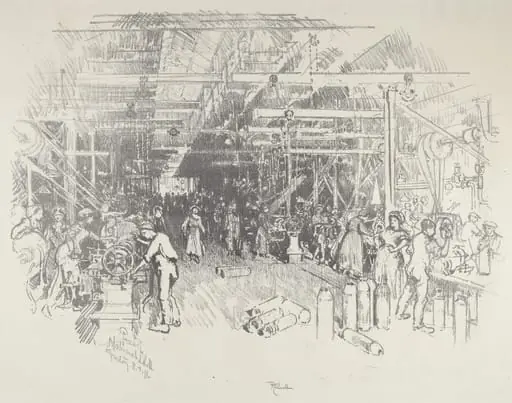 The Shell Factory
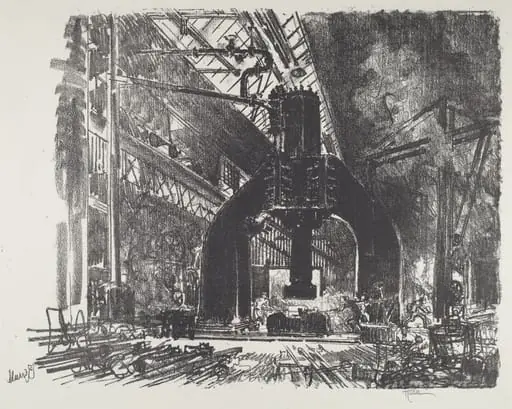 The Great Hammer
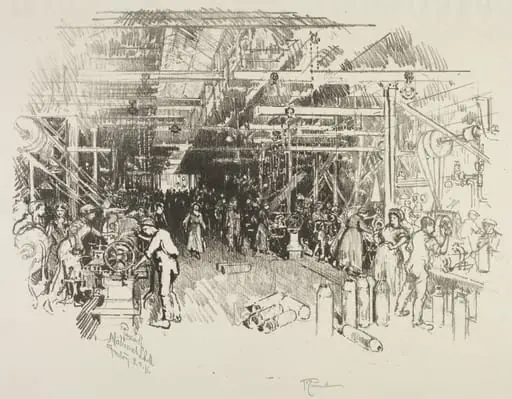 English War Work: The Shell Factory
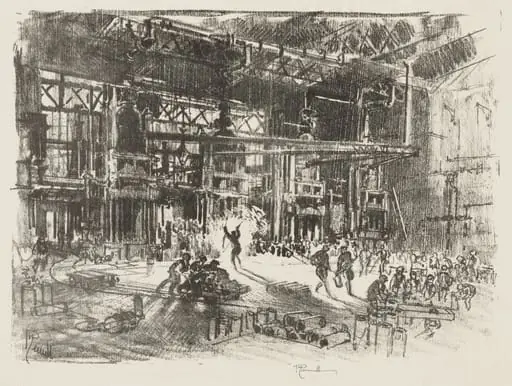 English War Work: The Presses
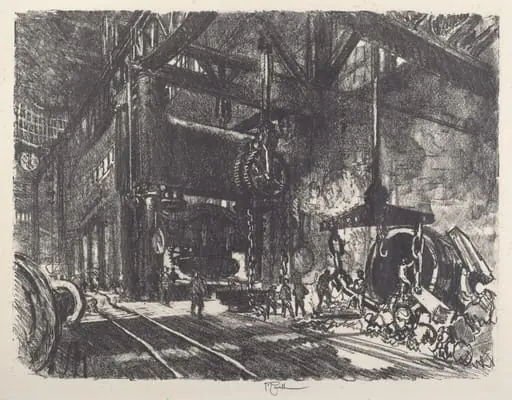 In the Land of Brobdingnag, the Armour Plate Bending Press
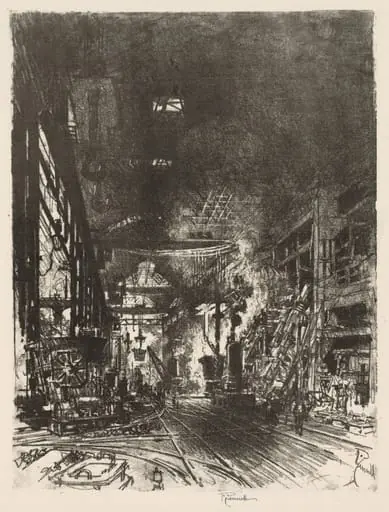 English War Work: Within the Furnaces
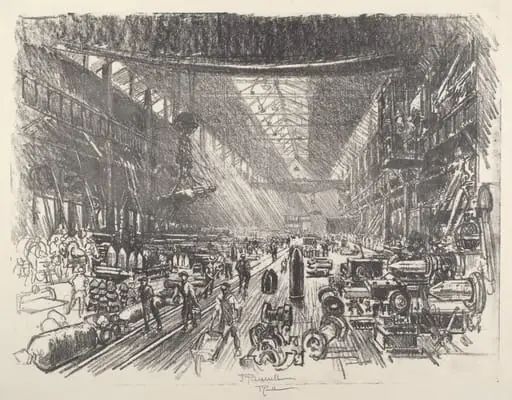 Shell Factory, No.I
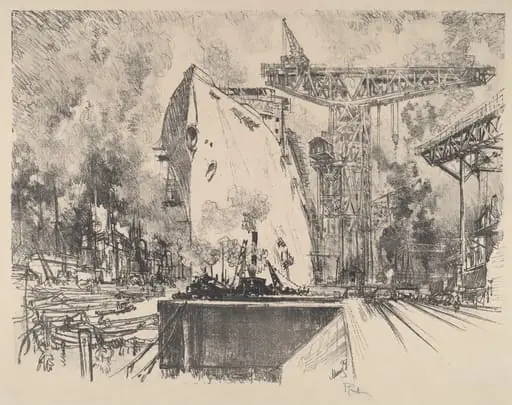 Building the Bismarck, Hamburg
 Planing Big Shells