Artwork
Cottage Interior
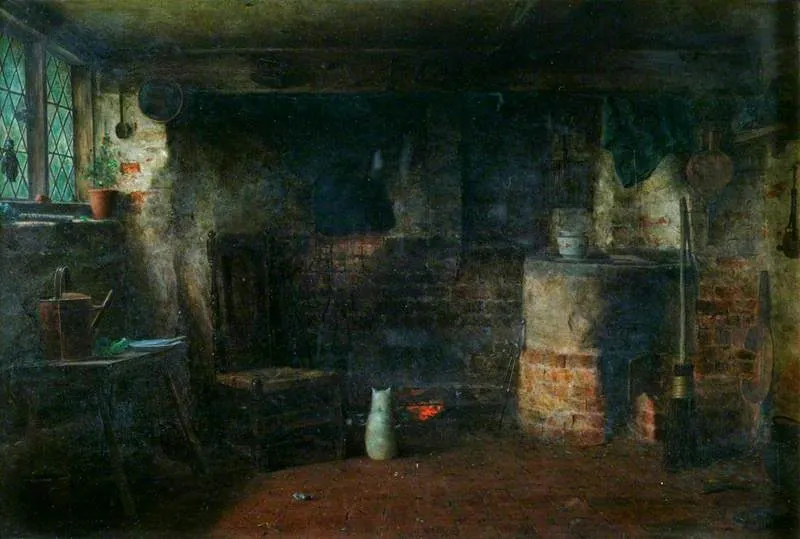
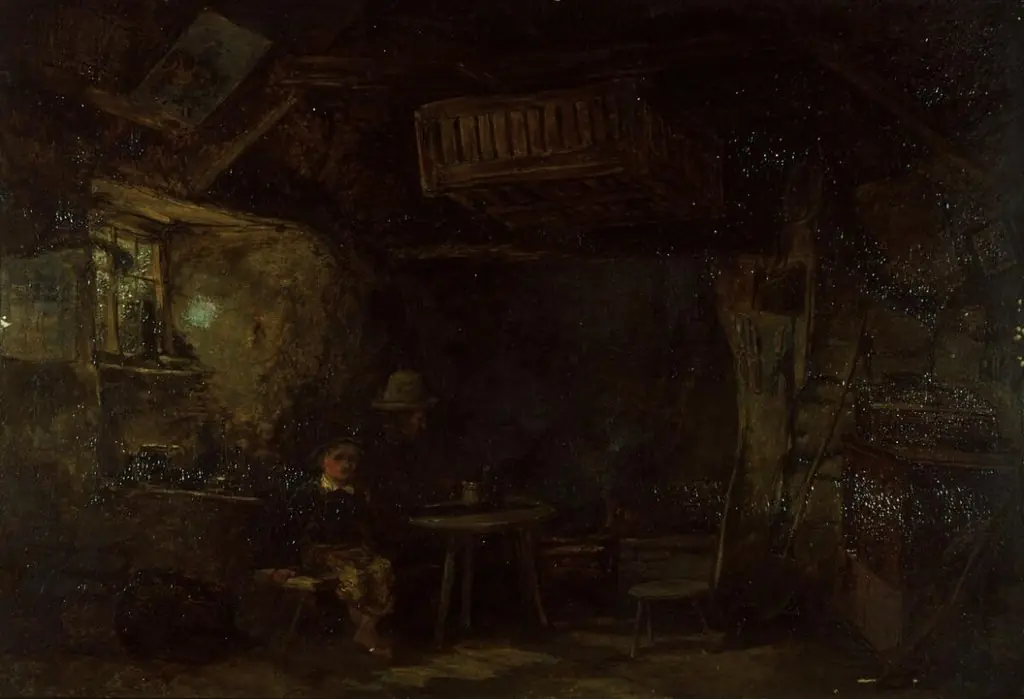
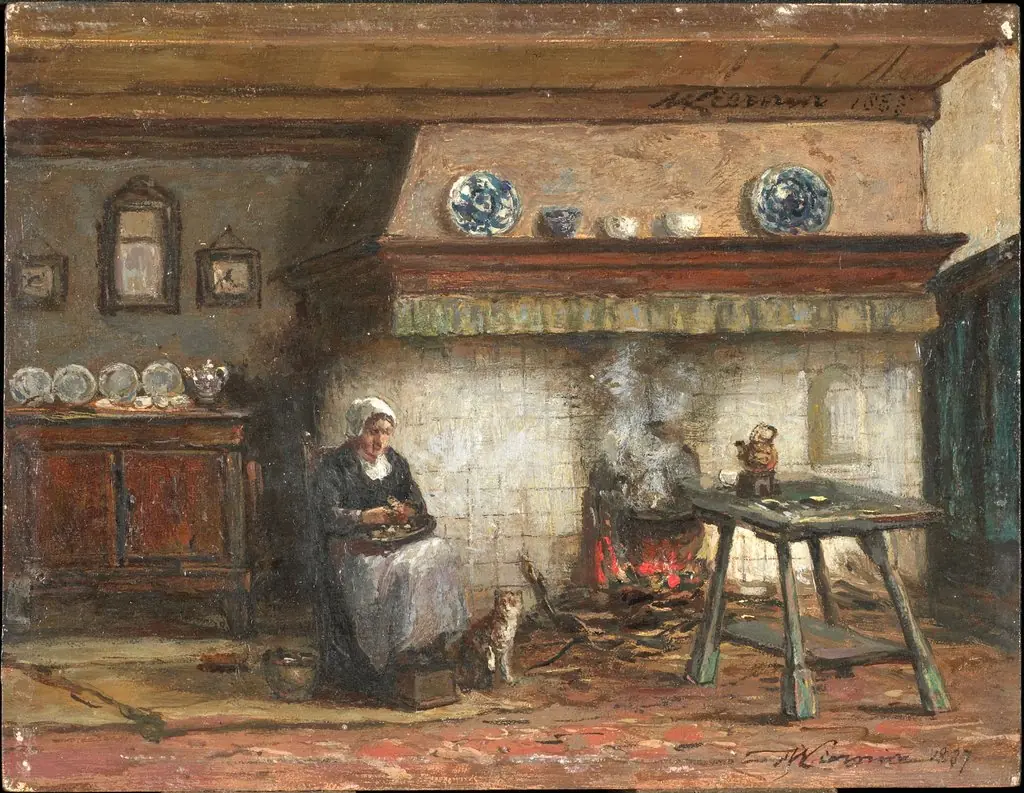
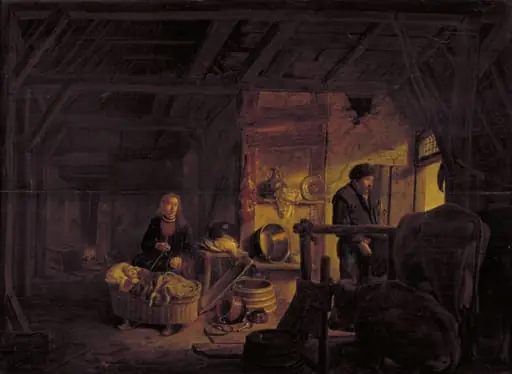
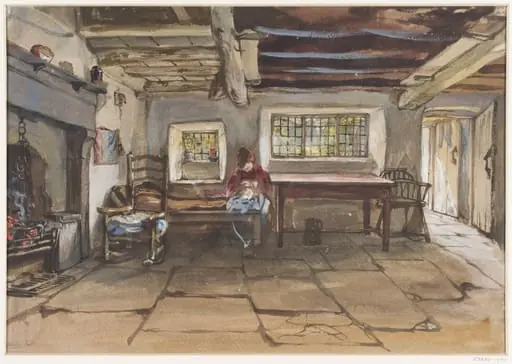
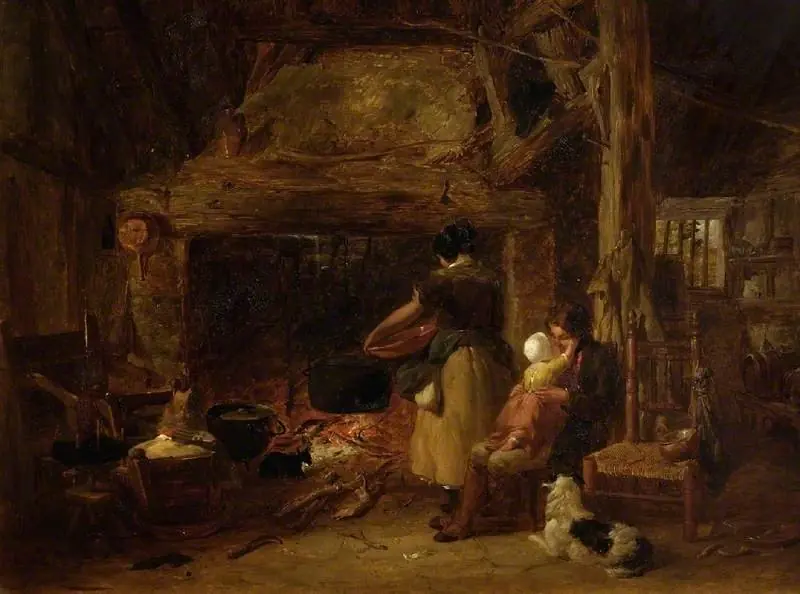
Cottage Interior is an unspecified painting by the Pre-Raphaelite artist Frederick Daniel Hardy. It dates from 1852 and is held in the collection of the Victoria and Albert Museum.
About this work
Overview
As a member of the Cranbrook Colony, Hardy focused on unidealized scenes from village existence, avoiding grand narratives in favor of subtle, observed moments.
Frederick Daniel Hardy painted Cottage Interior in 1852, a quiet depiction of rural domestic life during the height of the pre-Raphaelite influence in British art. As a member of the Cranbrook Colony, Hardy focused on unidealized scenes from village existence, avoiding grand narratives in favor of subtle, observed moments. The work reflects his commitment to authenticity and the quiet dignity of ordinary settings.
Subject & Meaning
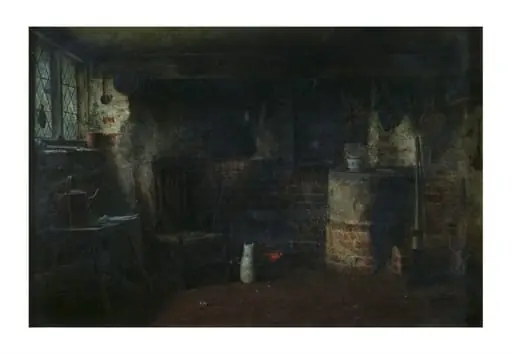
The painting captures a solitary interior moment in a modest cottage, where stillness dominates. A white cat rests near the hearth, the only living creature in view, its presence suggesting companionship and routine. No human figures appear, yet the arrangement of furniture and the glow of the fire imply recent activity and the rhythm of daily life. The absence of people deepens the sense of quiet solitude.
Technique & Style
Hardy employed muted, warm tones to render the interior’s brick and stone surfaces, with soft light emanating from the fireplace to define the space. Details like woven baskets, wooden chairs, and clay vessels are rendered with careful observation, reflecting the Cranbrook Colony’s emphasis on tactile realism. The lighting is naturalistic, avoiding theatricality, and enhances the intimacy of the scene without sentimentality.
History & Provenance
Created in 1852, the painting remained within the circle of Hardy’s contemporaries before entering the Victoria and Albert Museum’s collection. Its acquisition by the museum aligns with its 19th-century mission to document domestic craftsmanship and everyday life. The work has not been widely exhibited, preserving its status as a quiet, understated example of provincial genre painting from the period.
Context
In mid-19th-century England, artists increasingly turned to rural subjects as industrialization reshaped society. Hardy’s work, like that of his Cranbrook peers, responded to this shift by honoring the persistence of traditional village life. While not overtly political, such paintings subtly affirmed the value of simple, unchanging routines amid rapid social change.
Legacy
Though Hardy did not achieve widespread fame, Cottage Interior endures as a representative example of the Cranbrook Colony’s aesthetic. Its restrained composition and attention to domestic detail influenced later realist painters interested in the poetry of ordinary spaces. The painting remains a quiet testament to the dignity found in unremarkable moments of rural existence.
Artist & collection
Artist
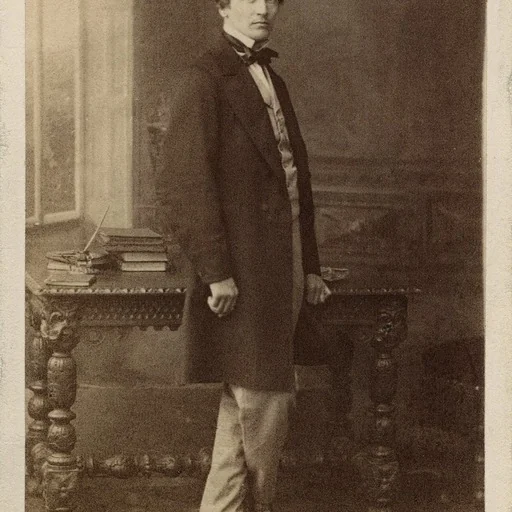
Frederick Daniel Hardy (13 February 1827 – 1 April 1911) was an English genre painter and member of the Cranbrook Colony of artists.