Artwork
View under the High Bridge at Lincoln
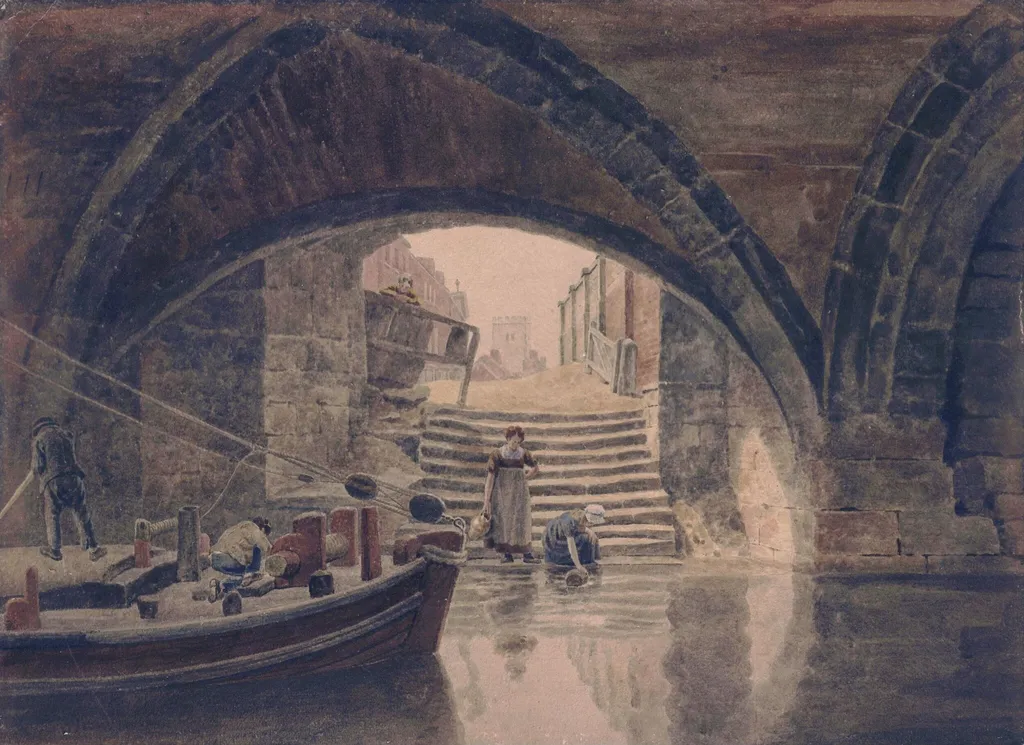
View under the High Bridge at Lincoln is a watercolor work on paper by the British Romanticist artist Frederick Nash. It dates from 1811 and is held in the collection of the Victoria and Albert Museum.
About this work
Overview
In the background, the steep ascent of Lincoln is populated with buildings and a cart traversing the road, emphasizing the town's topographical distinctiveness.
Frederick Nash's 'View under the High Bridge at Lincoln,' executed in watercolour in 1811, captures a specific architectural perspective beneath the medieval stone structure spanning the River Witham. The composition is defined by the strong contrast between the deep, shadowed archway in the foreground and the bright, sunlit cityscape rising on the hill beyond. Nash employs the transparency of watercolour to render the play of light spilling through the arch, illuminating the river surface and the figures within the scene.
A woman in a long dress stands on the steps observing the water, while two men attend to a small boat moored below, adding a sense of daily activity to the monumental setting. In the background, the steep ascent of Lincoln is populated with buildings and a cart traversing the road, emphasizing the town's topographical distinctiveness. Created during the height of the British watercolour tradition, this work exemplifies Nash's skill in topographical recording, blending precise architectural detail with atmospheric effects.
The painting reflects the early 19th-century interest in documenting historic English landmarks, preserving the visual character of Lincoln's High Bridge before later alterations.
Subject & Meaning
The composition centers on the dark, arched stone bridge, its interior illuminated by light that filters through the opening. A woman in a long dress stands on the bridge’s steps, gazing downward, while two men attend to tasks near the water. Beyond the arch, a sunlit street ascends a hill, punctuated by buildings and a cart, suggesting everyday activity within a historic setting.
Technique & Style
Nash combines a delicate pencil underdrawing with translucent watercolour washes, allowing subtle tonal shifts. Soft hues and gentle shading render the contrast between the shadowed tunnel and the bright street, while the light spilling through the arch highlights the texture of the bridge’s stonework.
History & Provenance
Created in 1811, the piece reflects Nash’s interest in topographical subjects during the early nineteenth century. Its mounting on card and the presence of a clear signature indicate it was likely intended for private collection or as a study for a larger work.
Context
The drawing aligns with the Romantic era’s fascination with atmospheric effects and the interplay of light and architecture. By focusing on a specific, recognizable structure, Nash contributes to the period’s broader interest in documenting the character of English towns.
Own this work as a print
Artist & collection

Artist
Frederick Nash was an American lawyer and jurist from Hillsborough, North Carolina. He served on the North Carolina Supreme Court and was its chief justice from 1852 until his death.

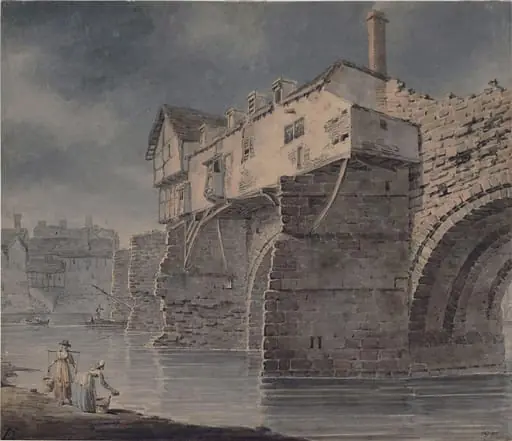 Bewdley, Worcestershire - Old Bridge with Houses
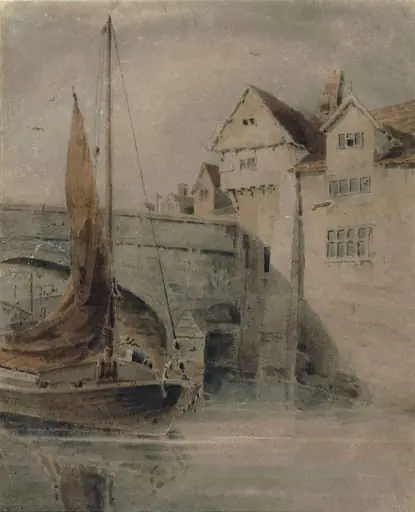 Fye Bridge, Norwich
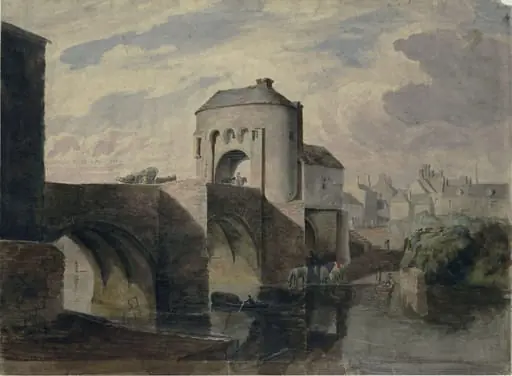 Bridge over the River Monmow, Monmouth
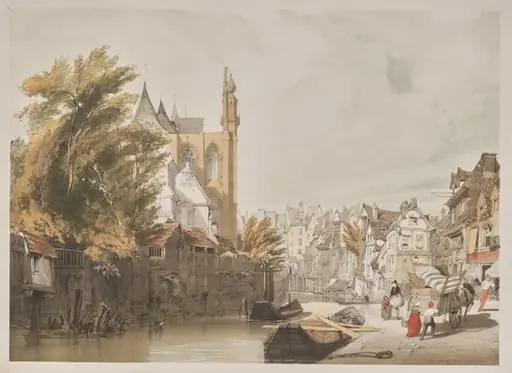
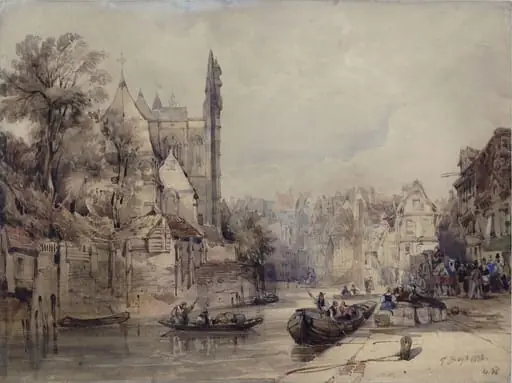 Rue du Rivage, Abbeville
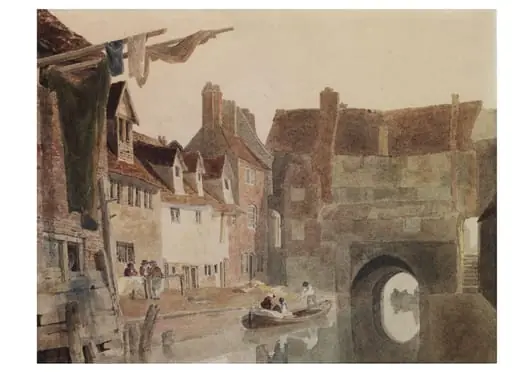 Old Houses on the High Bridge, Lincoln.
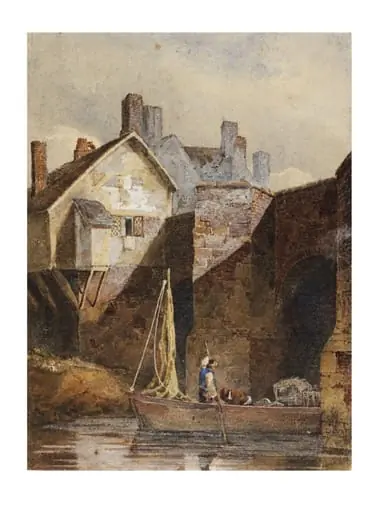 Canal scene with barge and houses in background
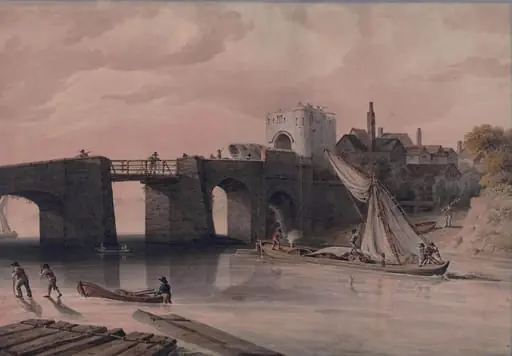 West Gate and bridge, Gloucester.
 The Thames, showing Somerset House in the course of construction
 A Birmingham Canal
 Picturesque Architecture in Paris, Ghent, Antwerp, Rouen: Rue du Rivage, Abbeville, France