Artwork
Study of Heads [recto]
![Study of Heads [recto], by French 17th Century, chalk, 1650](https://artifactworldgallery.com/img/french-17th-century--study-of-heads-recto--f112995fec29176f-w1024.webp)
Study of Heads [recto] is a chalk drawing by the Baroque artist French 17th Century. It dates from 1650 and is held in the collection of the National Gallery of Art. This drawing on blue laid paper employs black and red chalk with white highlights to render three distinct heads.
- Inscription
- Inscribed:by later hand, lower left in brown ink: Lanfranque
About this work
Overview
The contrast of tones and the textured paper surface enhance the tactile quality of the forms, suggesting a study focused on expression and light.
This drawing on blue laid paper employs black and red chalk with white highlights to render three distinct heads. Two are shown in profile, one in three-quarter view, creating a dynamic compositional rhythm. A faint, indistinct figure appears in the background, adding spatial ambiguity.
The contrast of tones and the textured paper surface enhance the tactile quality of the forms, suggesting a study focused on expression and light.
Subject & Meaning
The three heads convey varied emotional states through subtle shifts in brow, mouth, and gaze. Their arrangement, central figure facing outward, flanked by profile views, invites comparison of psychological nuance. The background figure, barely defined, may imply a narrative context or serve as a compositional anchor. The work appears less a finished piece than an exploration of human expression in motion.
Technique & Style
Chalk lines are layered and blended to model volume, with white highlights accenting planes caught in light. The blue paper provides a mid-tone base, allowing red and black to define shadow and contour. The handling reflects Baroque concerns with dramatic contrast and emotional immediacy, though the intimacy of the medium tempers its theatricality. The technique prioritizes observation over idealization.
History & Provenance
The drawing’s origin is unattributed in available records, though its materials and approach align with 17th-century European studio practices. Blue paper was commonly used by draftsmen for its neutral tone and durability. No documented ownership or exhibition history is known prior to its current institutional custody, suggesting it remained in private hands or artist’s archives for much of its life.
Context
Created during the Baroque era, the work reflects a period when artists increasingly turned to direct observation of the human form. Studies like this were essential for training and preparation, especially in regions where religious and mythological subjects demanded convincing emotional expression. The use of multiple chalks on colored paper was a practical and expressive choice among draftsmen of the time.
Legacy
Though unsigned and unattributed, the drawing exemplifies the quiet rigor of preparatory work in early modern art. Its focus on transient expression and tonal modeling influenced later generations of draftsmen who valued immediacy over polish. Today, it stands as a testament to the artist’s process, unembellished, observational, and deeply attentive to the human face.
Artist & collection

Artist
Seventeenth-century French printmakers worked in burin and acid. See the Beggar Woman with Rosary (1622), etched on laid paper with her hands folded in prayer, or The Siege of La Rochelle (1628/1631), one sheet from a…

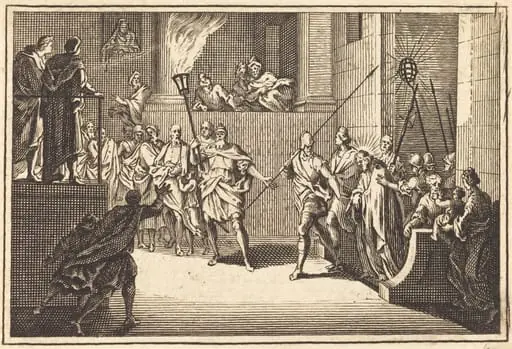
- The Sacrifice of Isaac
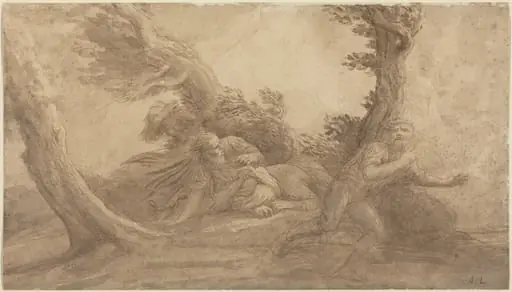 Clap of Thunder
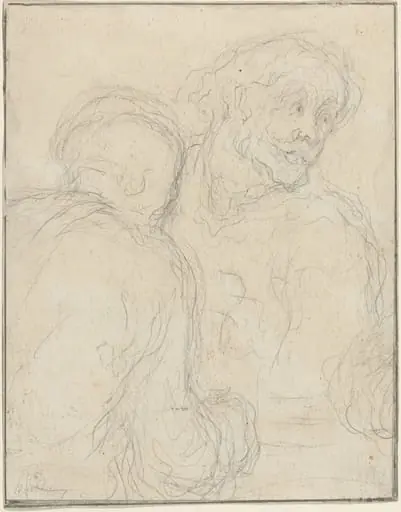 Two Men
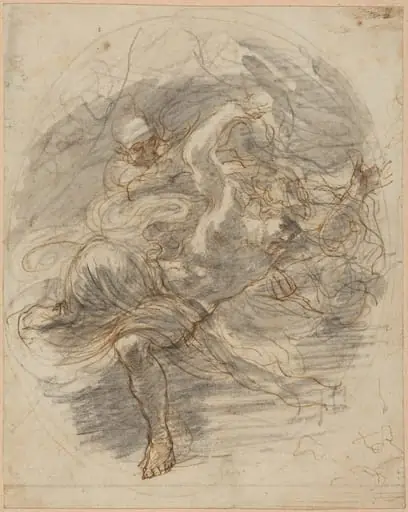 A Young Man Pursued by Death
![The March of Silenus [recto], by Jean Antoine Watteau](https://artifactworldgallery.com/img/jean-antoine-watteau--the-march-of-silenus-recto--41356d5e8937ed4e-w320.webp) The March of Silenus [recto]
The March of Silenus [recto]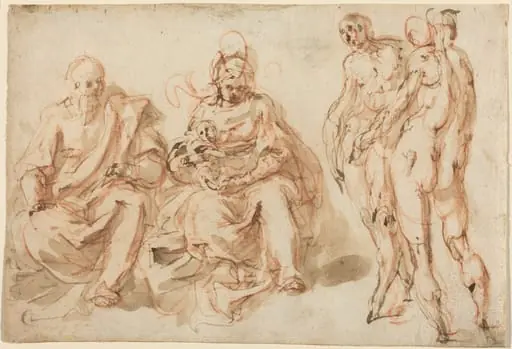 The Adoration of the Shepherds
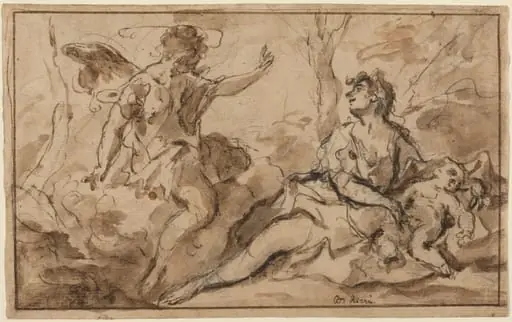 The Angel Appearing to Hagar and Ishmael
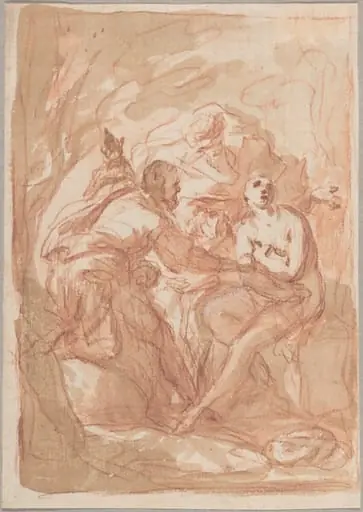 Susanna and the Elders
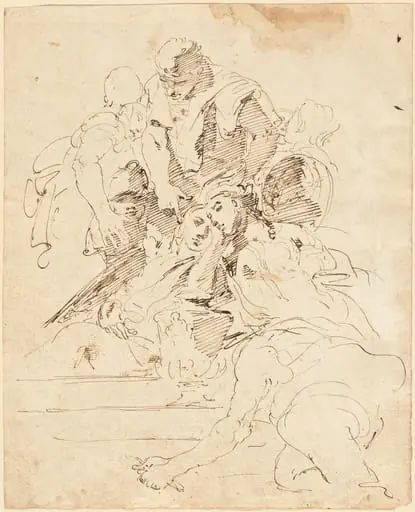 Classical Figures Gathered around an Urn
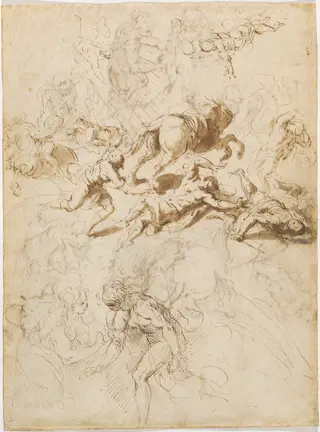 The Conversion of Saint Paul; Adam and Eve
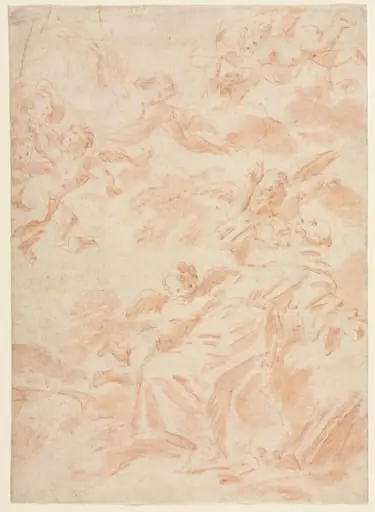 The Stigmatization of Saint Francis
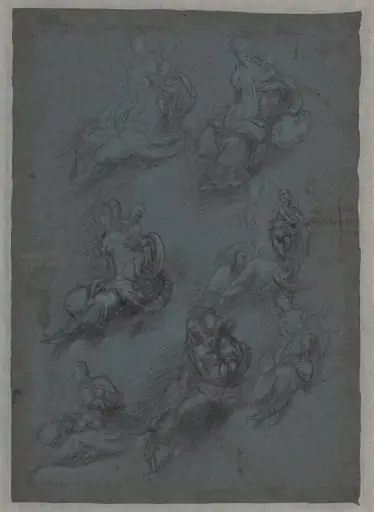 Studies for the Virgin and Child (recto)