Artwork
Taglia Cantoni and Fracasso
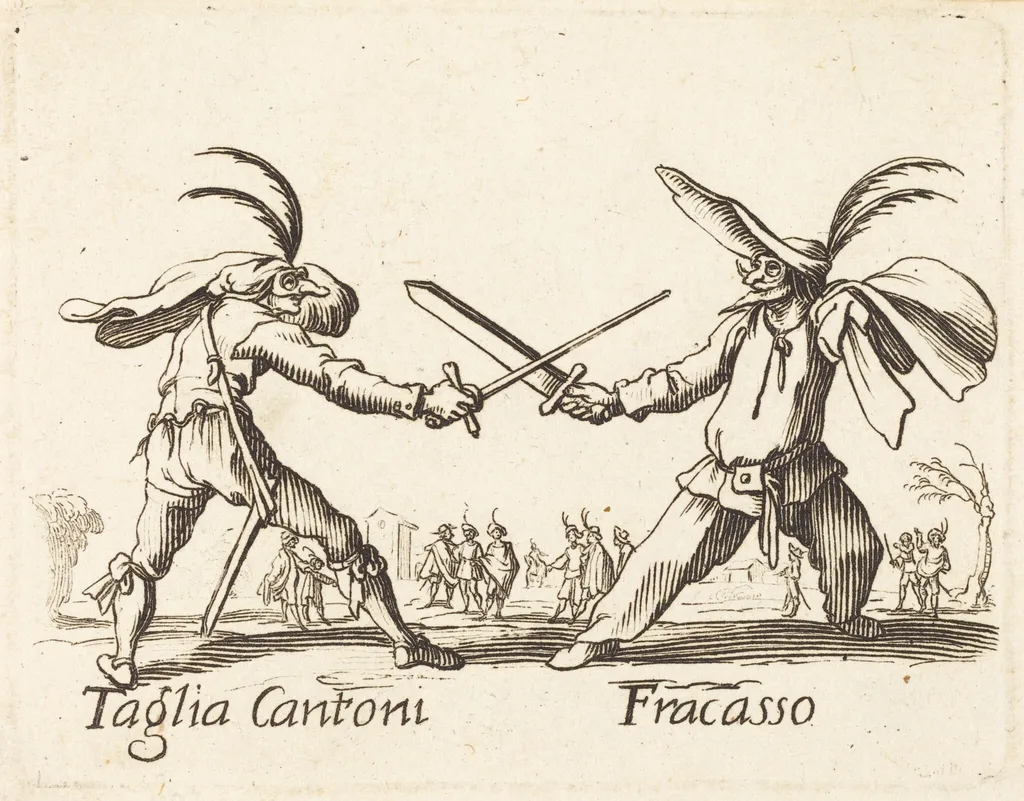
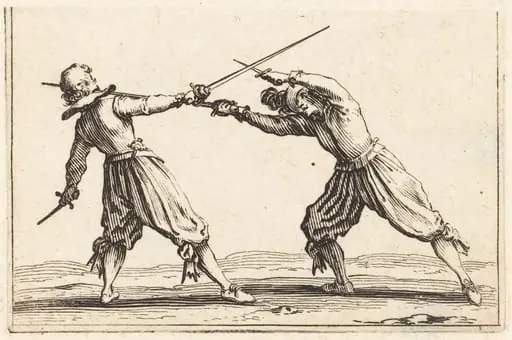
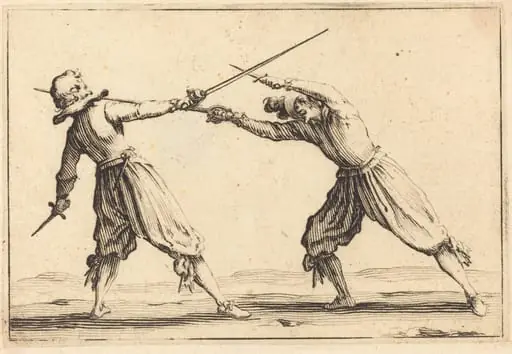
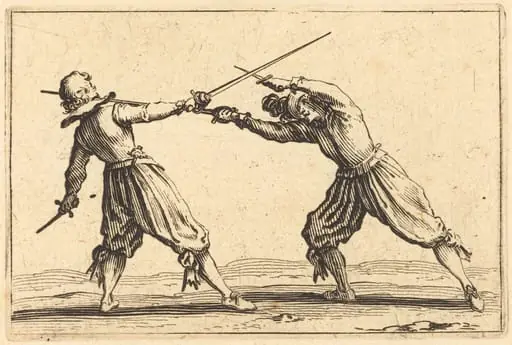
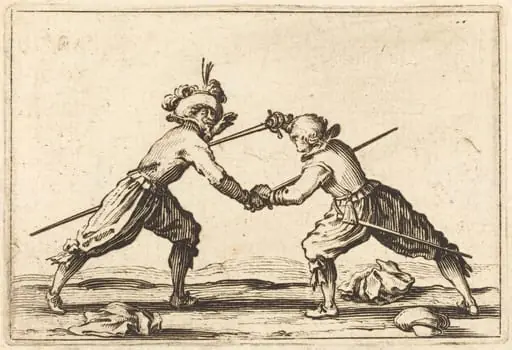
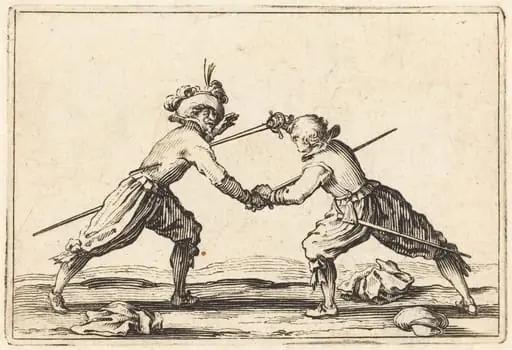
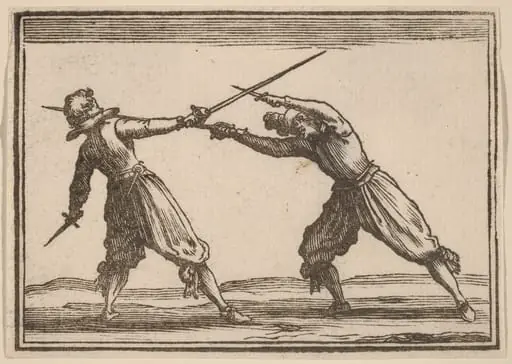
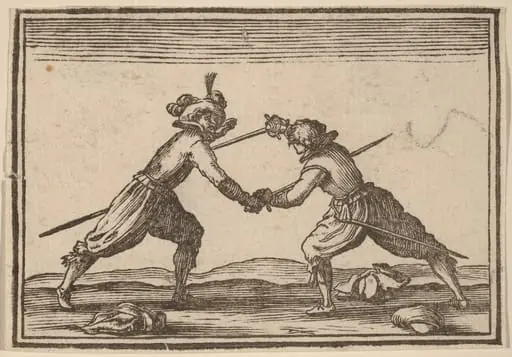
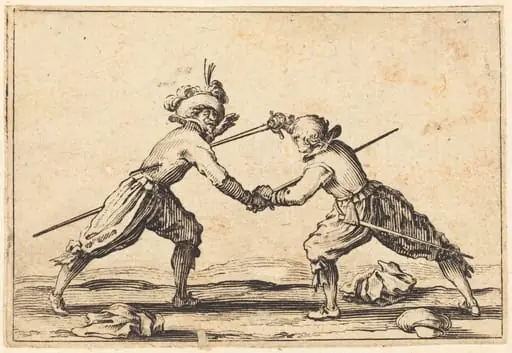
Taglia Cantoni and Fracasso is an ink print by the Baroque artist French 17th Century. It dates from 1622 and is held in the collection of the National Gallery of Art. The work is an etching on laid paper depicting a lively duel between two men in 17th‑century dress.
About this work
This image presents a dynamic scene of two men engaged in a sword fight, with the title "Taglia Cantoni" and "Fracasso" inscribed below them.
This image presents a dynamic scene of two men engaged in a sword fight, with the title "Taglia Cantoni" and "Fracasso" inscribed below them. The men are dressed in attire typical of the 17th century, complete with hats and cloaks, and are positioned in a fighting stance. In the background, a group of people can be seen watching the duel unfold.
The etching on laid paper technique used to create this image adds a sense of texture and depth to the scene. The level of detail in the clothing and facial expressions of the men suggests a high level of craftsmanship.
For more information on the artistic technique used in this image, explore the world of etching.
Overview
The work is an etching on laid paper depicting a lively duel between two men in 17th‑century dress. Both figures are poised with swords, while onlookers gather in the background to observe the confrontation. The inscription below the scene reads “Taglia Cantoni” and “Fracasso,” identifying the combatants.
Subject & Meaning
The image captures a moment of violent contest, likely a staged or ceremonial duel, as suggested by the formal attire and the presence of spectators. The title’s reference to “Taglia Cantoni” and “Fracasso” may denote the participants’ names or a narrative episode, emphasizing themes of honor, conflict, and public spectacle.
Technique & Style
Created through the etching process on laid paper, the print exhibits fine line work that renders intricate details in clothing, facial expression, and the surrounding crowd. The laid texture of the paper contributes subtle tonal variation, enhancing depth and giving the scene a tactile quality characteristic of skilled printmaking.
History & Provenance
The piece is catalogued as a print, though specific information about its date, artist, or ownership history is not provided in the source material. Its survival on laid paper indicates it was produced during a period when this support was common for fine etchings.
Context
Depictions of duels were a recurrent motif in 17th‑century European art, reflecting contemporary social codes surrounding honor and martial skill. The inclusion of an audience aligns with the period’s interest in public events as moral or cautionary subjects.
Artist & collection

Artist
Seventeenth-century French printmakers worked in burin and acid. See the Beggar Woman with Rosary (1622), etched on laid paper with her hands folded in prayer, or The Siege of La Rochelle (1628/1631), one sheet from a…