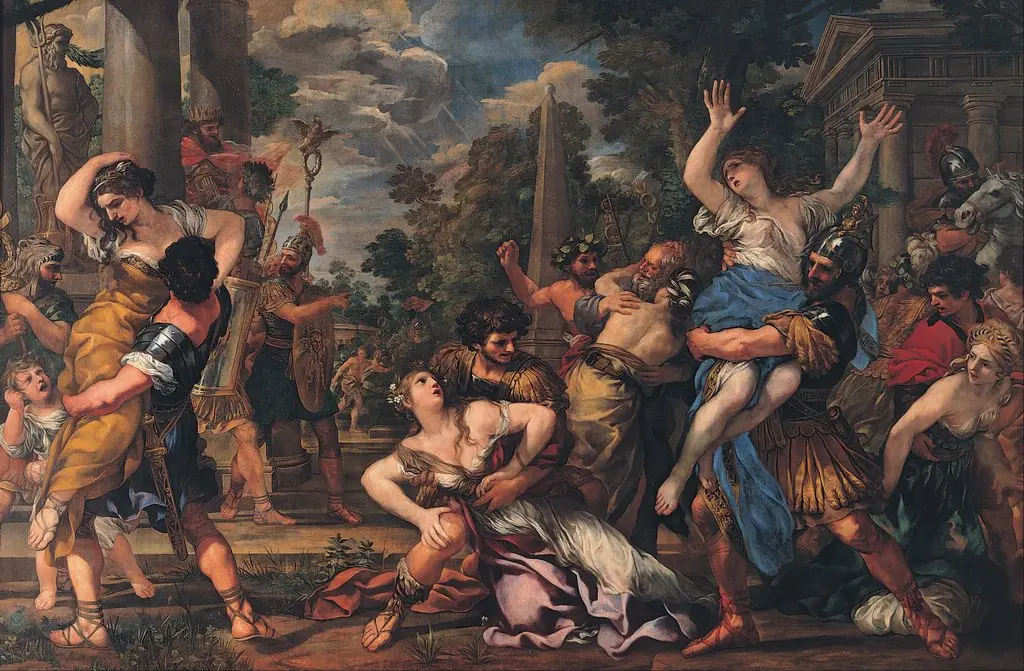
Artwork
The Rape of the Sabine Women
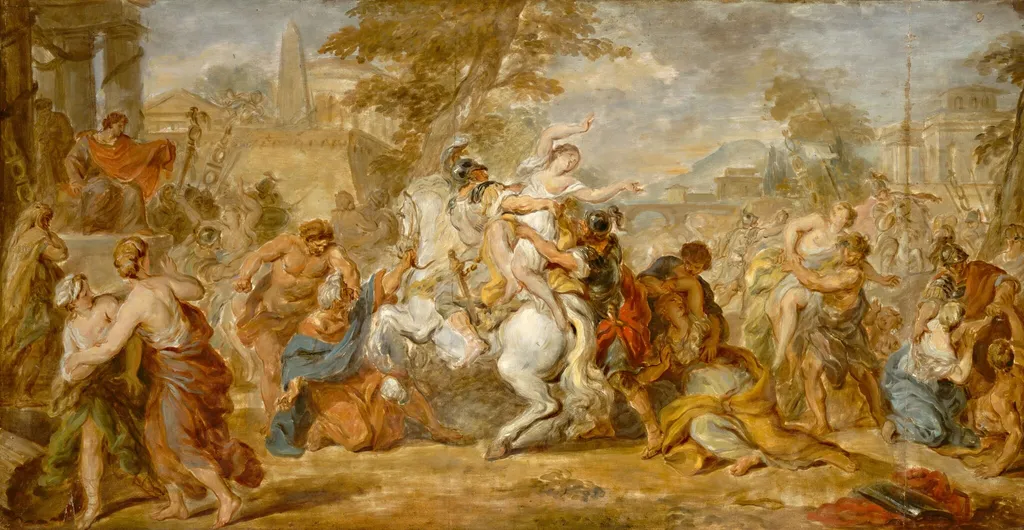
The Rape of the Sabine Women is an oil painting. It dates from 1770 and is held in the collection of the National Gallery of Art.
About this work
A chaotic crowd of men drags women away, bodies twisting in a storm of rough brushwork. One man grips a woman by the arms, her face tight with fear. The scene comes from the Roman myth in which the city's early men seized women from a neighboring tribe, a story long used to talk about power and control. By a French painter of the 18th century.
Subject & Meaning
The composition emphasizes muscular, dynamic figures locked in a struggle, underscoring themes of conflict, seduction, and the founding of Rome.
The painting portrays the mythological episode of the rape of the Sabine women, a legendary episode in which Roman men seized women from the neighboring Sabine tribe to secure spouses for the fledgling Roman community. The composition emphasizes muscular, dynamic figures locked in a struggle, underscoring themes of conflict, seduction, and the founding of Rome. Symbolically, the scene conveys ideas of conquest, cultural integration, and the heroic narrative of Rome’s origins.
As a history painting, it reflects the 18th‑century fascination with classical antiquity and heroic storytelling, while its provenance through European collectors and eventual donation to the National Gallery of Art highlights its enduring cultural significance.
Technique & Style
The Rape of the Sabine Women is executed in oil paint, applied to paper that has been mounted on canvas, producing a relatively modest support measuring 56.5 by 108.9 centimeters in its horizontal format. This unusual oil-on-paper-on-canvas construction, dated 1770, places the work within the French 18th-century tradition of history painting. The horizontal orientation of the support accommodates the narrative's multi-figure composition, a hallmark of the history-painting genre to which the work belongs.
The painting is held in the collection of the National Gallery of Art in Washington, D.C., where it has been preserved following its acquisition history from the Widener collection.
History & Provenance
This painting was created around 1770 by an anonymous French artist of the 18th century. It entered the collection of Leo Nardus in Suresnes, France, and later in New York, who sold it in 1897 to American collector Peter A.B. Widener at Lynnewood Hall, Elkins Park, Pennsylvania. Upon Widener’s death, the work passed by inheritance to his son Joseph E. Widener, who gifted it to the National Gallery of Art, Washington, D.C., in 1942.
The painting is currently held in the collection of the National Gallery of Art in Washington, D.C. It entered the museum's holdings in 1942 as a gift from Joseph E. Widener, following its inheritance from the estate of his father, Peter A.B. Widener, at Lynnewood Hall in Elkins Park, Pennsylvania. Prior to the Widener acquisition, the work was owned by Leo Nardus in Suresnes, France, and New York, from whom Peter A.B. Widener purchased it in 1897. The National Gallery of Art lists the work as an 18th-century French painting dated 1770.
The provided sources detail this ownership lineage and current location but do not contain specific records of past exhibitions.
Context
The work titled The Rape of the Sabine Women is classified as a history painting, a genre emphasized in 18th‑century academic discourse, and is attributed to Peter Paul Rubens. Executed in oil on canvas in 1770, the composition illustrates the mythic episode of the Sabine women's abduction. Its provenance traces from Leo Nardus through Peter A. B. Widener to the National Gallery of Art, where it remains on display in Washington, D.C. As a Rubens piece housed in a major American museum, the painting exemplifies the transmission of Baroque narrative art into the neoclassical era, reflecting both the artist’s mature storytelling approach and the enduring prestige of history painting in museum collections.
Legacy
The Rape of the Sabine Women, painted in 1770, entered the National Gallery of Art in Washington, D.C., through a series of gifts that began with Peter A. B. Widener and culminated in a 1942 donation. According to Wikidata, the work is attributed to Peter Paul Rubens and is classified as a history painting. Its long‑term display in a public museum has positioned the canvas as a key example for scholars examining 18th‑century French approaches to classical subjects and the visual representation of mythic violence.
The painting’s provenance and conservation history have also informed studies of 19th‑century collecting practices and the transmission of European art to America.
Overview
This painting, titled The Rape of the Sabine Women, is an oil on paper mounted on canvas. It depicts a tumultuous scene from Roman mythology, illustrating the moment early Roman men abducted women from the neighboring Sabine tribe. The artwork captures a chaotic struggle, characterized by dynamic figures and intense emotional expression, reflecting themes of power and conflict. It is currently housed at the National Gallery of Art, Washington.
Artist & collection

 The Meeting of David and Abigail
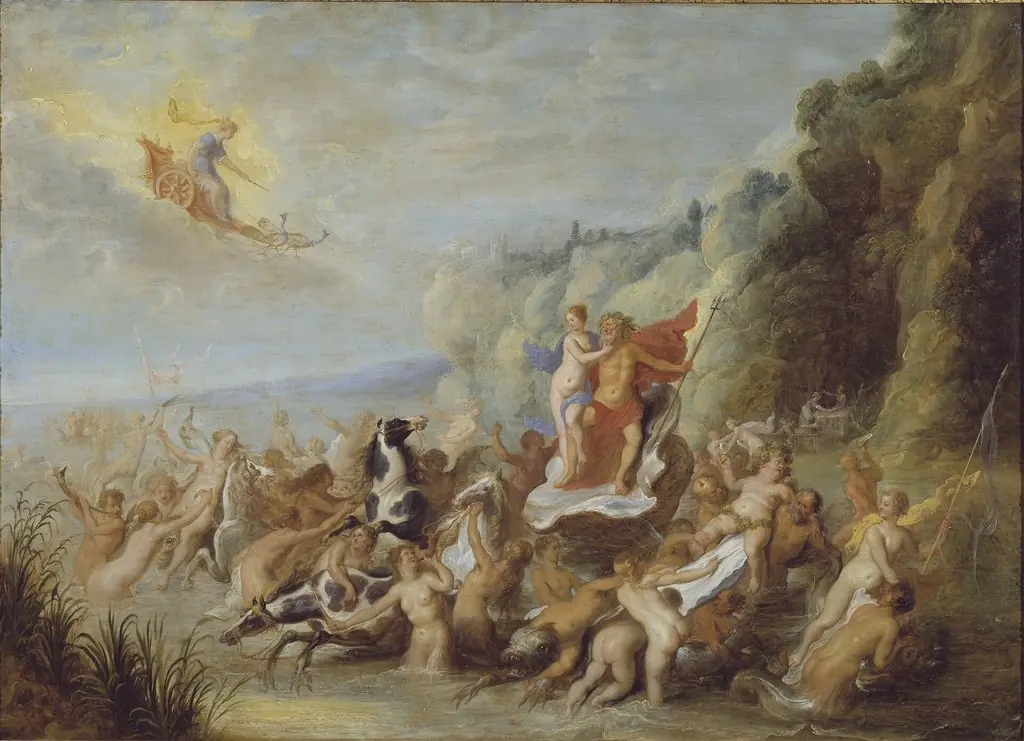 The Triumph of Neptune and Amphitrite
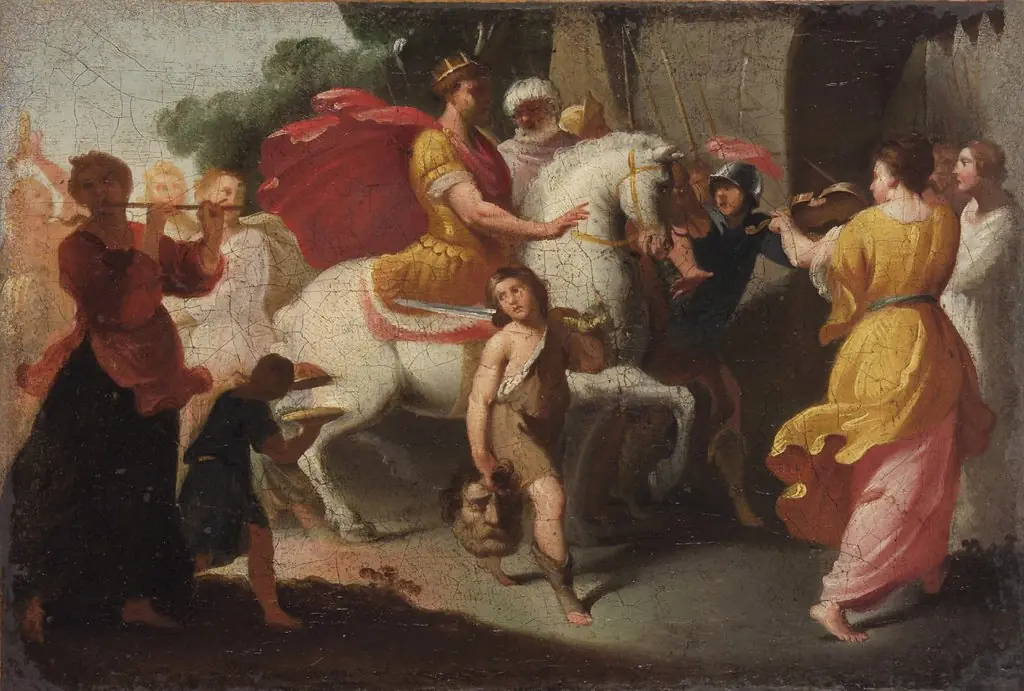 Triumph of David after defeating Goliath
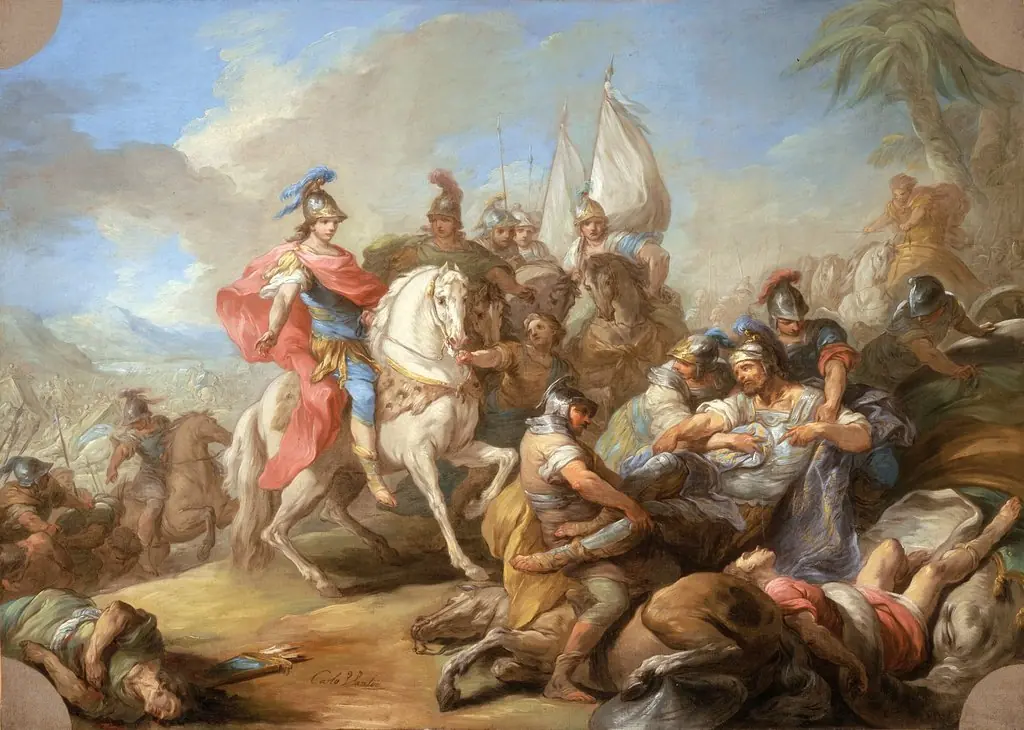 The Victory of Alexander over Porus
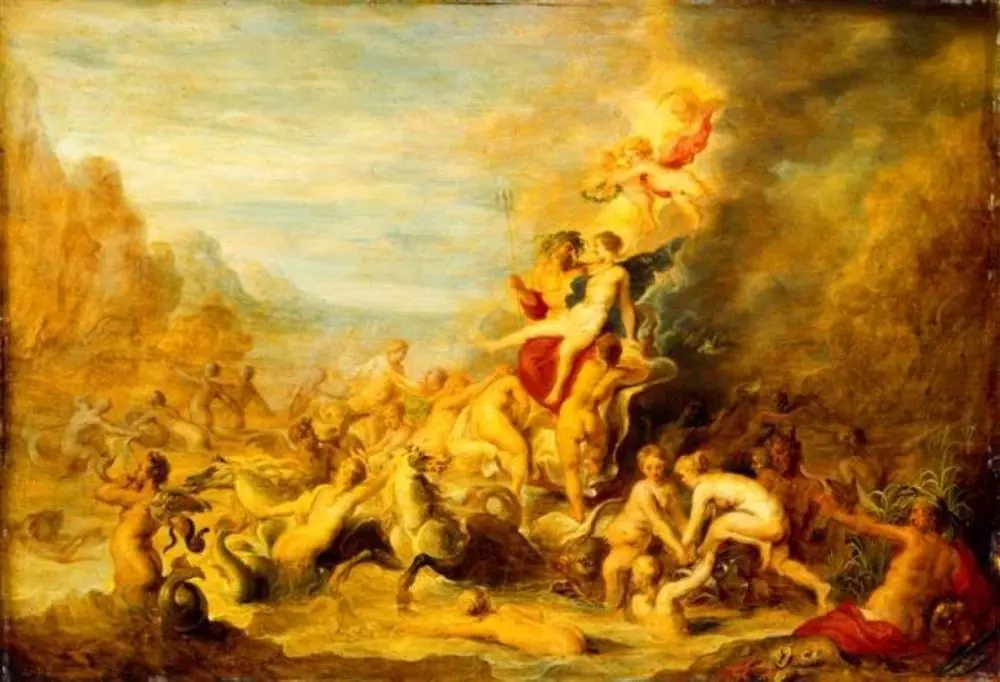 Triumph of Neptune and Amphitrite
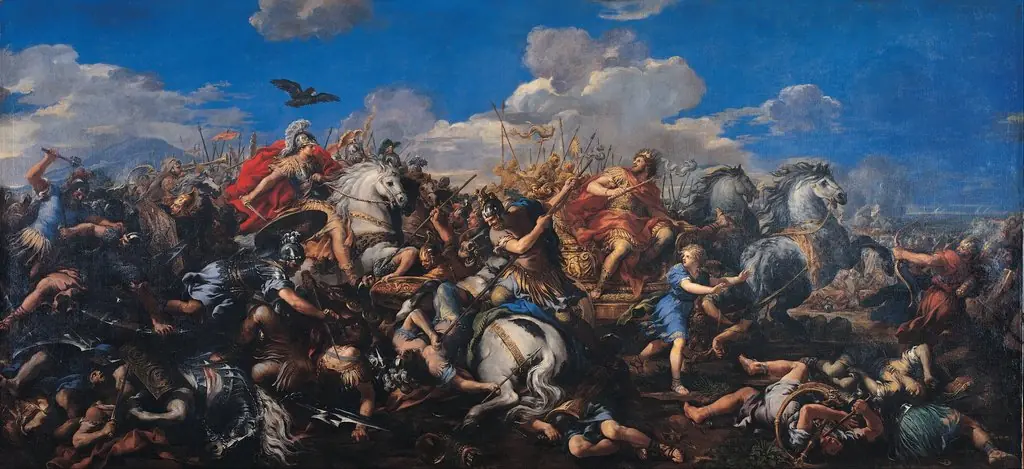 Battle of Alexander versus Darius
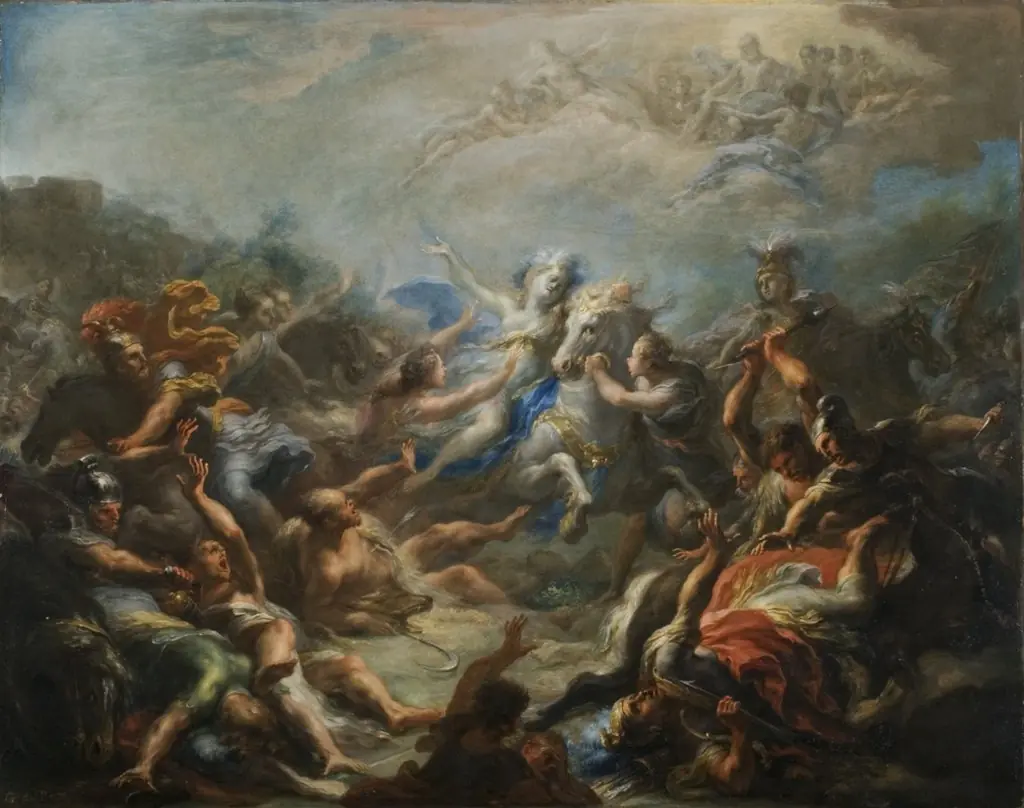 Camillia at War from Virgil's Aeneid
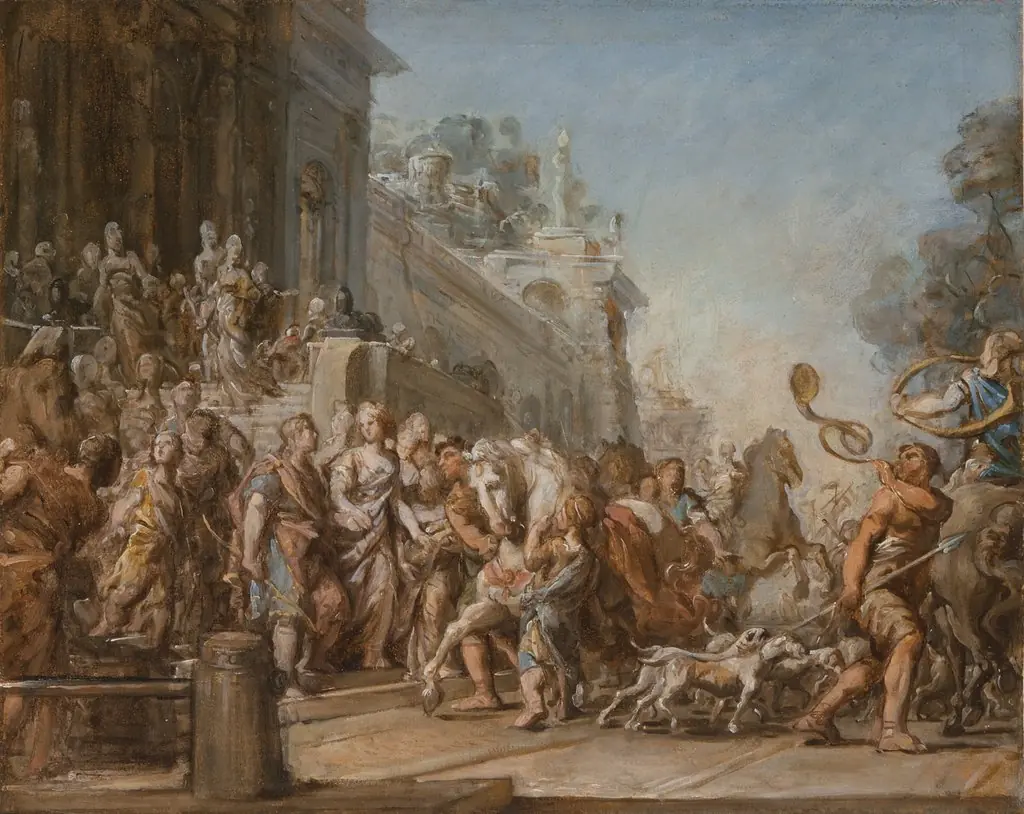 The Departure of Dido and Aeneas for the Hunt
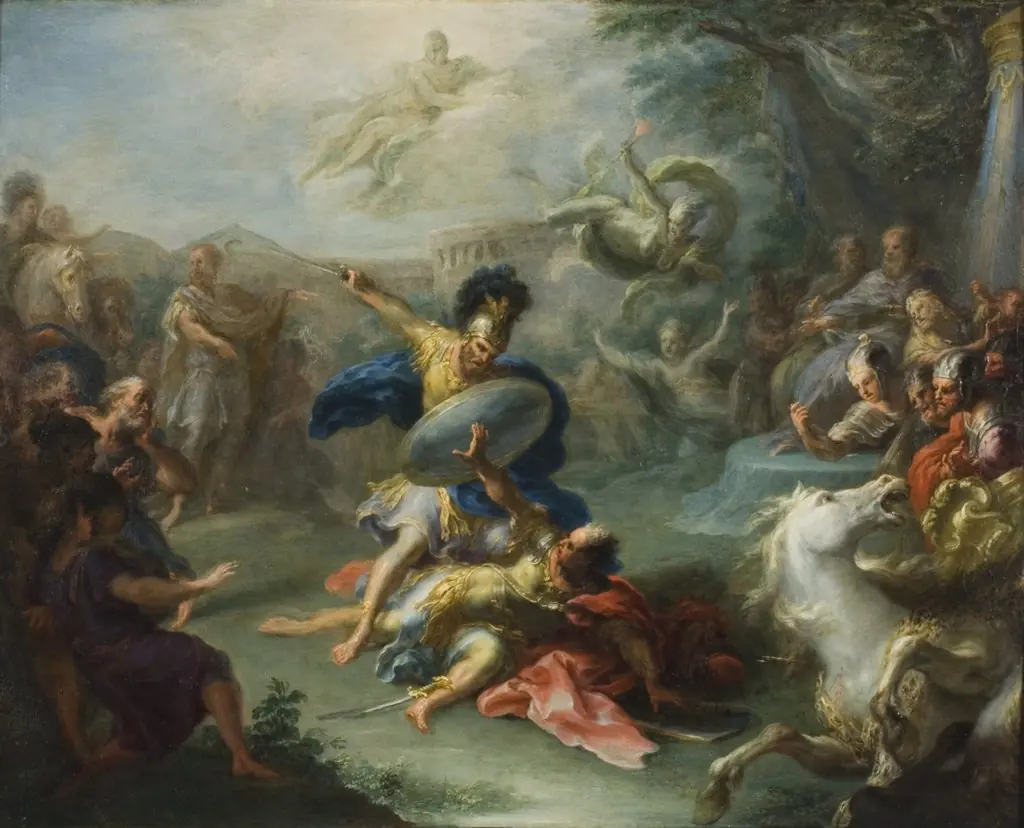 The Fight between Aeneas and King Turnus, from Virgil’s Aeneid