Artwork
Satyr (Bacchant)
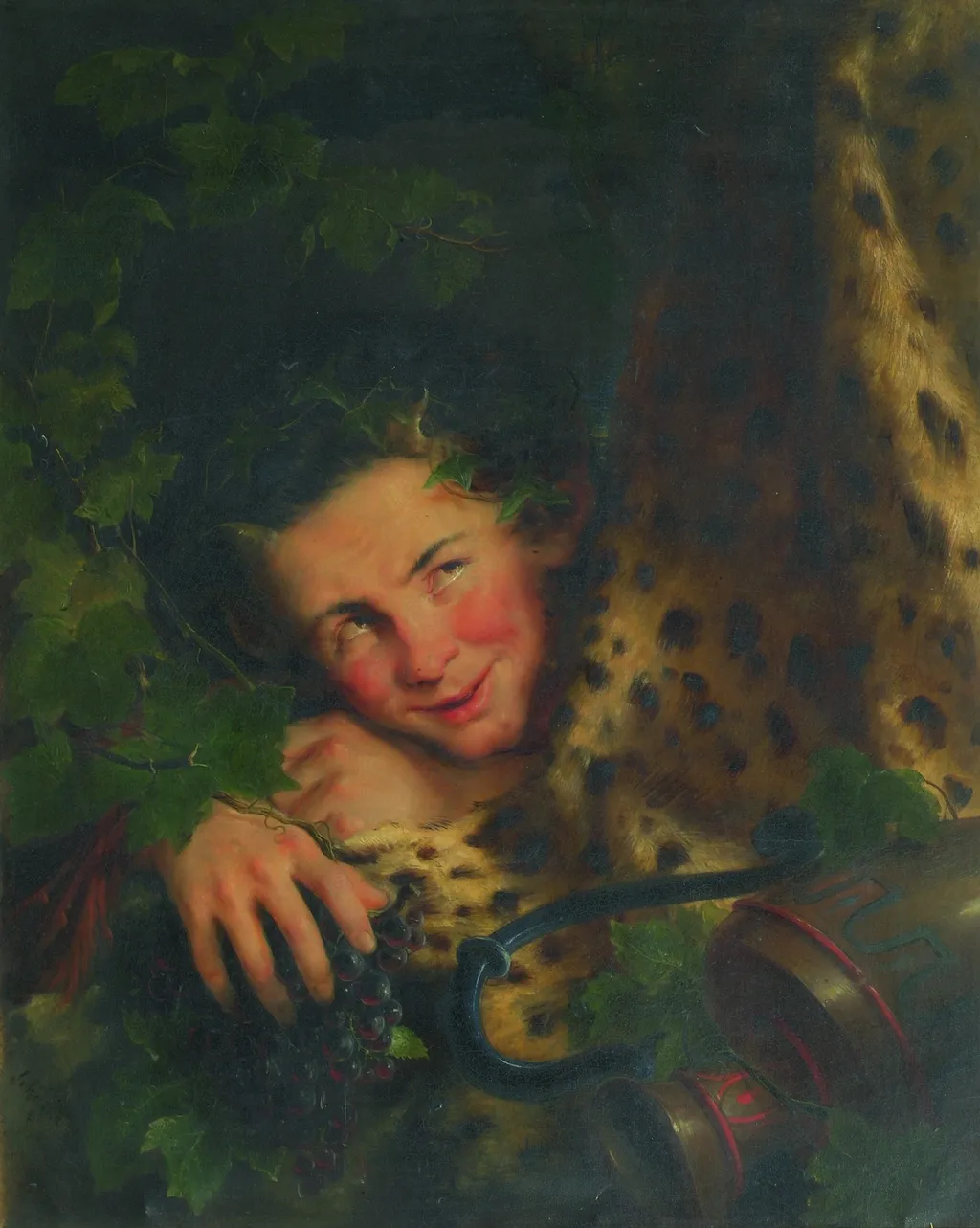
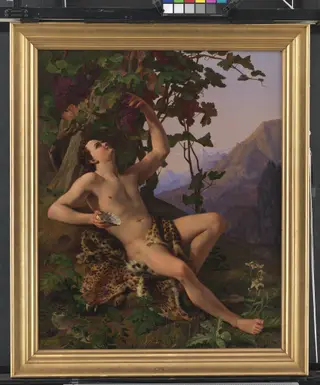
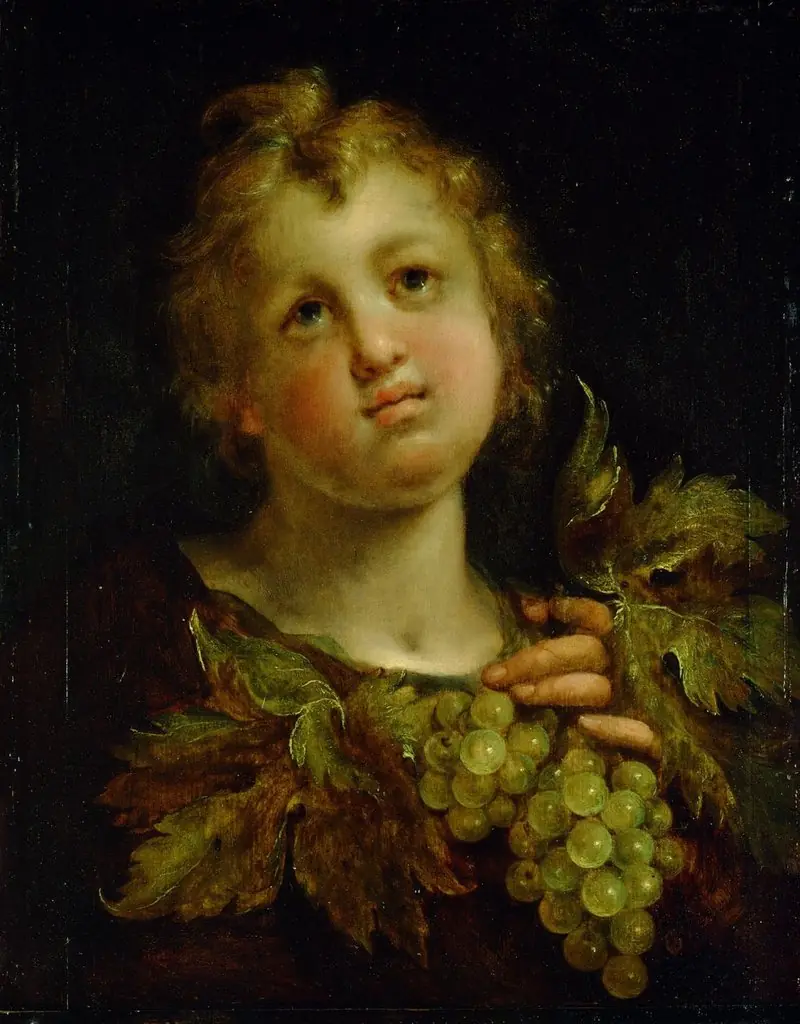
Satyr (Bacchant) is an oil painting by the German Romanticist artist Friedrich Schilcher. It dates from 1840 and is held in the collection of the Kunsthistorisches Museum.
About this work
Overview
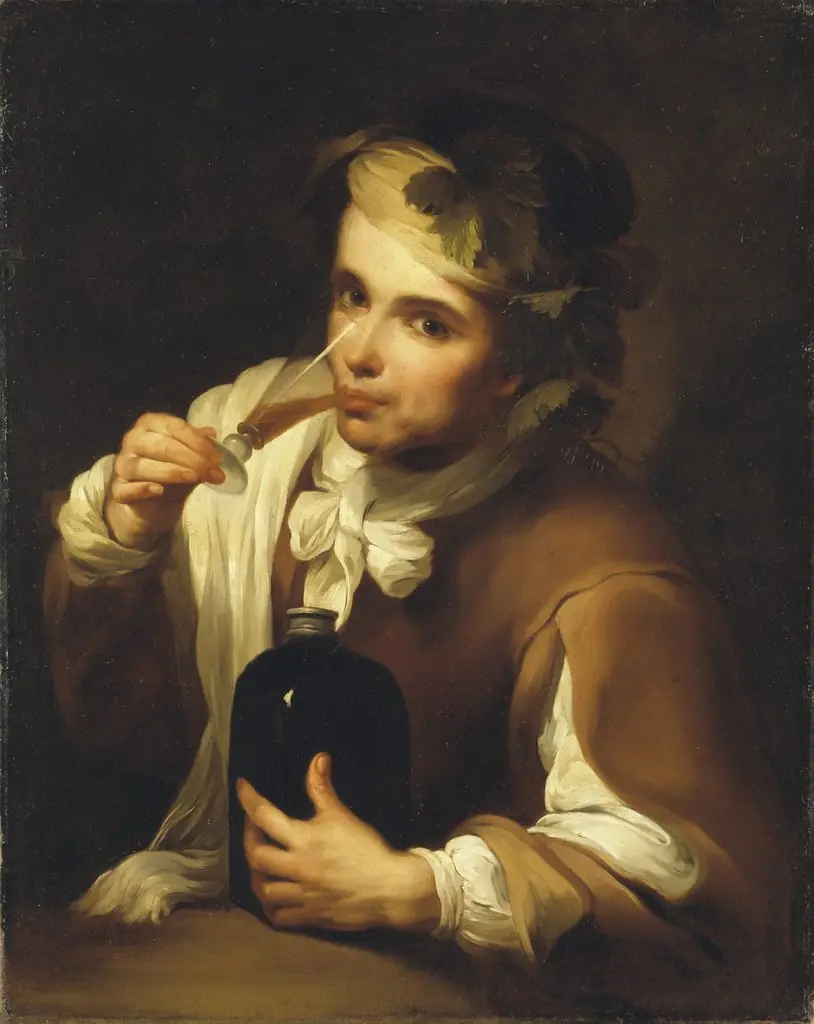
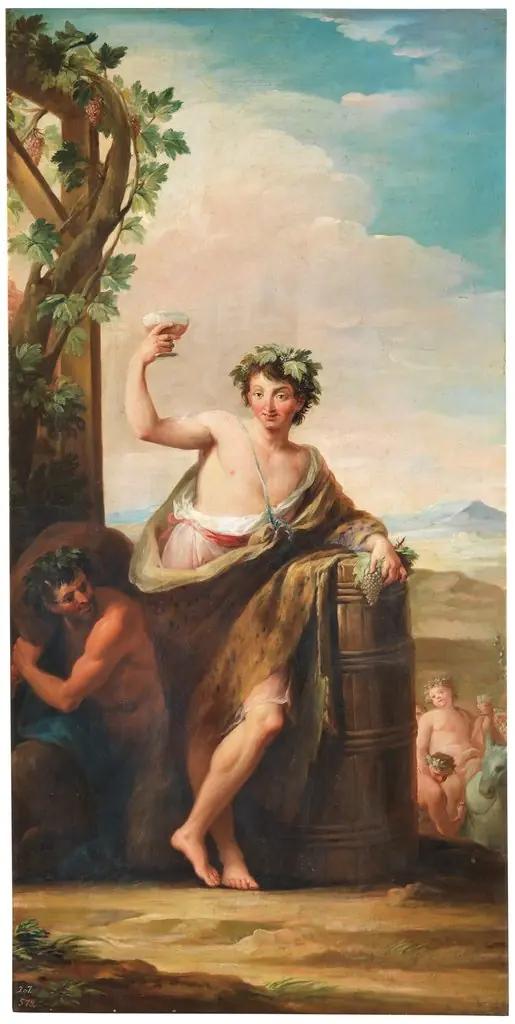
Friedrich Schilcher’s 1840 oil painting Satyr (Bacchant) depicts a mythological figure in a richly textured leopard‑print shawl, clutching a bunch of grapes. The subject’s flushed cheeks and faint smile are set against a dark backdrop of green vines, creating a striking contrast that draws the eye to the illuminated face.
Subject & Meaning
The work presents a satyr, a creature from classical mythology associated with revelry and wine. By emphasizing the grape bunch and the figure’s relaxed pose, Schilcher alludes to the bacchanalian pleasures of excess and the sensual indulgence celebrated in ancient rites, while the softened expression hints at a more introspective, perhaps nostalgic, mood.
Technique & Style
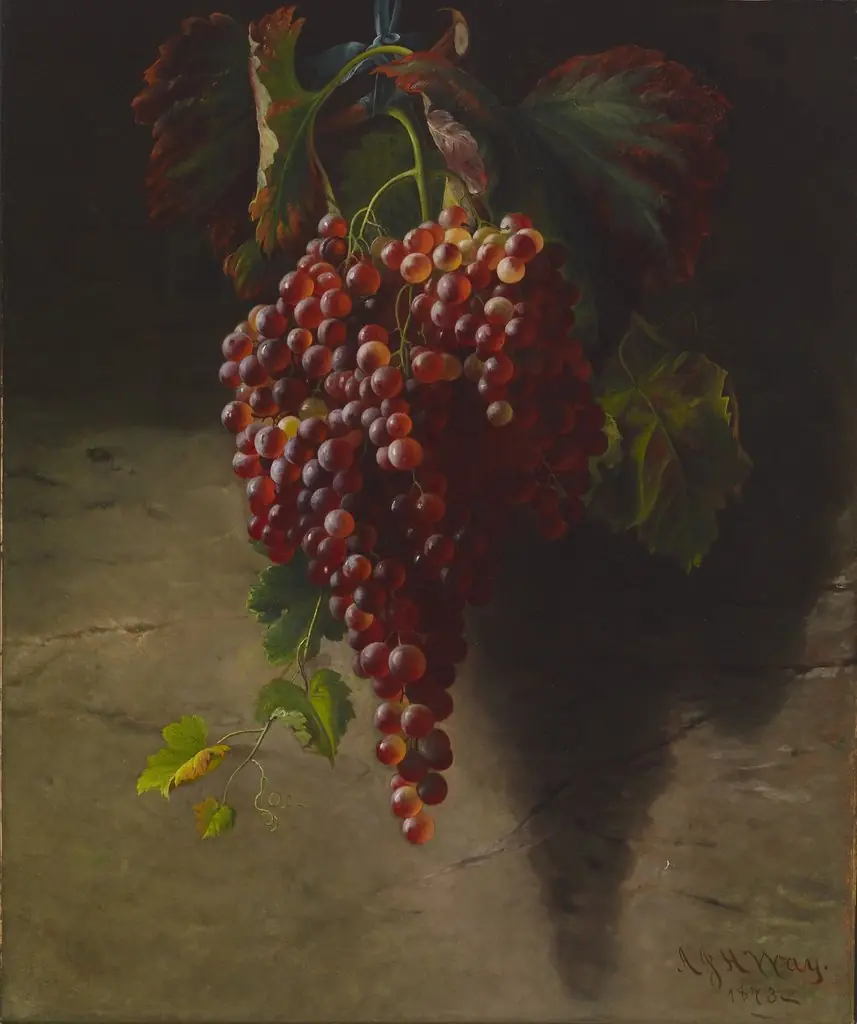
Executed in oil, the painting employs chiaroscuro to model the figure’s form, using deep shadows and bright highlights that give a three‑dimensional presence. Careful rendering of the grapes and the sheen on the shawl demonstrates the artist’s attention to surface detail, while the overall composition reflects the Romantic era’s preference for emotive, dramatic lighting.
History & Provenance
Schilcher, an Austrian trained at the Vienna Academy, worked across portraiture, genre scenes, and history painting. Satyr (Bacchant) entered the collection of Vienna’s Kunsthistorisches Museum, where it remains part of the museum’s holdings of 19th‑century Romantic works, illustrating the period’s fascination with classical mythology.
Own this work as a print
Artist & collection
Artist
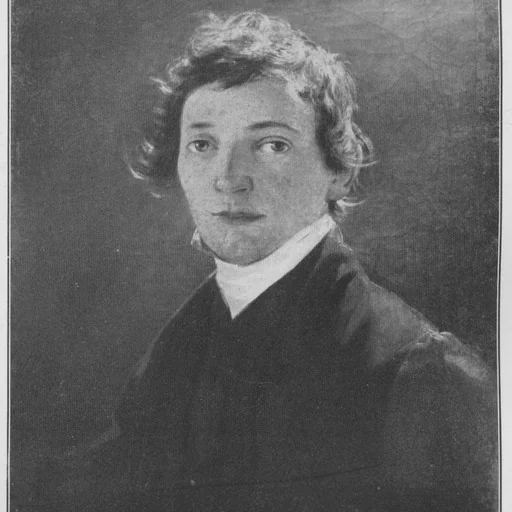
Friedrich Schilcher (1811 – 1881) was an Austrian portrait, genre, and history painter, and decorative designer.