Artwork
The Boy with Cherries
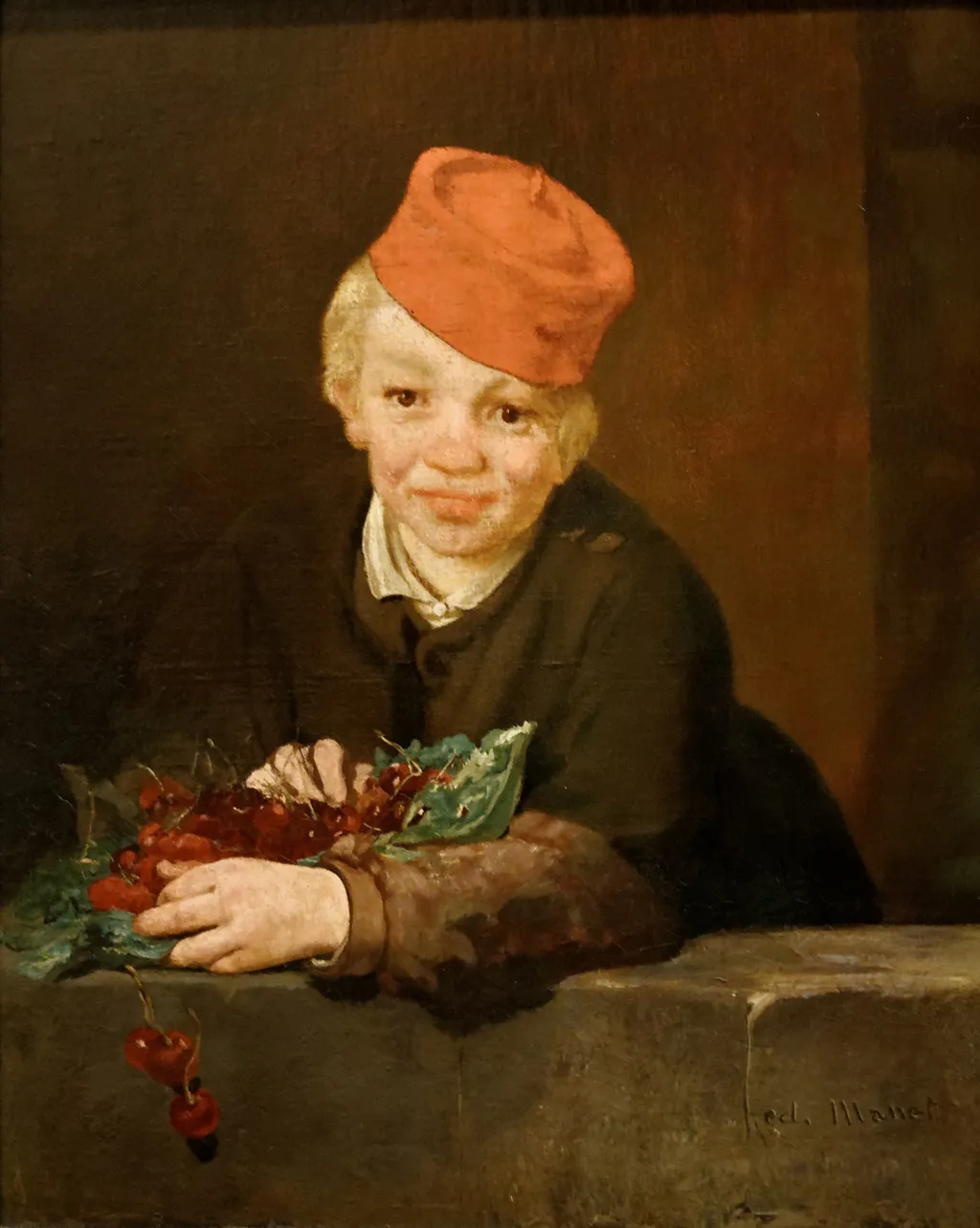
The Boy with Cherries is an oil painting by the Realist artist Édouard Manet. It dates from 1858 and is held in the collection of the Calouste Gulbenkian Museum.
About this work
Overview
Painted in 1858, The Boy with Cherries is an oil-on-canvas work by Édouard Manet, belonging to his early genre scenes.
Painted in 1858, The Boy with Cherries is an oil-on-canvas work by Édouard Manet, belonging to his early genre scenes. It depicts a young boy seated at a table, holding a cluster of cherries. The composition is tightly framed, with a dark, undefined background that isolates the figure.
The painting’s quiet intensity and focus on a single, ordinary moment reflect Manet’s interest in contemporary life, even before his more radical works of the 1860s.
Subject & Meaning
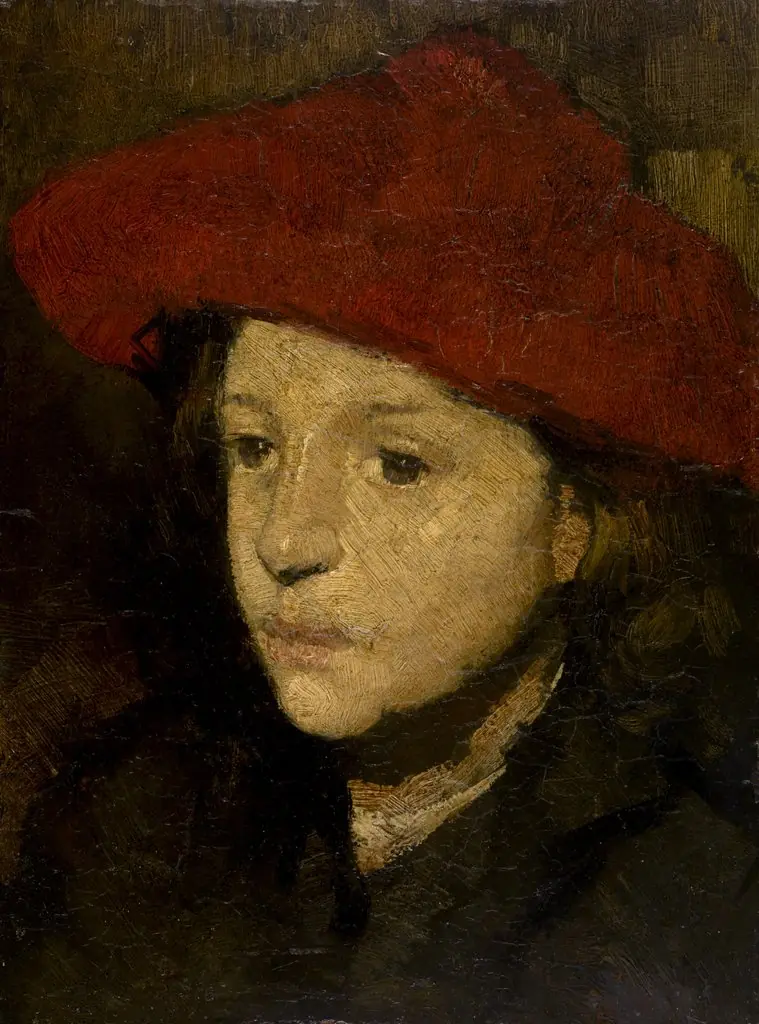
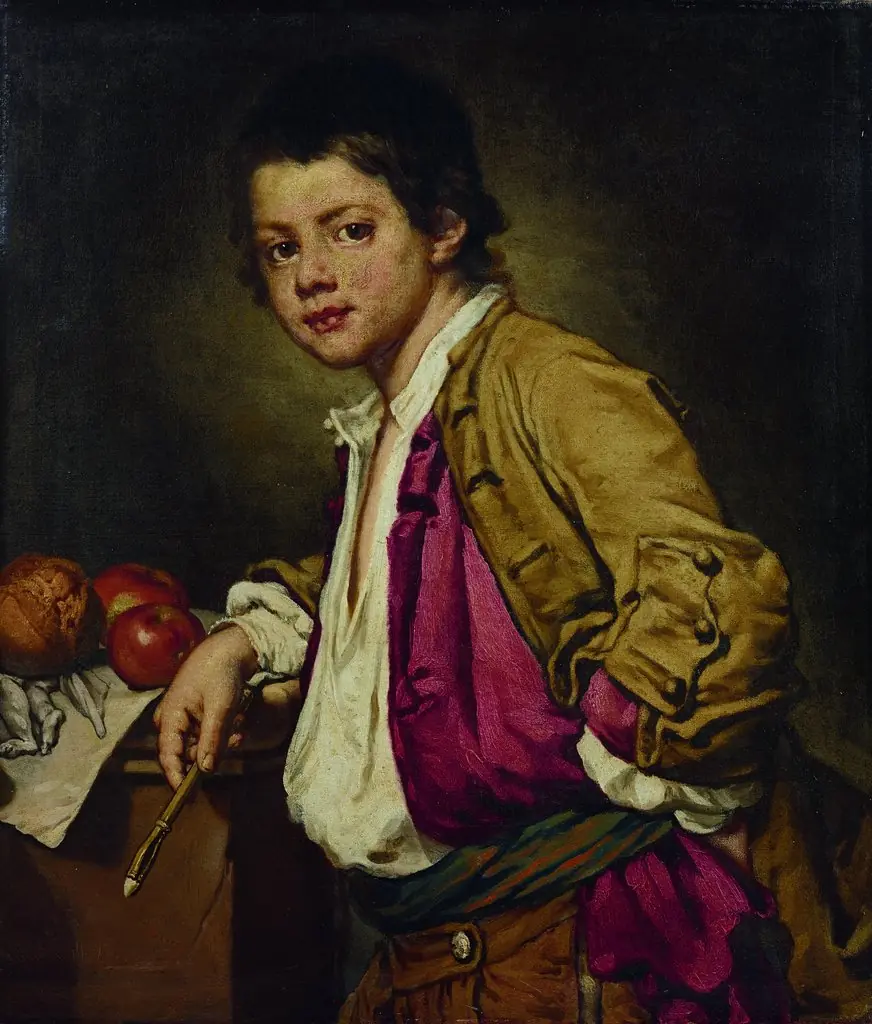
The boy, dressed in a dark jacket and white shirt, wears a red cap and gazes directly at the viewer. His hands cradle the cherries with care, suggesting both possession and vulnerability. The fruit, rendered with heightened luminosity, becomes a symbol of fleeting youth or transience.
The direct gaze invites an intimate, almost confrontational engagement, transforming a simple still-life gesture into a psychological encounter.
Technique & Style
Manet employs chiaroscuro to model the boy’s form against the deep background, creating volume without traditional modeling. The cherries’ glossy surfaces and the texture of the fabric are rendered with precise, controlled brushwork. The face is softly blurred, avoiding idealized detail, while the eyes remain sharply attentive.
This selective focus, detailing the fruit and hands while softening the features, shifts emphasis from identity to gesture and light.
History & Provenance
The painting entered the collection of Calouste Gulbenkian in the early 20th century and remains in the museum’s holdings in Lisbon. Its early date places it among Manet’s formative works, created before his public controversies. Little documentation exists about its original commission or exhibition history, but its survival in a major private collection suggests it was valued early for its quiet originality.
Context
In 1858, Manet was still developing his style outside the official Salon system. This work aligns with contemporary French genre painting but diverges in its psychological immediacy and lack of narrative. Unlike sentimental depictions of children common at the time, Manet presents the boy without moralizing or idealization, reflecting a modern, observational approach that would later define his role in the transition to Impressionism.
Legacy
Though less known than Manet’s later works, The Boy with Cherries reveals his early mastery of light, composition, and emotional restraint. Its influence is subtle but present in the way later artists approached everyday subjects with psychological depth. The painting stands as a quiet precursor to his more radical innovations, demonstrating how ordinary moments could carry visual and emotional weight without grandeur.
Own this work as a print
Artist & collection
Artist
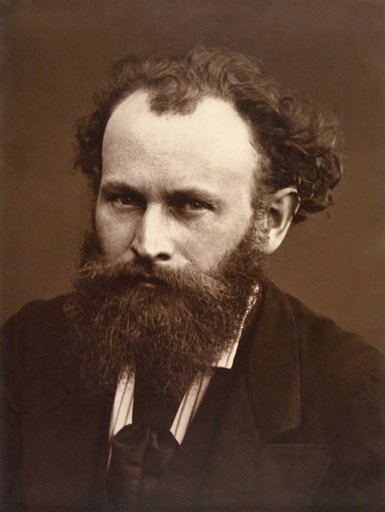
Édouard Manet was a French modernist painter. He was one of the first 19th-century artists to paint modern life, as well as a pivotal figure in the transition from Realism to Impressionism.