Artwork
Peonies
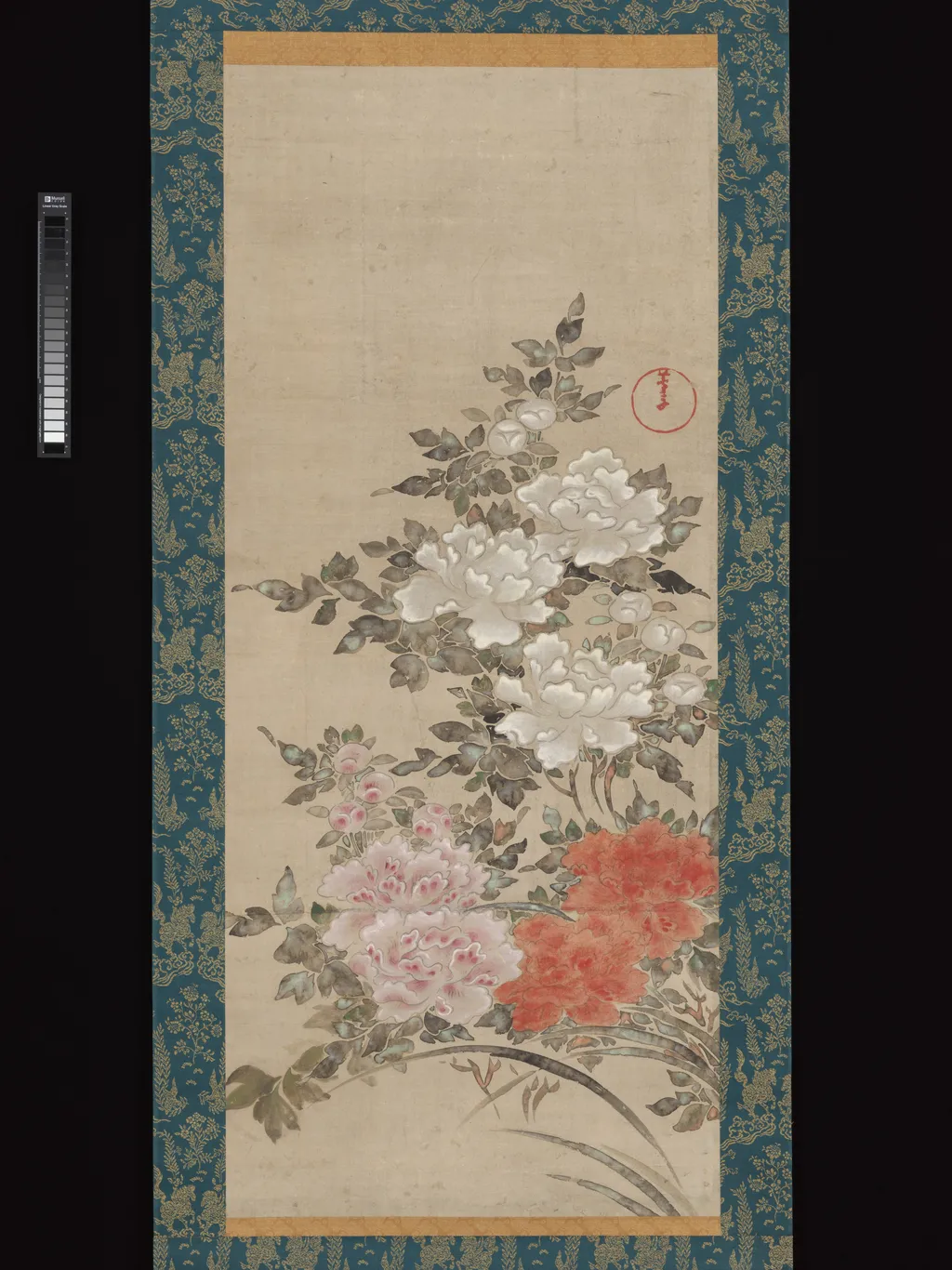
Peonies is an unspecified painting by the Rinpa school artist Fukae Roshū. It dates from 1745 and is held in the collection of the Metropolitan Museum of Art.
About this work
History & Provenance
No specific details regarding its original commission, early ownership history, or the circumstances of its creation are provided in the available records.
The painting Peonies was created in 1745 by the Japanese artist Fukae Roshū. Produced in Japan during the mid-18th century, the work is currently held in the collection of the Metropolitan Museum of Art. No specific details regarding its original commission, early ownership history, or the circumstances of its creation are provided in the available records.
Peonies is a painting by Fukae Roshū held in the collection of the Metropolitan Museum of Art. It was created in 1745 in Japan.
The work is accessioned under the Metropolitan Museum of Art's inventory system.
Peonies has been exhibited as part of the Metropolitan Museum of Art's collection displays.
Context
Fukae Roshū's 1745 painting Peonies, housed in the Metropolitan Museum of Art, occupies a pivotal position in the artist's oeuvre and early modern Japanese art. Created during the Edo period, it exemplifies the botanical realism and refined brushwork characteristic of Roshū's practice, reflecting broader cultural engagements with nature in Edo-period visual culture. Art historical scholarship situates the work within the trajectory of Japanese bird-and-flower painting (kachō-ga), where meticulous observation of flora served both aesthetic and didactic purposes, bridging traditional Chinese influences with emergent local artistic identities.
Its inclusion in a major institutional collection underscores its recognized significance in the canon of East Asian painting.
Overview
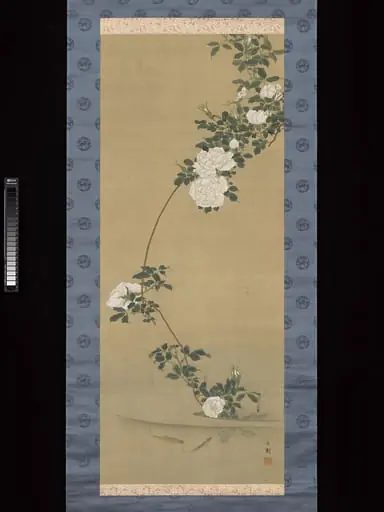
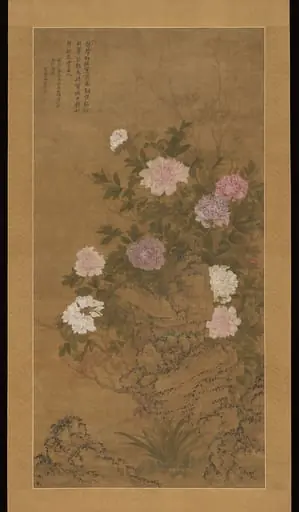
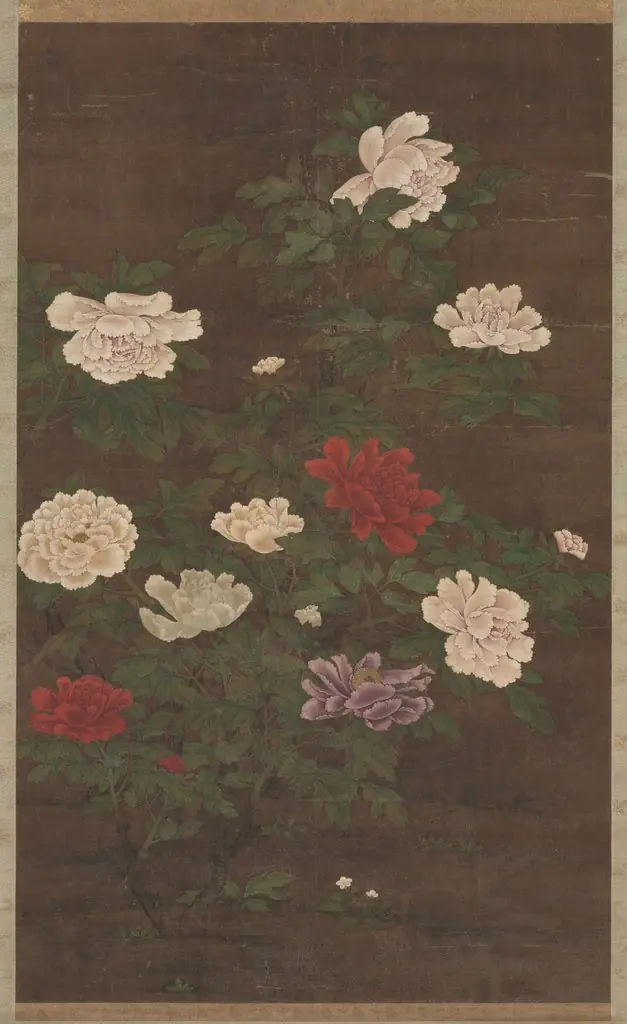
Created in 1745, Peonies is a narrow, vertical scroll painting by the Japanese artist Fukae Roshū. The work is part of the collection of the Metropolitan Museum of Art in New York. Its composition centers on a single branch laden with blossoms, rendered against a light, unadorned background and framed by a dark blue border edged with gold motifs.
Subject & Meaning
The scroll depicts a branch of peony flowers, predominantly in white and pink hues, with a striking red blossom positioned near the lower edge. In East Asian art, peonies often symbolize wealth, honor, and feminine beauty, suggesting the piece may have been intended as an auspicious decorative object or a study of seasonal flora.
Technique & Style
Roshū employed smooth, controlled brushwork to model the delicate petals, emphasizing subtle shifts of light across each bloom. The artist’s signature, rendered in red ink near the upper right, confirms authorship. The restrained palette and precise rendering reflect the refined aesthetic of mid‑18th‑century Japanese ink painting, while the gold‑lined border adds a decorative, ceremonial quality.
Own this work as a print
Artist & collection