Artwork
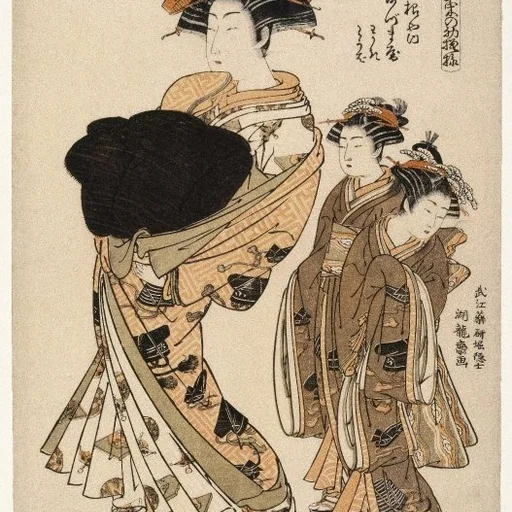
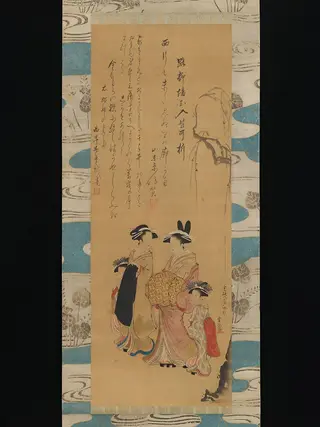
Courtesan and Two Attendants on New Year's Day
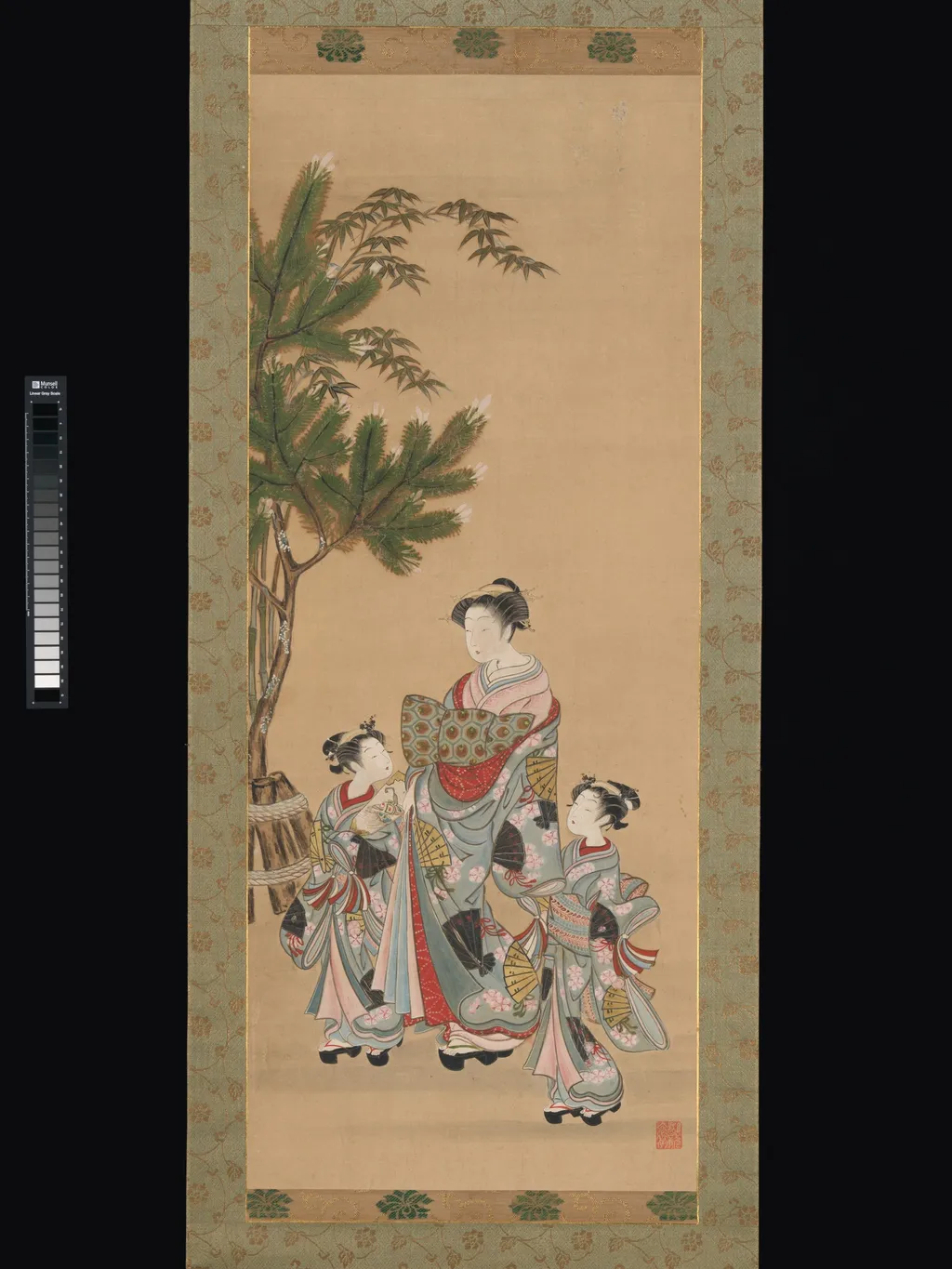
Courtesan and Two Attendants on New Year's Day is an unspecified painting by the Ukiyo-e artist Isoda Koryūsai. It is held in the collection of the Metropolitan Museum of Art.
About this work
History & Provenance
Furthermore, the sources consulted do not mention any documented exhibition history for this artwork beyond its inclusion in the museum's permanent holdings.
Created in 1784 by the Japanese artist Isoda Koryūsai, this painting depicts a courtesan accompanied by two attendants during New Year's celebrations. The work was produced in Japan during the late eighteenth century. It currently resides in the collection of the Metropolitan Museum of Art, where it is held as part of their permanent holdings.
No specific details regarding the original commission, early ownership history, or the chain of custody prior to its acquisition by the museum are provided in the available records.
The painting Courtesan and Two Attendants on New Year's Day is part of the collection of the Metropolitan Museum of Art in New York. The museum's records identify the work as being held in its galleries, but they do not provide an explicit accession or inventory number for the piece. Furthermore, the sources consulted do not mention any documented exhibition history for this artwork beyond its inclusion in the museum's permanent holdings.
Overview
Isoda Koryūsai's painting, "Courtesan and Two Attendants on New Year's Day," created in 1792, captures a scene featuring three female figures. This work is part of the collection at The Metropolitan Museum of Art. It portrays a central courtesan accompanied by two younger attendants, suggesting a ceremonial or significant occasion, possibly related to the New Year's theme indicated in its title.
Subject & Meaning
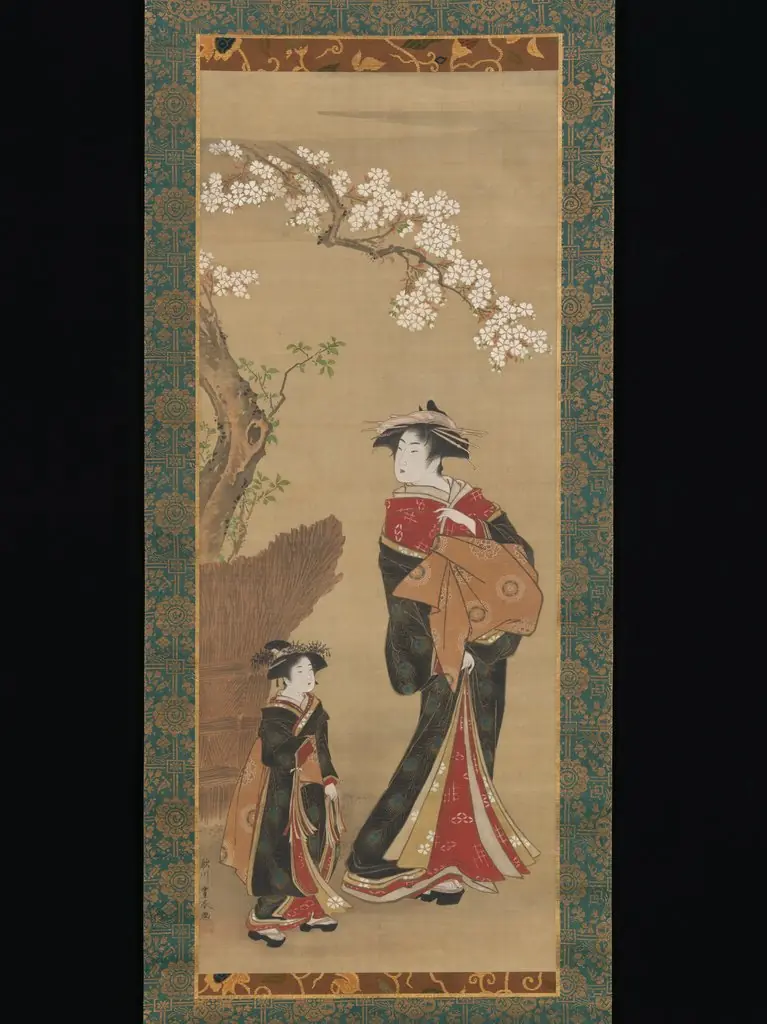
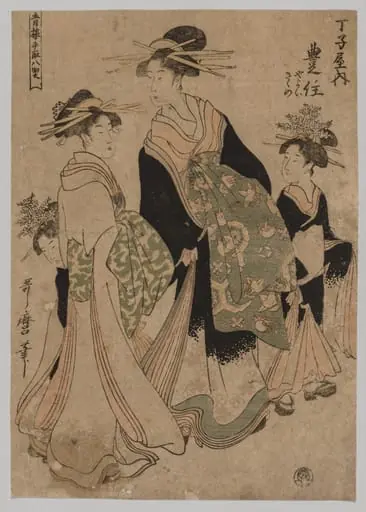
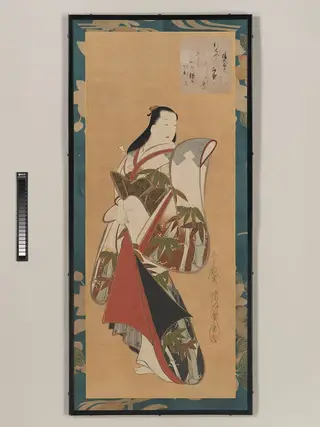
The painting presents a central courtesan, distinguished by her elaborate attire and a fan, flanked by two younger attendants. One attendant holds a scroll, while a bamboo plant rises behind the group, elements that often carry symbolic meaning in Japanese art. The title suggests a New Year's celebration, a time for formal greetings and renewal, aligning with the composed demeanor and detailed dress of the figures.
Technique & Style
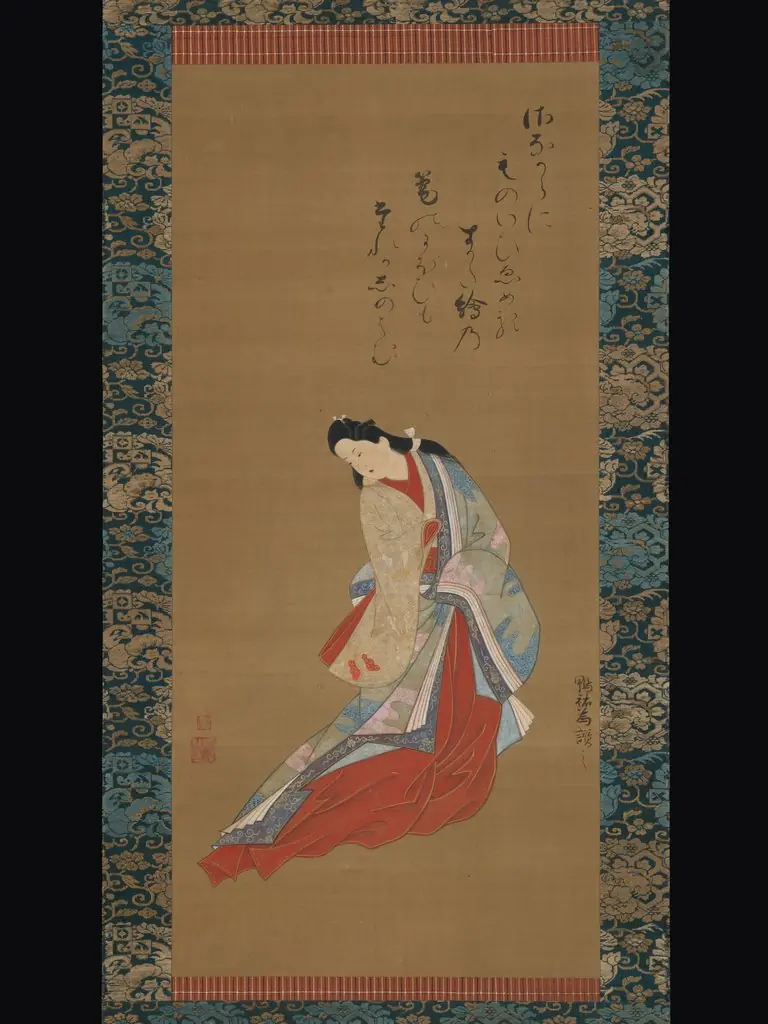
Koryūsai employs a vibrant palette, evident in the richly colored robes adorned with intricate patterns worn by the three women. Their expressions are rendered with a sense of calm and decorum, contributing to the painting's serene atmosphere. The composition places the figures against a simple, light background, accented by a decorative border, which allows the detailed textiles and the figures' quiet presence to command attention.
Own this work as a print
Artist & collection