Artwork
Oedipus at Colonus
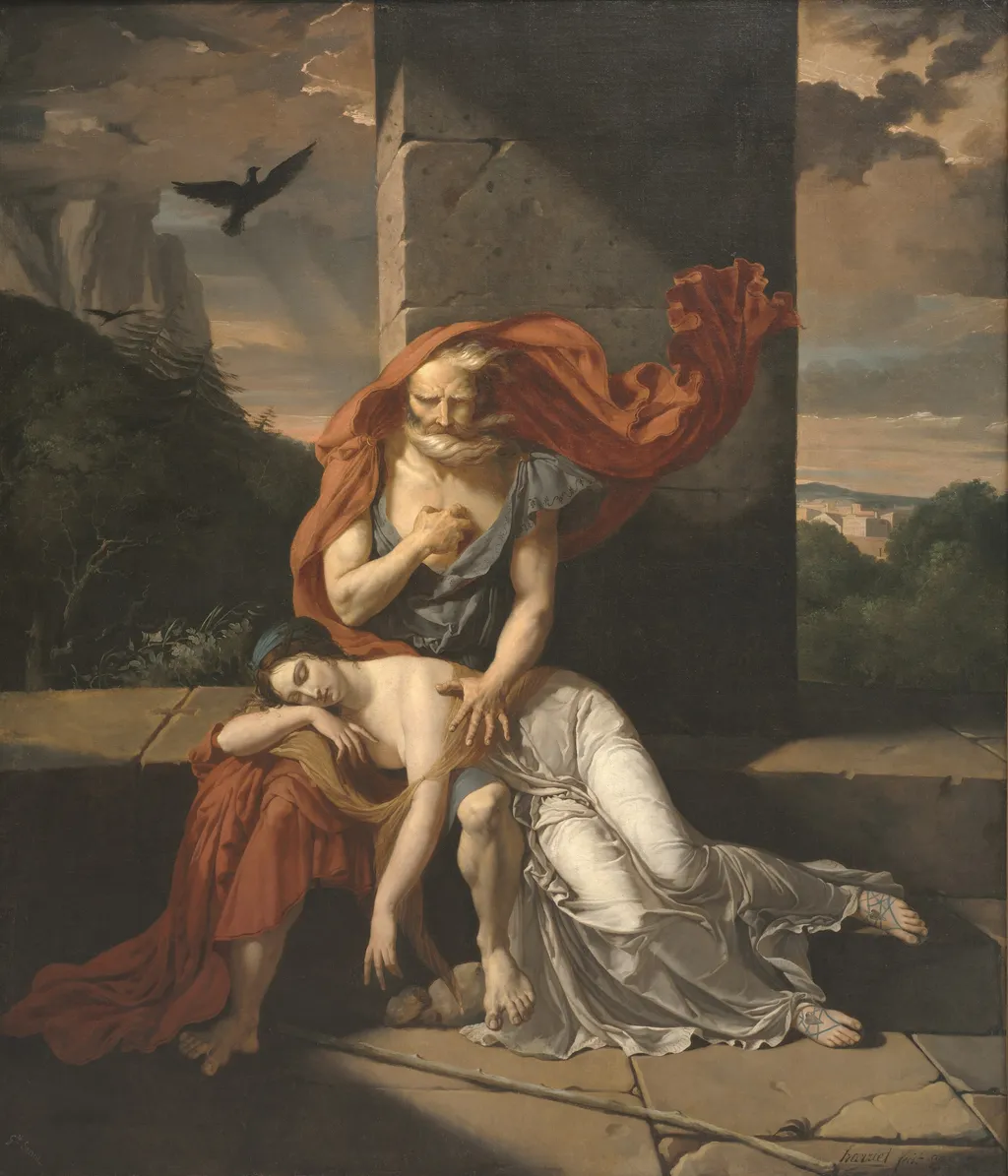
Oedipus at Colonus is an oil painting by the French Romanticist artist Fulchran-Jean Harriet. It dates from 1800 and is held in the collection of the Cleveland Museum of Art.
About this work
Subject & Meaning
Fulchran-Jean Harriet's 1800 oil painting depicts the mythological figures Oedipus and Antigone, illustrating a specific narrative moment from Sophocles' tragedy Oedipus at Colonus. The work visually represents the exiled, blind king accompanied by his devoted daughter, a pairing that symbolizes enduring familial loyalty amidst suffering and displacement. By focusing on these two characters, the composition emphasizes the human element of the myth, highlighting Antigone's role as her father's guide and protector during his final journey.
The depiction serves as a visual interpretation of the classical text, capturing the emotional weight of their bond rather than a broader landscape or crowd scene. Created in France during the late eighteenth century, the artwork engages with the era's continued interest in classical antiquity and moral virtue through historical subject matter.
Technique & Style
The work measures 157 by 134 centimeters, providing a substantial surface for Harriet's detailed composition.
Fulchran-Jean Harriet's Oedipus at Colonus (1800) is executed in oil paint on canvas, a medium and support typical of late 18th-century French neoclassical painting. The work measures 157 by 134 centimeters, providing a substantial surface for Harriet's detailed composition. Stylistically, the painting reflects neoclassical ideals, characterized by balanced composition, precise draftsmanship, and a restrained yet dramatic use of light and shadow.
The handling of paint appears smooth and controlled, with careful attention to anatomical accuracy and drapery folds, aligning with the academic standards of the period. The condition of the painting, housed at the Cleveland Museum of Art, is not explicitly detailed in available sources, though its preservation in a major institution suggests stable conservation.
History & Provenance
Fulchran-Jean Harriet created the oil painting Oedipus at Colonus in 1800 while working in France. The work, executed on canvas, depicts the mythological figures Oedipus and Antigone. Harriet, a French artist active between 1778 and 1805, completed this piece around the turn of the nineteenth century.
The painting eventually entered the collection of the Cleveland Museum of Art, where it is cataloged under the accession number 2002.3. No specific details regarding the original commission or intermediate ownership history prior to its museum acquisition are provided in the available records, though its creation date and location are established as 1800 in France.
Overview
Fulchran-Jean Harriet's oil painting, "Oedipus at Colonus," was completed in 1800. This work, which depicts a scene from the ancient Greek tragedy, is currently housed in the collection of The Cleveland Museum of Art. The artist utilized oil paint to render a somber and emotionally charged narrative, characteristic of the period's dramatic artistic trends.
Own this work as a print
Artist & collection

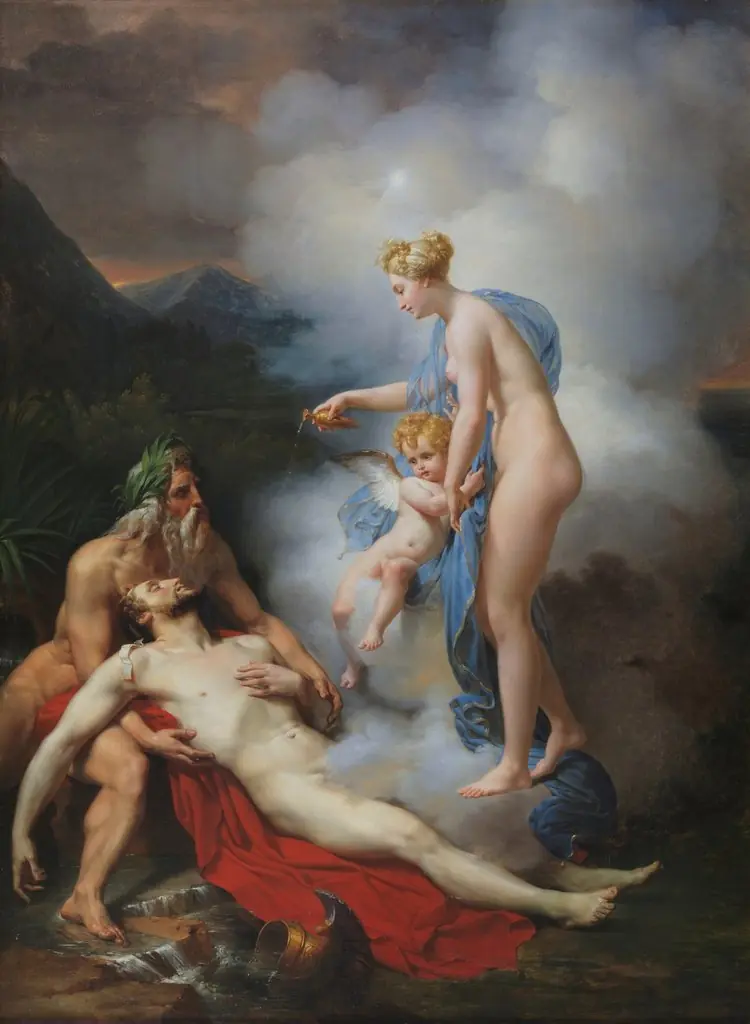 Aeneas Becomes a God
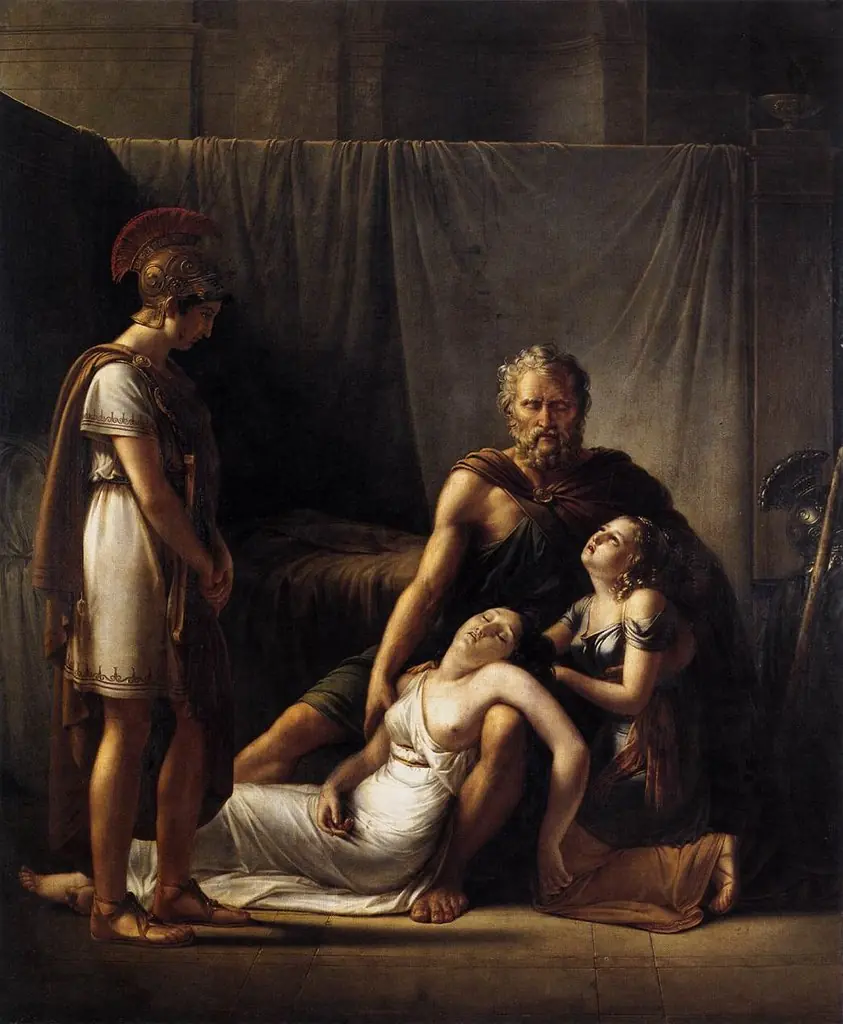 The Death of Belisarius' Wife
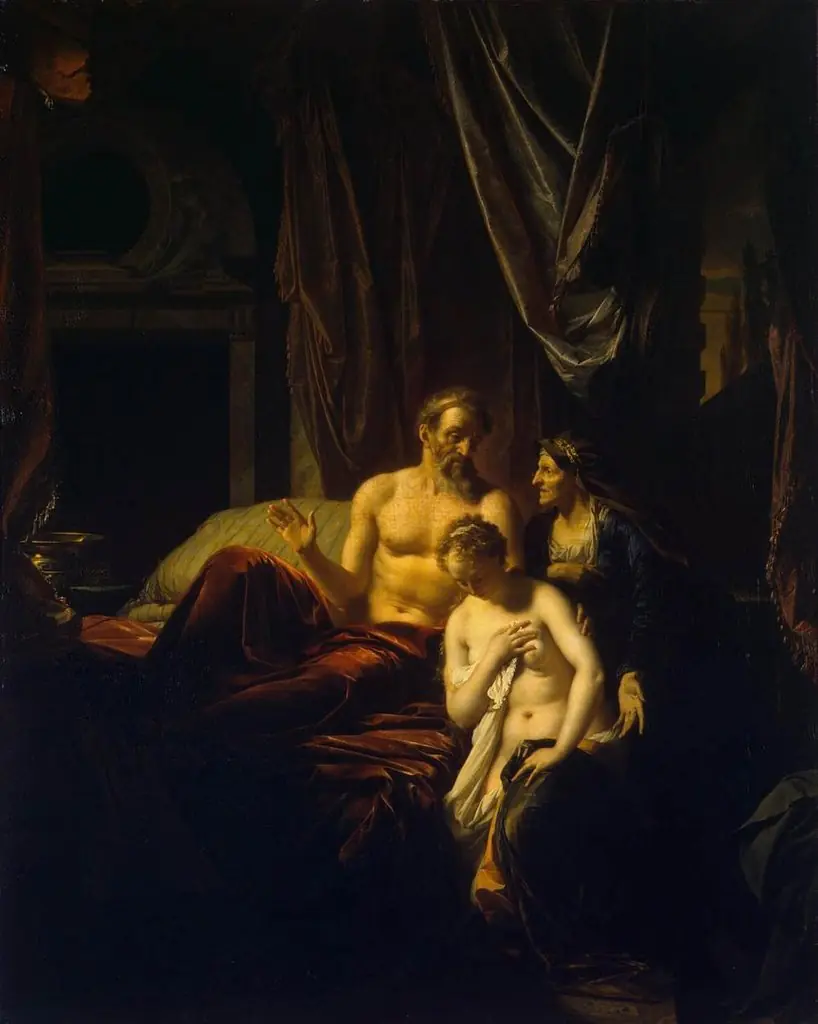 Sarah Bringing Hagar to Abraham
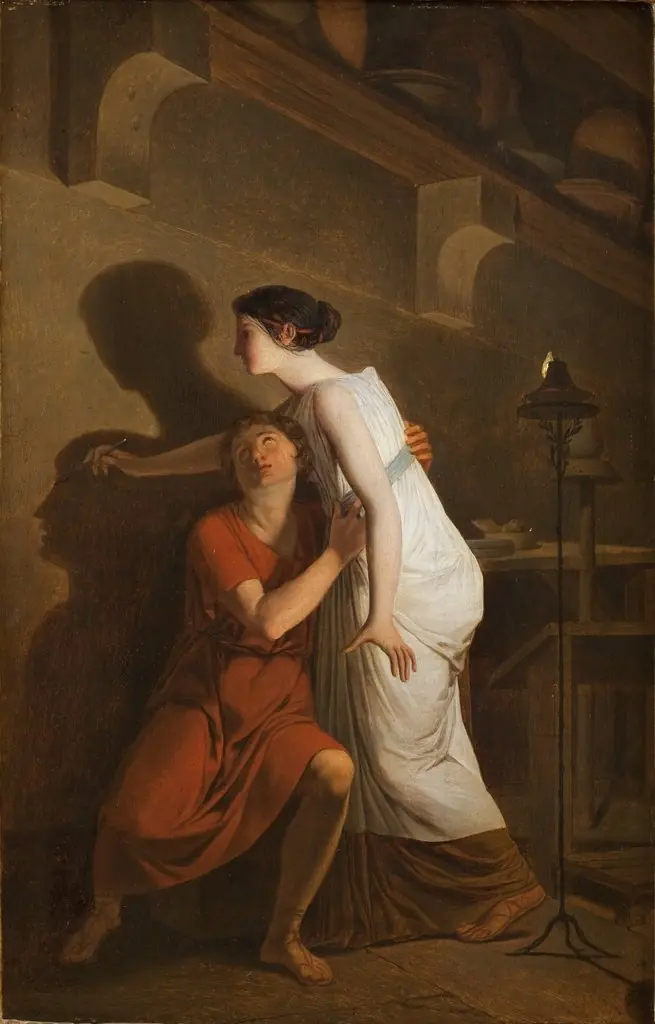 The invention of the art of drawing
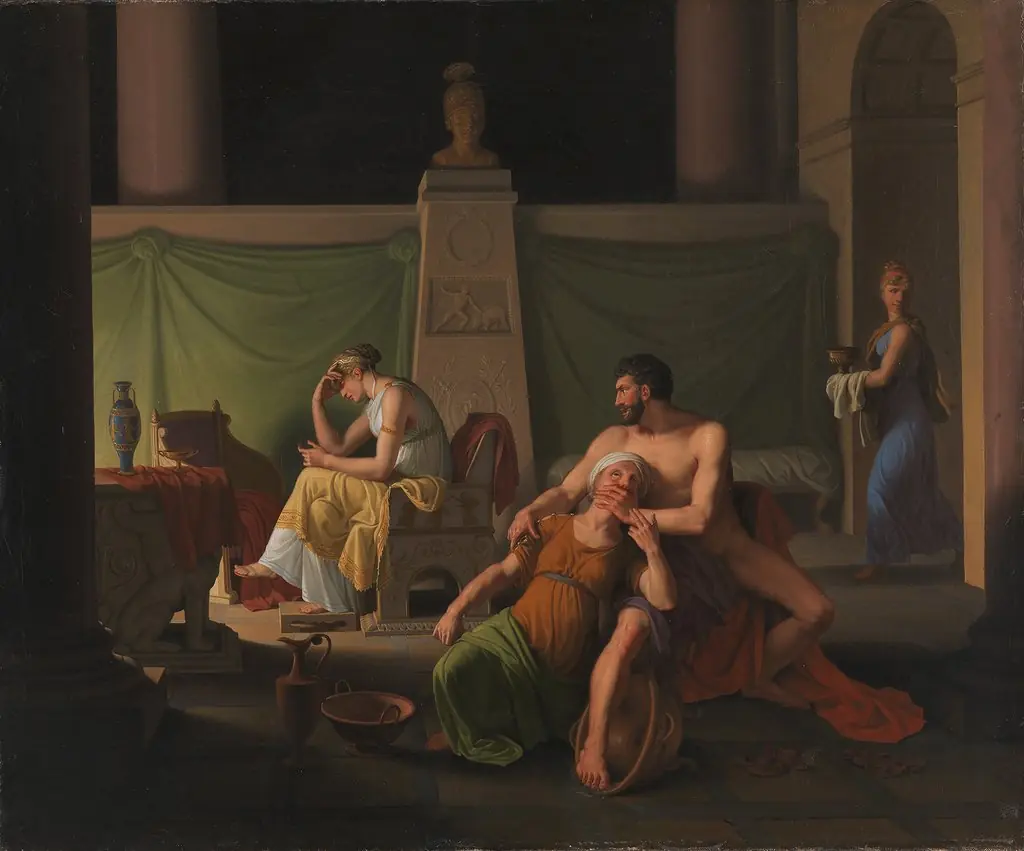 The Return of Ulysses. Scene from Homer´s Ulysses
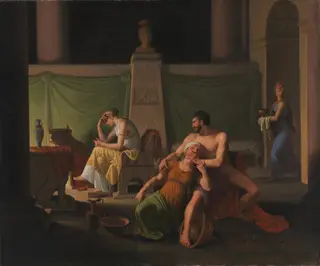 The Return of Ulysses. Scene from Homer´s Ulysses
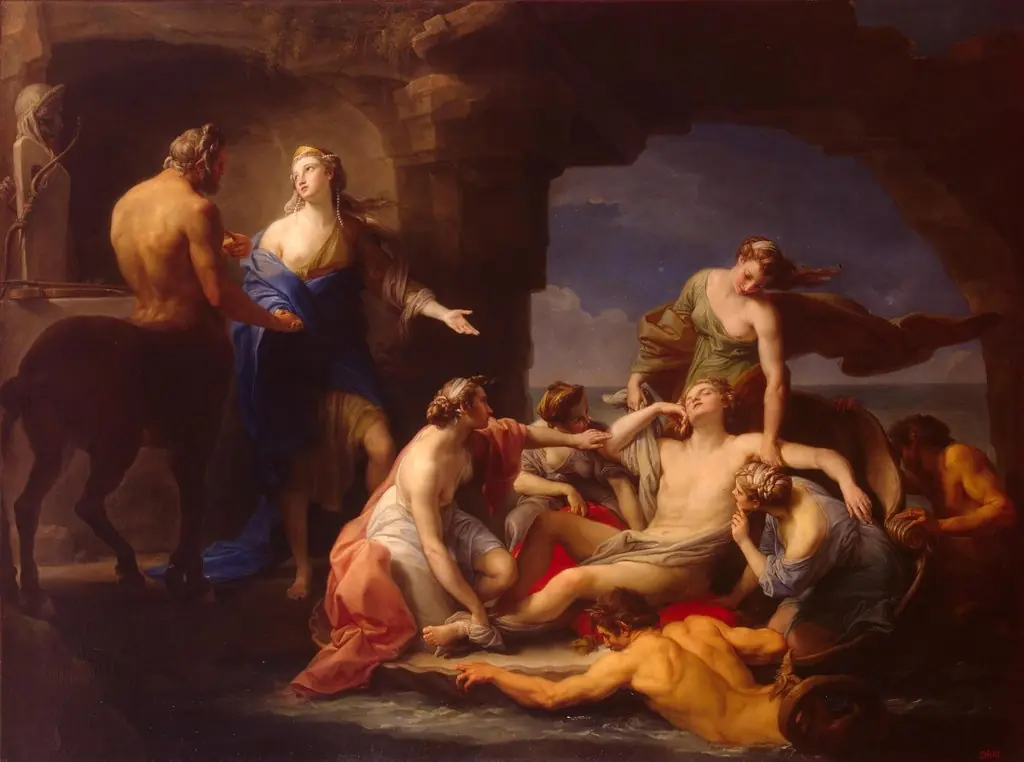 Thetis takes Achilles from the Centaur Chiron
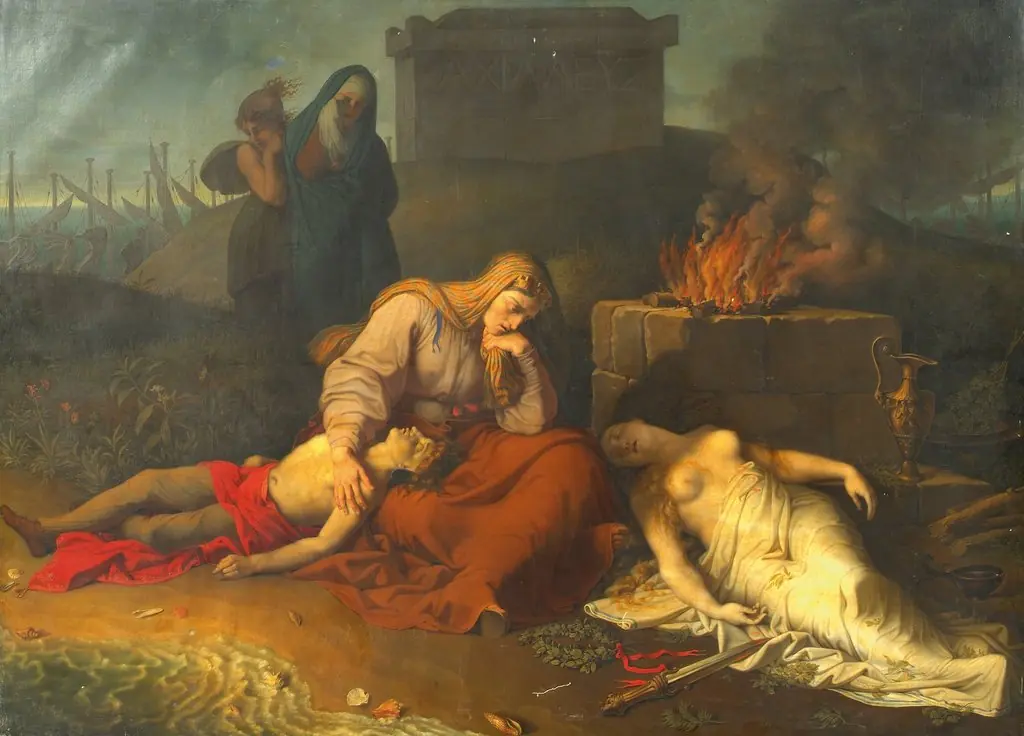 Hecabe mit den Leichnamen ihrer Kinder Polyxena und Polydoros am Grab des Achill
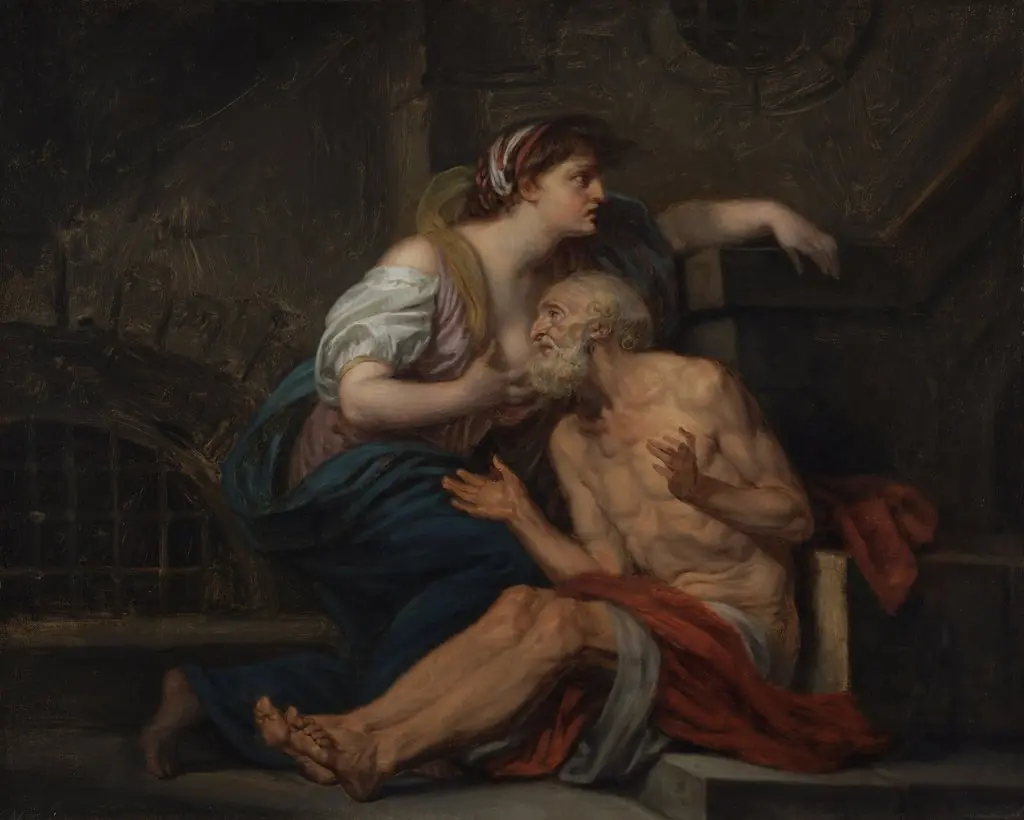 Cimon and Pero: "Roman Charity"
 Sócrates reprendiendo a Alcibíades en casa de una cortesana