Artwork
Hecabe mit den Leichnamen ihrer Kinder Polyxena und Polydoros am Grab des Achill
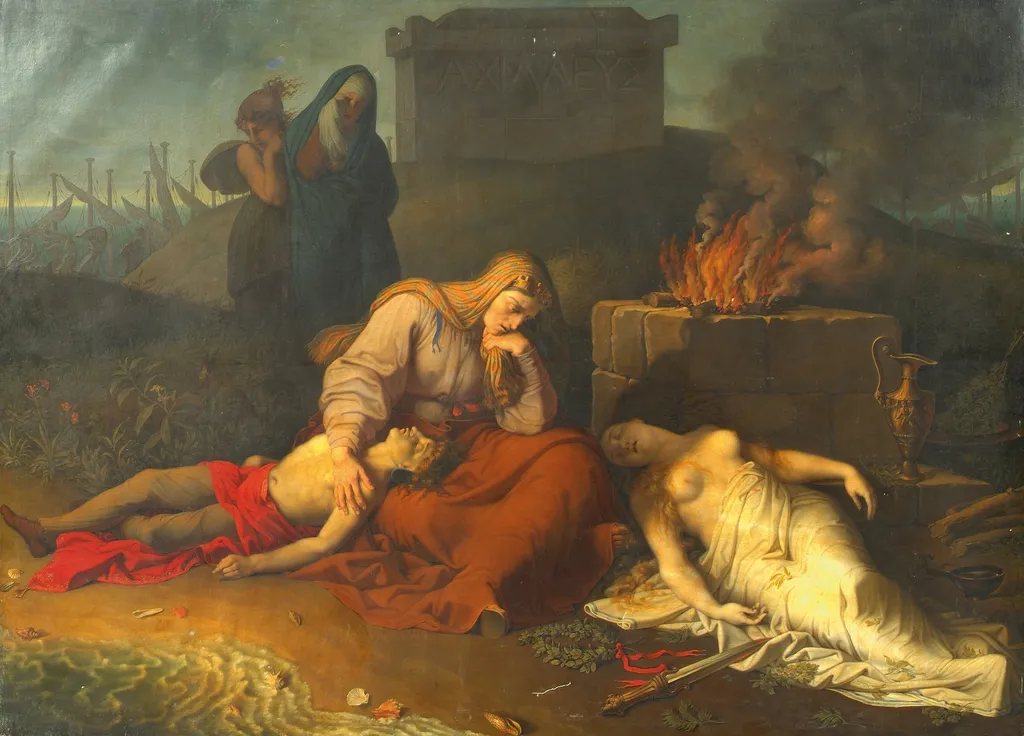
Hecabe mit den Leichnamen ihrer Kinder Polyxena und Polydoros am Grab des Achill is an oil painting by the Biedermeier artist Karl Russ. It dates from 1809 and is held in the collection of the Kunsthistorisches Museum.
About this work
Overview
Hecabe mit den Leichnamen ihrer Kinder Polyxena und Polydoros am Grab des Achill is an oil painting by Karl Russ, created in 1809.
Subject & Meaning
The painting depicts Hecabe mourning the bodies of her children, Polyxena and Polydoros, at Achilles' tomb. The somber scene conveys a sense of loss and grief, with Hecabe cradling Polydoros' head and Polyxena's lifeless body nearby.
Technique & Style
The artist's use of chiaroscuro creates a dramatic effect, with strong contrasts between light and dark adding to the emotional impact of the scene.
History & Provenance
The painting is held at the Kunsthistorisches Museum.
Own this work as a print
Artist & collection

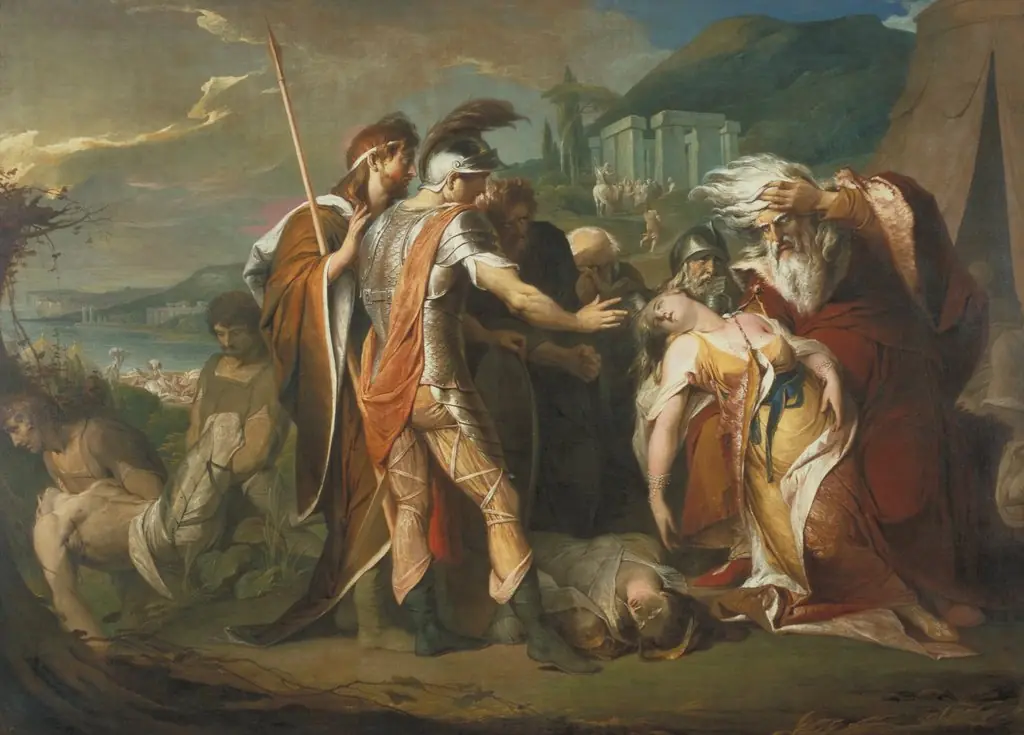 King Lear Weeping over the Dead Body of Cordelia
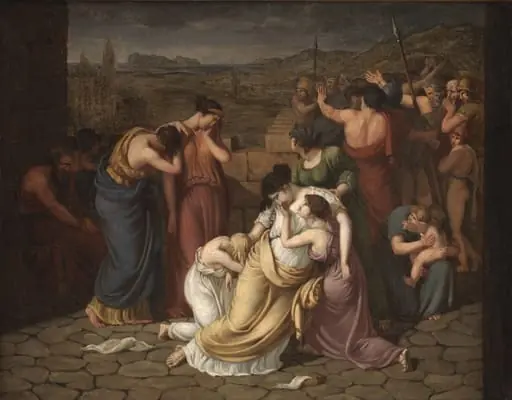 Andromache in Despair at the Sight of Hector's Body
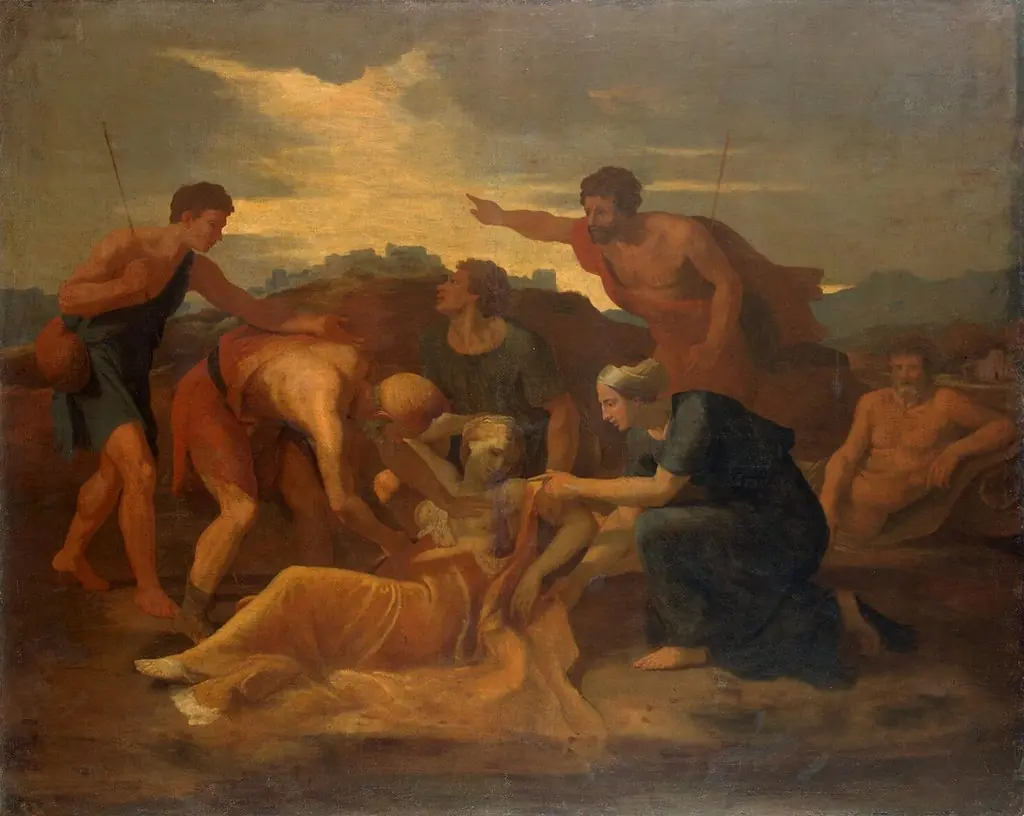 Queen Zenobia Found on the Banks of the Arax
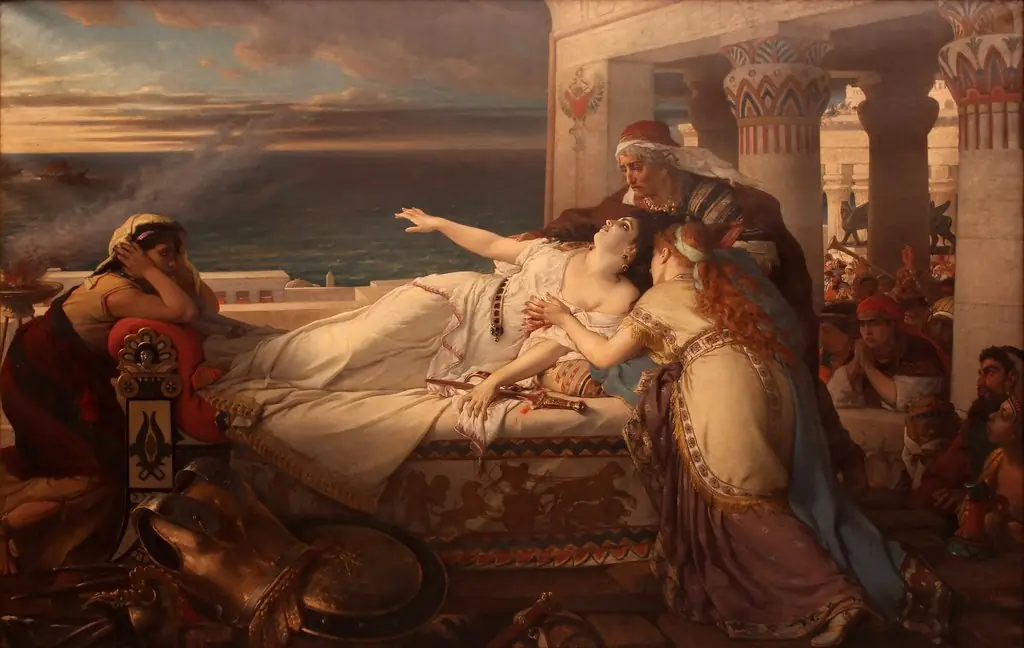 Death of Dido
 Antigone Gives Token Burial to the Body of Her Brother Polynices
 Cassandra in the Temple of Minerva
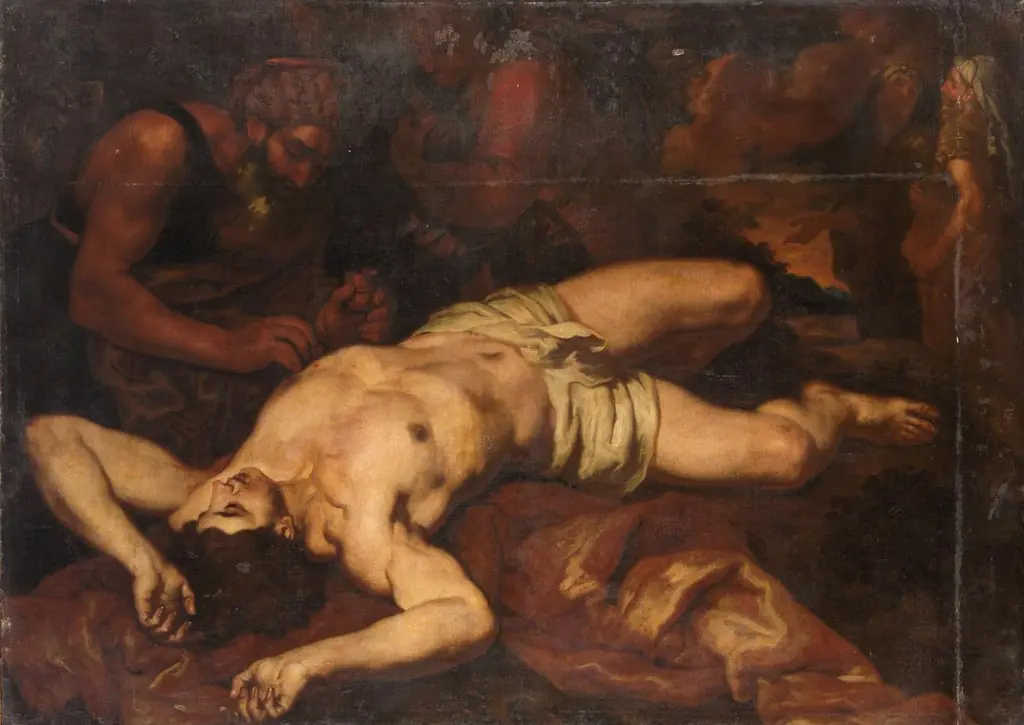 The Good Samaritan
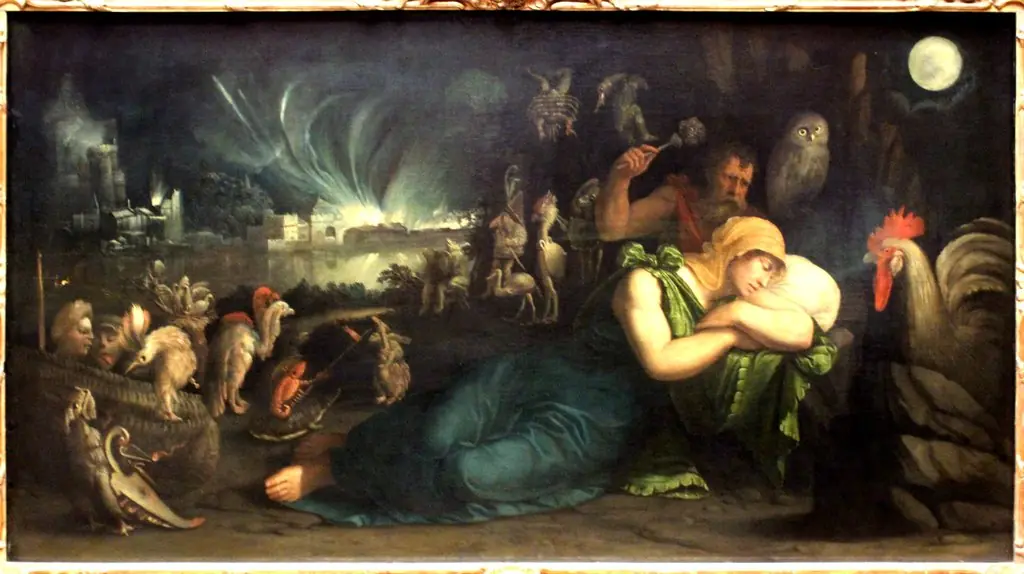 The Dream
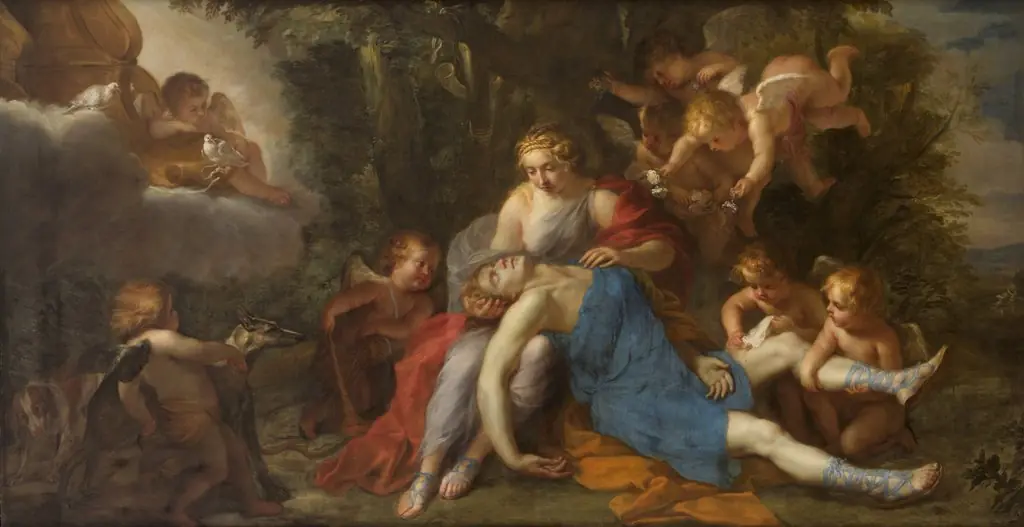 Venus beweint den toten Adonis
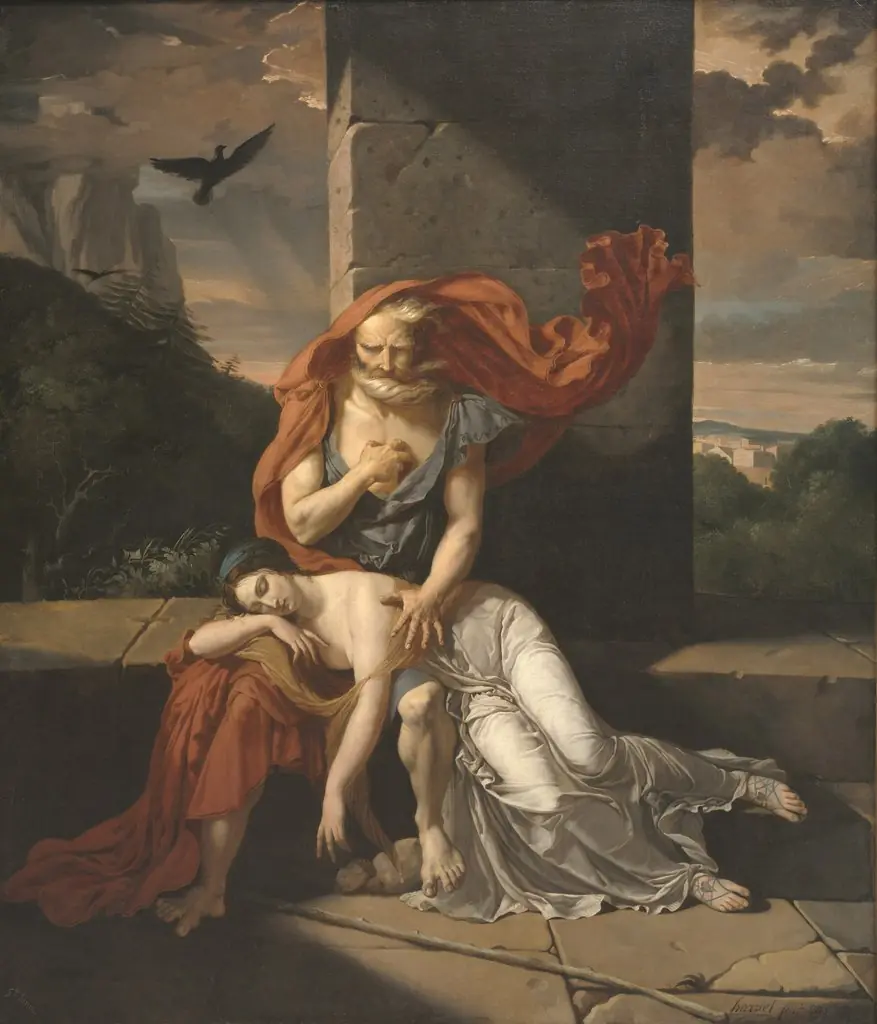 Oedipus at Colonus
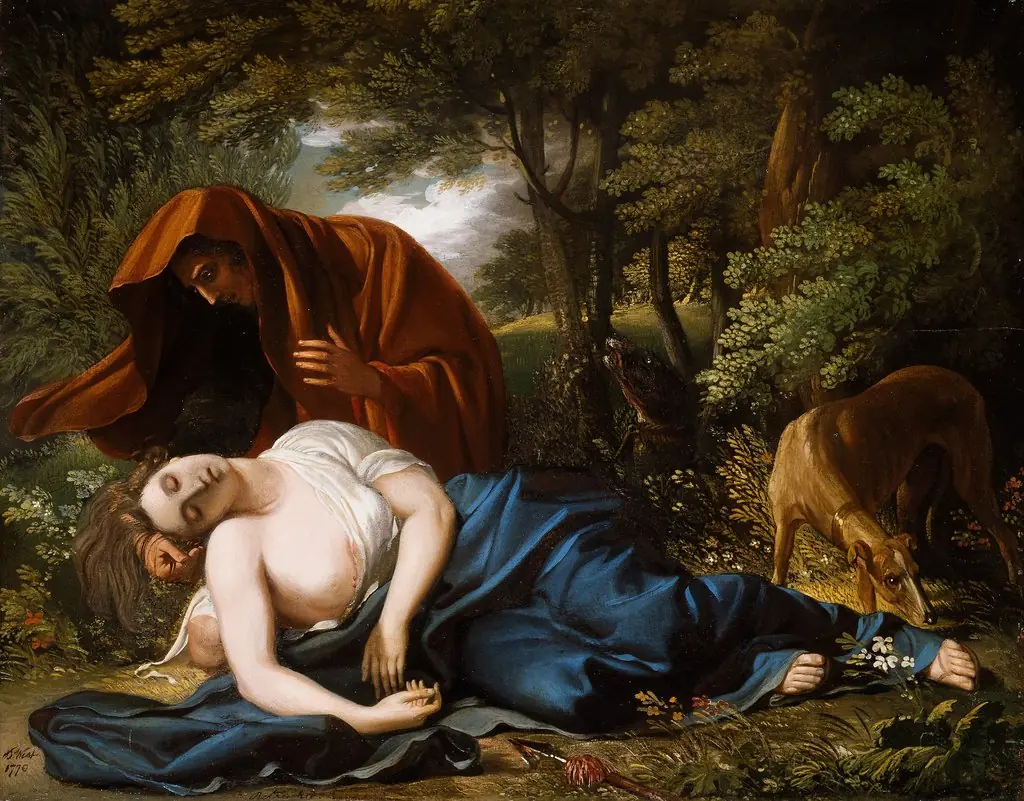 The Death of Procris
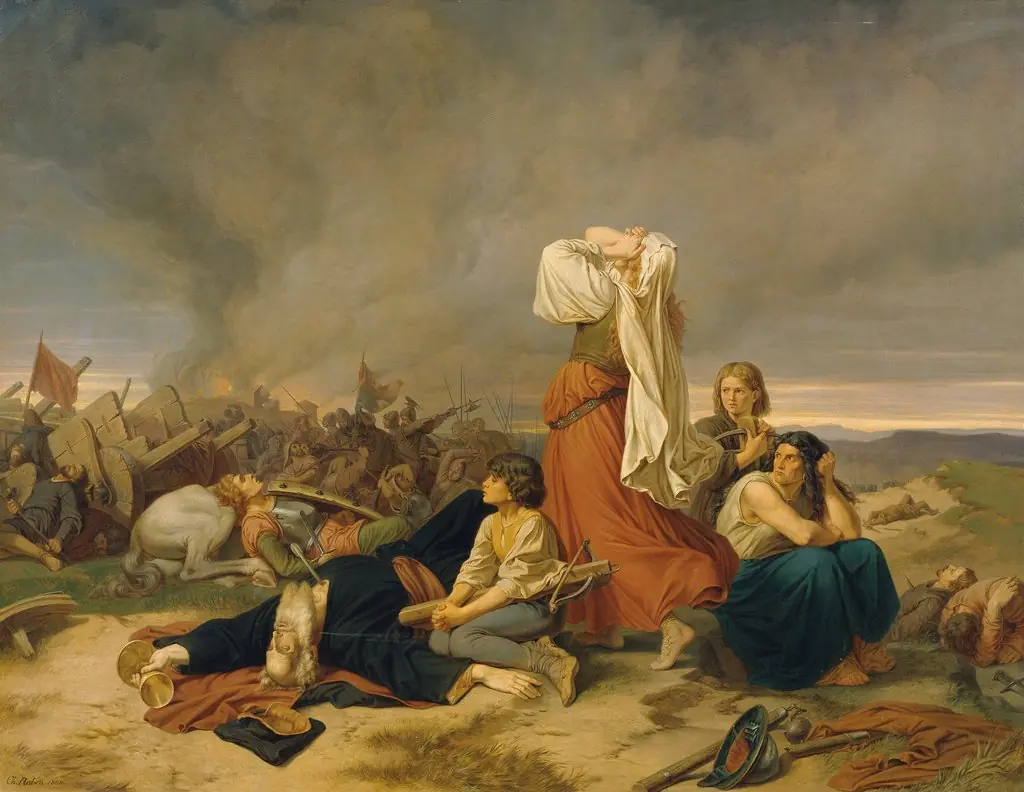 Die Schlacht bei Lipan 1434