Artwork
Costumed Dancers Performing in a Garden Tavern
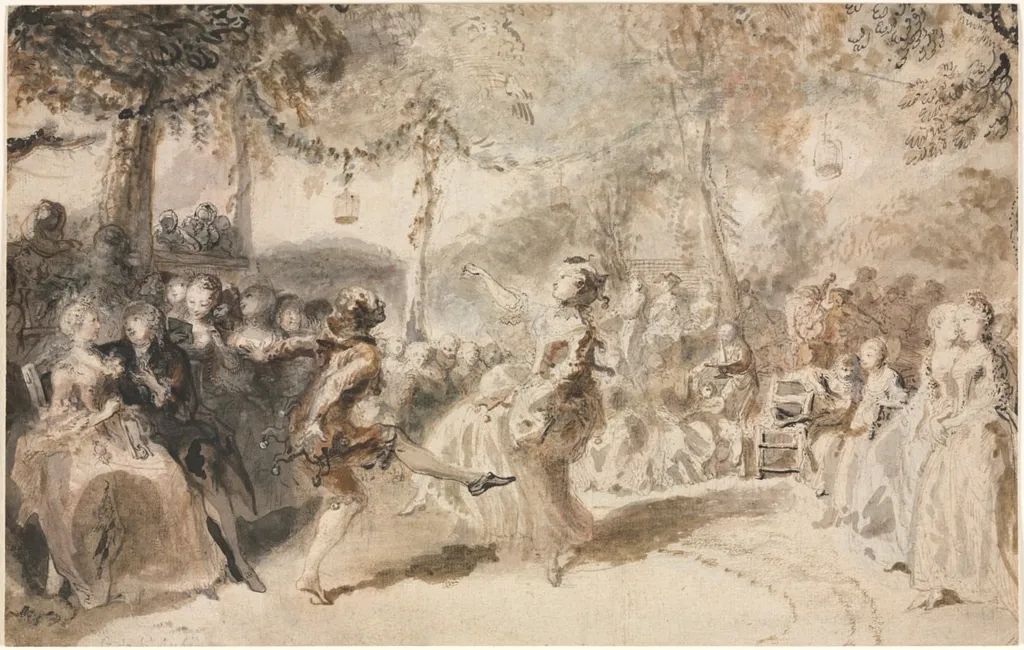
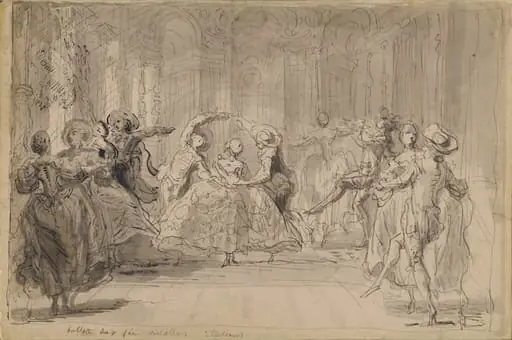
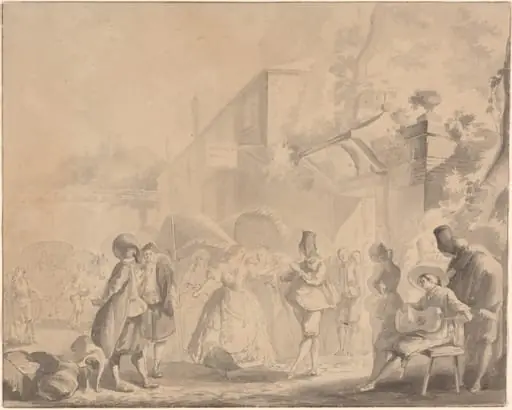
Costumed Dancers Performing in a Garden Tavern is a drawing by the Romanticist artist Gabriel de Saint-Aubin. It dates from 1756 and is held in the collection of the Cleveland Museum of Art.
- Accession no.
- 1966.124
- Credit line
- Purchase from the J. H. Wade Fund
About this work
The bells on their jackets and the quick, messy brushstrokes make it feel like a backstage joke, not a polished show.
You see two dancers in a garden at night, legs kicked high under strings of lanterns and flowers.
The moves look silly, no real 18th-century woman would lift her skirt that high. The bells on their jackets and the quick, messy brushstrokes make it feel like a backstage joke, not a polished show.
To see more of this playful, sketchy style, look up other works by Gabriel de Saint-Aubin (French, 1724–1780).
Overview
This drawing by Gabriel de Saint‑Aubin captures two costumed figures dancing in a garden setting illuminated by lanterns and floral garlands. The scene is rendered with swift, loose brushwork characteristic of the artist’s sketchy approach, emphasizing movement and atmosphere over fine detail.
Subject & Meaning
The performers are depicted with exaggerated, high‑raised legs, a gesture that suggests a comic or theatrical performance rather than a conventional 18th‑century social dance. Their attire, including jackets with uneven hems and jingling bells, evokes the costume of jesters, reinforcing a playful, perhaps satirical, tone.
Technique & Style
Saint‑Aubin employs rapid, sketch‑like strokes that convey immediacy and spontaneity. The irregular lines and loose handling of light, particularly the lanterns and flower swags, create a sense of motion and a fleeting glimpse of a lively outdoor entertainment.
Context
The setting resembles a guinguette, an informal tavern with a pleasure garden common in French social life of the period. Such venues often featured music, dancing, and informal gatherings, providing a backdrop for the artist’s informal, observational style.
Legacy
The drawing exemplifies Saint‑Aubin’s interest in documenting everyday entertainments with a humorous edge. Its informal execution and theatrical subject matter anticipate later genre sketches that blend observation with caricature, marking a distinctive contribution to French 18th‑century drawing.
Artist & collection