Artwork
Perseus and Andromeda
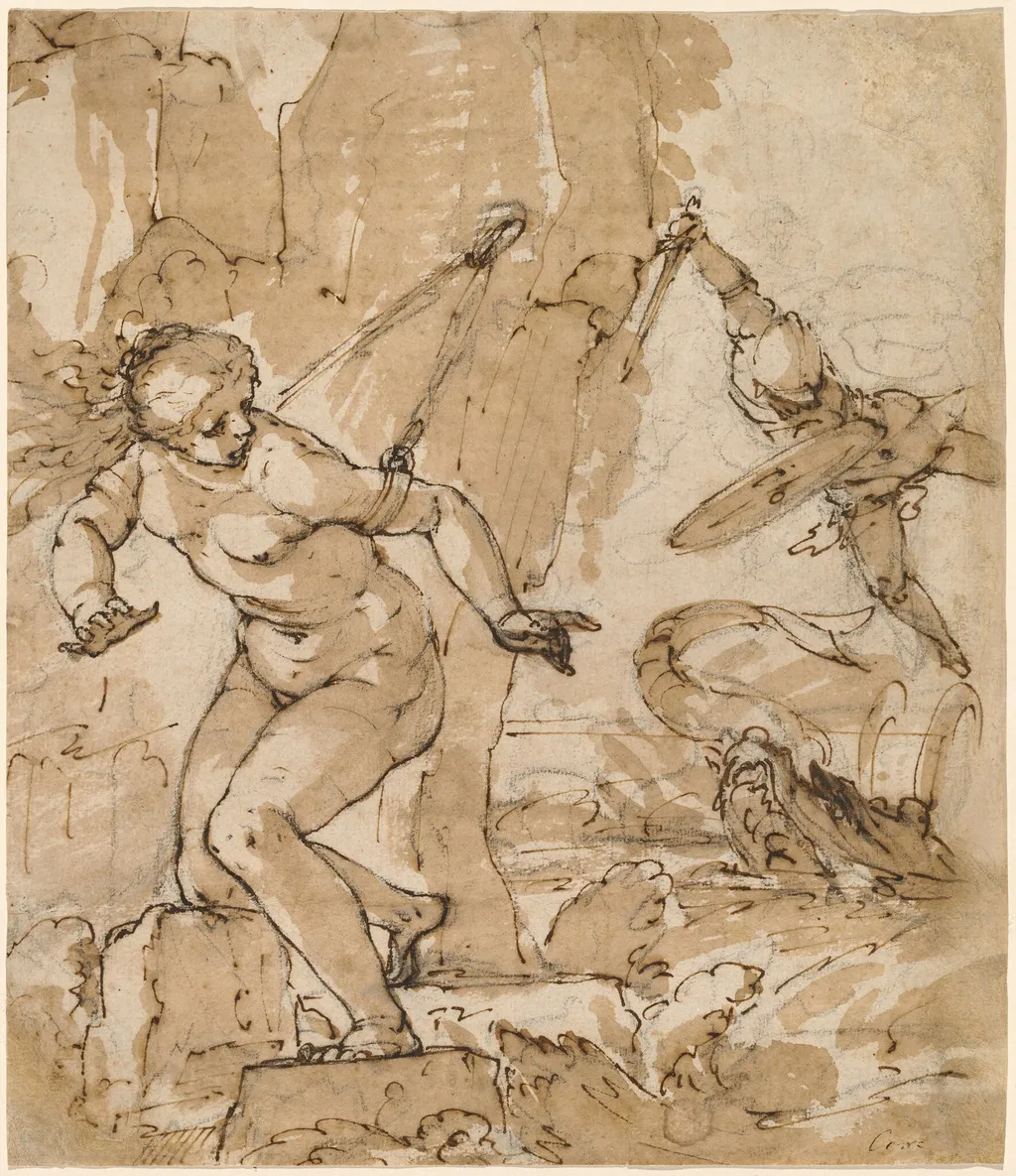
Perseus and Andromeda is a chalk drawing by the Renaissance artist Bartolommeo Gagliardo. It dates from 1590 and is held in the collection of the National Gallery of Art.
About this work
Overview
Executed in pen and brown ink with brown wash over black chalk on laid paper, the work demonstrates Gagliardo's handling of line and tone.
Created in 1590 by Bartolommeo Gagliardo, this drawing depicts the mythological rescue of Andromeda by Perseus. The composition centers on the nude Andromeda, who is chained to a rock and shown in profile, gazing downward and to the right. In the background, Perseus rides the winged horse Pegasus, poised to strike the sea monster threatening the princess.
Executed in pen and brown ink with brown wash over black chalk on laid paper, the work demonstrates Gagliardo's handling of line and tone. The underlying black chalk sketch remains partially visible, indicating the artist's preparatory process. This piece reflects the late Mannerist interest in complex poses and dramatic narrative scenes common in Genoese art of the period.
As a work from the early stage of Gagliardo's career, it illustrates his engagement with classical mythology and his technical proficiency in drawing, a medium he utilized extensively before his later focus on painting.
Subject & Meaning
The composition centers on Andromeda, rendered nude and bound to a rock, her profile turned downward and to the right, suggesting resignation or contemplation. In the distance, Perseus rides a winged horse, poised to confront the sea monster that threatens her, encapsulating the rescue motif of the legend.
Technique & Style
Gagliardo employs swift, expressive lines that convey motion, while the brown wash adds tonal depth to the figures and background. Residual black chalk marks remain visible, indicating an underlying drawing stage and revealing the artist’s process of building the image through layered media.
History & Provenance
Created at the close of the sixteenth century, the drawing reflects the period’s interest in mythological subjects rendered for private study or collection. It is attributed to Gagliardo, an Italian artist active during the Renaissance, though specific ownership records prior to its current location are not documented.
Own this work as a print
Artist & collection


- Romulus and Remus Found by Faustulus (recto)
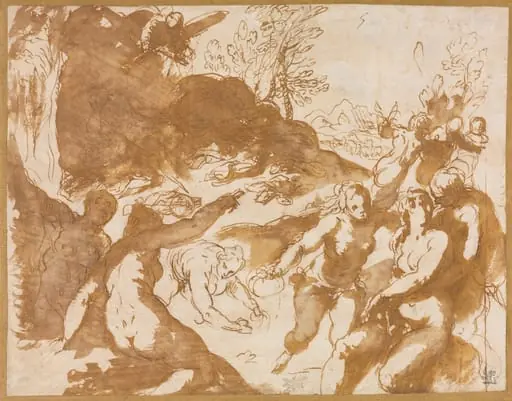 Apollo and the Muses Awakened by the Call of Fame
![The Fall of the Rebel Angels [recto], by Parmigianino](https://artifactworldgallery.com/img/parmigianino--the-fall-of-the-rebel-angels-recto--e9b082b33c001c66-w320.webp) The Fall of the Rebel Angels [recto]
The Fall of the Rebel Angels [recto]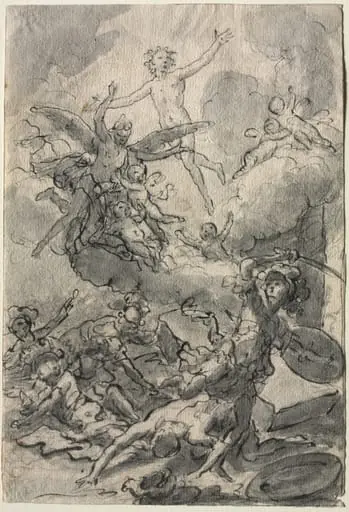 The Resurrection
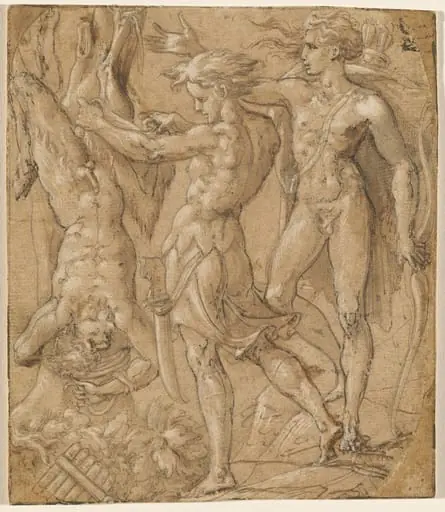 The Flaying of Marsyas
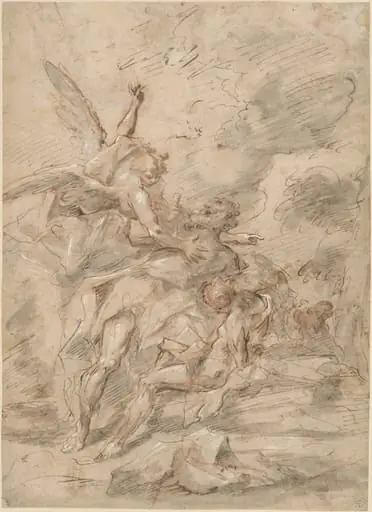 The Sacrifice of Isaac
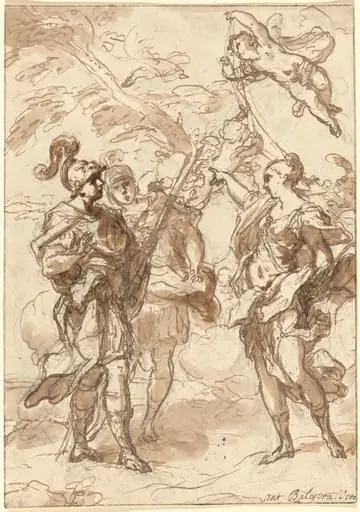 Venus as a Huntress Appearing to Aeneas and Achates
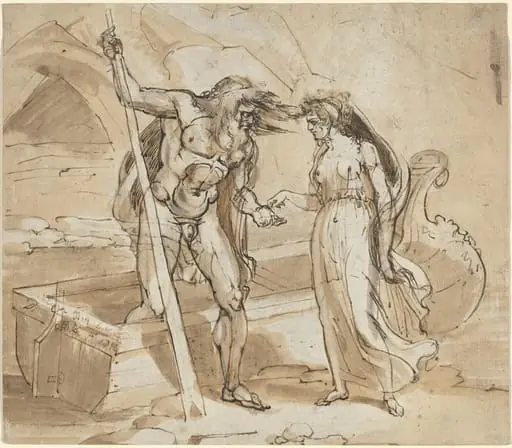 Psyche Giving Her Coin to Charon
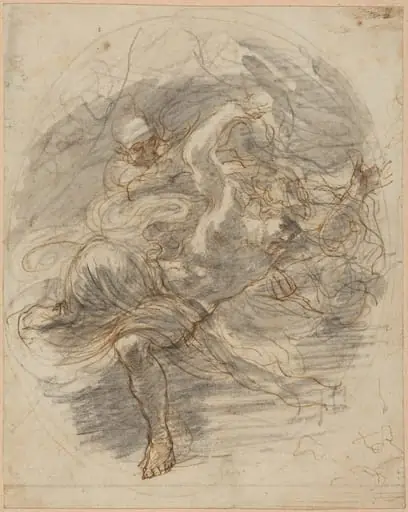 A Young Man Pursued by Death
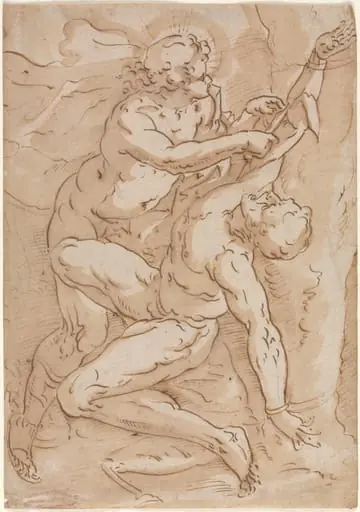 Apollo Flaying Marsyas (recto)
![Mythological Composition with Chronos and Harpies [recto], by Giovanni Battista Cipriani](https://artifactworldgallery.com/img/giovanni-battista-cipriani--mythological-composition-with-chronos-and-harpies-recto--23e4197a1ba0ae7e-w320.webp) Mythological Composition with Chronos and Harpies [recto]
Mythological Composition with Chronos and Harpies [recto]![Biblical Scene [verso], by Sebastiano Ricci](https://artifactworldgallery.com/img/sebastiano-ricci--biblical-scene-verso--d33f1e2abb3d29f7-w320.webp) Biblical Scene [verso]
Biblical Scene [verso]