Artwork
The Servant Begging for Mercy from His King
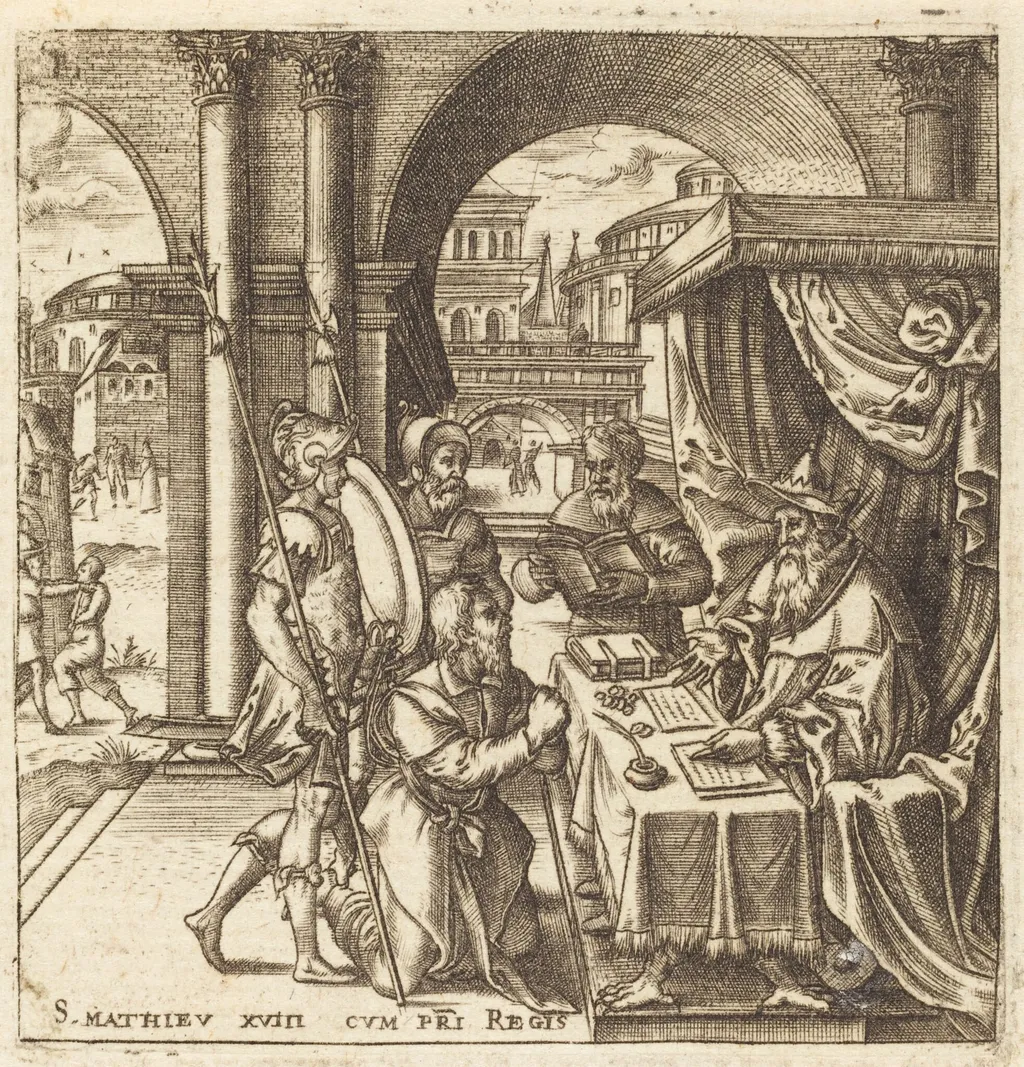
The Servant Begging for Mercy from His King is an ink print by the Renaissance artist Léonard Gaultier. It dates from 1578 and is held in the collection of the National Gallery of Art.
- Inscription
- Inscribed:in plate across bottom: S. MATHIEV XVIII CVM PRI REGIS
About this work
Overview
This piece belongs to a broader body of work that includes religious narratives and portraits, all marked by fine, controlled line work.
Created around 1578 by Léonard Gaultier, this engraving is one of many prints produced during his decades-long career in Paris. Executed entirely with a burin, the work exemplifies the precision and restraint typical of late 16th-century French printmaking. Gaultier often drew his own compositions, blending moral themes with technical discipline.
This piece belongs to a broader body of work that includes religious narratives and portraits, all marked by fine, controlled line work.
Subject & Meaning
The scene portrays a servant kneeling before a king, hands clasped in supplication, while the monarch stands rigidly, sword in hand. The moment captures a plea for clemency, evoking themes of power, repentance, and judgment. The king’s stillness contrasts with the servant’s vulnerability, reinforcing hierarchical tension. Background figures peering from windows suggest surveillance or moral witness, deepening the narrative’s gravity without overt symbolism.
Technique & Style
Gaultier rendered the scene using fine, incised lines typical of burin engraving, with no etching or wash. Shadows and texture emerge through dense cross-hatching and delicate parallel strokes, particularly in the folds of clothing and the stone architecture. The background city, with its domes and towers, is rendered in miniature detail, demonstrating the artist’s skill in compressing spatial depth into a flat plane. The composition remains formal, with figures arranged for clarity rather than naturalism.
History & Provenance
Gaultier worked in Paris from approximately 1561 until his death in 1641, producing hundreds of prints, many after his own designs. This engraving likely circulated among educated elites interested in moral allegory or religious themes. While its early ownership is undocumented, its survival in multiple institutional collections suggests it was valued for its craftsmanship and thematic resonance during the late Renaissance.
Context
In late 16th-century France, prints like this served both devotional and didactic purposes, reflecting a society preoccupied with order, authority, and divine justice. Gaultier’s style aligned with Northern European traditions, particularly the Wierix brothers and Crispyn van de Passe, whose detailed engravings influenced French artists. The emphasis on hierarchy and penitence resonated amid religious conflict and political instability following the Wars of Religion.
Legacy
Gaultier’s technical rigor helped sustain the prestige of engraving in France during a period when etching was gaining popularity. His ability to convey narrative clarity through line alone ensured his work remained in demand among collectors and printmakers. Though less celebrated today than his contemporaries, his prints, including this one, remain important examples of the intellectual and aesthetic values of French Renaissance print culture.
Own this work as a print
Artist & collection
Artist
Léonard Gaultier, or, as he sometimes signed himself, Galter, a French engraver, was born at Mainz about 1561, and died in Paris in 1641.

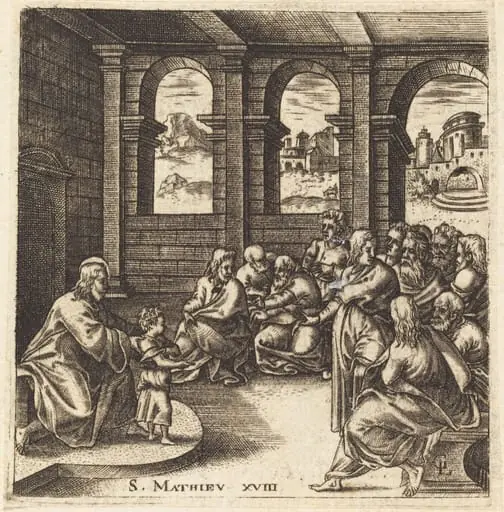 The Greatest in the Kingdom of Heaven will be Humble like a Child
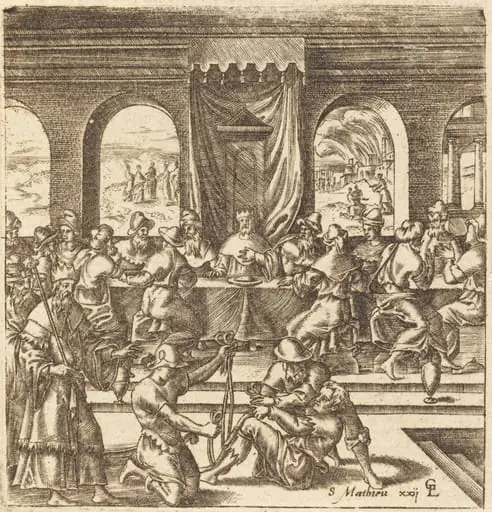 The Parable of the Marriage Feast
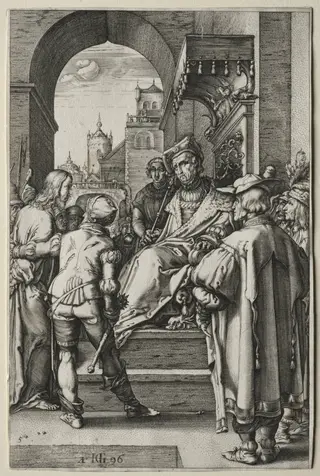 The Passion: Christ before Pilate
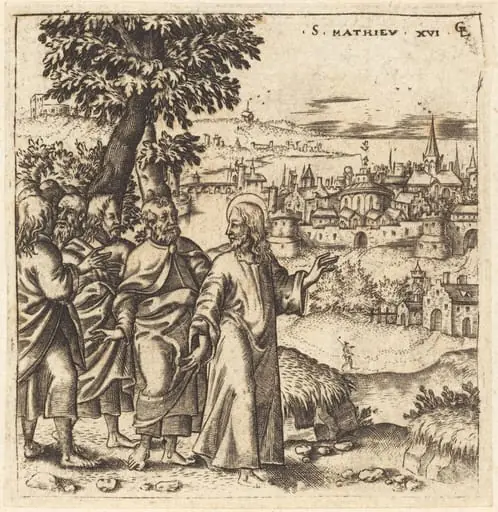 Christ Admonishes His Disciples
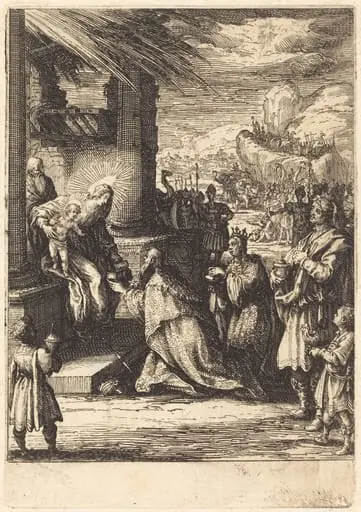 The Adoration of the Magi
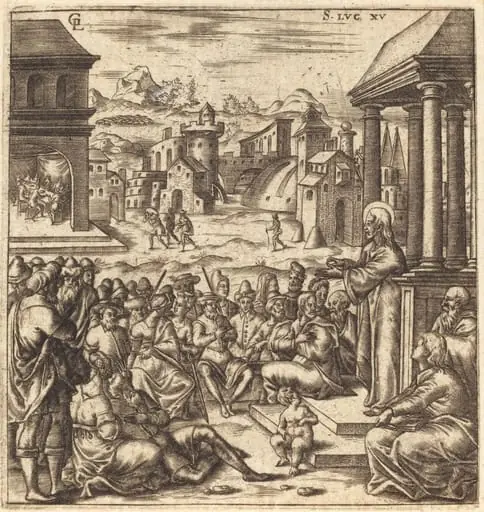 The Parables of the Lost Sheep, the Woman with Pieces of Silver and the Prodigal Son
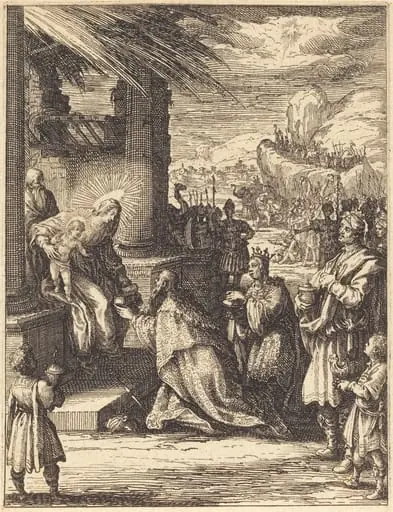 The Adoration of the Magi
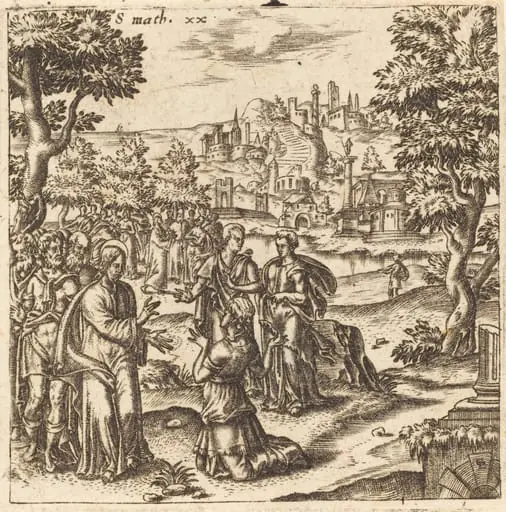 The Children of Zébédée
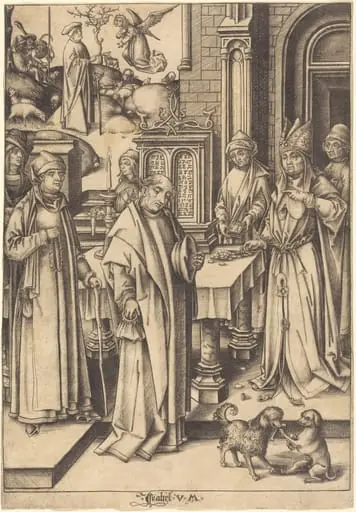 Joachim's Sacrifice
- Christ Heals the Paralyzed Man