Artwork
Still Life with Flowers and Snacks
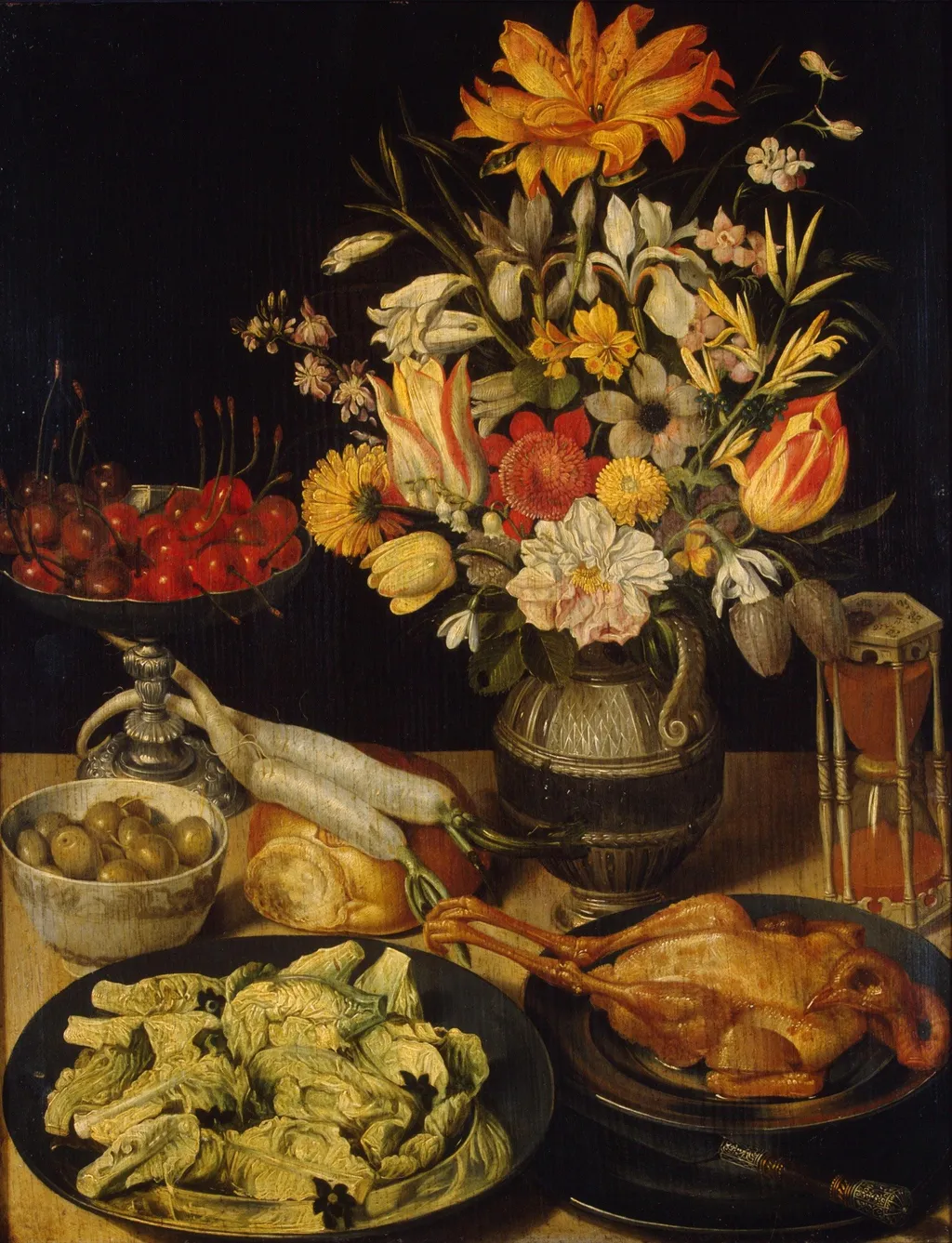
Still Life with Flowers and Snacks is an oil painting by the Dutch Golden Age artist Georg Flegel. It dates from 1630 and is held in the collection of the Hermitage Museum.
About this work
Subject & Meaning
A vase holds a flowering plant, while the surrounding surface carries a roast chicken alongside olives, radishes, and cabbage.
Georg Flegel's 1630 panel Still Life with Flowers and Snacks presents a composite arrangement characteristic of early German still life, pairing a floral display with a spread of prepared food. A vase holds a flowering plant, while the surrounding surface carries a roast chicken alongside olives, radishes, and cabbage. The juxtaposition of cut blooms with a cooked bird and raw vegetables reflects the genre's traditional pairing of the transient and the everyday, inviting readings of abundance and the pleasures of the table.
By uniting floral and culinary motifs within a single composition, Flegel linked two established strands of still-life imagery, the bouquet piece and the breakfast or banquet piece, into one cabinet-scale picture intended for close, contemplative viewing.
Technique & Style
Executed in 1630, this still life by Georg Flegel is an oil painting created on a wooden panel support. The work measures 52.5 cm in height and 41 cm in width. Stylistically, the composition features a dense arrangement of natural and culinary elements, including a vase with flowering plants alongside specific food items such as roast chicken, olives, radishes, and cabbage.
The artist's handling of the oil medium allows for the detailed rendering of these varied textures, characteristic of the German still life genre of the period.
History & Provenance
Still Life with Flowers and Snacks was created by the German still-life painter Georg Flegel in 1630. The work is executed in oil paint on panel and depicts a vase with flowering plants alongside roast chicken, olives, radishes, and cabbage, consistent with Flegel's established practice of combining floral arrangements with foodstuffs in a single composition.
The painting is held in the collection of the Hermitage Museum, where it remains located. No information regarding a specific commission, prior ownership, or chain of custody prior to its acquisition by the Hermitage is documented in the available sources.
The painting is held in the collection of the State Hermitage Museum, St Petersburg.
It is inventoried as Ж-576 in the Hermitage’s holdings.
The work appeared in the exhibition “Masterpieces of Western European Painting from the Hermitage” held at the Hermitage Rooms, Somerset House, London, in 2000–2001.
Overview
Georg Flegel's Still Life with Flowers and Snacks, painted in oil in 1630, exemplifies the detailed still-life tradition of the early 17th century. This German artist, a pioneer in the genre, meticulously arranged a variety of everyday items, including vibrant flowers and an assortment of foods, on a table. The painting is part of the collection at the State Hermitage Museum, showcasing Flegel's characteristic precision and focus on domestic scenes.
Context
Active in Frankfurt during the early 17th century, Georg Flegel is recognized for his foundational role in German still-life painting. His work, including this piece, aligns with the broader artistic trends of the Dutch Golden Age, which saw a surge in the popularity of still-life as a genre. Flegel distinguished himself through his focus on common objects and foodstuffs, elevating the depiction of the everyday into a subject worthy of detailed artistic exploration.
Own this work as a print
Artist & collection
Artist
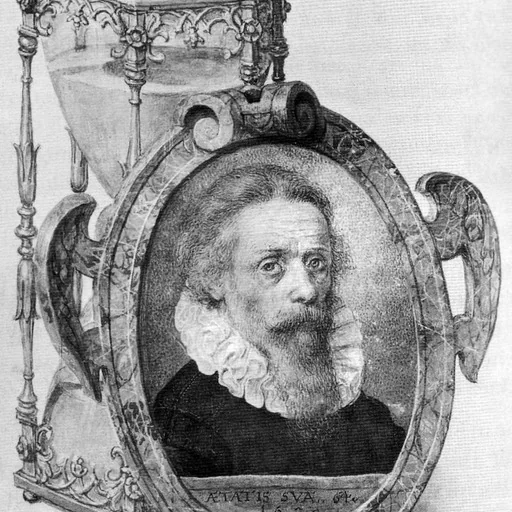
Georg Flegel (c. 1566 – 23 March 1638) was a German painter, best known for his still-life works. Born in Olomouc, he later worked in Frankfurt, where he became a leading figure in early German still-life painting.

- Still life with fruit, wine glass and vase of flowers
 Dessertstilleben mit Blumenstrauß
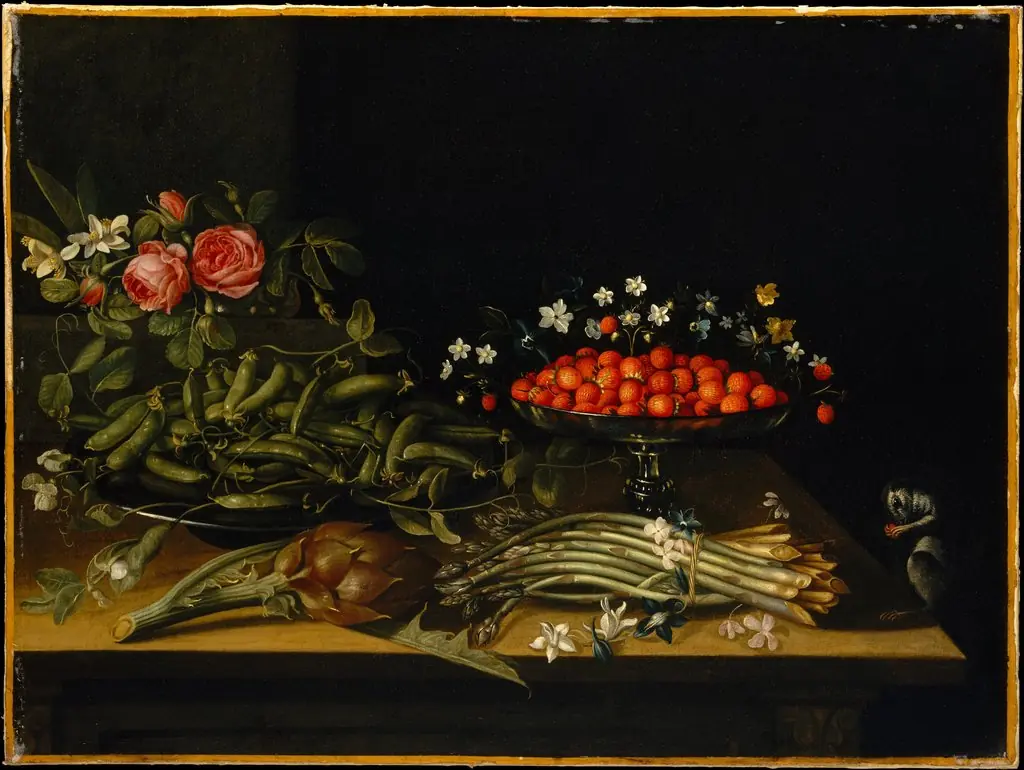 Still Life with Strawberries
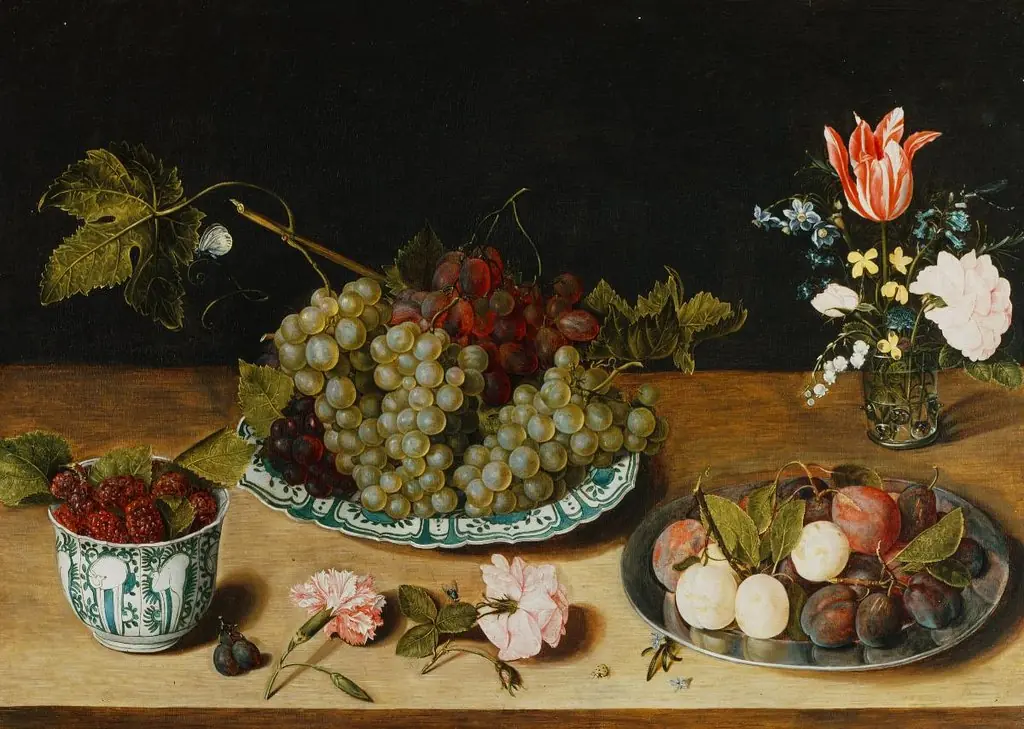 Stillleben mit Früchten und Blumensträusslein
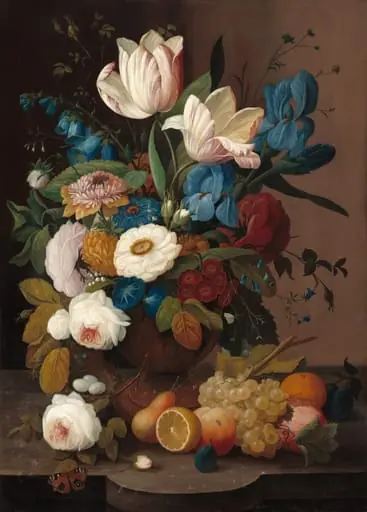 Still Life, Flowers, and Fruit
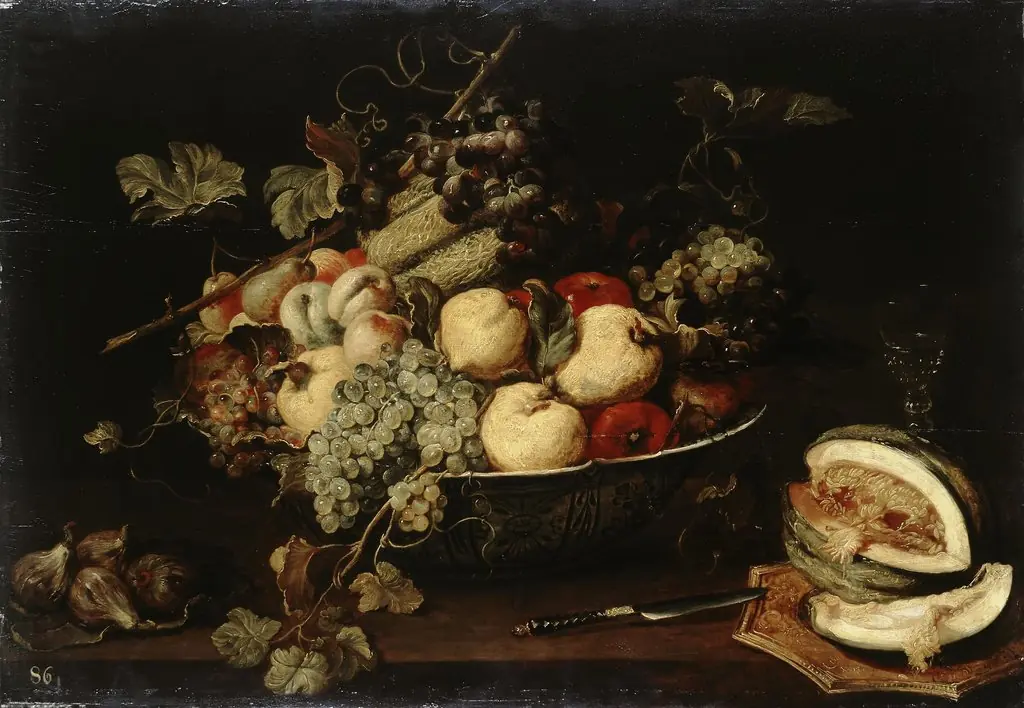 Fruit in a Bowl and a Sliced Melon
 Still Life
 Still Life
 Stille life
 Still life with – fruit, mussels and a bird
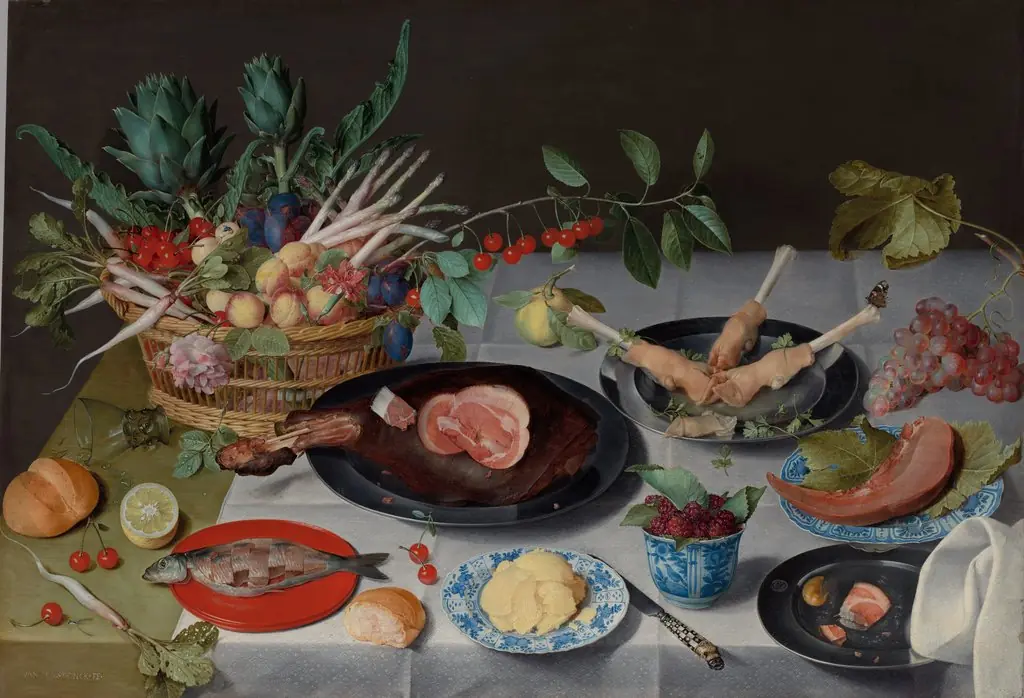 Still Life with Meat, Fish, Vegetables, and Fruit
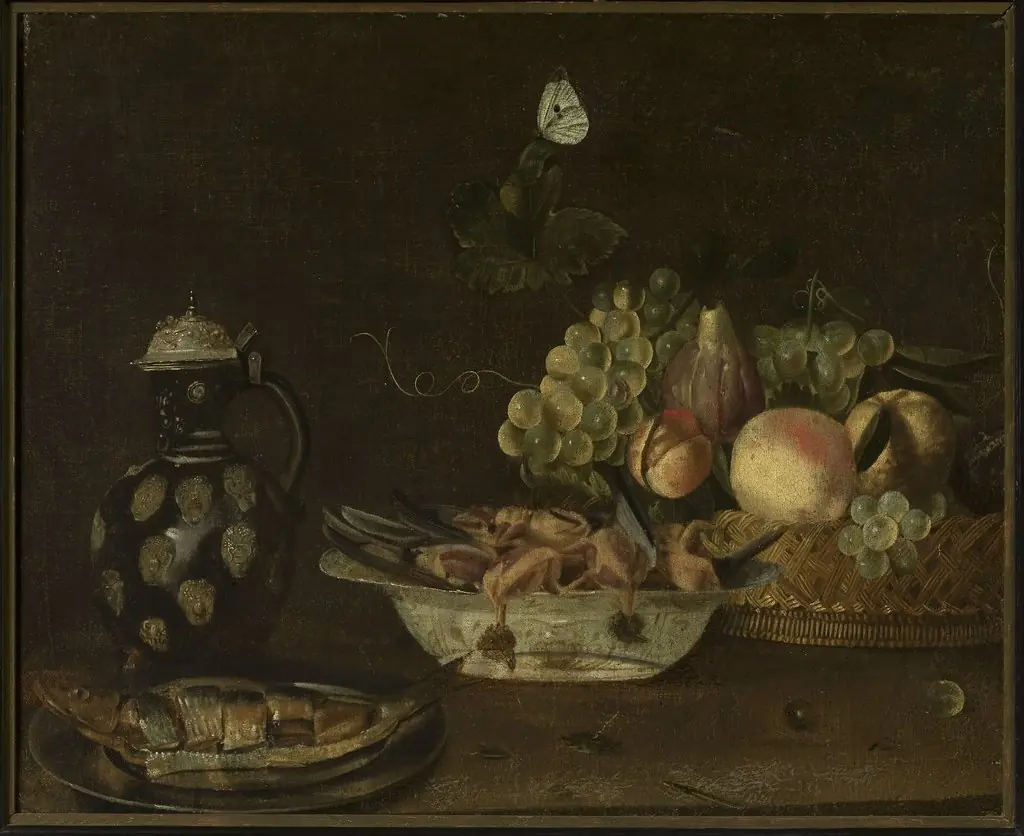 Still life with a herring
 Mrs. Noah Smith and Her Children
 The Contest for the Bouquet: The Family of Robert Gordon in Their New York Dining-Room
 Portrait of Marianne Dorothy Harland (1759–1785), Later Mrs. William Dalrymple
 View on the Catskill—Early Autumn
 The Daughters of Catulle Mendès
 The Interior of an Atelier of a Woman Painter
 Annunciation
 Flowers in a Basket and a Vase