Artwork
Stille life
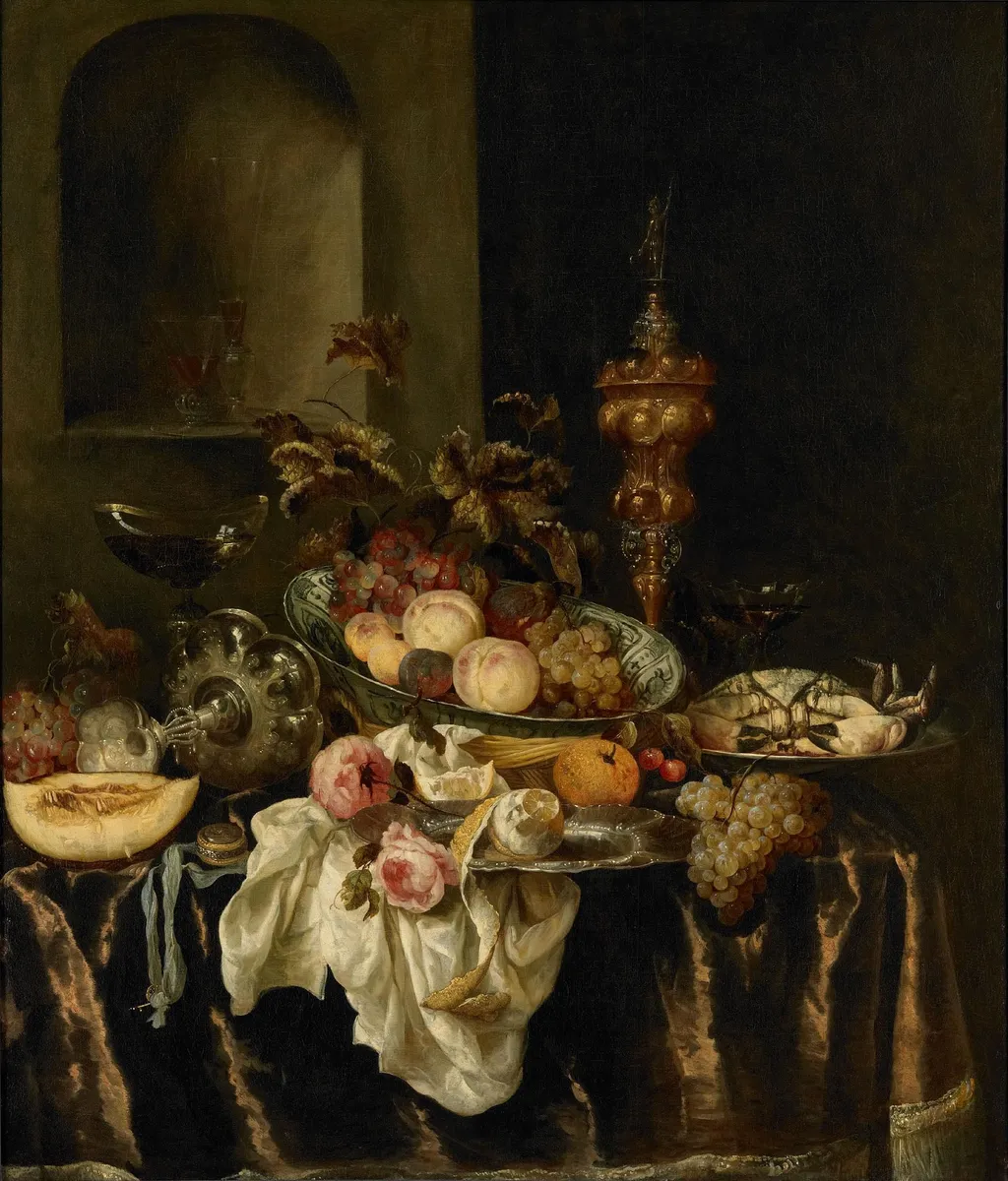
Stille life is an oil painting by the Dutch Golden Age artist Abraham van Beijeren. It dates from 1665 and is held in the collection of the Rijksmuseum.
About this work
Technique & Style
The handling is characteristic of Dutch still-life painting of the period, with precise brushwork used to render textures and surfaces.
The work is an oil painting on canvas measuring 126 cm in height and 106 cm in width, executed in 1665.
The handling is characteristic of Dutch still-life painting of the period, with precise brushwork used to render textures and surfaces. Reflective metal and glass vessels are depicted with careful attention to light and shadow, while the floral elements are rendered with delicate, layered strokes to suggest volume and freshness. The composition balances opulent objects against a dark background, emphasizing contrast and depth through subtle tonal gradations.
History & Provenance
The still life painting was created in 1665 by the Dutch artist Abraham van Beijeren. Executed in oil on canvas, the work originated in the Northern Low Countries during the mid-17th century. The composition features floral subjects and measures 126 cm in height by 106 cm in width.
Today, the artwork is held in the collection of the Rijksmuseum, where it remains part of the institution's permanent holdings.
Legacy
The painting's enduring reputation stems from its masterful rendering of light and texture within the Dutch Golden Age still-life tradition. Its composition, featuring a lavish arrangement of flowers in a glass vase, influenced later artists' approaches to floral subjects and genre painting, particularly within the Northern European decorative arts sphere. The work's presence in the Rijksmuseum's collection has cemented its status as a benchmark for Dutch still-life painting, frequently cited in scholarly analyses of 17th-century Dutch art markets and artistic lineage.
Overview
Created in 1665, this oil painting by Abraham van Beijeren belongs to the Dutch Baroque tradition of still‑life composition. Executed on canvas, the work presents a tabletop arrangement that includes fruit, flowers, dishes and a white cloth, rendered with meticulous attention to surface texture and light.
Subject & Meaning
The composition centers on a bowl overflowing with grapes and peaches, surrounded by scattered blossoms and a few ceramic vessels. The careful placement of these everyday objects reflects the period’s interest in the transience of material abundance and the visual pleasure of richly rendered natural forms.
Context
Although van Beijeren began his career producing marine scenes, by the mid‑17th century he turned to still‑life subjects, often assembling luxurious items such as exotic fruit, fine glassware, and occasionally fish. This work exemplifies his mature phase, where the focus shifts to intimate, meticulously detailed arrangements.
Own this work as a print
Artist & collection
Artist
Abraham Hendriksz van Beijeren or Abraham van Beyeren (c. 1620, The Hague – March 1690, Overschie (Rotterdam)) was a Dutch Baroque painter of still lifes. Little recognized in his day and initially active as a marine…

 Still Life with Lobster and Fruit
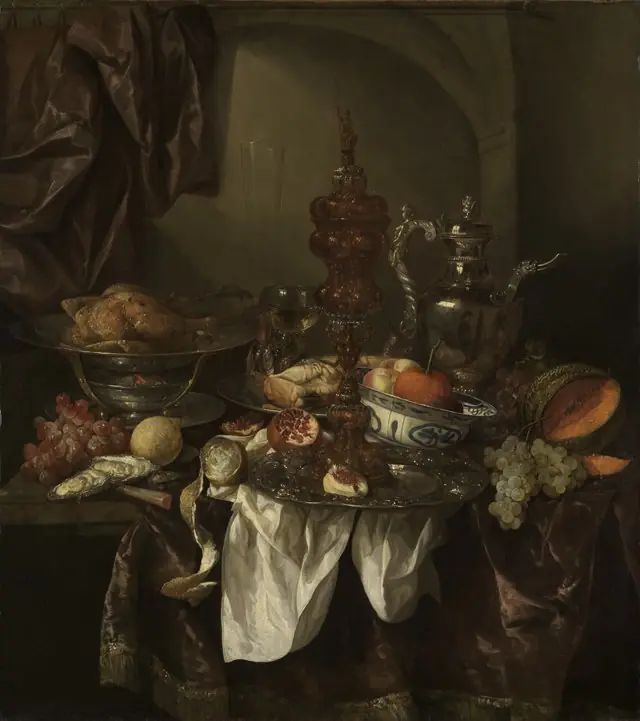 Still life with fruit, roast, silver- and glassware, porcelain and columbine cup on a dark tablecloth with white serviette
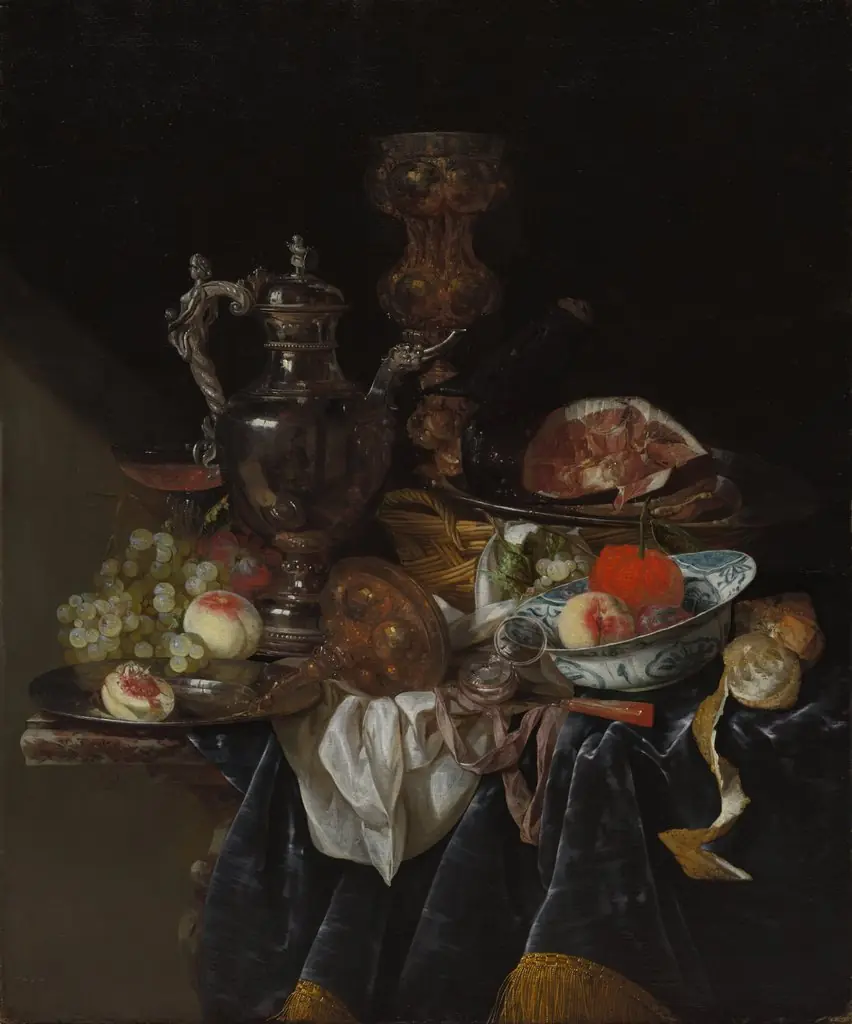 Silver Wine Jug, Ham, and Fruit
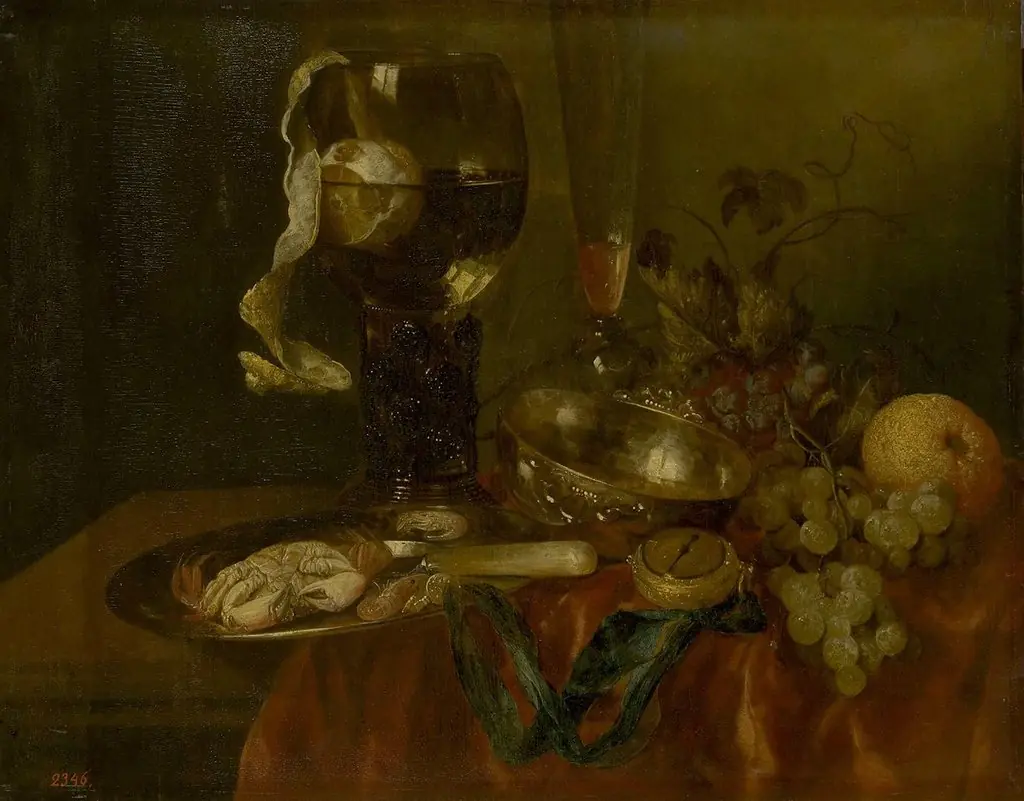 Snack (Still Life with Crab, Fruit and Clock)
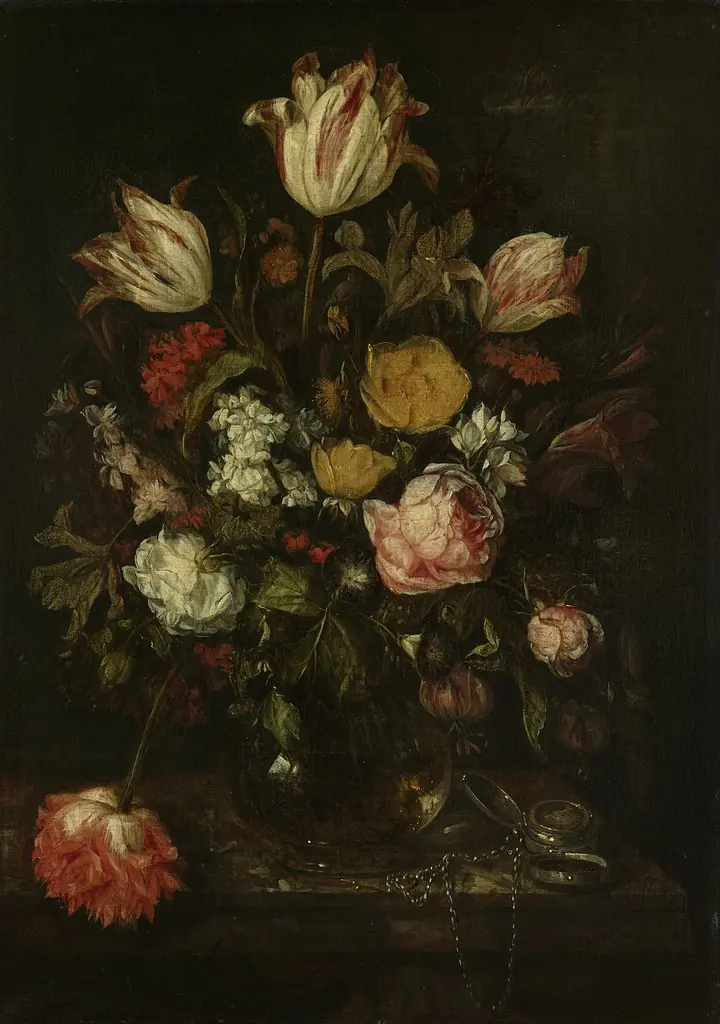 Still life with flowers
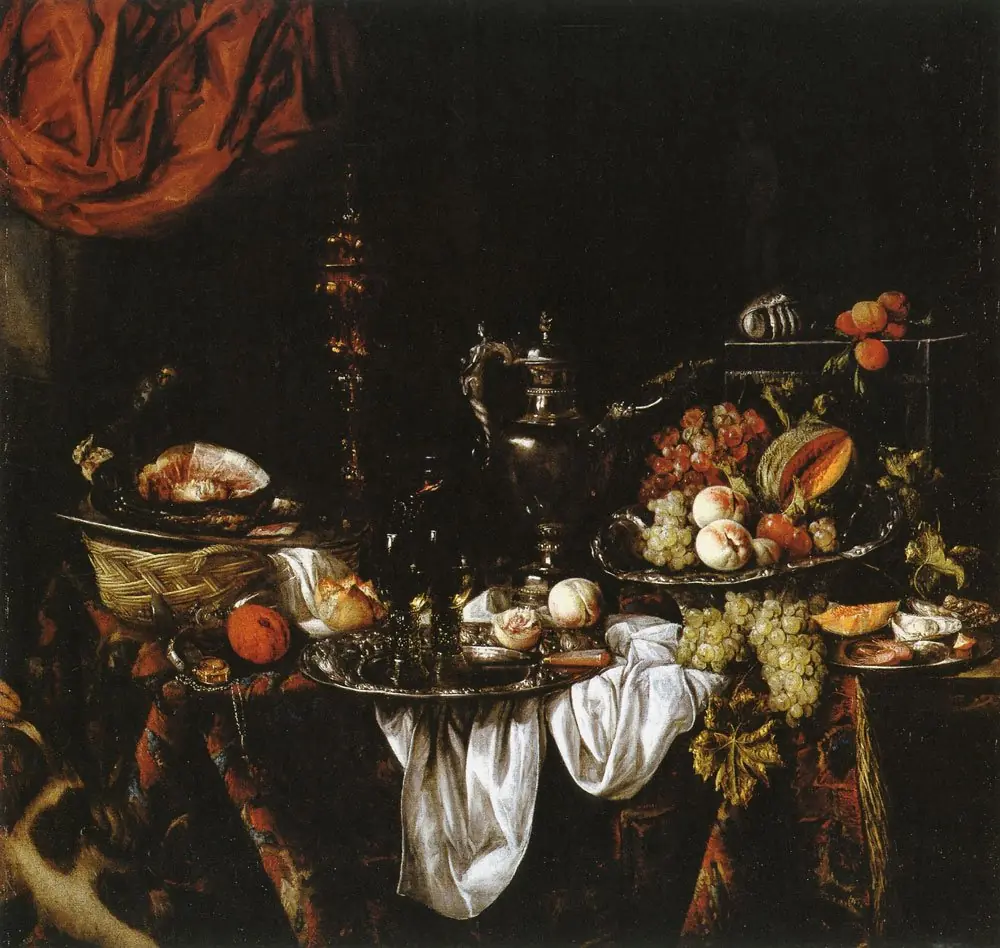 Still life on a draped table with a sculpture of Venus in a niche behind a curtain
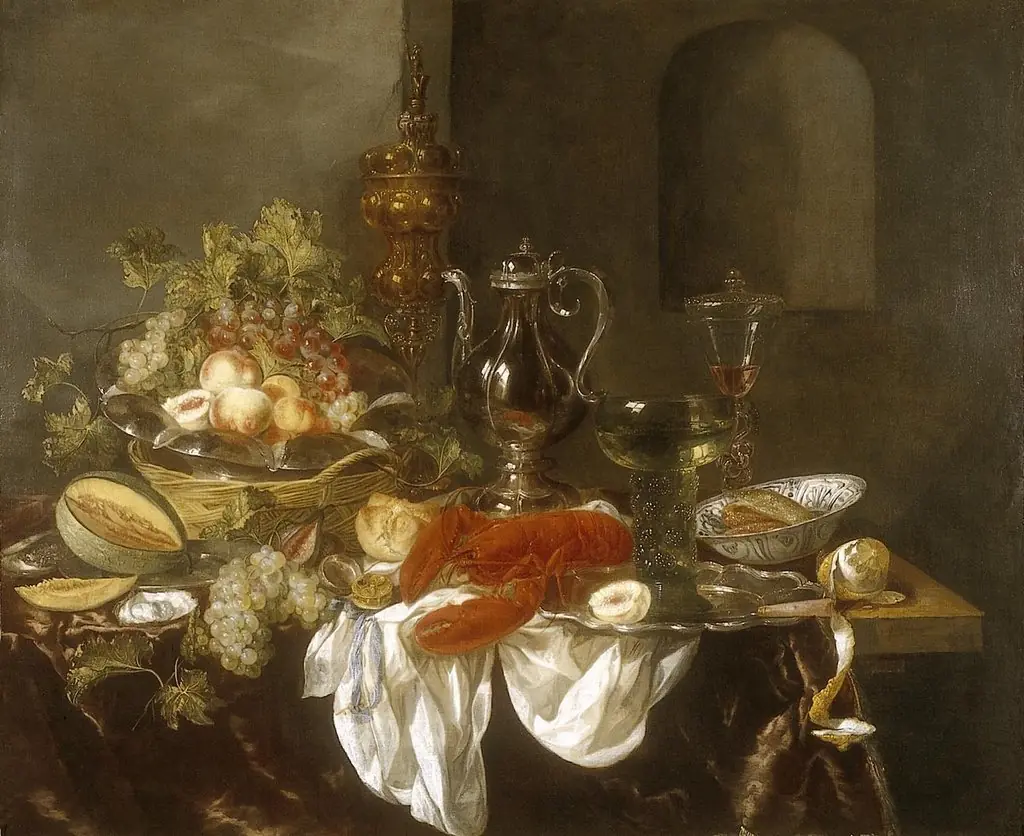 still-life
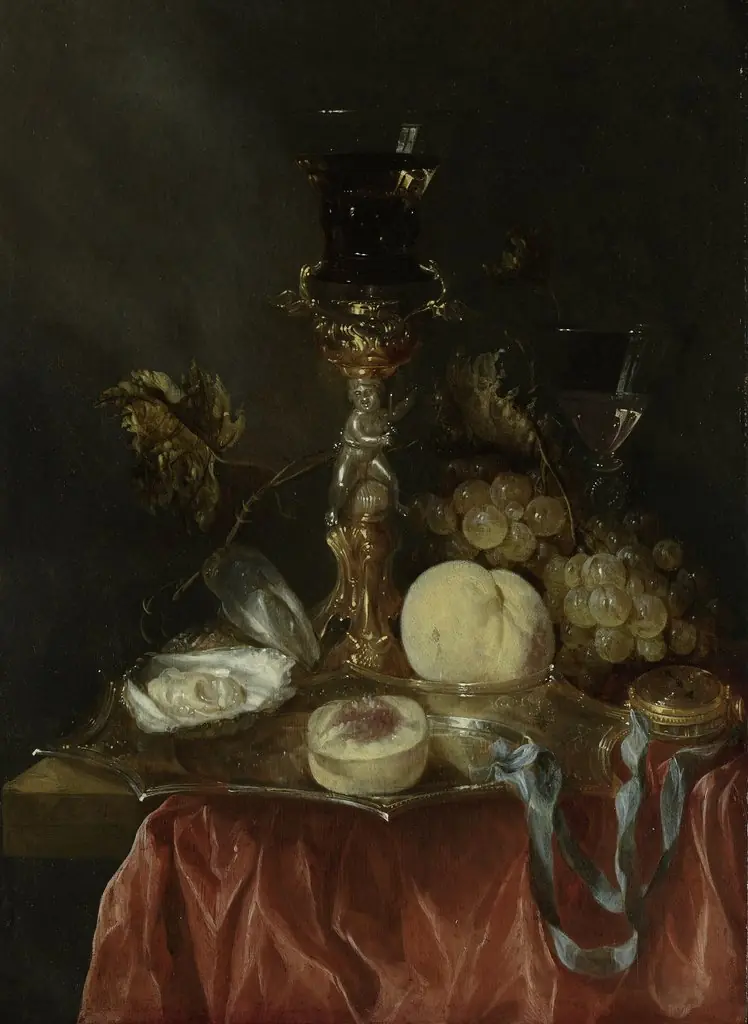 Still Life with Silver-gilt Bekerschroef with Roemer
- Still Life
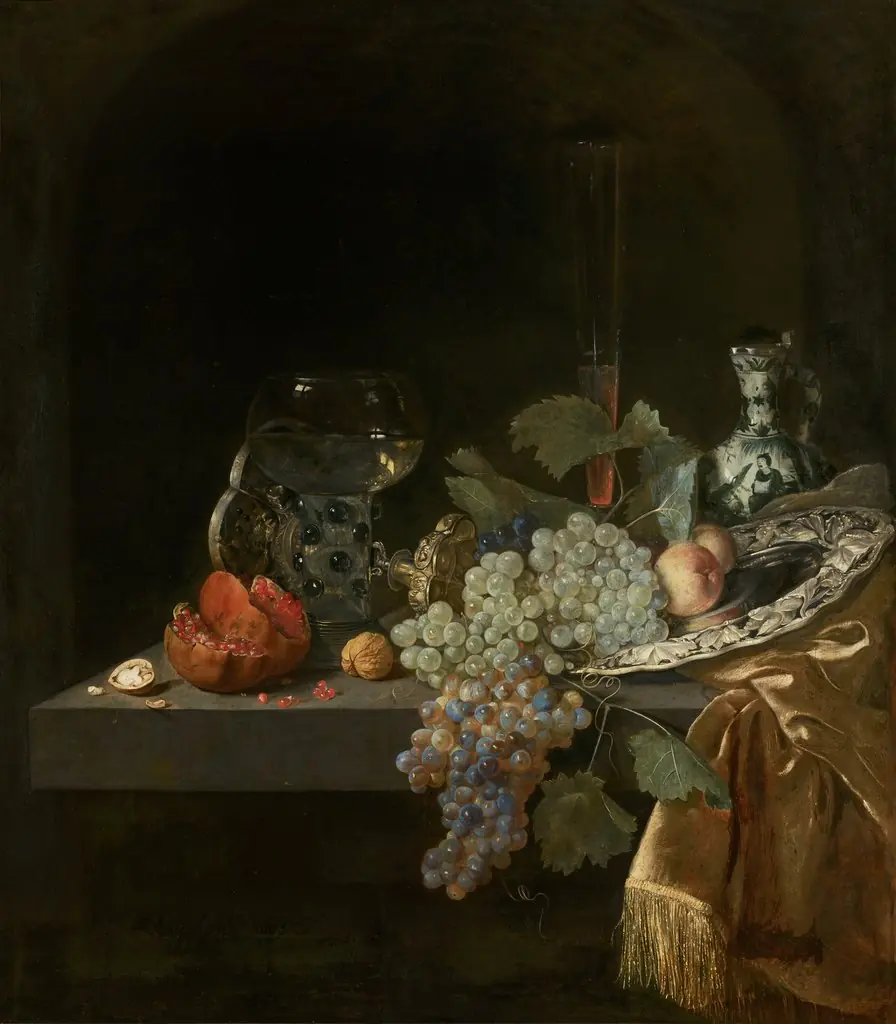 Still life
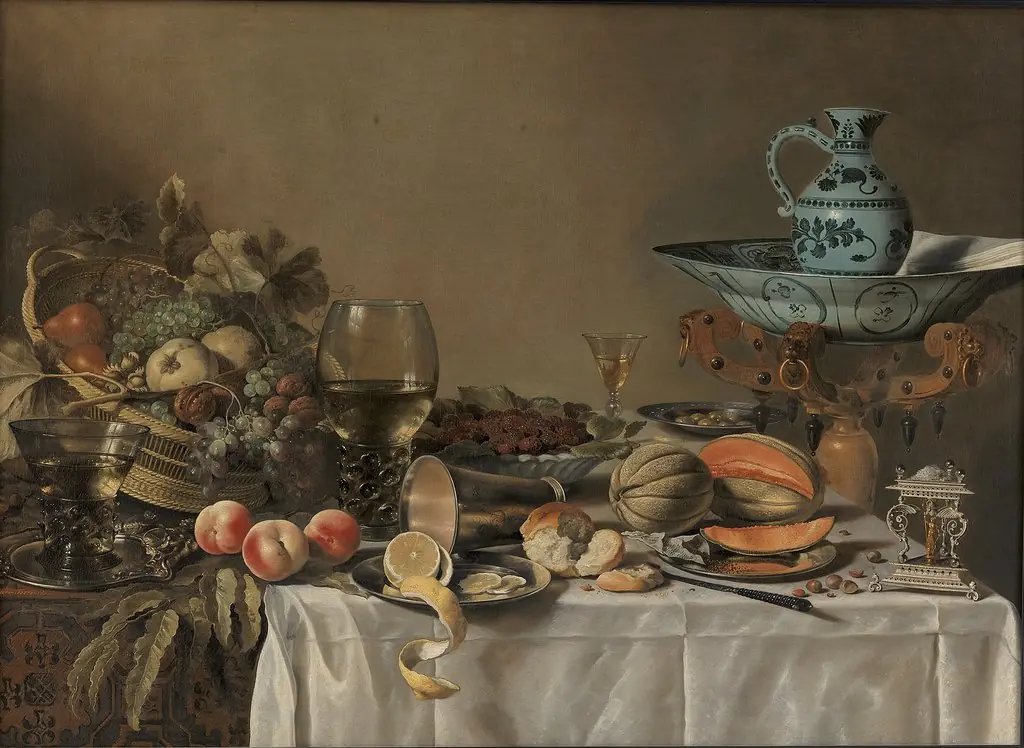 Still Life
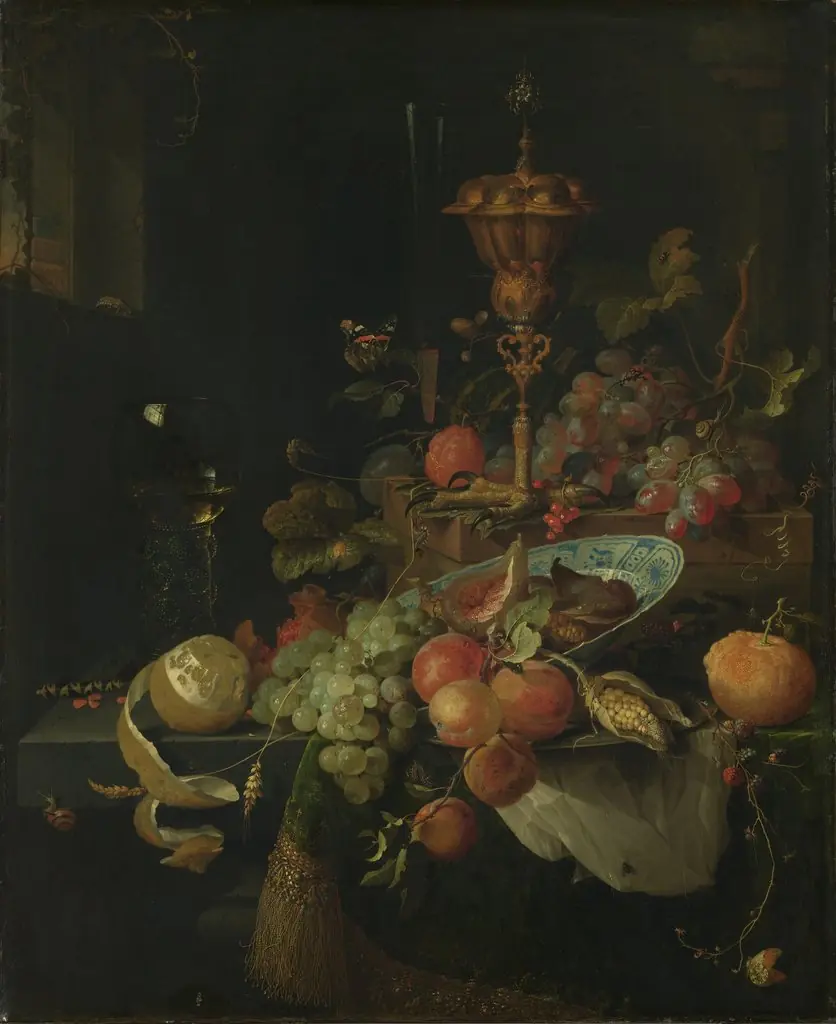 Still life with fruit and a beaker on a cock's foot
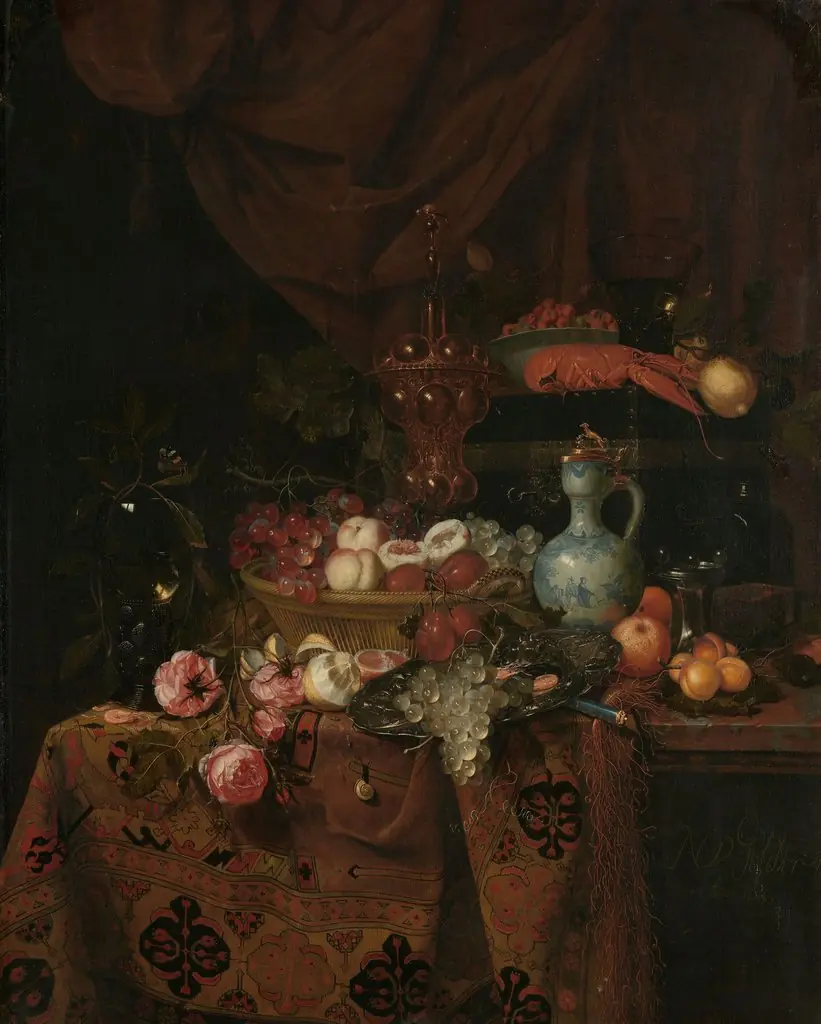 Still life
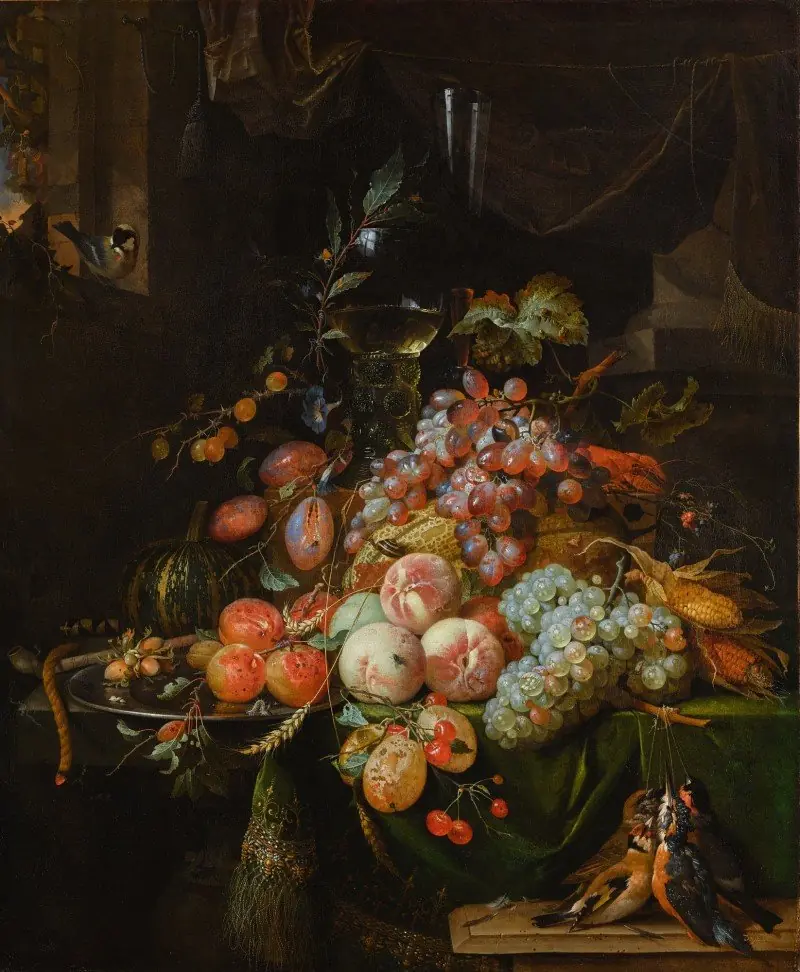 Still Life with Plums, Peaches, Apricots, Grapes and a Melon
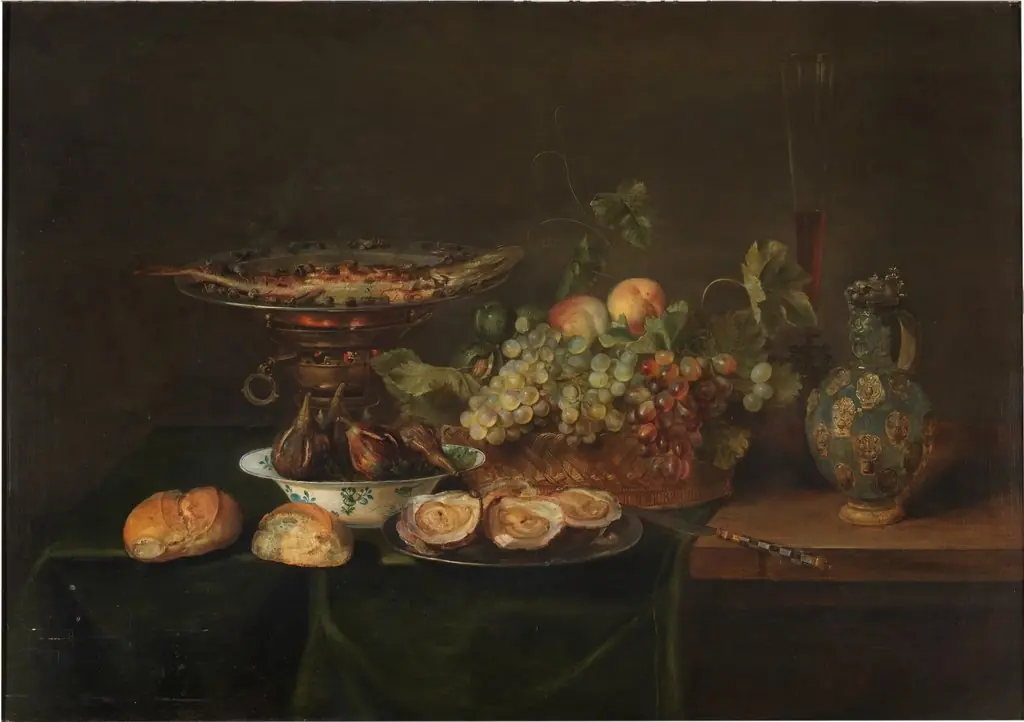 PBanquet still life
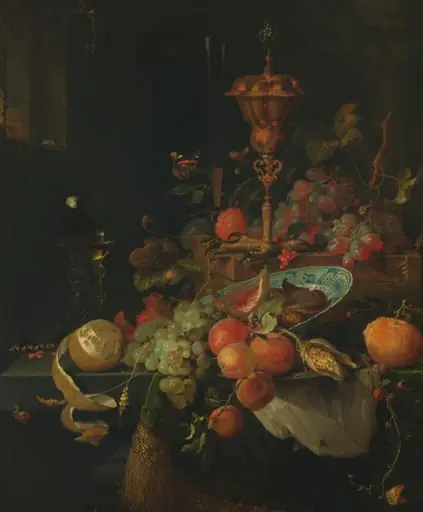 Still Life with Fruit and a Beaker on a Cock's Foot
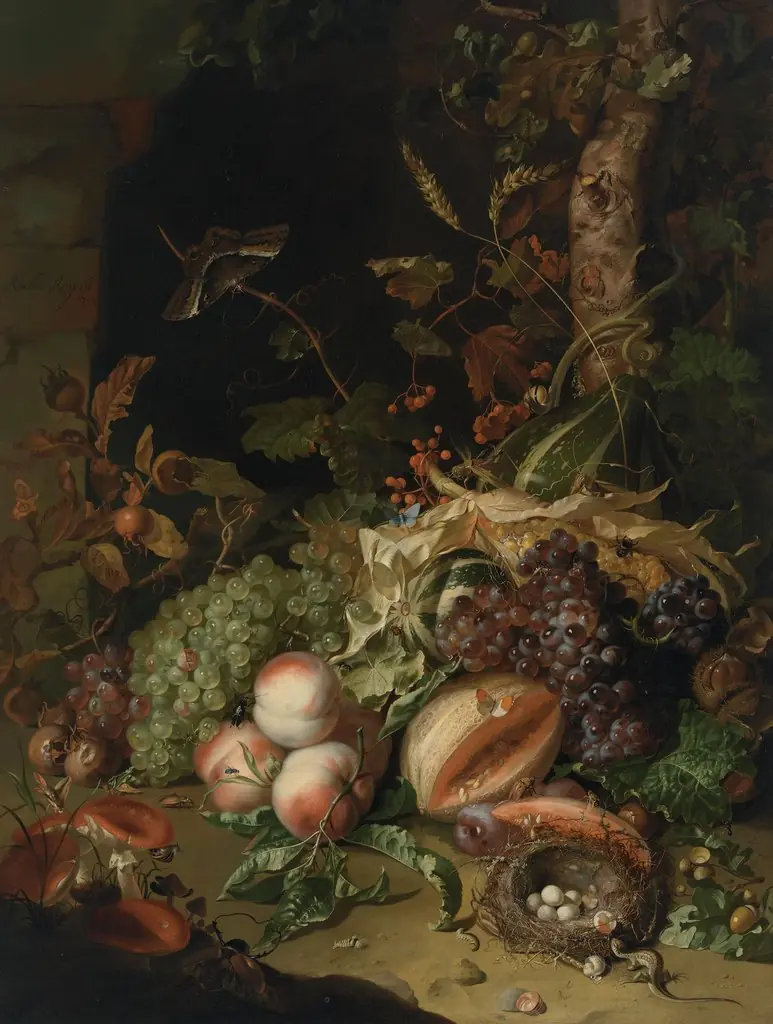 Fruit on a Forest Floor
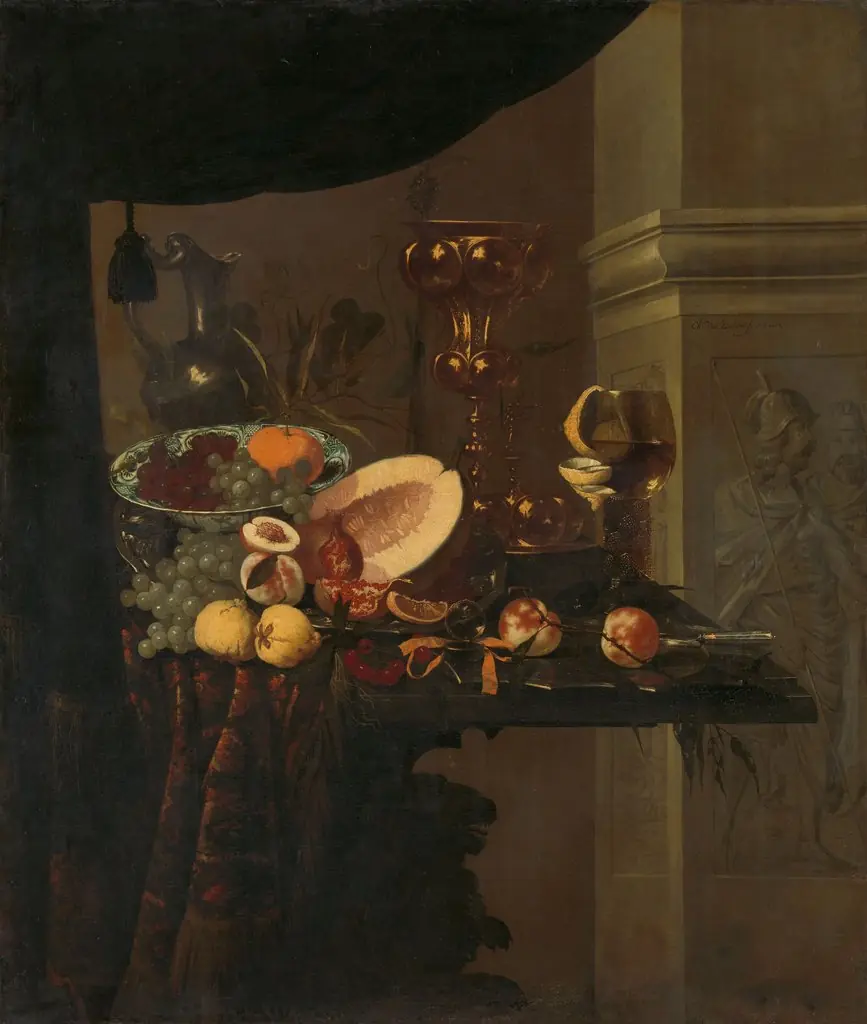 Still Life
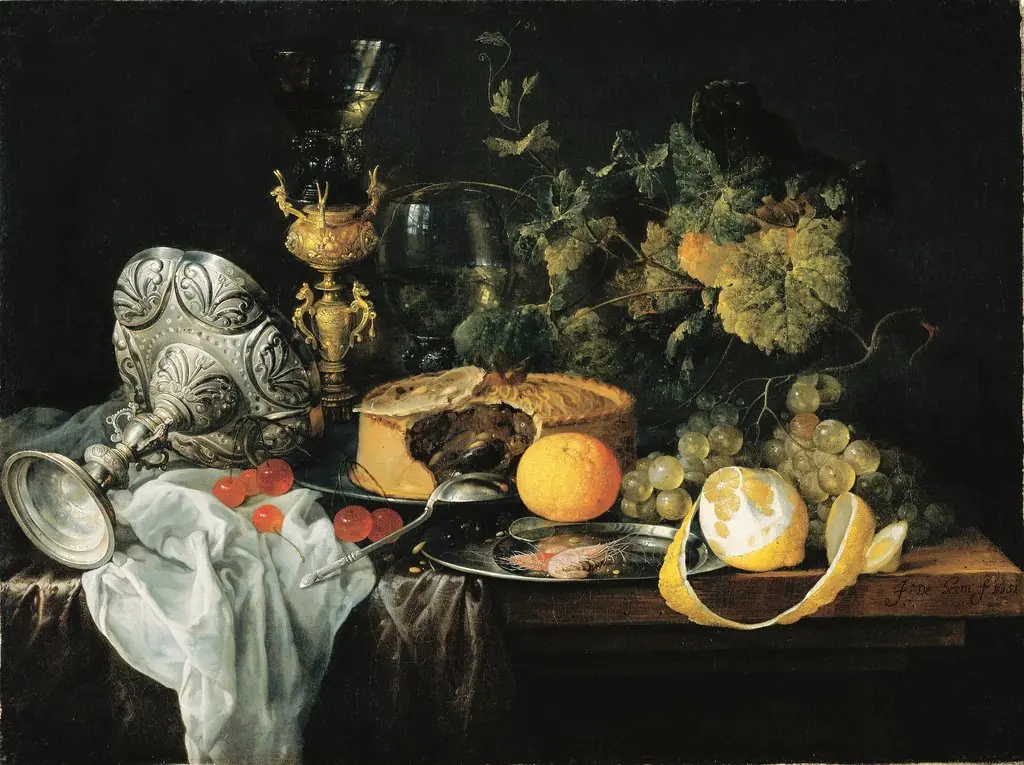 Sumptuous Still Life with Fruits, Pie and Goblets, 1651
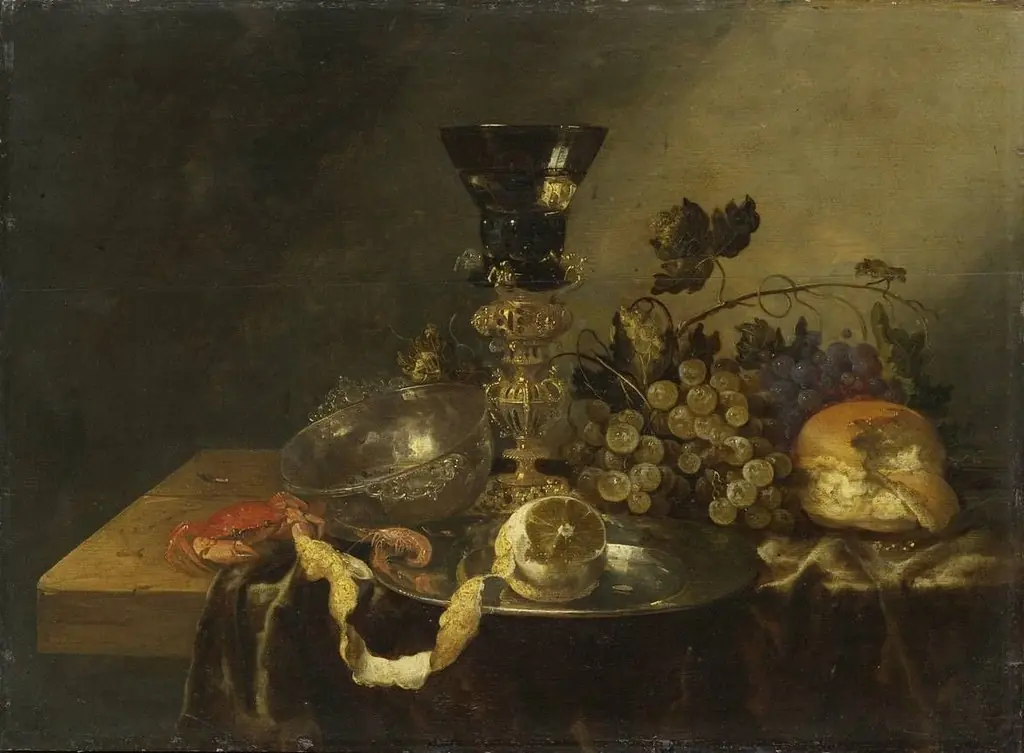 Stillleben mit Silberschale und Becherschraube