Artwork
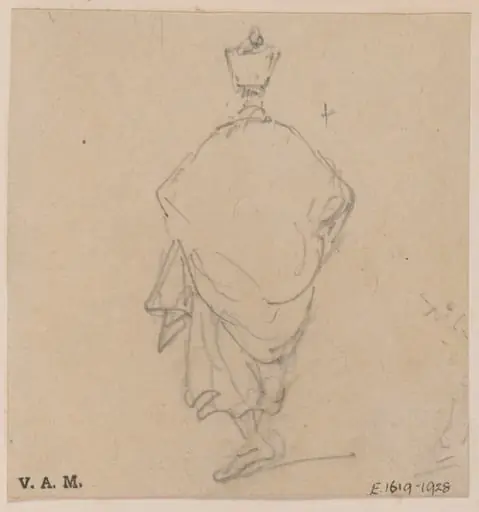
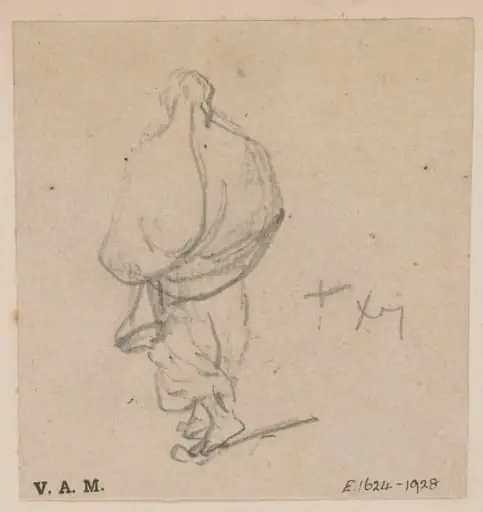
A Macanese woman seen from behind
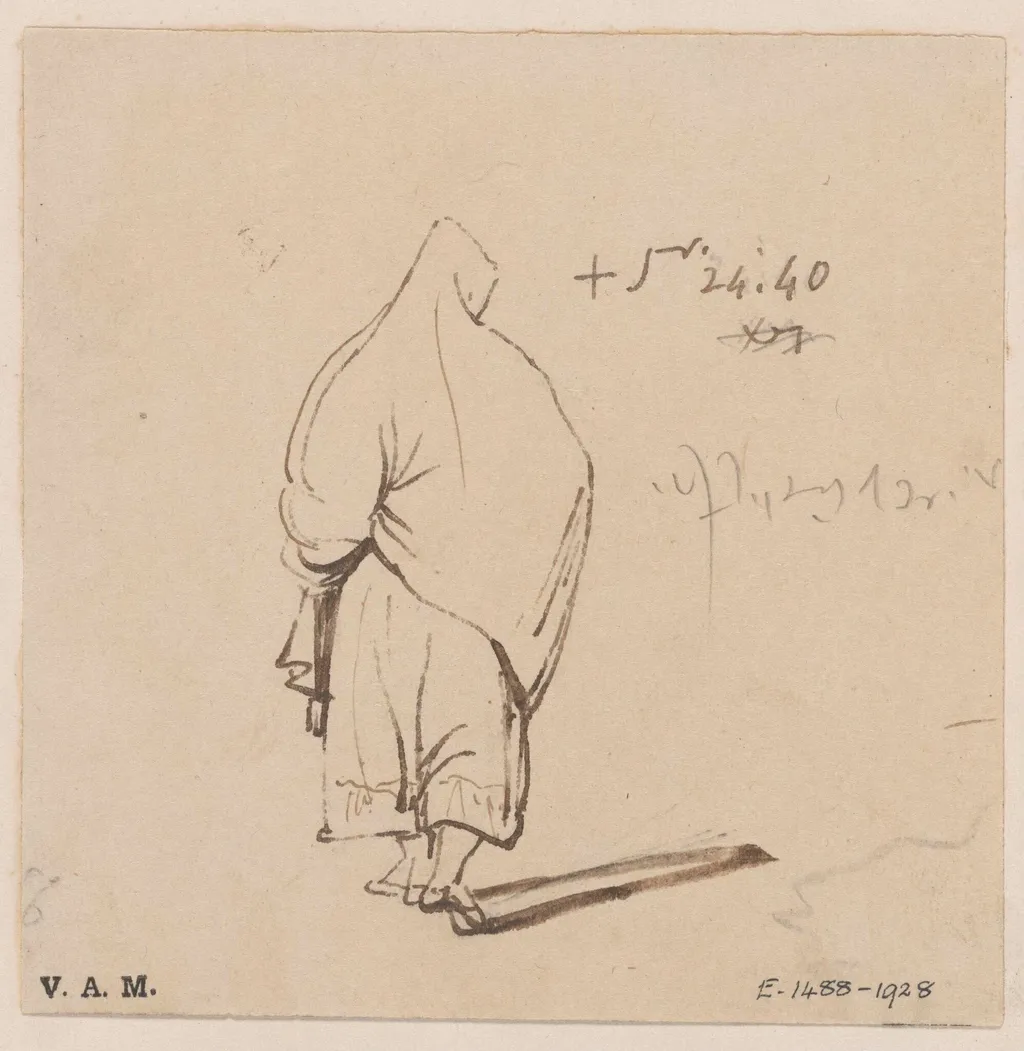
A Macanese woman seen from behind is a drawing by the Romanticist artist George Chinnery. It dates from 12 and is held in the collection of the Victoria and Albert Museum.
About this work
George Chinnery drew this in 1840. It’s a simple line drawing on paper. You see a woman in Macanese dress walking away, her head covered as was the custom.
This was made during the Romantic period. Back then, artists often showed everyday life with real feeling. This piece feels quiet but full of small details.
Look up George Chinnery next.
Overview
This 1840 drawing by George Chinnery depicts a Macanese woman viewed from behind, distinguished by her traditionally covered head, as she walks away from the viewer.
Subject & Meaning
The subject, a woman in customary Macanese attire, conveys a sense of everyday life, characteristic of the Romantic period's emphasis on ordinary scenes infused with emotional depth. The rear view may imply a focus on the mundane or the privacy of the individual.
Technique & Style
Executed as a simple yet detailed line drawing on paper, the work showcases Chinnery's ability to convey depth and character through minimalism, aligning with the expressive yet restrained aesthetic of some Romantic-era drawings.
History & Provenance
Created in 1840 by British artist George Chinnery, this drawing reflects his observations during his time in Macau, highlighting cultural detail.
Context
Produced during the Romantic period, the piece aligns with the era's artistic tendency to portray everyday life with sensitivity, though its subdued tone sets it apart from more dramatic Romantic works.
Legacy
While not widely known, this drawing contributes to the broader legacy of Chinnery's Asian works, offering a glimpse into Macanese life in the 19th century. Further study of Chinnery's oeuvre can provide deeper insight into this piece's significance.
Own this work as a print
Artist & collection
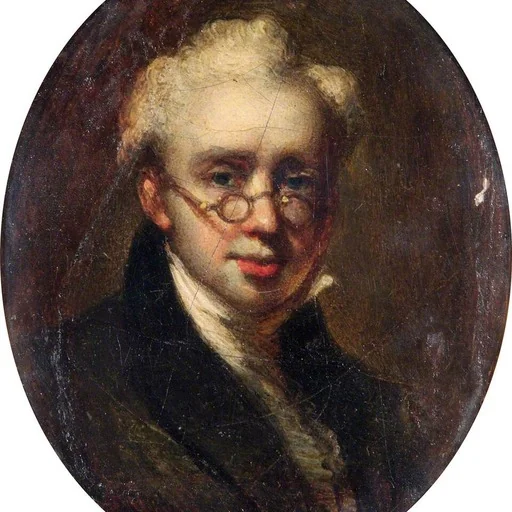
Artist
George Chinnery (Chinese: 錢納利; 5 January 1774 – 30 May 1852) was an English painter who spent most of his life in Asia, especially India and southern China.