Artwork
East Hampton Meadows
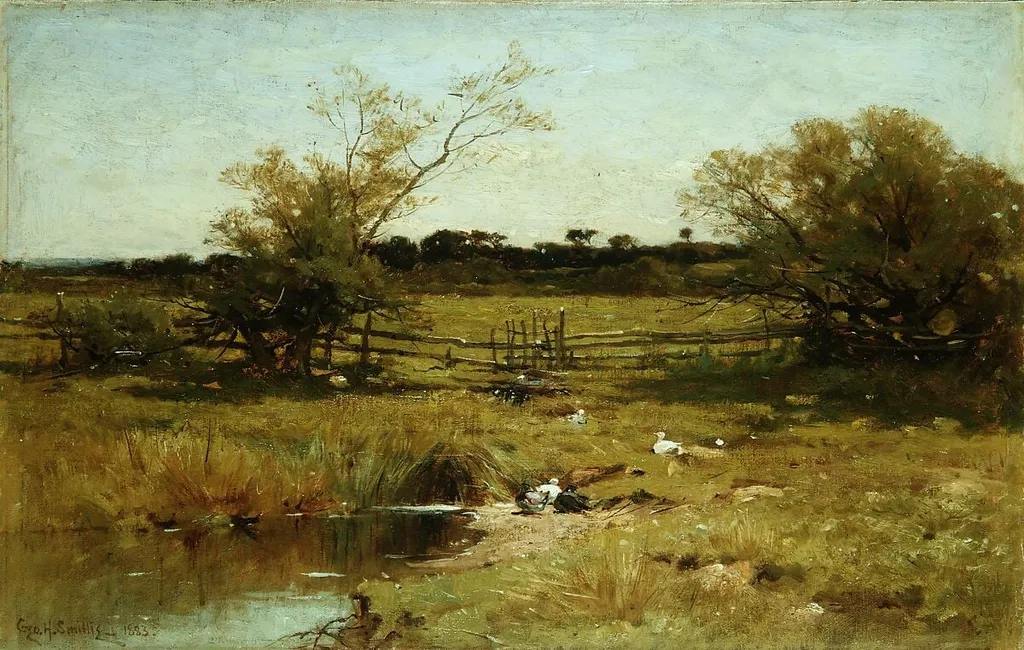
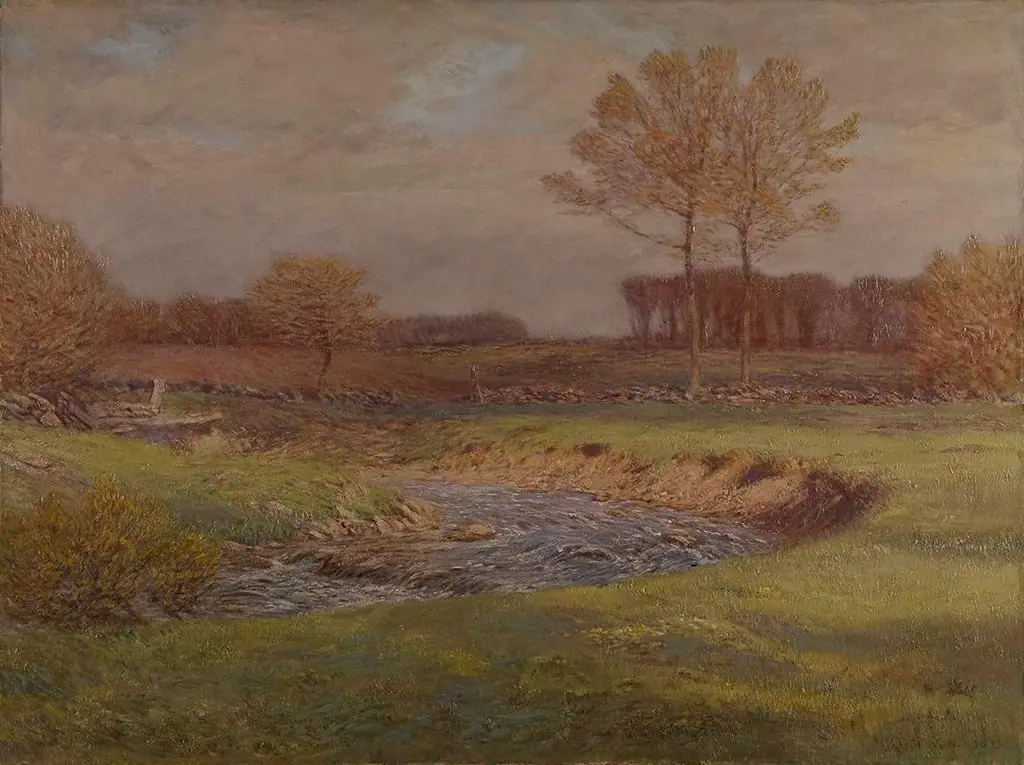
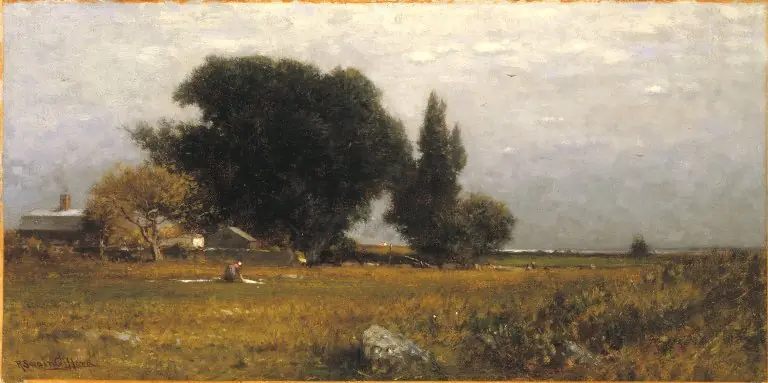
East Hampton Meadows is an oil painting by the American Impressionist artist George Henry Smillie. It dates from 1883 and is held in the collection of the Metropolitan Museum of Art.
About this work
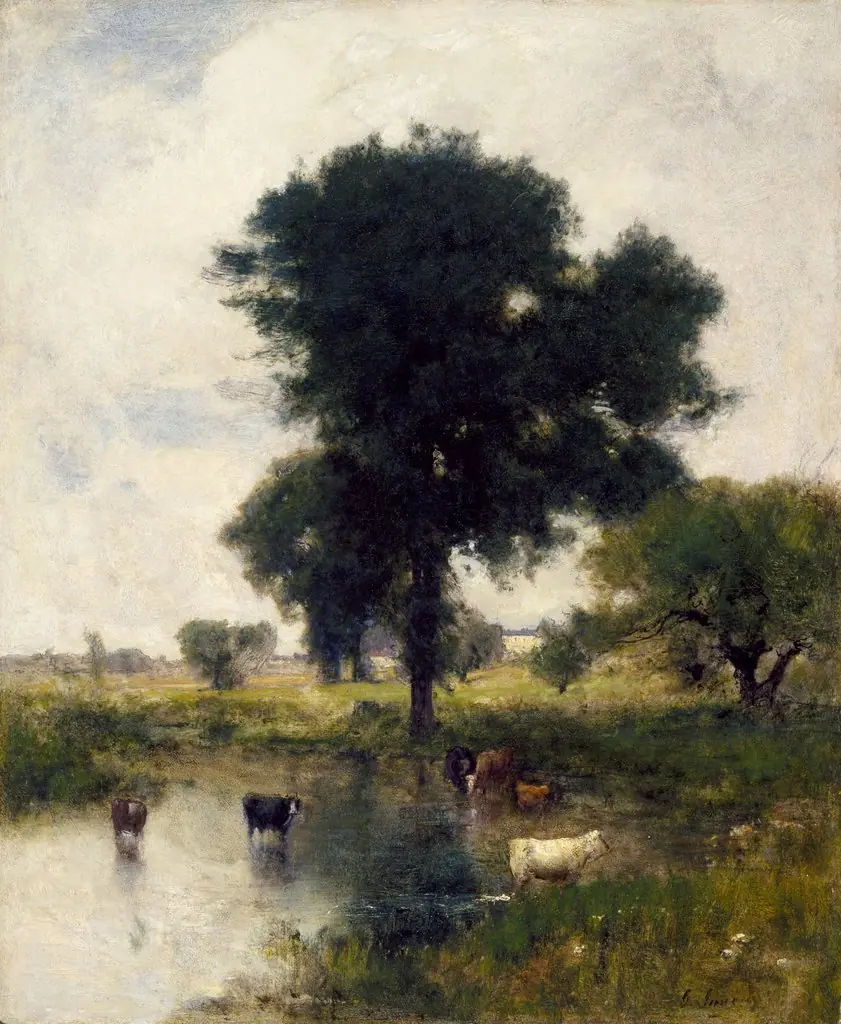
A quiet field in East Hampton: tall grass, a few trees, and a sky shifting from pale blue to soft pink. Smillie painted it in 1883, when artists were leaving their studios to work outdoors. The loose strokes almost keep the grass moving in the wind. It is a small moment rather than a grand scene.
Subject & Meaning
The painting East Hampton Meadows presents a serene pastoral scene of the Long Island countryside, rendered as a landscape with a solitary tree amid rolling meadowland. Smillie's choice of subject aligns with the 19th-century American fascination with unspoiled nature, using the tree as a focal point that suggests both stability and the quiet presence of the natural world. The work's genre as a landscape and its depiction of a tree underscore an iconographic emphasis on rural tranquility, reflecting contemporary ideals of pastoral purity and the spiritual resonance of the American environment.
Technique & Style
George Henry Smillie's East Hampton Meadows (1883) exemplifies the artist's refined oil-on-canvas technique, characteristic of late 19th-century American landscape painting. The work employs a smooth, layered application of oil paint, allowing for subtle gradations of light and atmospheric effects, particularly in the depiction of sky and foliage. The support, a commercially primed canvas measuring 38.1 by 60.3 centimeters, provides a stable foundation for Smillie's delicate brushwork, which balances precise detailing in foreground elements, such as trees, with looser strokes in distant meadows.
Stylistically, the painting aligns with the Hudson River School's emphasis on luminous naturalism, though Smillie's handling leans toward a more restrained, almost tonalist approach in its muted palette and harmonious composition.
Context
The work's creation date aligns with a period when American artists increasingly depicted rural scenery, situating Smillie within the broader tradition of U.
George Henry Smillie's East Hampton Meadows (1883), an oil on canvas landscape, exemplifies late-19th-century American pastoral interests as reflected in its placement within the Metropolitan Museum of Art's American Wing and its classification as a landscape painting. The work's creation date aligns with a period when American artists increasingly depicted rural scenery, situating Smillie within the broader tradition of U.S. landscape art. Its inclusion in a major museum collection underscores attention to Smillie's contribution to the genre, while the painting's formal qualities, depicted tree and expansive meadow, offer insight into contemporary aesthetic concerns.
Overview
George Henry Smillie's East Hampton Meadows, painted in 1883, is an oil on canvas landscape. This work captures a serene view of the East Hampton countryside, characterized by its open fields and a tranquil sky. It exemplifies a shift towards depicting intimate, observed moments in nature rather than grand, dramatic vistas, reflecting a particular approach to American landscape painting of its era.
Artist & collection