Artwork
Meadow near Oosterbeek
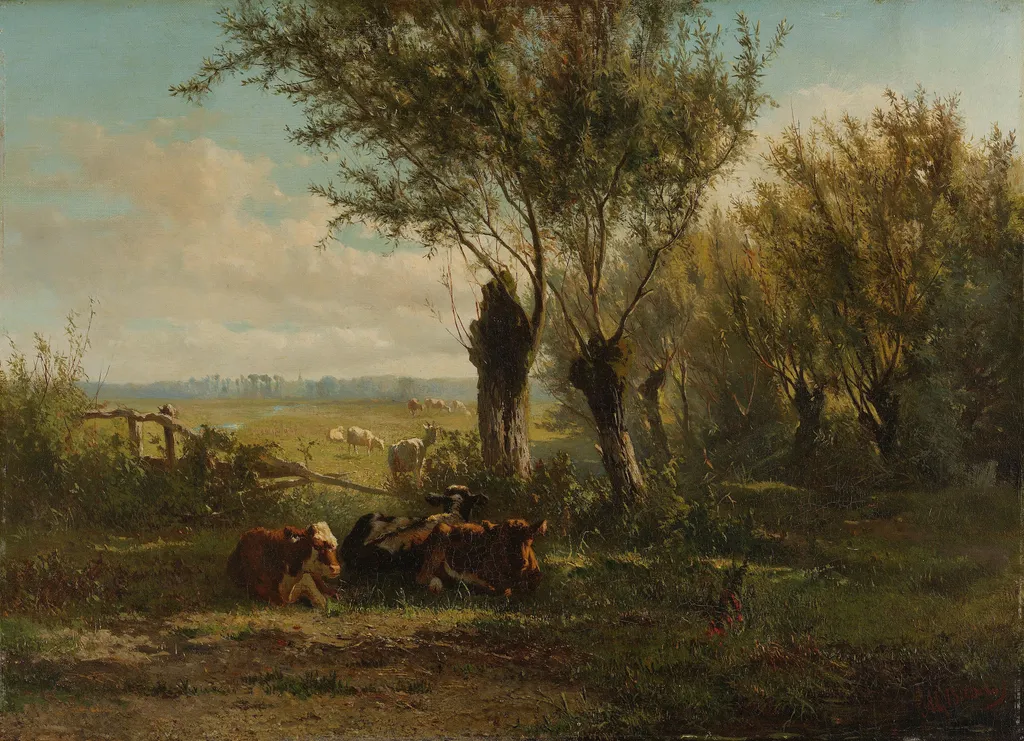
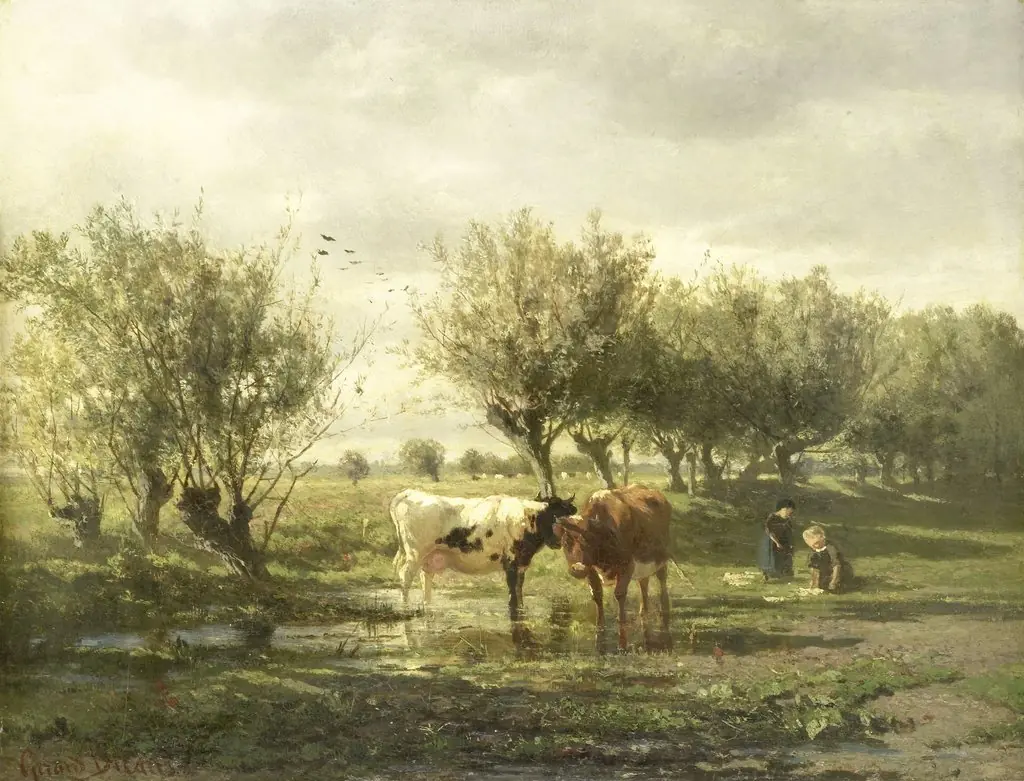
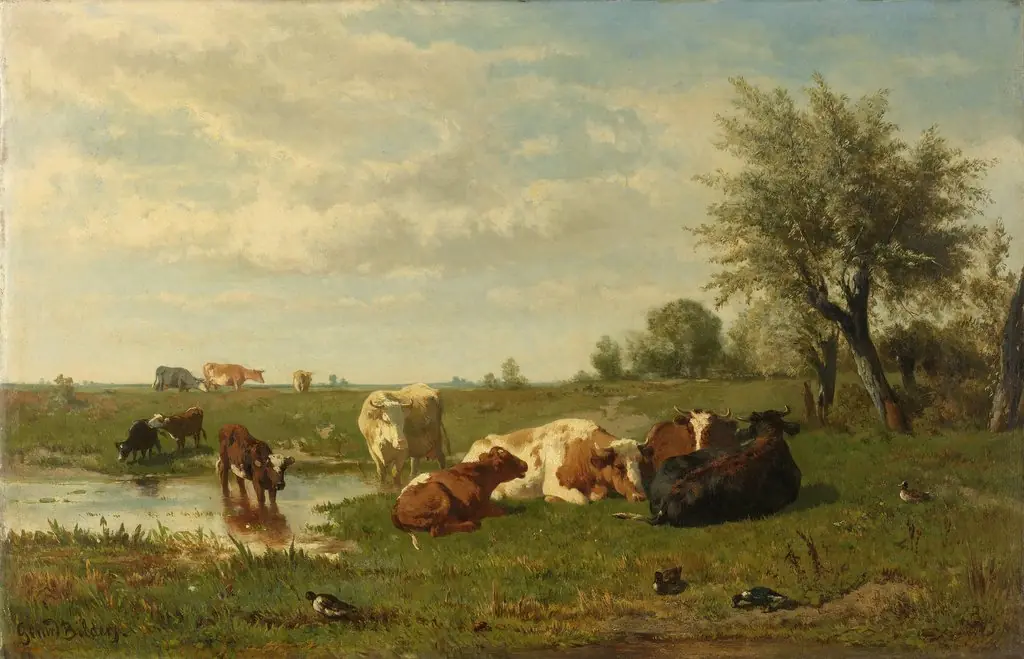
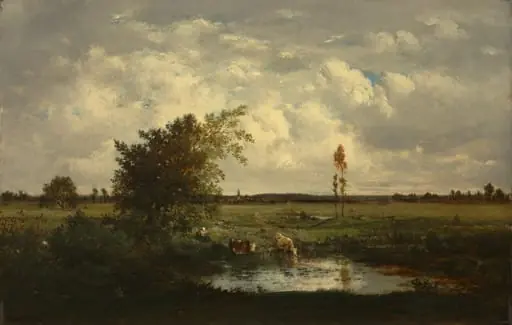
Meadow near Oosterbeek is an oil painting by the Barbizon school artist Gerard Bilders. It dates from 1860 and is held in the collection of the Rijksmuseum.
About this work
Subject & Meaning
The work marks a transitional moment in Dutch painting, moving from Romanticism toward the Realism later associated with the Hague School.
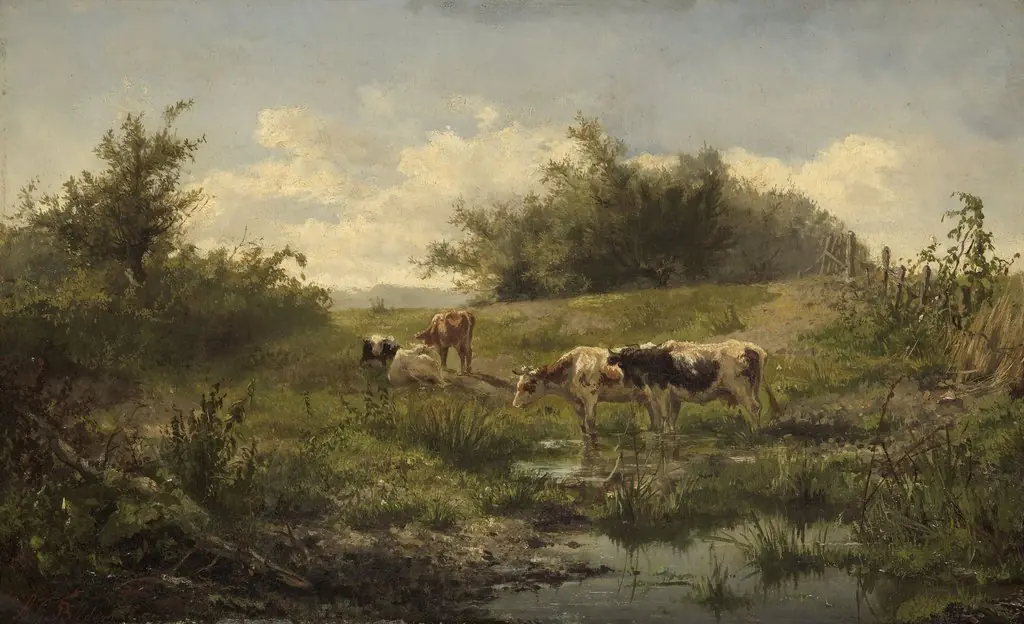
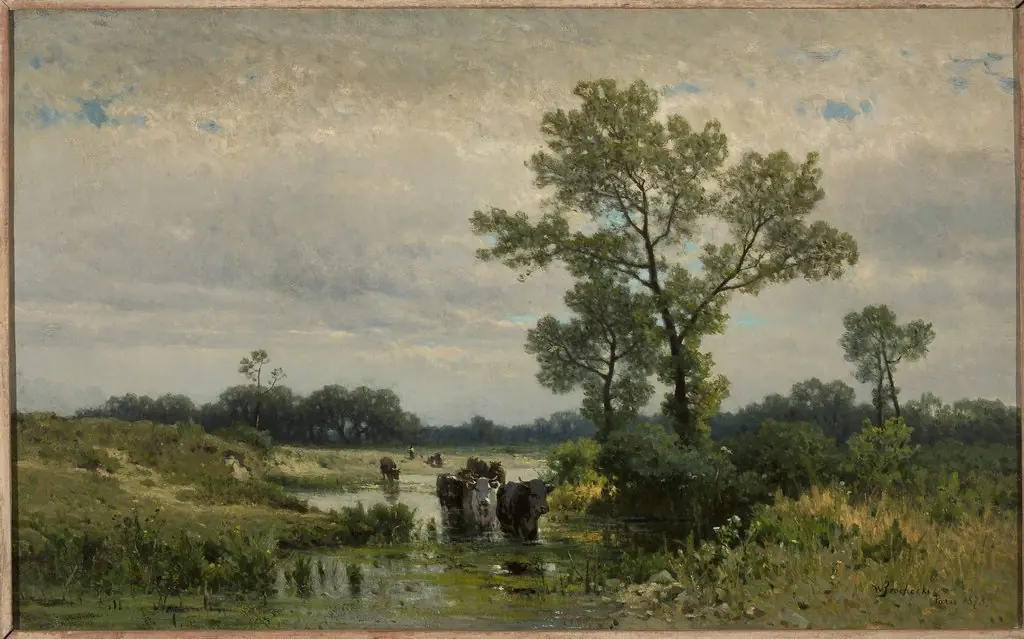
Meadow near Oosterbeek depicts three cows lying in the shade of a few willows, set against an illuminated meadow and cloudy sky. The work marks a transitional moment in Dutch painting, moving from Romanticism toward the Realism later associated with the Hague School. Bilders sketched the scene en plein air in the Oosterbeek area and finished it in the studio, composing a harmonious, unforced arrangement in which dark foreground shadows shelter the resting cattle while a sunlit pasture brightens toward the horizon. The languid livestock and silvery-green shimmer of the willow landscape are rendered with great skill.
The painting's meaning lies in this stylistic pivot: the Romantic preoccupation with the overwhelming has given way to a quieter, more intimate realism focused on simplicity and atmosphere. It is among the landscapes Bilders produced shortly after encountering the Barbizon School in Brussels in 1860, embodying the new realist sensibility that would flourish among the Oosterbeek artists' colony and seed the Hague School.
Technique & Style
Gerard Bilders executed Meadow near Oosterbeek in oil on canvas, measuring 39 × 55 cm. The painting was sketched en plein air and subsequently finished in the studio. Its composition is harmonious and informal: dark shadowed foregrounds, where three cows seek coolness beneath willows, contrast with a sunlit meadow and luminous sky on the horizon.
The work occupies a transitional phase between Romanticism and the realism that would define the Hague School. A Romantic sensibility remains palpable, yet the treatment is more intimate and contemplative. The languid cattle and silvery-green shimmer of the willows are rendered with accomplished skill.
The artist's focus has shifted from overwhelming grandeur toward atmospheric simplicity, a realist orientation that would become characteristic of the Hague School painters, many of whose first generation worked alongside Bilders in Oosterbeek.
History & Provenance
Meadow near Oosterbeek was created in 1860 by Gerard Bilders as an oil painting on canvas measuring 39 by 55 centimeters. The work was originally owned by Joannes Barnardus Antonius Maria Westerwoudt and entered the Rijksmuseum collection in 1907, where it remains on display. Its provenance reflects a continuous chain of ownership from the artist to Westerwoudt and subsequently to the museum, establishing a documented ownership history that aligns with its accession record.
Meadow near Oosterbeek is held in the collection of the Rijksmuseum Amsterdam under inventory number SK-A-2565. The work was acquired by the museum in 1907 as part of the Westerwoudt collection, which had been donated to the institution. It has been exhibited in several Rijksmuseum presentations focusing on 19th‑century Dutch landscape painting and was included in the 2000 publication "Poëzie der werkelijkheid; Nederlandse schilders van de negentiende eeuw" (pp. 112‑114) as part of the museum’s permanent display.
Context
Meadow near Oosterbeek (1860) by Gerard Bilders exemplifies the shift from Romanticism toward Realism in 19th-century Dutch landscape painting. Bilders, trained by his father Johannes Warnardus within the Romantic tradition, settled in Oosterbeek near the Veluwezoom, where he joined an emerging artists' colony. Influenced by the Barbizon School during a visit to Brussels, he helped catalyze this movement, which later evolved into the Hague School.
The work depicts three cows in shaded willows against a sunlit meadow, rendered in oil on canvas with masterful handling of light and atmosphere. This piece reflects a more intimate, subdued realism compared to earlier Romantic grandeur, emphasizing everyday natural details. Bilders died in 1866 before fully witnessing the movement's development, though his contributions laid groundwork for successors.
The painting has been part of the Rijksmuseum collection since 1907 and remains a key example of transitional Dutch landscape art.
Legacy
Meadow near Oosterbeek is recognized as a pivotal work marking the transition in Dutch painting from Romanticism to the Realism that would define the Hague School. The painting's intimate atmosphere and focus on simple, natural light prefigured the stylistic priorities of the next generation of artists, many of whom had worked alongside Gerard Bilders in the Oosterbeek artist colony. Although Bilders died young in 1866 before fully realizing this artistic revolution in his own oeuvre, the work remains a testament to the colony's role as the cradle of the Hague School.
Its historical significance was cemented when it entered the collection of the Rijksmuseum in 1907, where it continues to illustrate this critical evolutionary phase in 19th-century art.
Overview
Meadow near Oosterbeek is an 1860 oil painting by Dutch artist Gerard Bilders, characterized by a serene rural landscape depicting a meadow near Oosterbeek, with a focus on naturalistic representation.
Own this work as a print
Artist & collection
Artist
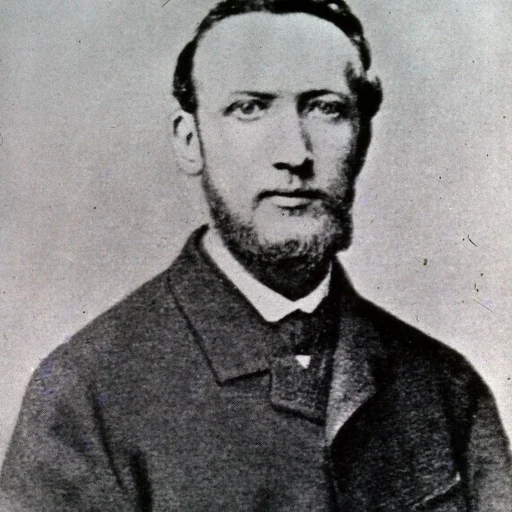
Albertus Gerardus "Gerard" Bilders (9 December 1838 – 8 March 1865) was a Dutch landscape painter, associated with some members of the Hague School, such as Anton Mauve and Willem Maris.