Artwork
Our Brilliant Failure
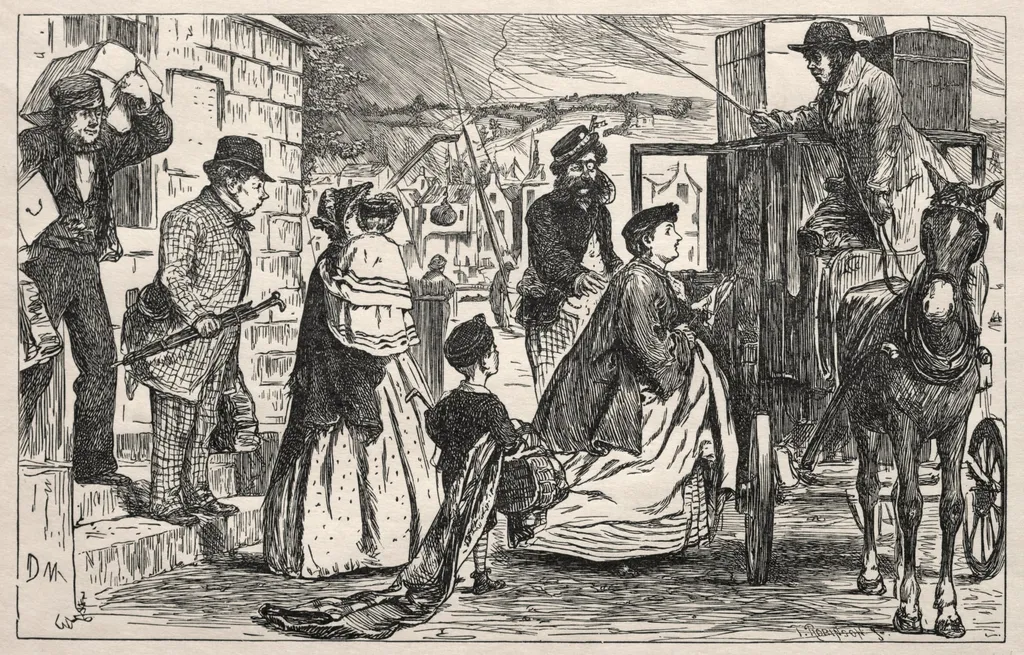
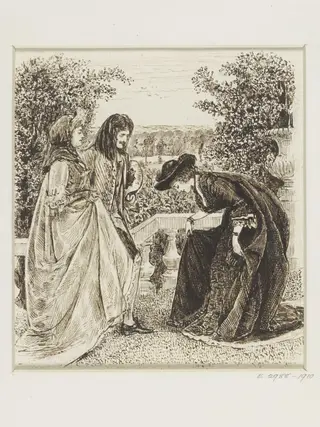
Our Brilliant Failure is a print by the Impressionist artist George Louis Palmella Busson Du Maurier. It dates from 1865 and is held in the collection of the Cleveland Museum of Art.
- Accession no.
- 1924.384
- Credit line
- Dudley P. Allen Fund
About this work
Overview
Created in 1865 by George du Maurier, Our Brilliant Failure is a black-and-white ink drawing that captures a fleeting moment in urban Victorian life.
Created in 1865 by George du Maurier, Our Brilliant Failure is a black-and-white ink drawing that captures a fleeting moment in urban Victorian life. As a contributor to Punch magazine, du Maurier specialized in observational illustration, and this work reflects his interest in ordinary social interactions rather than idealized subjects. The piece is executed with loose, energetic lines that convey motion and spontaneity.
Subject & Meaning
The scene portrays a modest street corner where figures go about daily routines: a woman guides a child, another sits passively in a chair, and men loiter or gaze upward. No single narrative dominates; instead, the composition suggests the quiet chaos of public life. The title, ironic in tone, may hint at the futility or unpredictability of human endeavors, a recurring theme in du Maurier’s satirical work.
Technique & Style
Du Maurier employed rapid, sketch-like ink lines to render figures and architecture with minimal detail, emphasizing movement over precision. The absence of tone or shading heightens the graphic quality, relying on contour and posture to suggest character and mood. The composition feels unposed, as if captured mid-action, aligning with the immediacy of journalistic illustration rather than formal portraiture.
History & Provenance
Produced during du Maurier’s early years at Punch, the drawing likely originated as a preparatory sketch or published illustration, though its exact publication history is unrecorded. It remained within private collections until entering institutional holdings in the 20th century. Its survival reflects its value as a representative example of Victorian graphic satire, not as a finished artwork in the traditional sense.
Context
In mid-19th century Britain, illustrated periodicals like Punch thrived as platforms for social critique. Du Maurier’s work emerged alongside rising interest in realism and urban observation, influenced by French illustrators and the growing middle-class readership. His focus on unglamorous public spaces aligned with broader cultural shifts toward documenting everyday life with honesty and wit.
Legacy
Though lesser known than his novel Trilby, this drawing exemplifies du Maurier’s contribution to the visual language of Victorian satire. His ability to distill complex social dynamics into quick, expressive sketches influenced later illustrators and cartoonists. The work stands as a quiet testament to the power of observational art in capturing the rhythms of ordinary existence.
Own this work as a print
Artist & collection
Artist
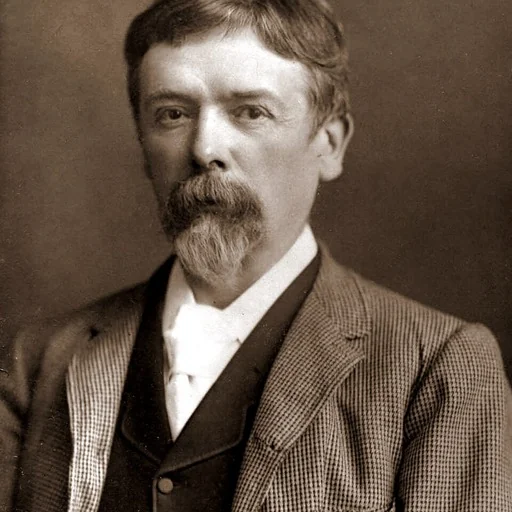
George Louis Palmella Busson Du Maurier
George Louis Palmella Busson du Maurier (French:; 6 March 1834 – 8 October 1896) was a French-British cartoonist, illustrator, and novelist.

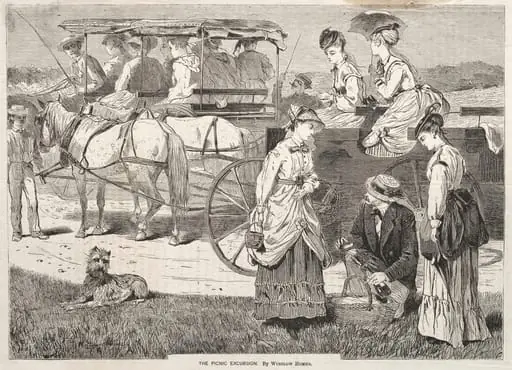 The Picnic Excursion
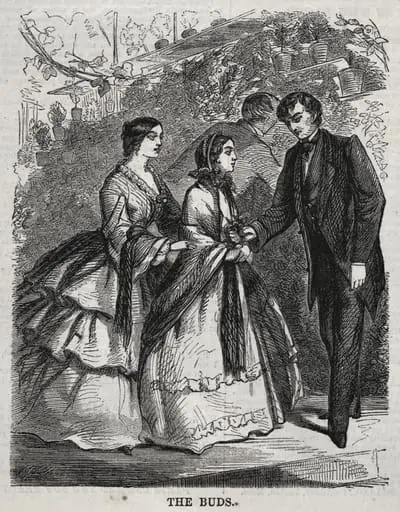 The Buds
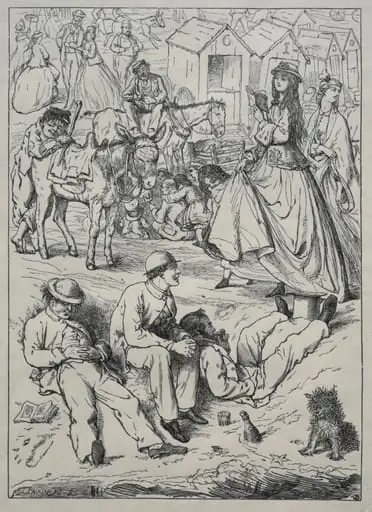 What We Did at the Seaside - Nothing
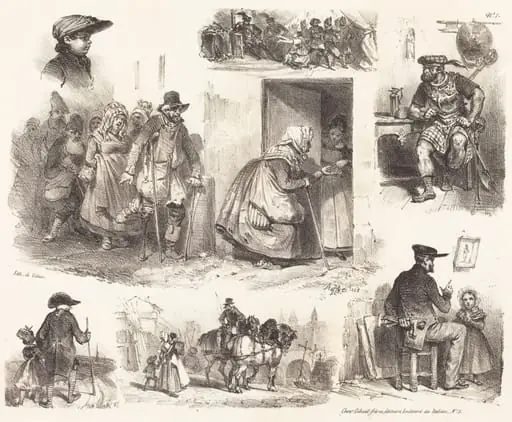 Eight Vignettes of Genre Incidents
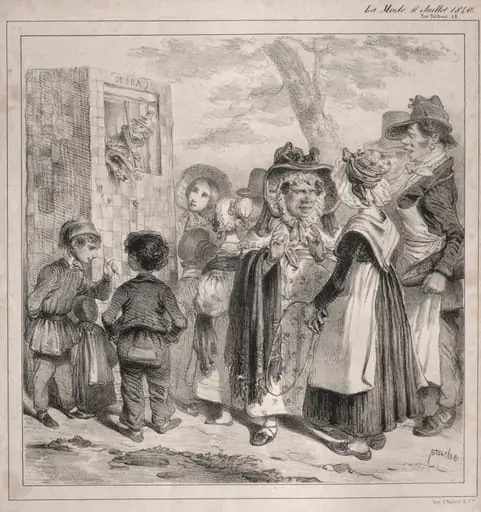 Voyez-vous ma Chère! c'est la police qui fait jouer ces polichinels là, pour détourner l'attention...
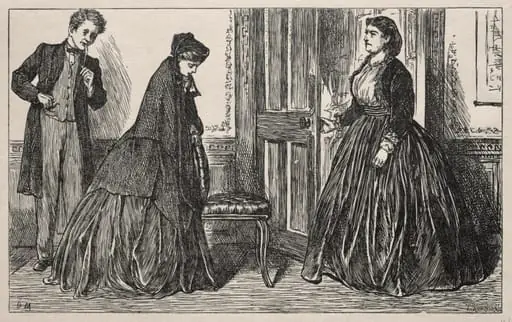 The Other Mrs. Johnson
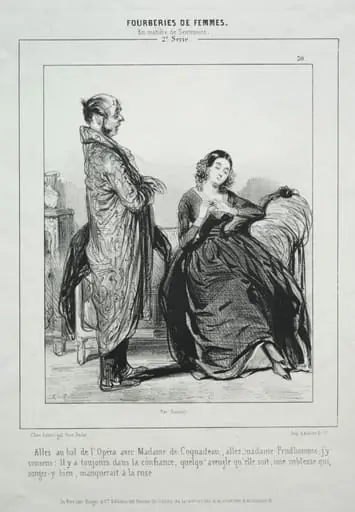 Fourberies de Femmes En Matière de Sentiment
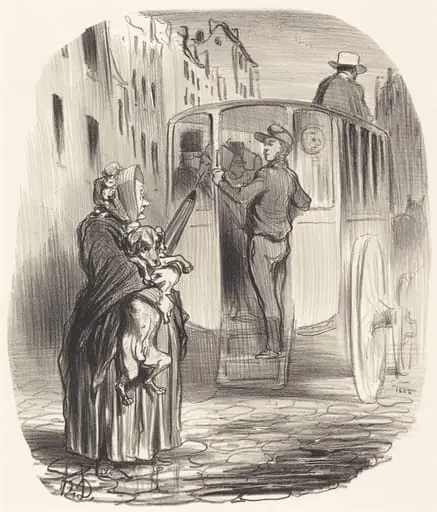 Désolé, citoyenne... je ne reçois pas de chiens...
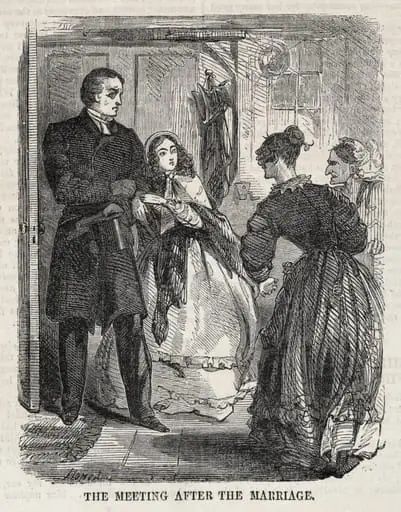 The Meeting After the Marriage
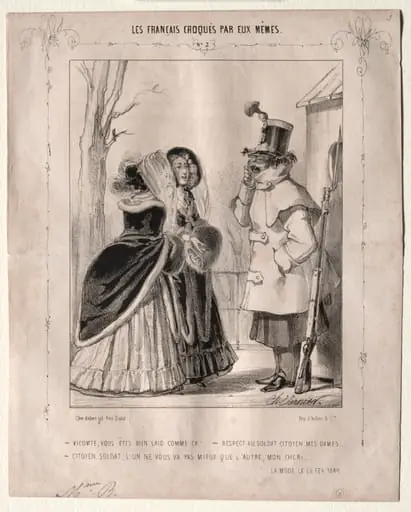 Les Français croquès par eux-mêmes: Vicomte, vous êtes bien laid comme ca!,,,Respect au soldat citoyen, mes dames...Citoyen, soldat, l'un ne vous va pas mieux que l'autre, mon cher!
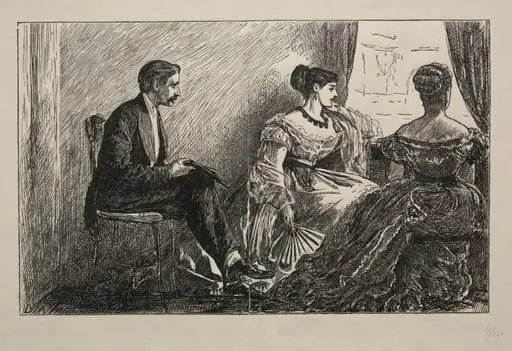 The White Camellia
- Wanted a Curate. Rather an Ordeal for the Reverend M. Green