Artwork
A Sleeping Leopard
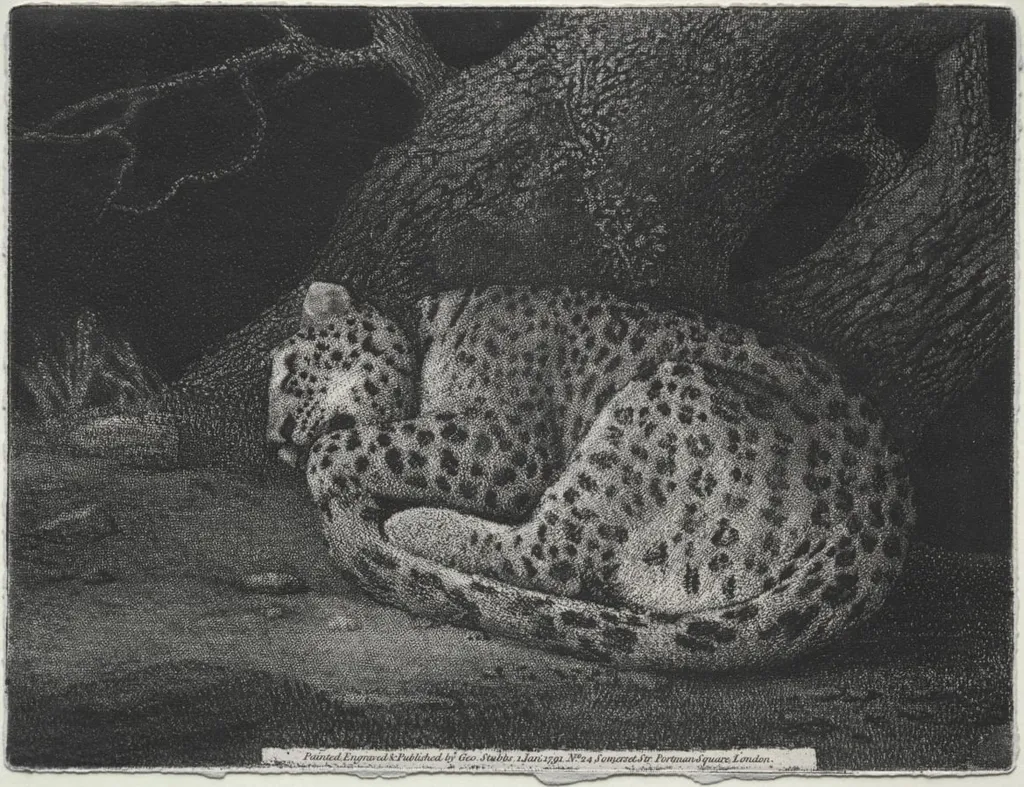
A Sleeping Leopard is a print by the Romanticist artist George Stubbs. It dates from 1791 and is held in the collection of the Cleveland Museum of Art.
- Accession no.
- 1980.90
- Credit line
- Purchase from the J. H. Wade Fund
About this work
Overview
A Sleeping Leopard is a print by George Stubbs, a renowned artist known for his detailed depictions of animals.
Subject & Meaning
The print shows a leopard asleep on a rocky outcropping, its fur illuminated by dappled sunlight. The leopard's anatomy is rendered with precision, suggesting a deep understanding of its physical structure.
Technique & Style
Stubbs employed soft-ground etching to capture the textures of the scene, including the roughness of tree bark and the softness of the leopard's fur. This technique allowed him to transfer the textures directly onto the printing plate.
Context
Stubbs' work was informed by his study of anatomy and likely his observations of animals in London's menageries, which housed exotic creatures from around the world.
Artist & collection
Artist
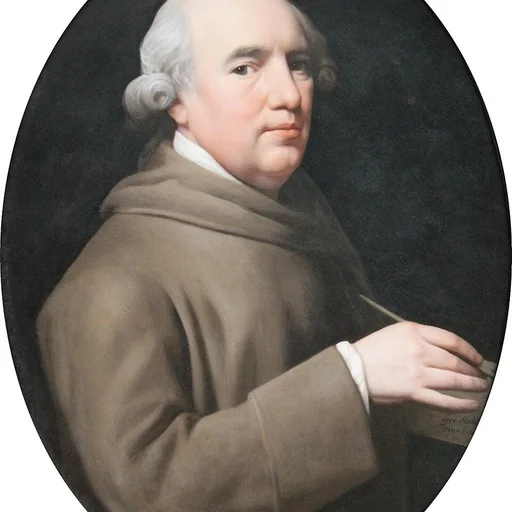
George Stubbs (25 August 1724 – 10 July 1806) was an English painter, best known for his paintings of horses.

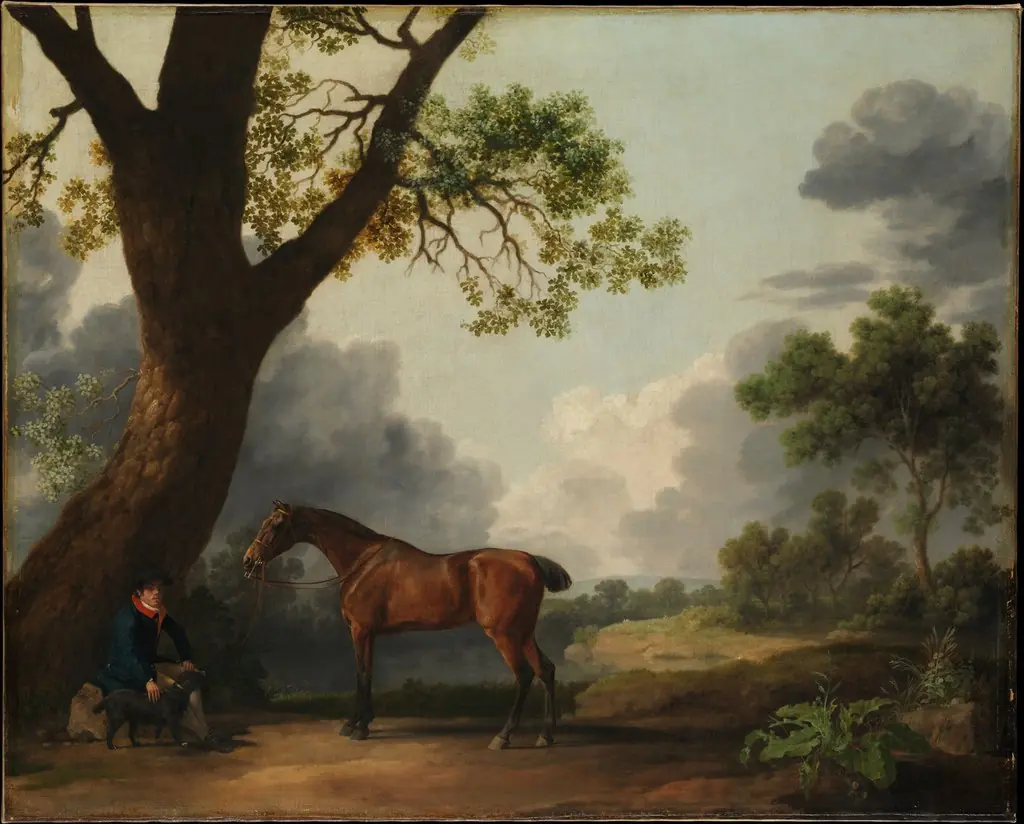 The Third Duke of Dorset's Hunter with a Groom and a Dog
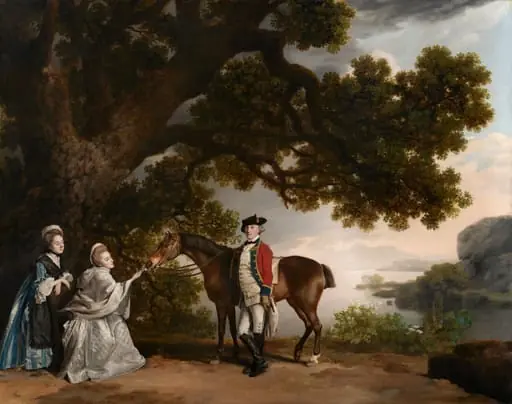 Captain Samuel Sharpe Pocklington with His Wife, Pleasance, and possibly His Sister, Frances
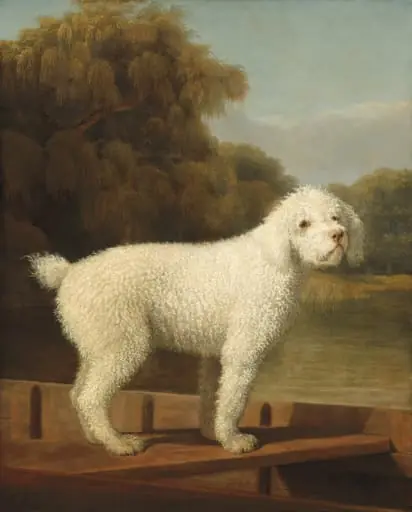 White Poodle in a Punt
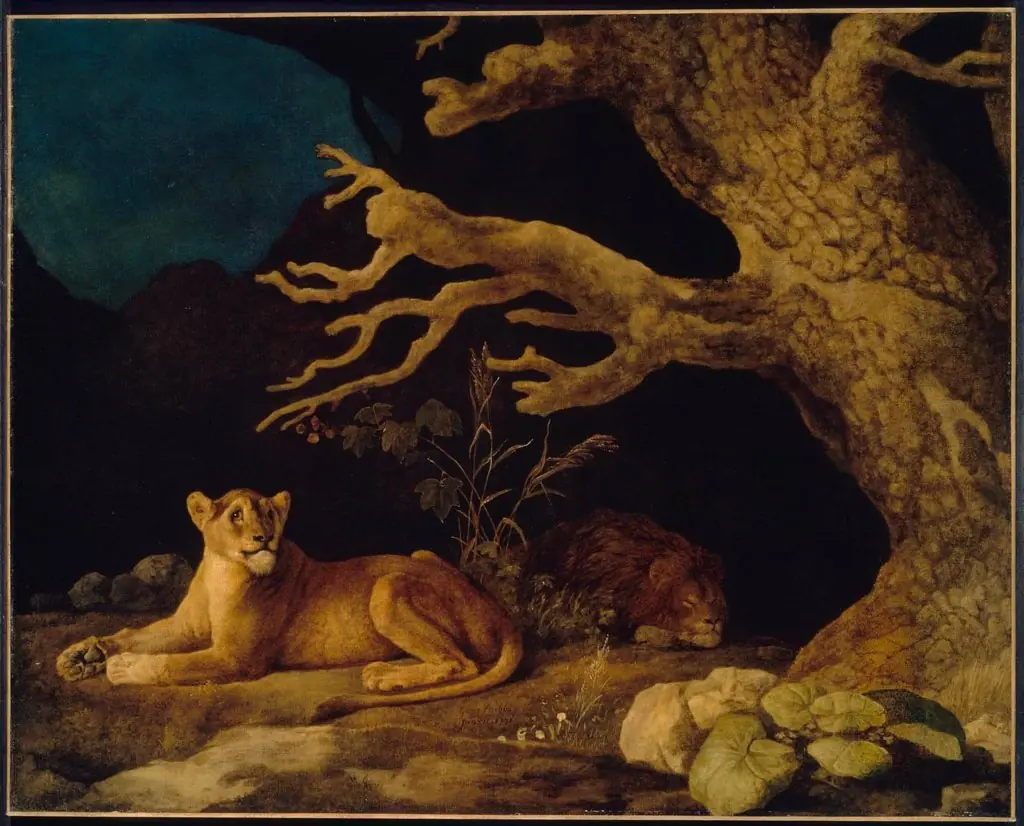 Lion and Lioness
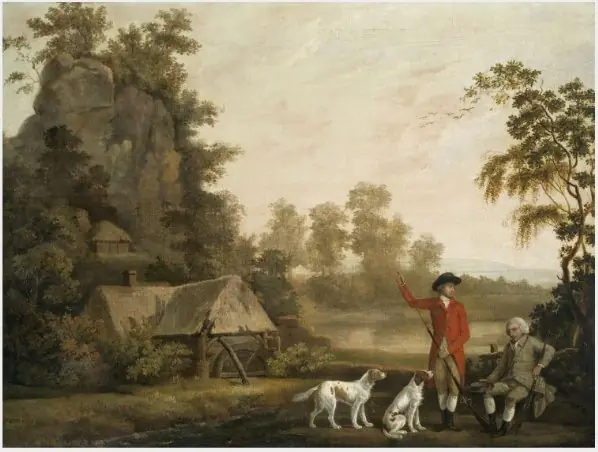 Sportsmen at Rest
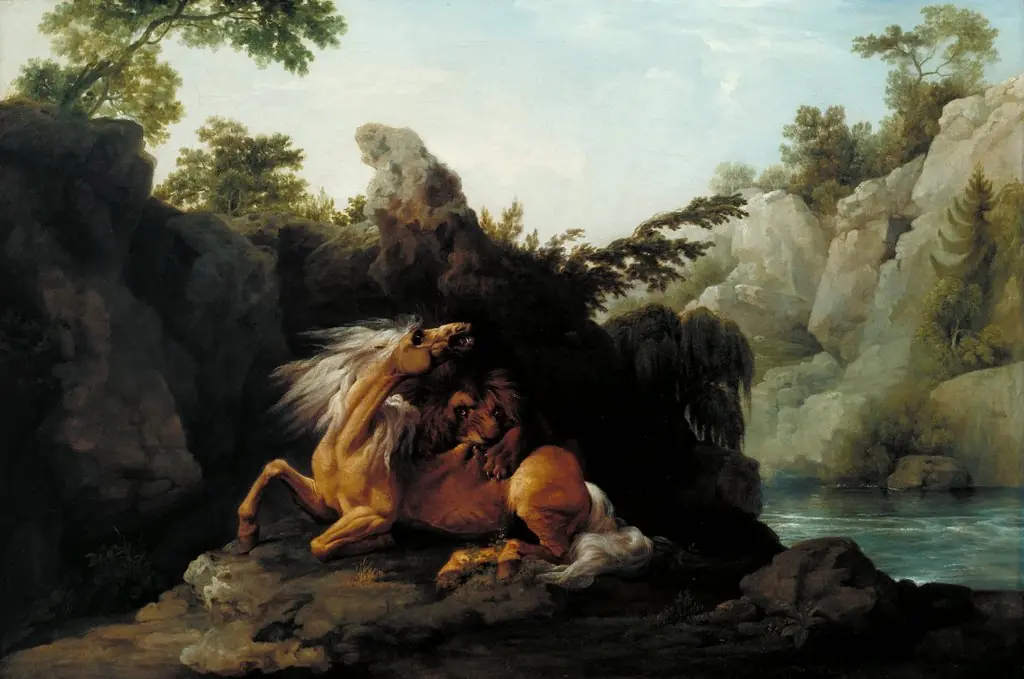 Horse Devoured by a Lion
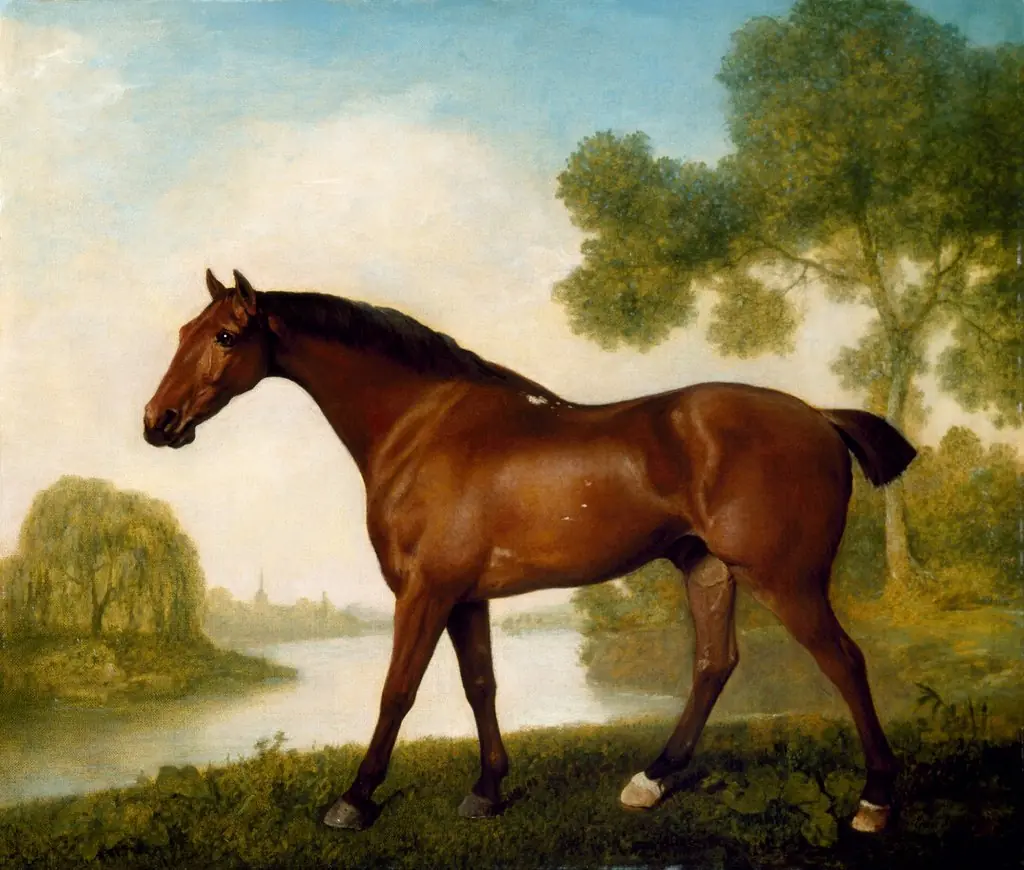 Truss, A Hunter
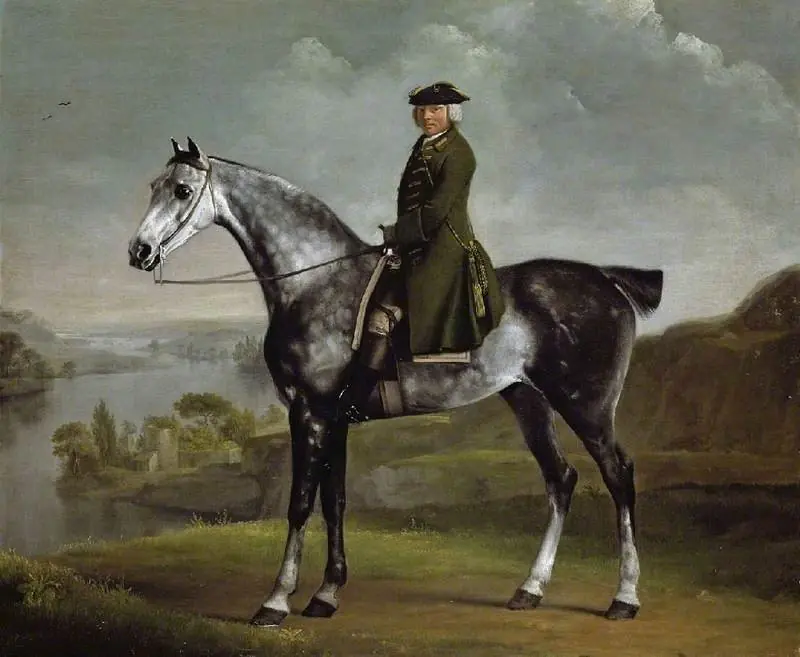 Joseph Smyth Esq, Lieutenant of Whittlebury Forest, Northamptonshire, on a dapple grey horse
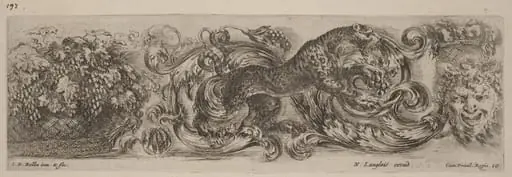
- Ornamental Frieze with Leopard
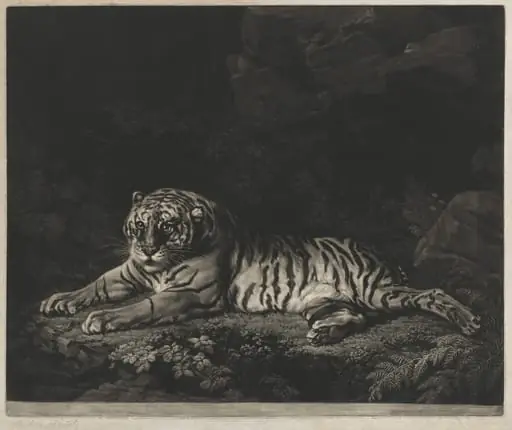 A Tigress
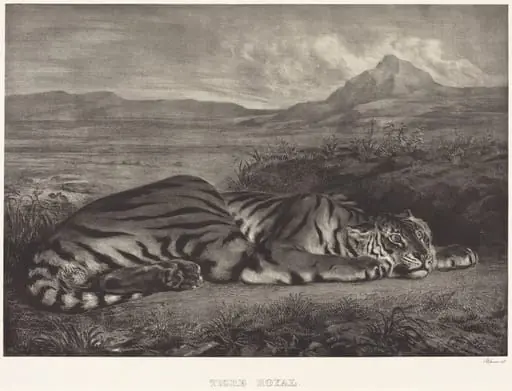 Royal Tiger (Tigre Royal)
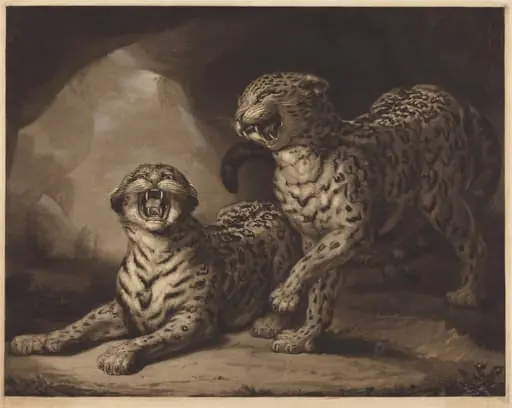 Leopards
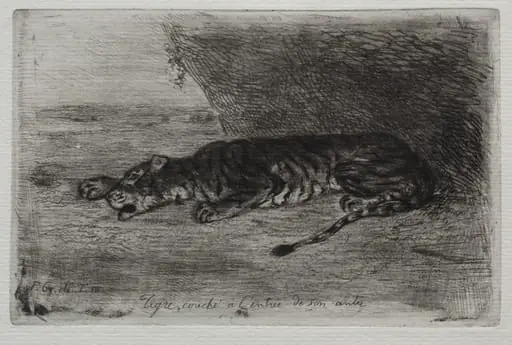 Tiger Sleeping at the Entrance to His Lair
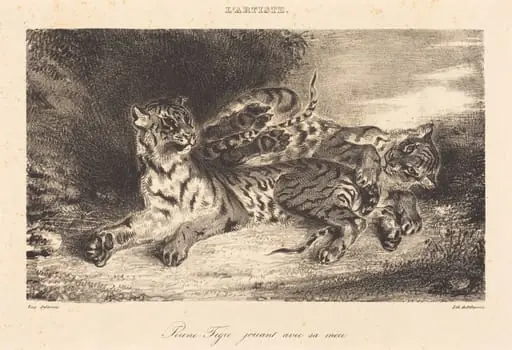 Young Tiger Playing with its Mother (Jeune tigre jouant avec sa mère)
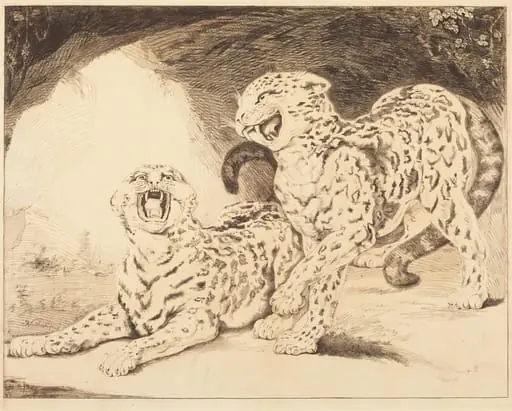 Leopards
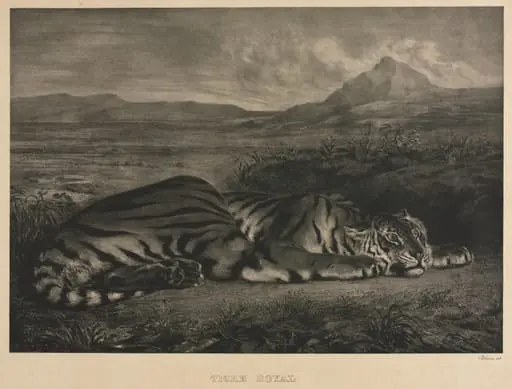 Tigre Royal
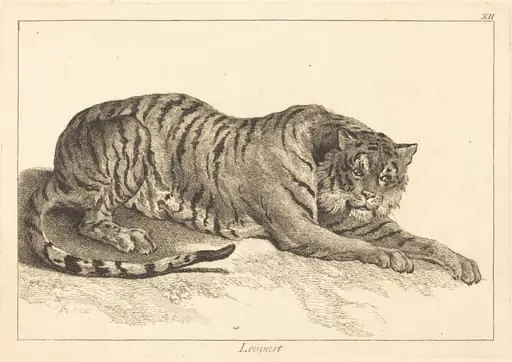 Leopart (Leopard or Tiger)
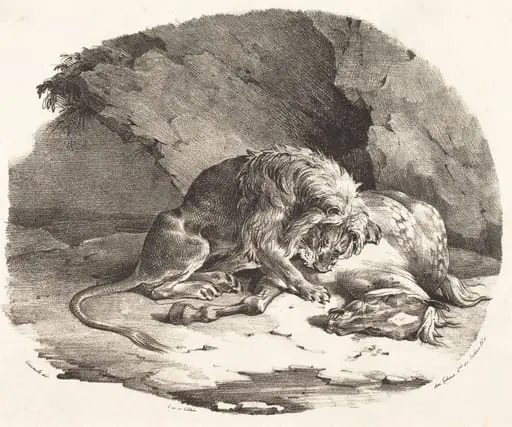 Lion Devouring a Horse
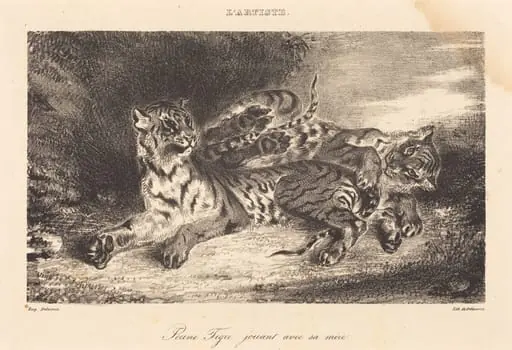 Young Tiger Playing with its Mother (Jeune tigre jouant avec sa mère)
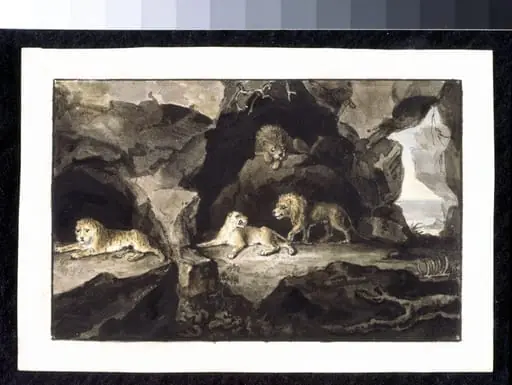 Lions and Lionesses