Artwork
White Poodle in a Punt
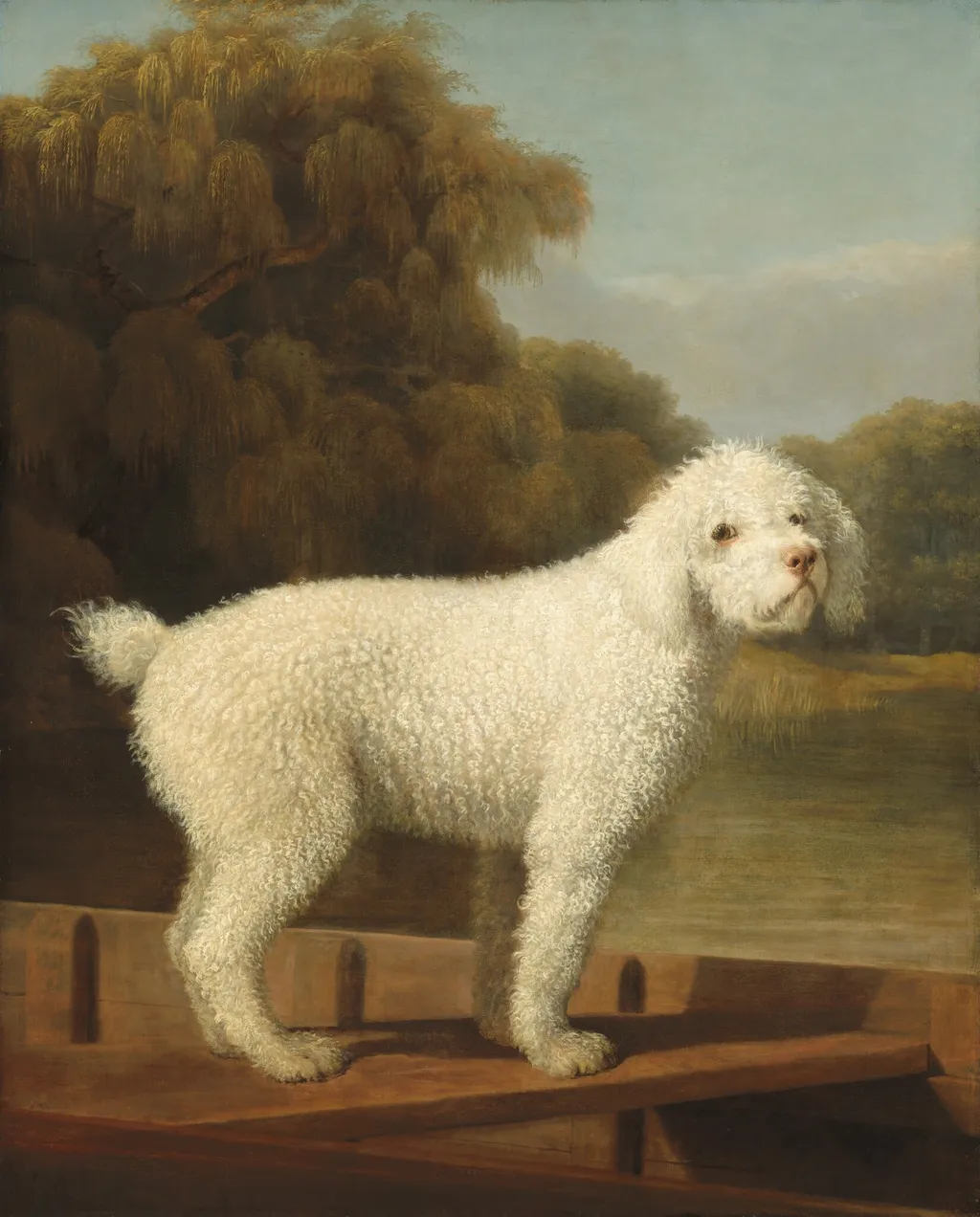
White Poodle in a Punt is an oil painting by the Romanticist artist George Stubbs. It dates from 1780 and is held in the collection of the National Gallery of Art.
About this work
Overview
White Poodle in a Punt is an oil on canvas painting by the British artist George Stubbs, dated to 1780.
White Poodle in a Punt is an oil on canvas painting by the British artist George Stubbs, dated to 1780. Measuring 127 by 101.5 centimeters, the work depicts a large white poodle standing aboard a flat-bottomed riverboat. The painting is an unusual animal portrait by an artist celebrated primarily for his equine subjects. It is currently held by the National Gallery of Art in Washington, D.C., having entered the collection as a bequest from Paul Mellon in 1999.
Subject & Meaning
The composition centers on a large white poodle standing in profile on a wooden punt, its body facing left while its head turns back toward the viewer. The dog's dark eyes and pinkish nose provide small points of contrast against its pale coat, and its alert stance suggests a moment of attentive observation. While dogs have historically symbolized fidelity and vigilance, in the eighteenth century the poodle specifically emerged as a fashionable aristocratic companion, making the animal a symbol of wealth and leisure. The tranquil setting, featuring a massive weeping willow, calm water, and a hazy sky, contrasts with the poodle's watchful posture, reflecting the period's evolving cultural attitudes toward animals as both status symbols and subjects of naturalistic study.
Technique & Style
Stubbs executed the work on canvas using oil paint, applying his characteristic scientific observation and anatomical precision to the poodle. The surface reveals a smooth, refined finish in the background landscape, contrasted by tactile, layered strokes used to render the dog's thick, curly coat. The fur is modeled with dense, textured brushwork in creamy whites and pale grays, built up through small, broken strokes and subtle tonal variations. The palette is restrained, relying on warm browns, muted greens, and atmospheric blues. Light falls evenly across the scene, modeling the dog's form with subtle shadows beneath its belly and legs, while the background elements are blended to create a soft, atmospheric effect that enhances the central subject's realism.
History & Provenance
The early ownership of the painting remains somewhat speculative, though it is believed to have belonged to Sir Jarrit Smyth of Ashton Court, Somerset, who died in 1783. It descended through the Smyth family to his great-great-great-granddaughter, Esme Smyth, who inherited Ashton Court in 1914. The work was not included in the 1947 estate sale at Ashton Court. It subsequently passed to Lord de Mauley of Langford House, Gloucestershire, before being sold at Christie's in London on July 8, 1949. The dealer Frank Sabin sold it in 1951 to the 21st Earl of Shrewsbury and Waterford of Ingestre Hall, Staffordshire. Following the Earl's ownership, it was sold at Sotheby's in London on March 23, 1960, and purchased by the gallery Colnaghi on behalf of Paul Mellon. Mellon bequeathed the painting to the National Gallery of Art in 1999.
Context
George Stubbs is renowned for his horse paintings, but he applied the same rigorous anatomical study to all animal subjects, having dissected numerous species to understand their internal structures. White Poodle in a Punt demonstrates his versatility beyond equine portraiture, applying his descriptive clarity and penetrating observation to a canine subject. The painting fits within the broader eighteenth-century animal painting genre, while its emphasis on naturalistic detail and the beauty of the animal connects it to the Romantic movement's focus on nature. The work stands as a testament to Stubbs's ability to capture animal character with the same precision he brought to his most celebrated thoroughbred portraits.
Own this work as a print
Artist & collection
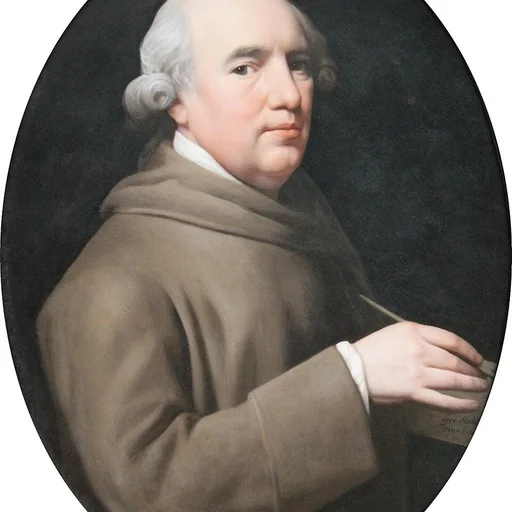
Artist
George Stubbs (25 August 1724 – 10 July 1806) was an English painter, best known for his paintings of horses.

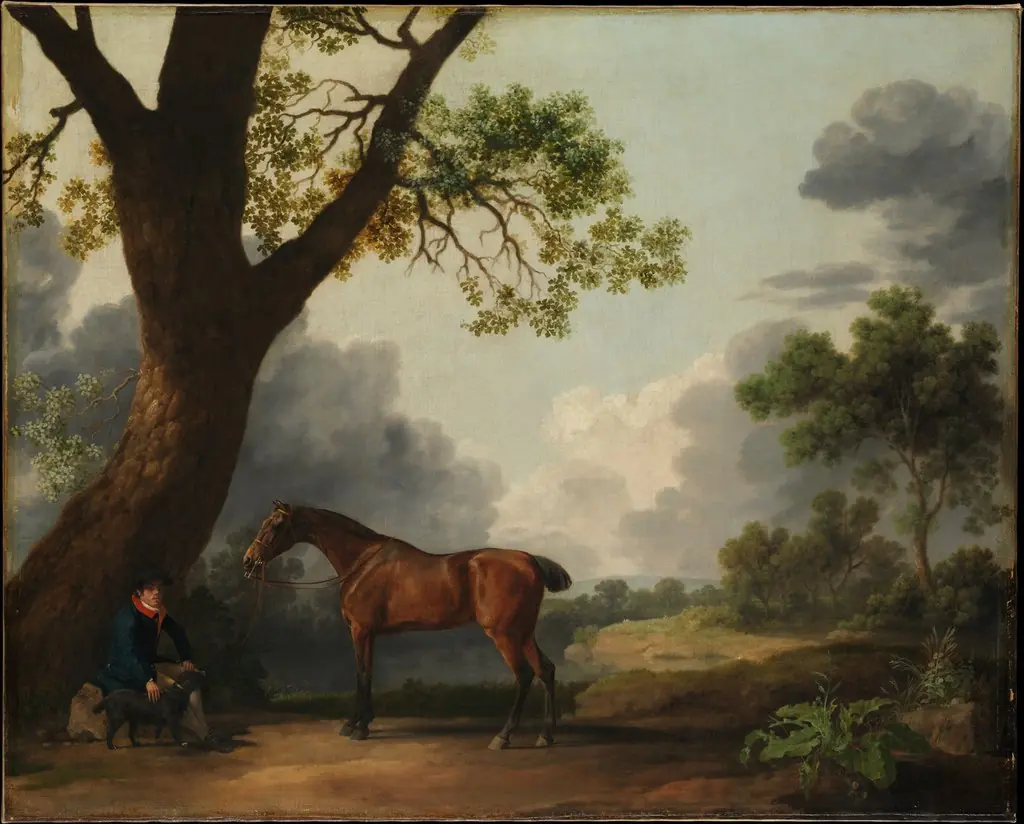 The Third Duke of Dorset's Hunter with a Groom and a Dog
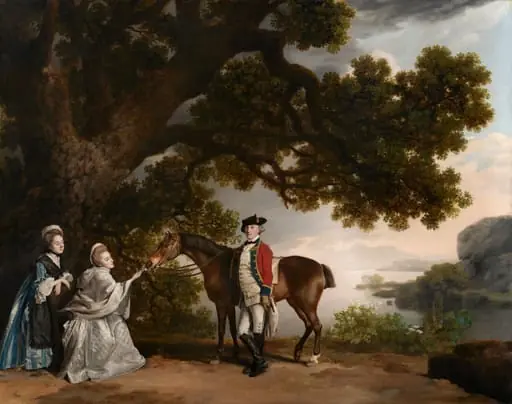 Captain Samuel Sharpe Pocklington with His Wife, Pleasance, and possibly His Sister, Frances
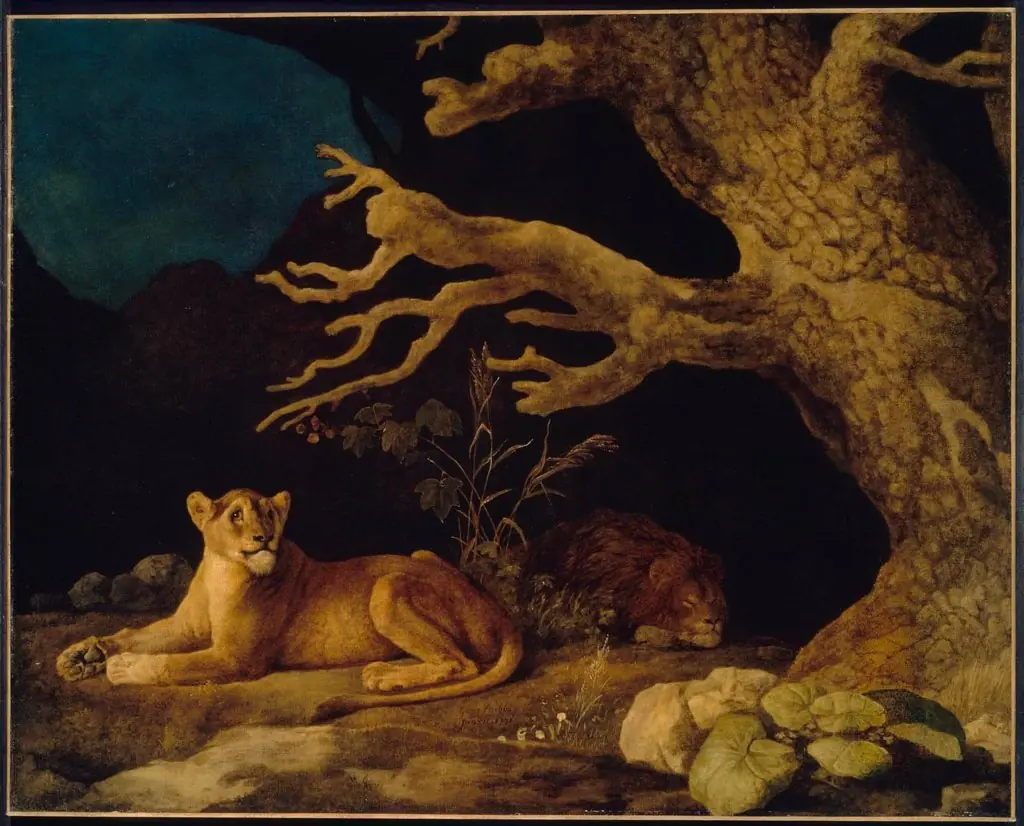 Lion and Lioness
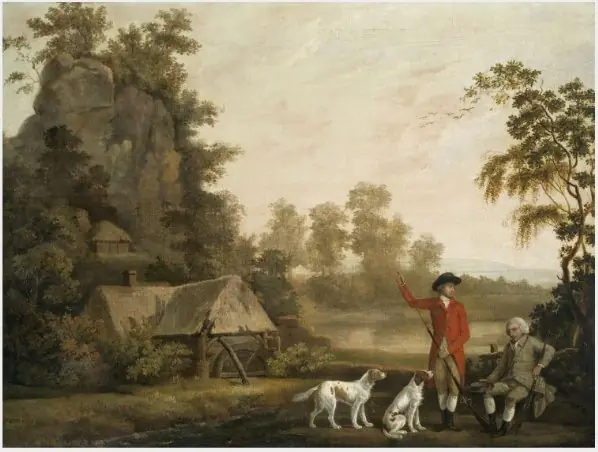 Sportsmen at Rest
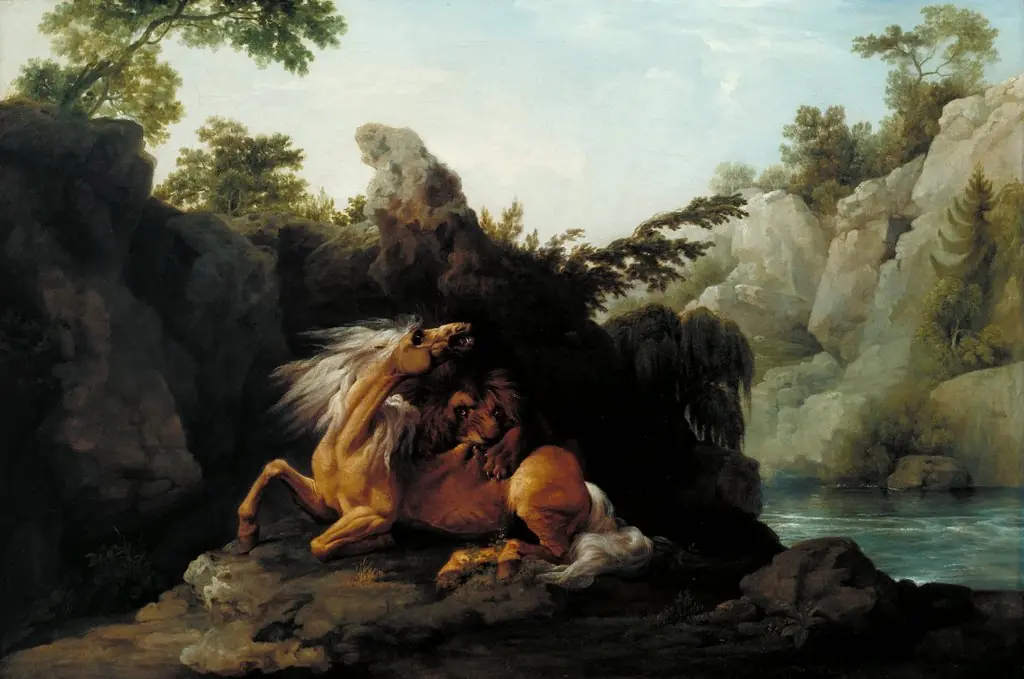 Horse Devoured by a Lion
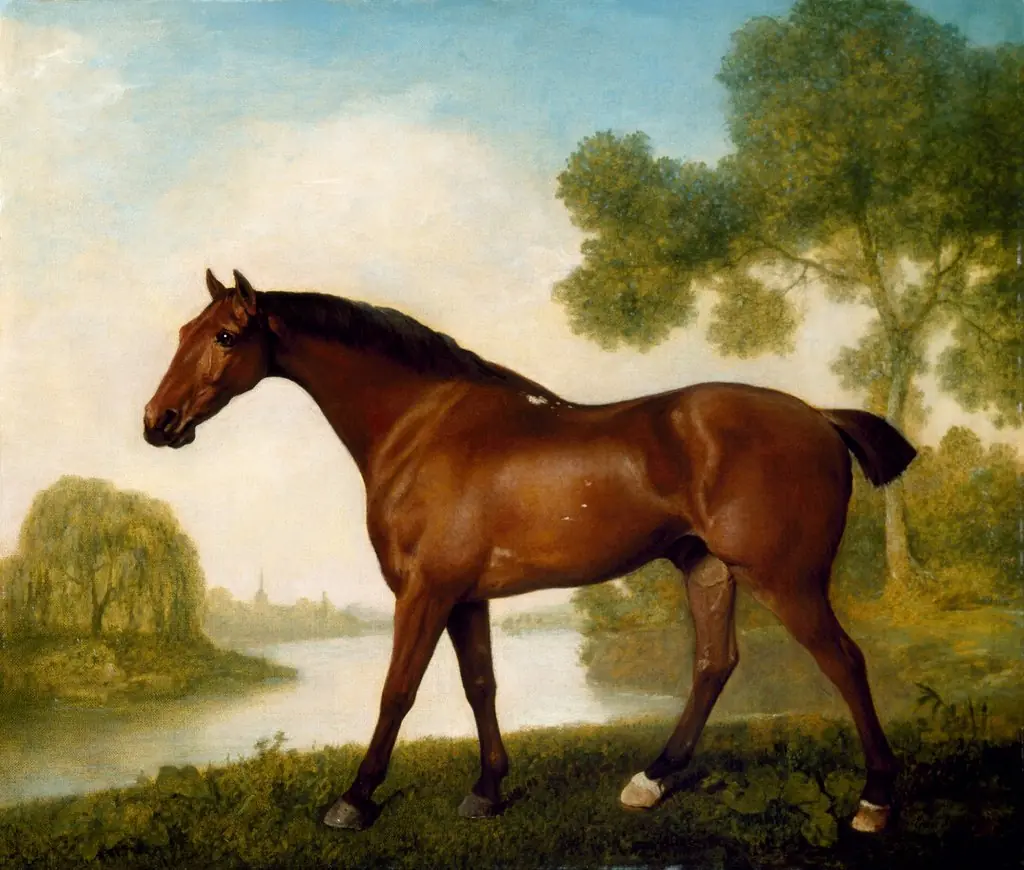 Truss, A Hunter
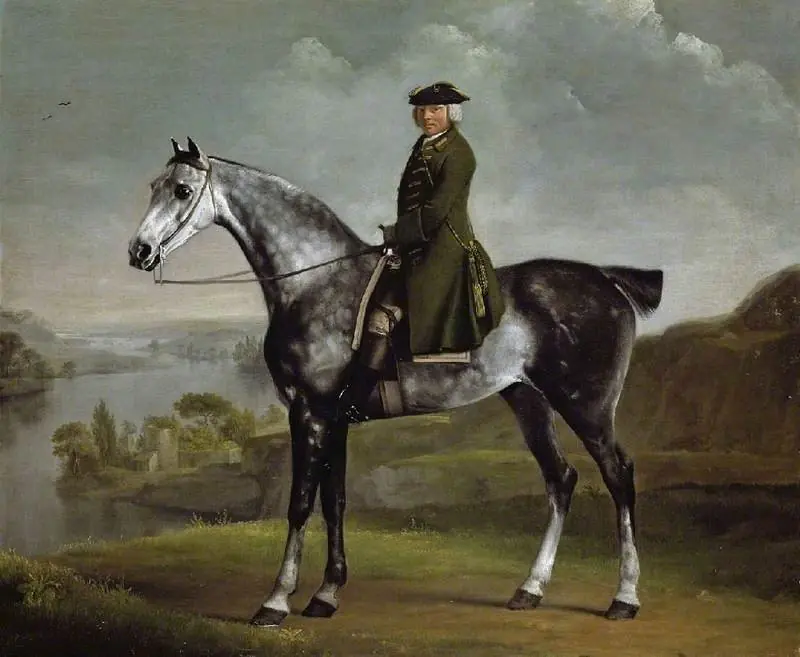 Joseph Smyth Esq, Lieutenant of Whittlebury Forest, Northamptonshire, on a dapple grey horse
 Gimcrack, with John Pratt up, on Newmarket Heath