Artwork
Allegorie auf Kaiser Leopold I. (1640-1705)
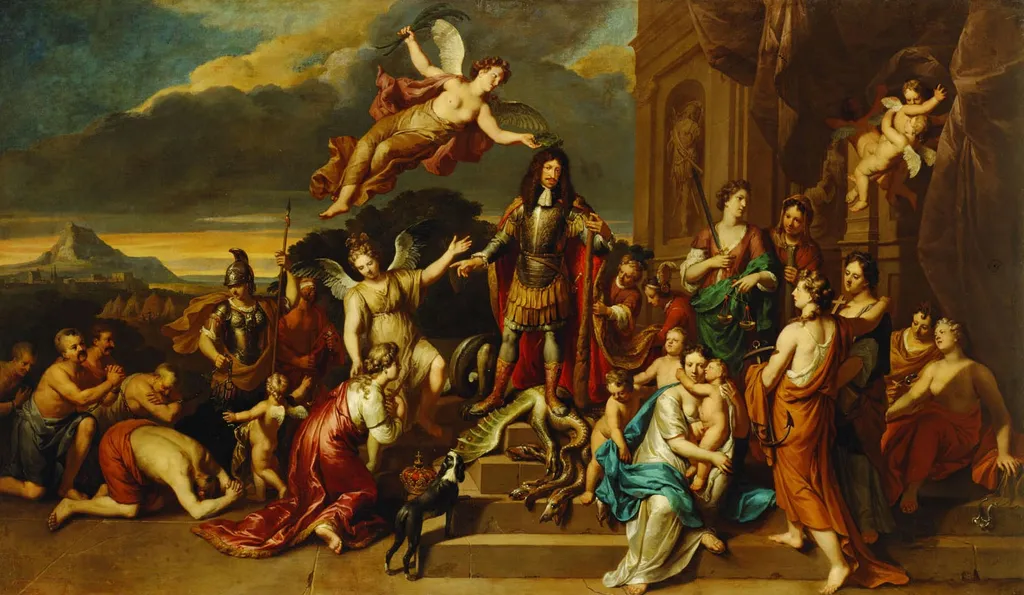
Allegorie auf Kaiser Leopold I. (1640-1705) is an oil painting by the Dutch Golden Age artist Gerard Hoet. It dates from 1672 and is held in the collection of the Kunsthistorisches Museum.
About this work
Subject & Meaning
Created by Gerard Hoet in 1672, this oil painting functions as an allegory dedicated to Emperor Leopold I.
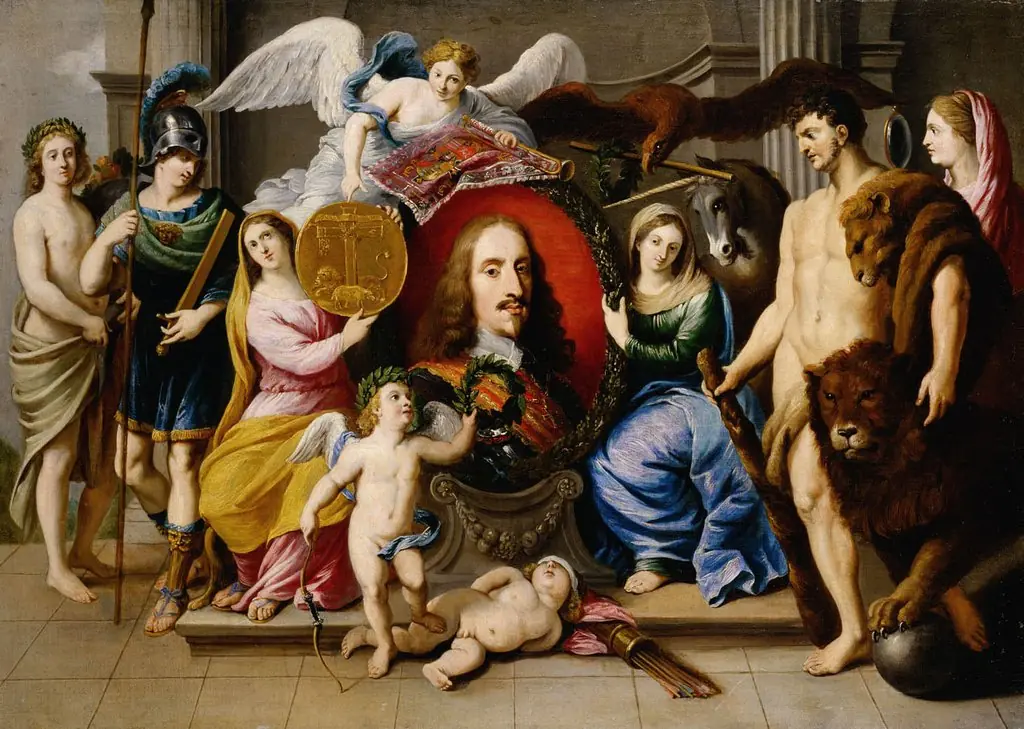
Created by Gerard Hoet in 1672, this oil painting functions as an allegory dedicated to Emperor Leopold I. The work is classified simultaneously as a portrait and an allegorical composition, indicating that it represents the monarch not merely through a literal likeness but through symbolic imagery. While the specific figures or attributes constituting the allegory are not detailed in the provided records, the title explicitly defines the subject as a symbolic tribute to the Holy Roman Emperor. The piece serves as a visual representation of Leopold I's reign, utilizing the conventions of 17th-century allegorical portraiture to convey imperial authority and meaning.
Technique & Style
Executed in 1672, this work is an oil painting on canvas. The piece functions as a portrait allegory, combining representational likeness with symbolic elements characteristic of the genre. The composition is substantial in scale, measuring 138 cm in height and 240 cm in width.
These dimensions suggest a large-format presentation intended for significant display within a collection, specifically held by the Kunsthistorisches Museum.
History & Provenance
The painting was created in 1672, as recorded by both the artist’s date and the work’s catalog entry.
It entered the collection of the Kunsthistorisches Museum, where it remains today, housed in the Schloss Ambras Innsbruck. The work is classified as an oil on canvas with dimensions of 138 cm in height and 240 cm in width.
The painting is held in the collection of the Kunsthistorisches Museum, located at Schloss Ambras in Innsbruck. Created in 1672, the work is executed in oil on canvas and measures 138 cm in height by 240 cm in width. The provided sources identify the piece as an allegorical portrait of Emperor Leopold I by Gerard Hoet within this specific museum holding. No specific inventory numbers or records of past exhibitions are detailed in the available documentation.
Context
The painting's allegorical portrayal of Emperor Leopold I reflects Baroque-era political messaging, aligning with contemporary efforts to legitimize Habsburg authority through visual rhetoric. Gerard Hoet's stylistic approach situates the work within the Northern Baroque tradition, emphasizing detail and grandeur characteristic of court portraiture in late 17th-century Central Europe. Its inclusion in the Kunsthistorisches Museum's collection since 1672 underscores its enduring significance as both an artistic achievement and a historical artifact.
Scholarship on the piece highlights its role in shaping imperial iconography, with recent studies emphasizing its technical mastery and symbolic complexity within the broader context of European allegorical painting.
Overview
Gerard Hoet’s 1672 oil painting, titled Allegorie auf Kaiser Leopold I., is part of the collection of the Kunsthistorisches Museum. The work presents a complex allegorical tableau that juxtaposes a contemporary figure in elaborate armor with a host of classical and celestial beings, set against an architectural backdrop.
Artist & collection


 Diana and her Nymphs
 Queen Cleophis Offers Alexander the Great Wine after Conquering Massaga
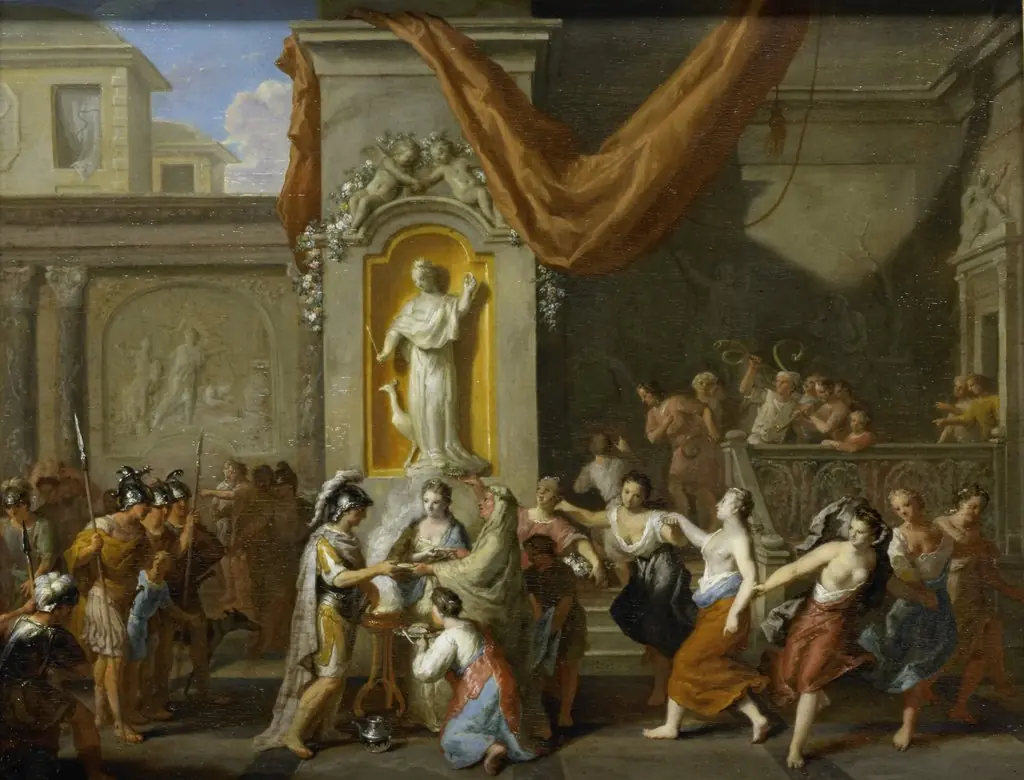 Marriage of Alexander the Great, King of Macedonia, with Roxana of Bacteriane
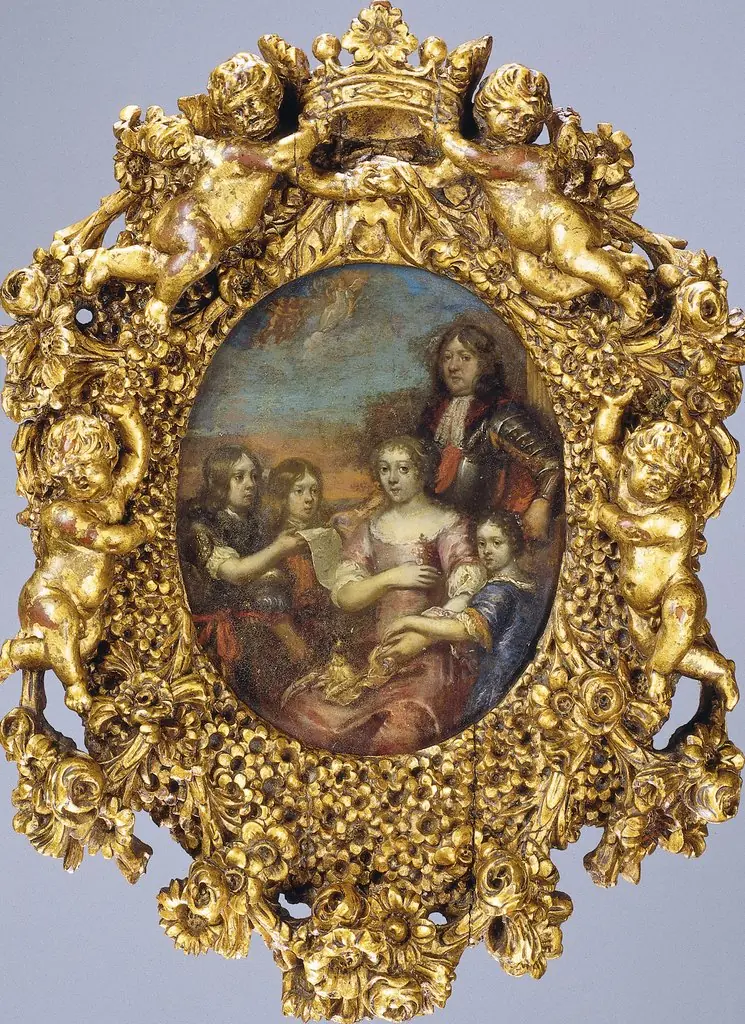 Family Portrait of Willem Hadriaan of Nassau, Lord of Odijk, with his Wife and Children
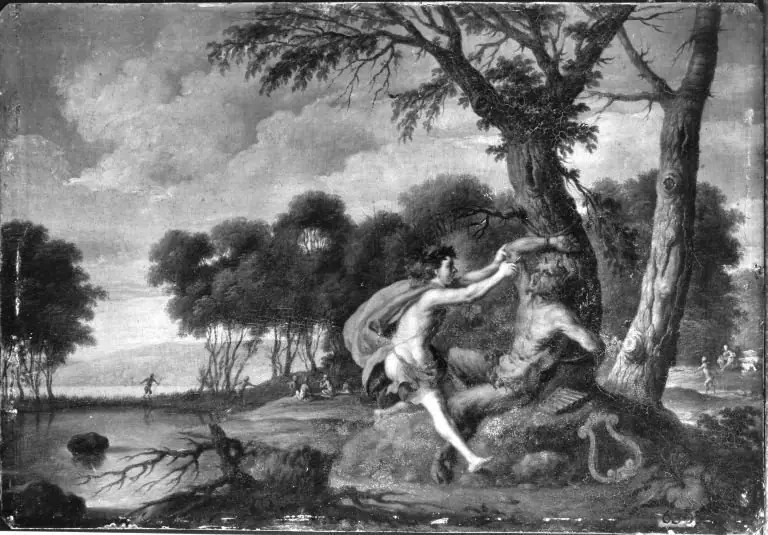 Schindung des Marsyas (?)
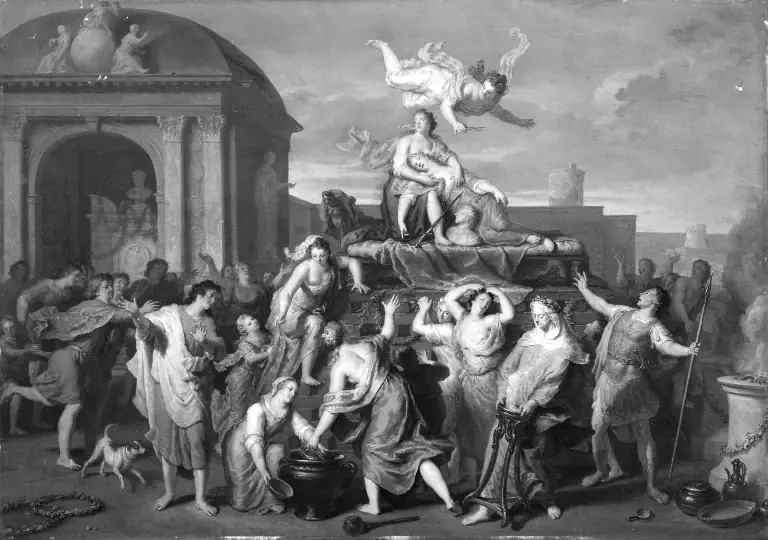 Death of Dido
 Idyllic Landscape with Fortress
 Idyllic Landscape with Watch-tower
- The Guild of the Crossbow Venerates the Portrait of Headman Jan Karel de Cordes
 The leavetaking of Captain Hendrik de Sandra (1619-1707), sent off by his wife and children
 Portrait of the Earl of Pembroke with His Family (copy)
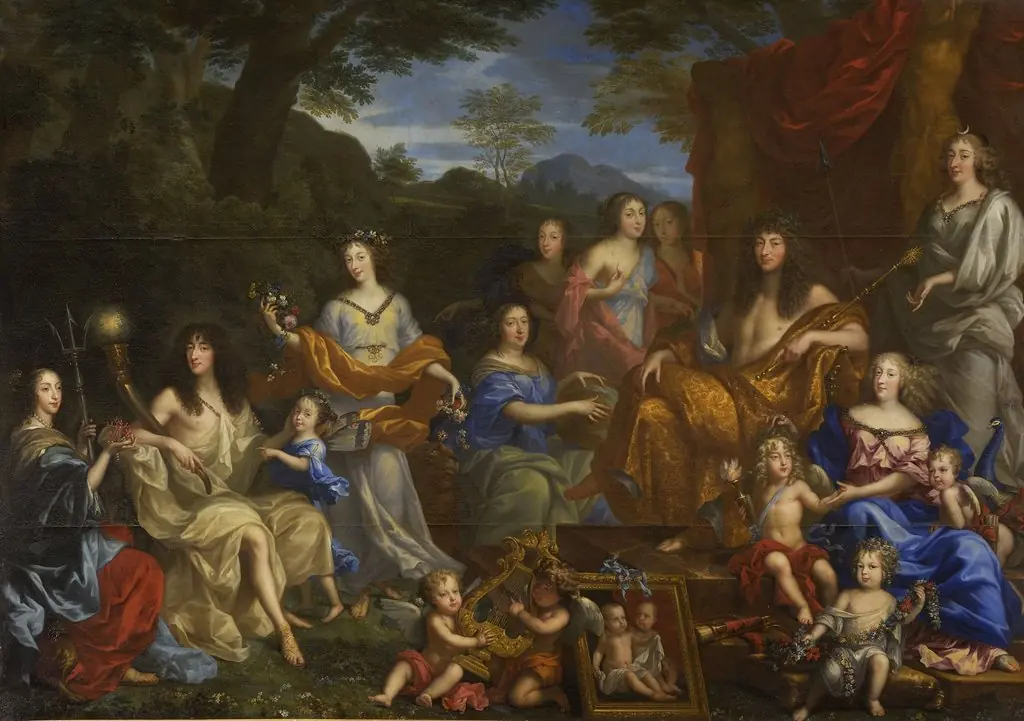 Mythological portrait of Louis XIV and the royal family
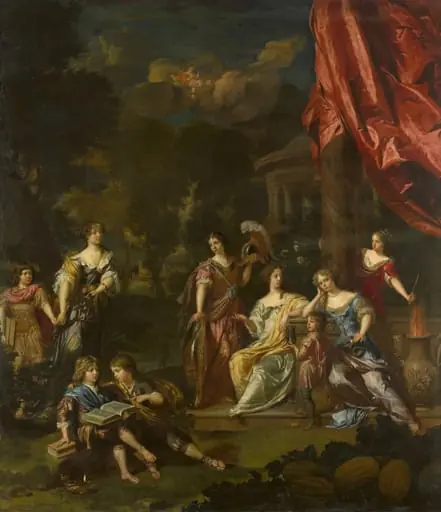 Allegorizing Group Portrait of the Children of Diederic Pietersz van Leyden van Leeuwen, Burgomaster of Leiden, and Alida Paets
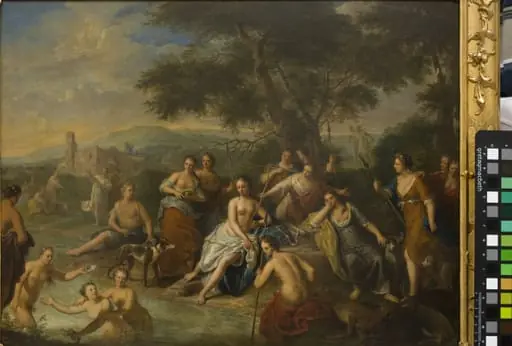 Diana and her Nymphs
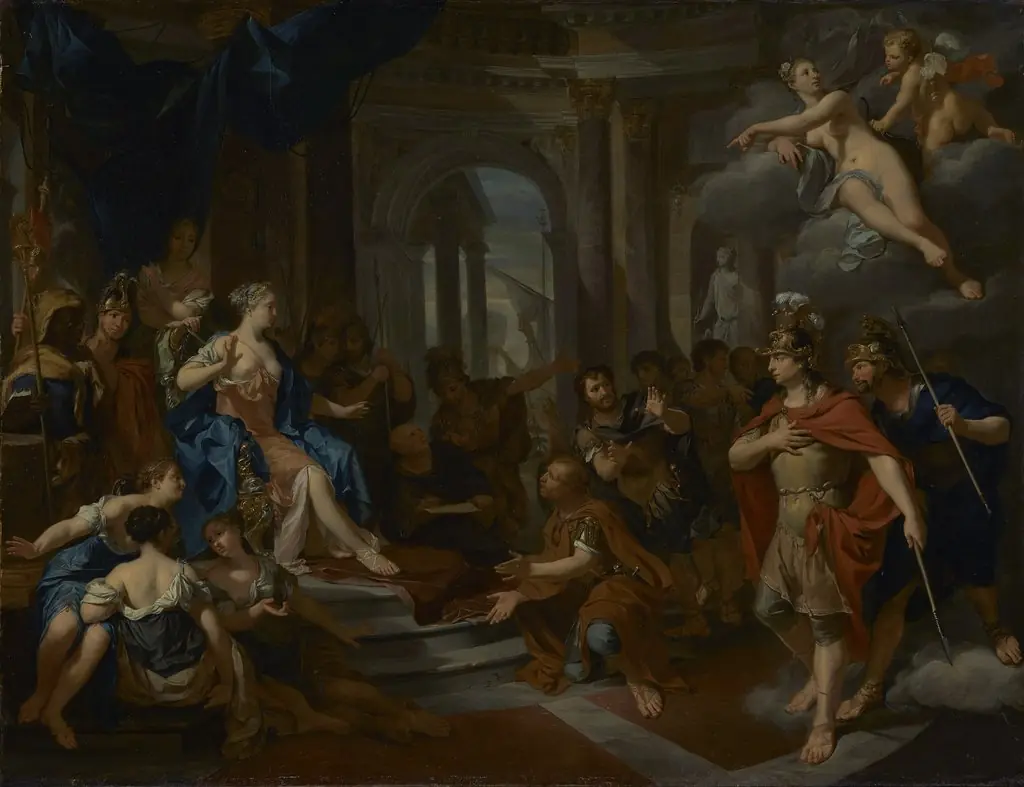 Dido and Aeneas
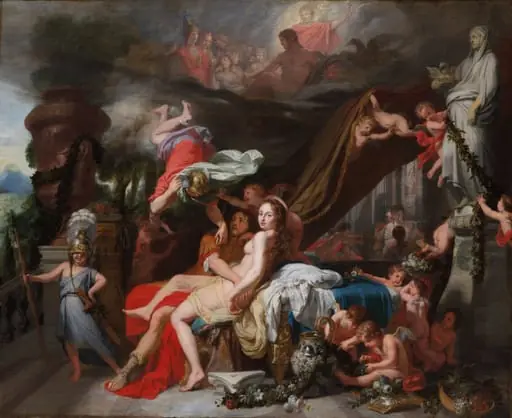 Hermes Ordering Calypso to Release Odysseus
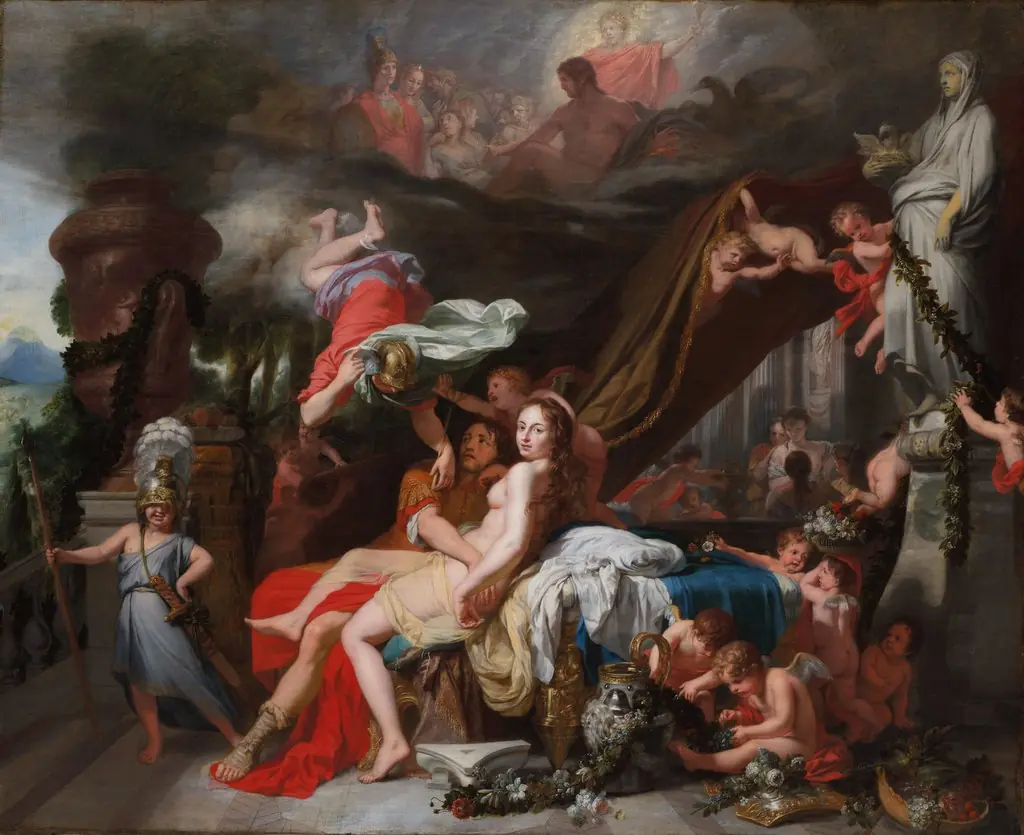 Hermes Ordering Calypso to Release Odysseus
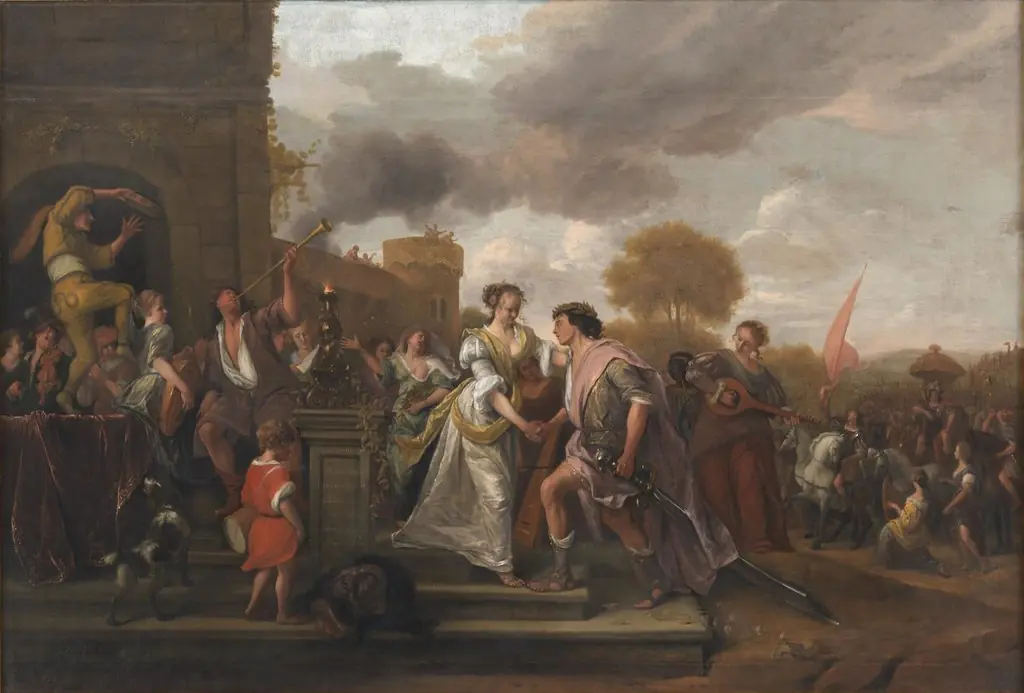 David Returning Victorious after Defeating Goliath and the Philistines
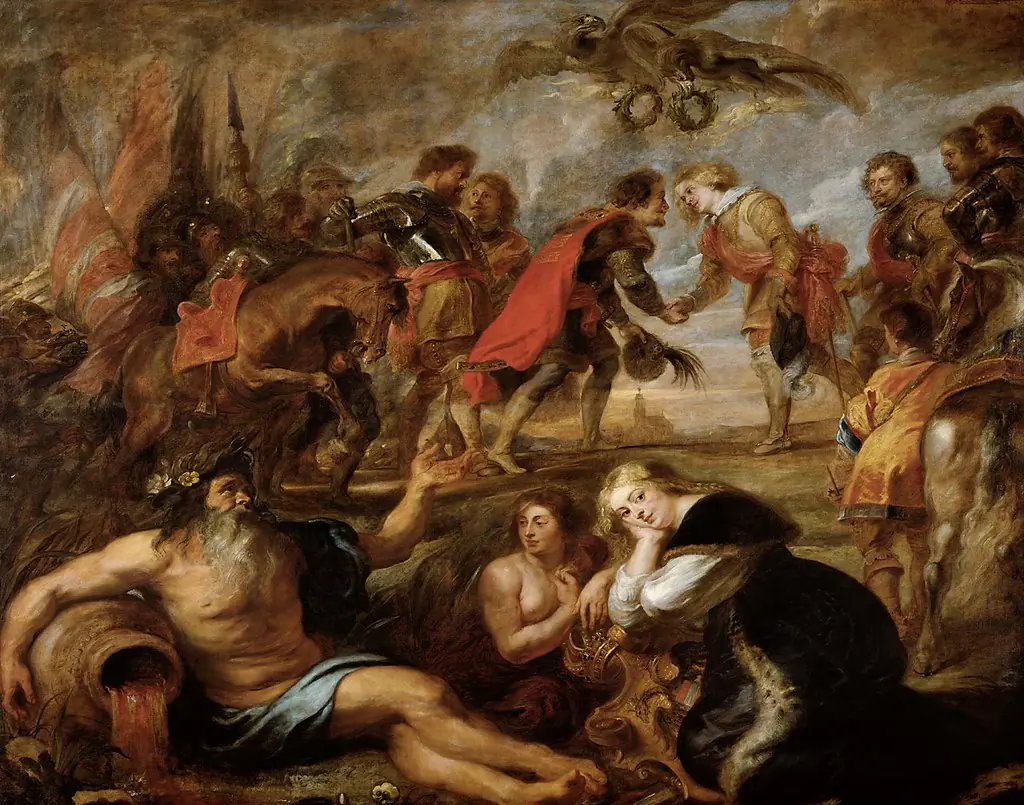 Meeting of King Ferdinand and Cardinal-infante Ferdinand at Nördlingen
 Allegory on Archduke Leopold Wilhelm (1614-1662)