Artwork
Death of Dido
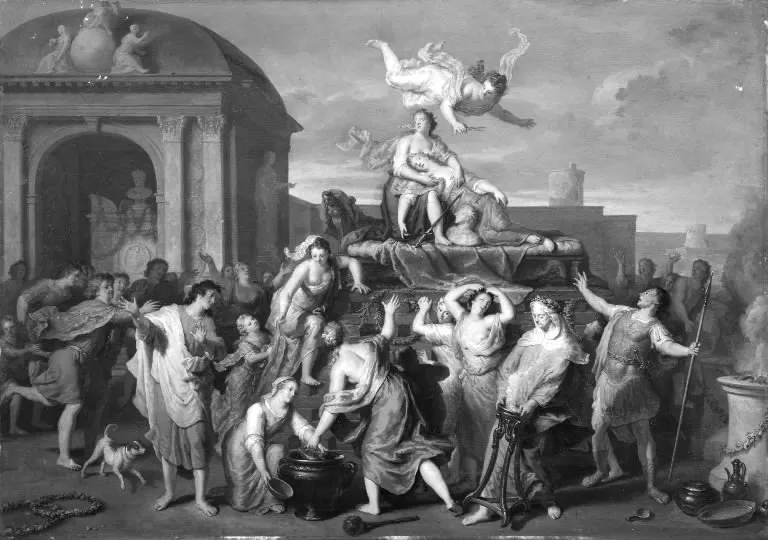
Death of Dido is an oil painting by the Dutch Golden Age artist Gerard Hoet. It dates from 1700 and is held in the collection of the Statens Museum for Kunst.
About this work
Subject & Meaning
The composition utilizes the panel medium to capture this dramatic scene from antiquity, serving as a visual interpretation of the legendary figure's final act.
Gerard Hoet's 1698 oil painting depicts the mythological suicide of Dido, the Queen of Carthage. The work illustrates the tragic climax of her story, focusing on the moment of her death as the central narrative event. As a piece of mythological art, the subject represents the consequences of abandoned love and political despair found in classical literature.
The composition utilizes the panel medium to capture this dramatic scene from antiquity, serving as a visual interpretation of the legendary figure's final act.
Technique & Style
Gerard Hoet executed Death of Dido in 1698 using oil paint applied to a wooden panel. The artwork measures 43.5 by 62 centimeters. As a mythological painting, it visually narrates the death of its central subject, Dido, through Hoet's handling of the medium on the rigid support.
History & Provenance
Death of Dido is an oil painting on panel by Gerard Hoet, dated 1698. The work entered the collection of the Statens Museum for Kunst in Denmark, where it is currently held. No information is available on the original commissioner, the circumstances of its creation, or any intermediate owners between the artist and the museum.
The panel measures 43.5 cm in height by 62 cm in width. No further documentation of its early provenance, exhibition history, or acquisition details by the Statens Museum for Kunst is recorded in the available sources.
Death of Dido (1698) by Gerard Hoet is held by the Statens Museum for Kunst in Copenhagen, where it is accessioned under the museum’s collection inventory. The work has been part of the museum’s exhibitions, including a 2015 display of Dutch and Flemish paintings from the 17th century and a 2019–2020 exhibition on mythological painting in European art.
Context
Gerard Hoet's 1698 oil painting Death of Dido, depicting the mythological figure's demise, resides in the Statens Museum for Kunst collection in Copenhagen. The work belongs to the mythological painting genre and exemplifies Dutch Golden Age narrative art through its adherence to classical storytelling and compositional clarity. Scholarship emphasizes its significance within Hoet's oeuvre as a refined treatment of Ovidian themes, reflecting the late Baroque period's fascination with emotional restraint and allegorical depth.
Its placement in a major Danish national museum underscores the transnational appreciation of Dutch narrative painting beyond the Netherlands, situating it within broader European artistic dialogues of the late 17th century.
Overview
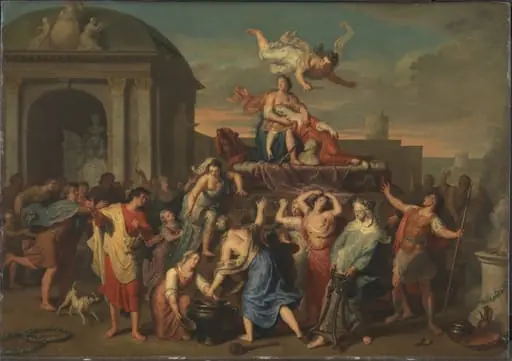
Gerard Hoet’s oil on canvas, executed around 1700, portrays a pivotal moment from the legend of Dido. The composition centers on a massive sarcophagus surrounded by a tumultuous crowd, while a winged presence hovers above the seated woman. The work is part of the collection of Denmark’s Statens Museum for Kunst.
Artist & collection


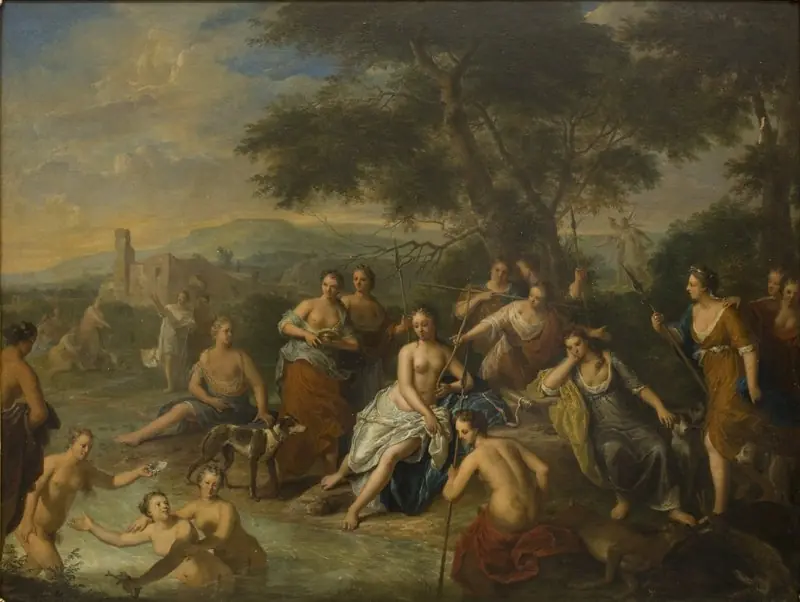 Diana and her Nymphs
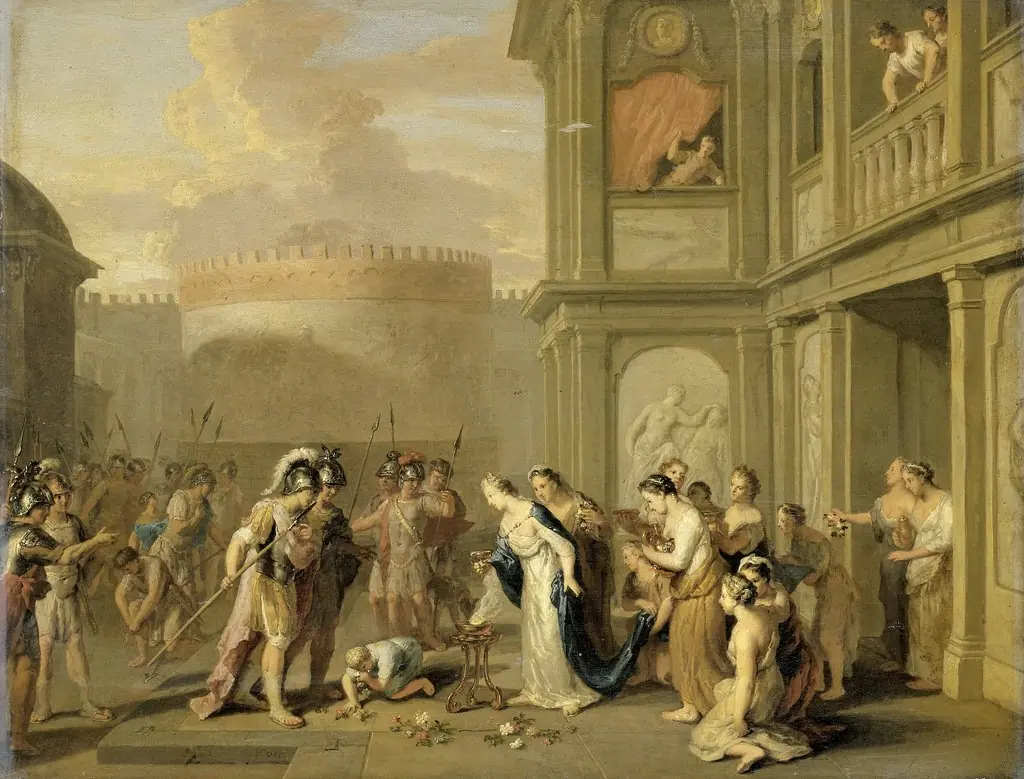 Queen Cleophis Offers Alexander the Great Wine after Conquering Massaga
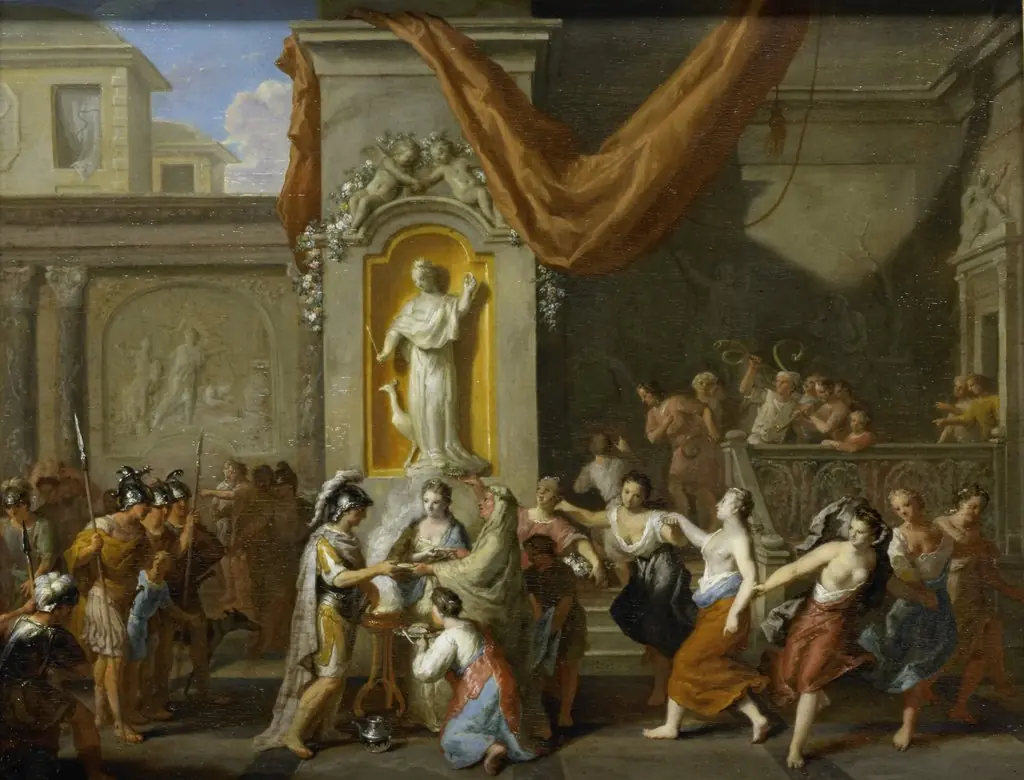 Marriage of Alexander the Great, King of Macedonia, with Roxana of Bacteriane
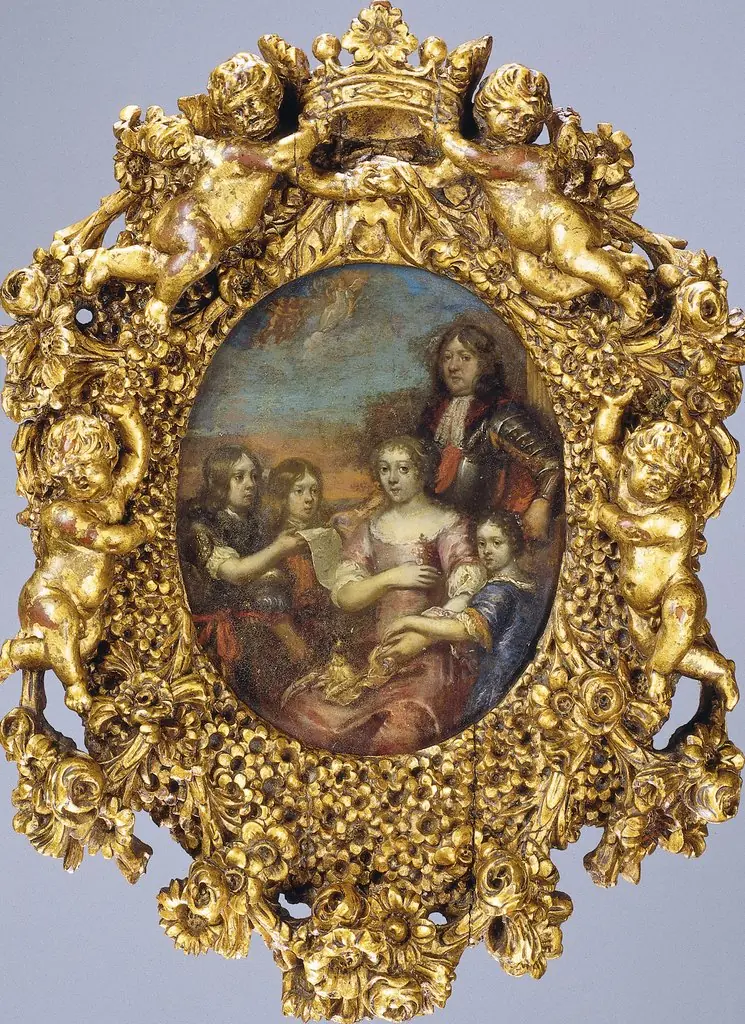 Family Portrait of Willem Hadriaan of Nassau, Lord of Odijk, with his Wife and Children
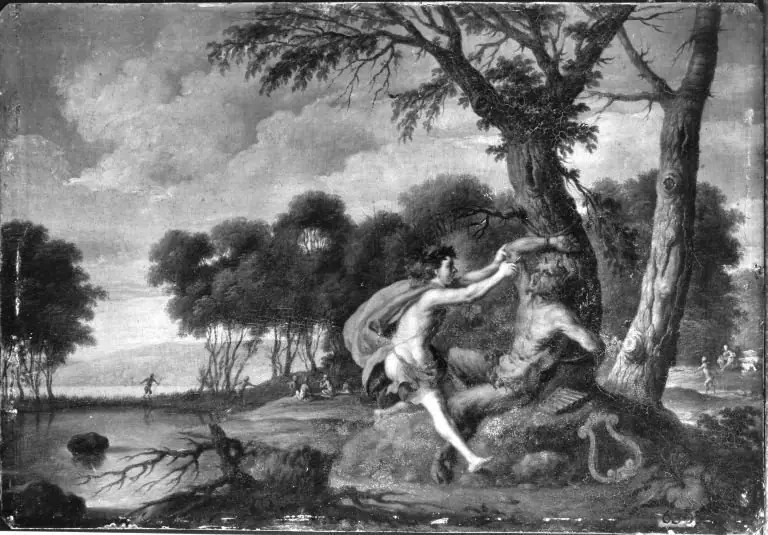 Schindung des Marsyas (?)
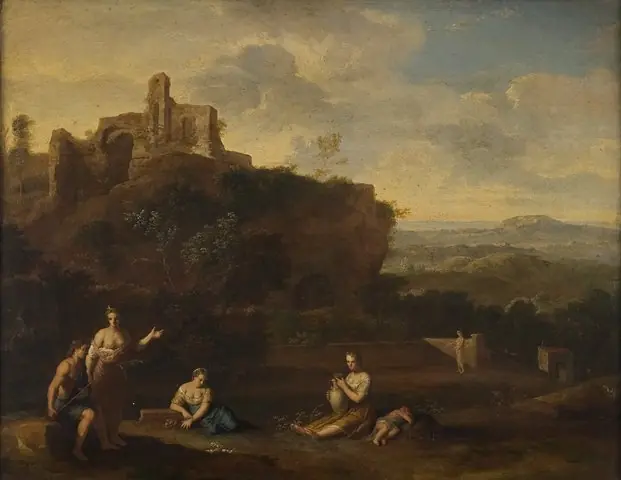 Idyllic Landscape with Fortress
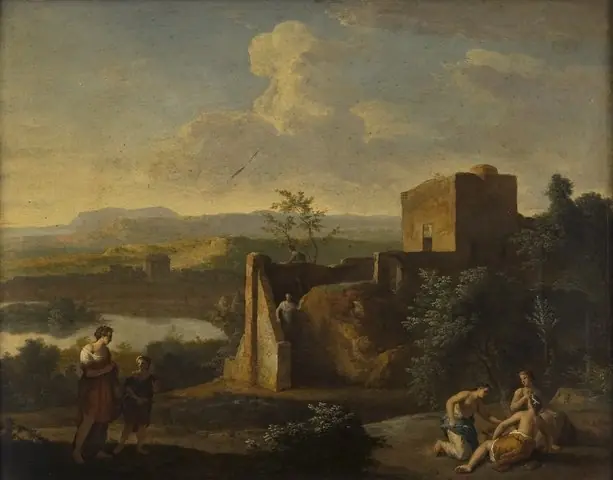 Idyllic Landscape with Watch-tower
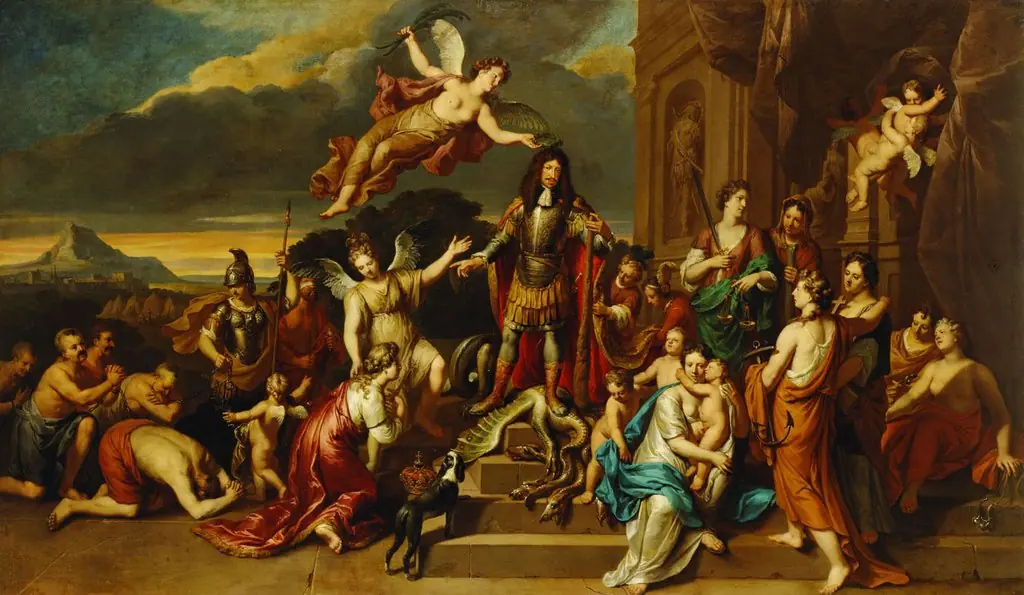 Allegorie auf Kaiser Leopold I. (1640-1705)
 Landscape with Messalina's Wedding
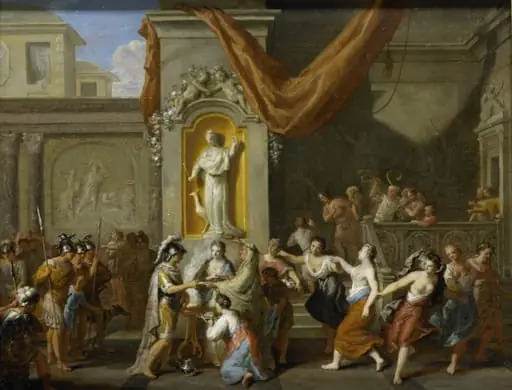 The Marriage of Alexander the Great and Roxane of Bactria
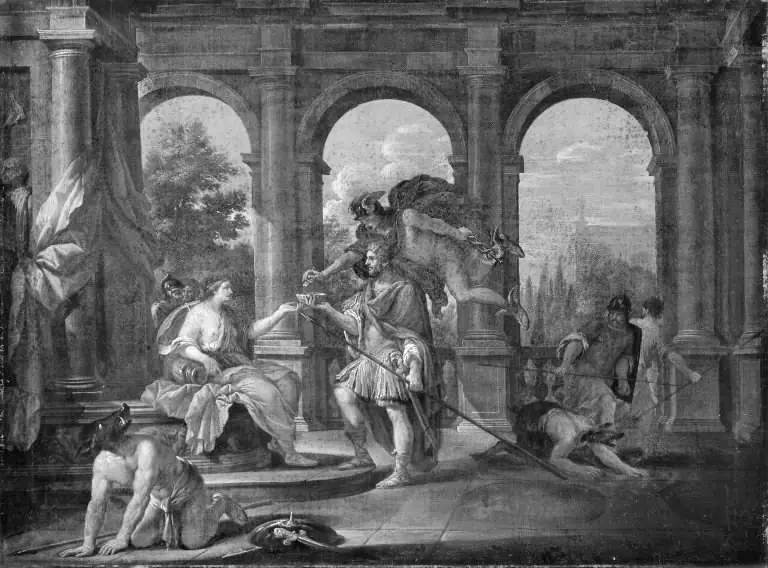 Circe and Ulysses
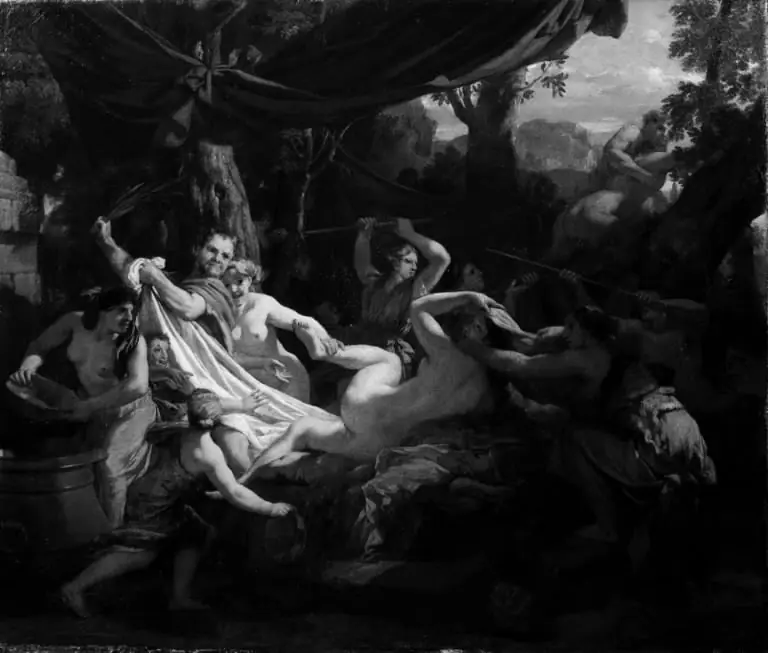 Nymphs Surprised by Satyrs
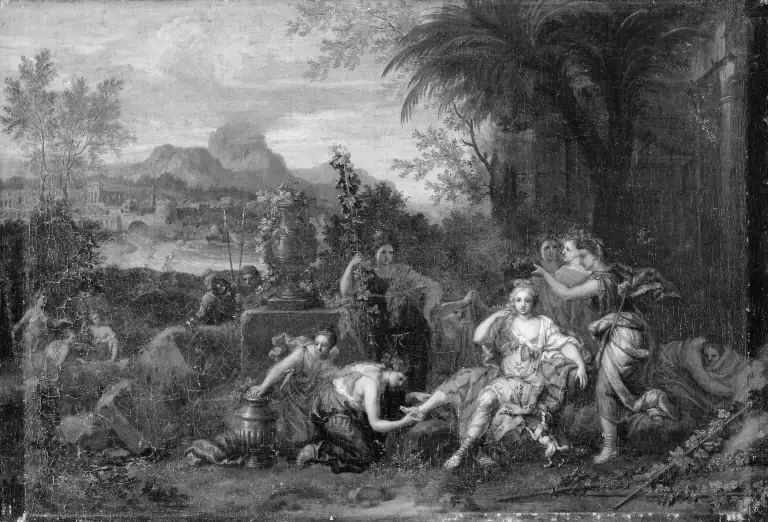 Landscape with Messalina's Wedding
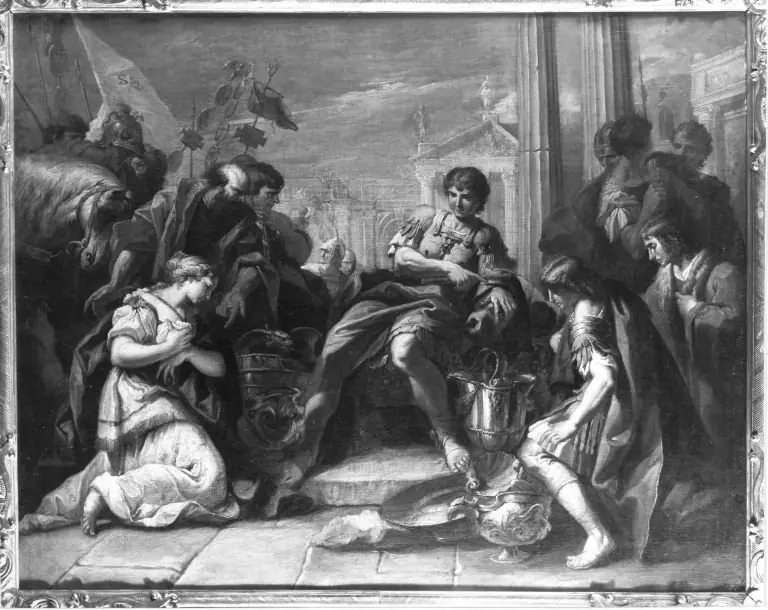 Enthaltsamkeit des Scipio
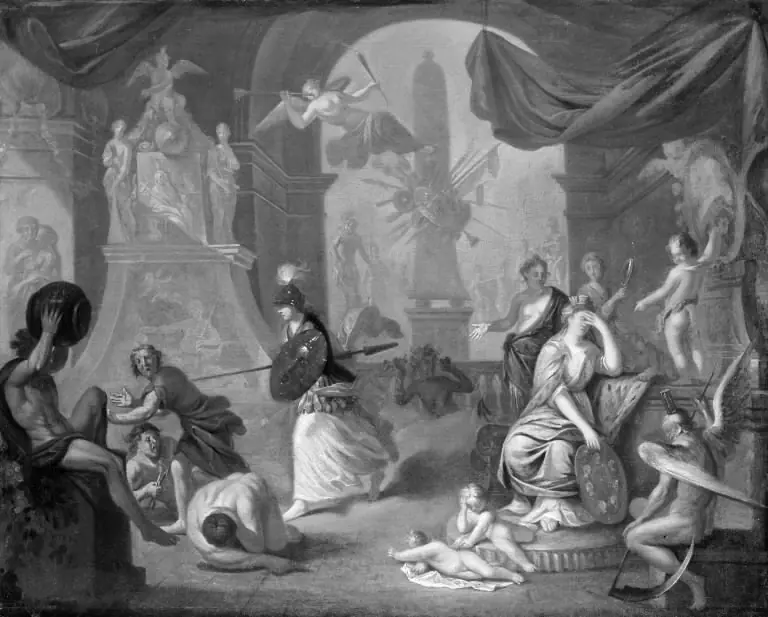 An Allegory
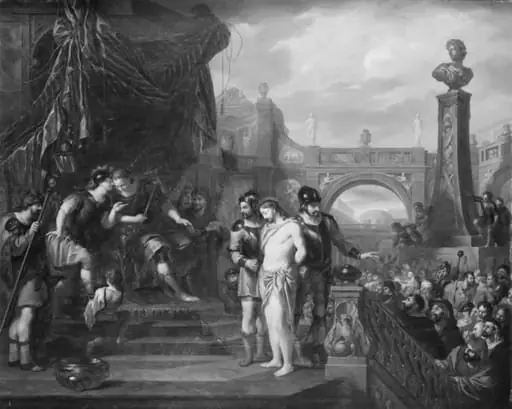 Christ before Pilate
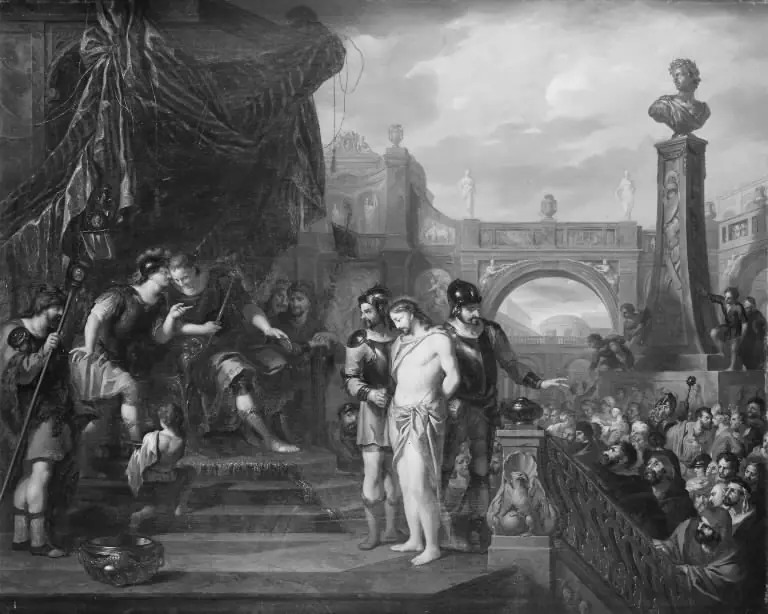 Christ before Pilate
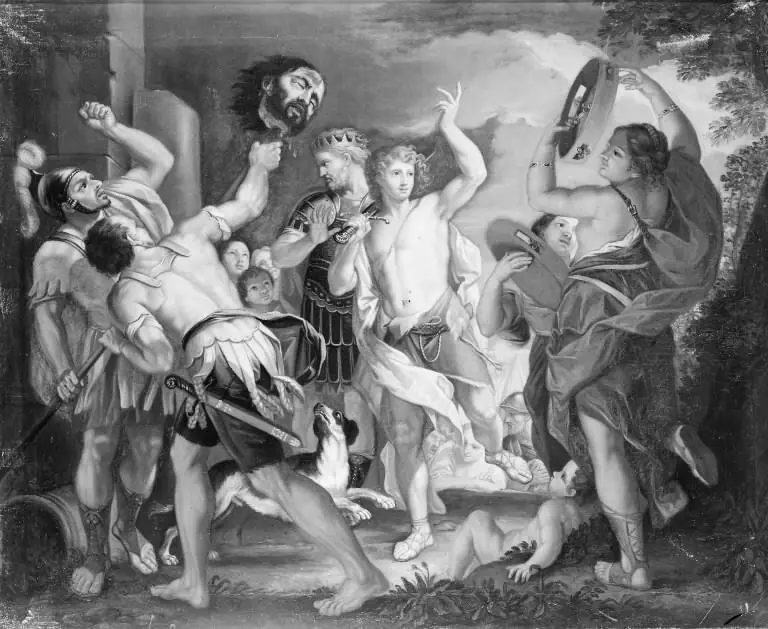 David med Goliats sværd på skulderen. Andre med hans hoved på en stage
- Death of Dido