Artwork
The leavetaking of Captain Hendrik de Sandra (1619-1707), sent off by his wife and children
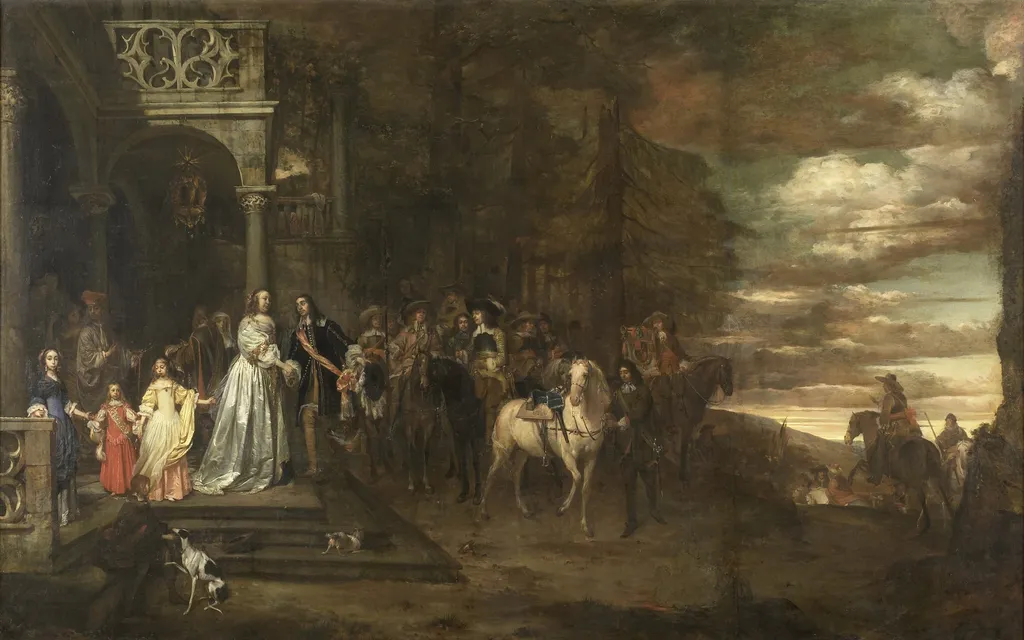
The leavetaking of Captain Hendrik de Sandra (1619-1707), sent off by his wife and children is an oil painting by the Dutch Golden Age artist Pieter van Anraedt. It dates from 1661 and is held in the collection of the Rijksmuseum.
About this work
Subject & Meaning
The iconography emphasizes domestic devotion and the solemnity of departure, reflecting 17th-century Dutch values of family honor and civic duty.
The painting shows Captain Hendrik de Sandra being bid farewell by his wife and children as he departs, a moment that captures familial affection and the poignant transition of a military officer leaving home. The iconography emphasizes domestic devotion and the solemnity of departure, reflecting 17th-century Dutch values of family honor and civic duty. Rendered in oil on canvas, the work measures 154.5 cm in height and 245.5 cm in width, and is housed in the Rijksmuseum, where it is classified as a history painting that documents personal and historical narratives through intimate portraiture.
The composition uses gestures and expressions to convey emotional depth, with the surrounding figures framing the captain’s departure as both a private and socially significant event, reinforcing themes of loyalty, sacrifice, and the fleeting nature of life.
Technique & Style
The work is an oil painting executed on canvas, a standard support for Dutch history paintings of the mid-17th century. Van Anraedt employed layered oil pigments to achieve nuanced chiaroscuro and fine detail in the figures and drapery, typical of the period’s emphasis on narrative clarity. The composition balances theatrical gesture with restrained colour, reflecting the formal conventions of the history_painting genre while allowing intimate emotional expression.
History & Provenance
The painting was created in 1661 by Pieter van Anraedt as an oil on canvas work depicting the departure of Captain Hendrik de Sandra. It entered the collection of the Rijksmuseum, where it remains on display.
The work was commissioned to capture the emotional farewell of the captain, reflecting family dynamics in 17th-century Dutch society. Its dimensions measure 154.5 cm in height and 245.5 cm in width.
The painting was first documented in the Rijksmuseum inventory in 1885, indicating a continuous ownership chain from its creation to the present.
The painting is held in the collection of the Rijksmuseum, as indicated by both the cataloguing data and the Wikidata record, which lists the work's location as the Rijksmuseum. Its medium is oil paint on canvas, and the canvas measures 154.5 cm in height and 245.5 cm in width.
No accession number, inventory code, or specific gallery assignment within the museum is recorded in the available sources. Likewise, the provided documentation does not mention any past or current exhibitions, loans, or display history for the work.
Overview
Pieter van Anraedt's 1661 oil painting depicts the emotional departure of Captain Hendrik de Sandra, surrounded by his family and entourage outside a grand stone building.
Context
Reflecting the Dutch Golden Age, the work combines the everyday with the dramatic, typical of Van Anraedt's approach to capturing detailed, relatable moments from life.
Legacy
The painting showcases Van Anraedt's ability to balance the intimate with the monumental, influencing the representation of emotional, everyday scenes in subsequent Dutch art.
Own this work as a print
Artist & collection

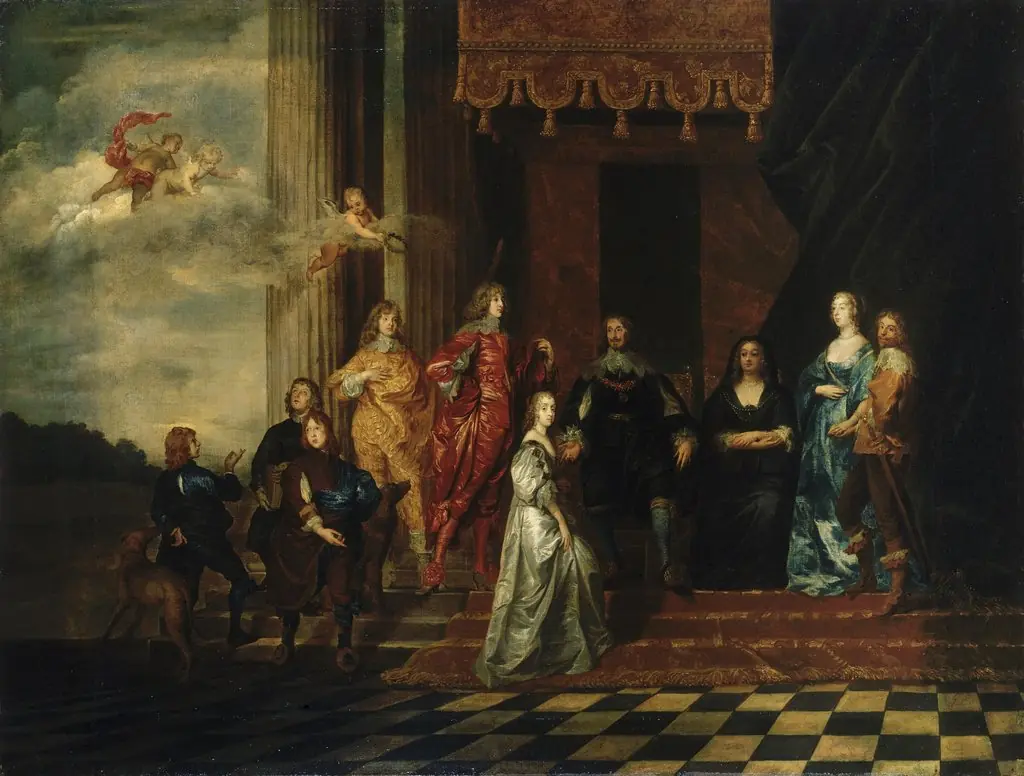 Portrait of the Earl of Pembroke with His Family (copy)
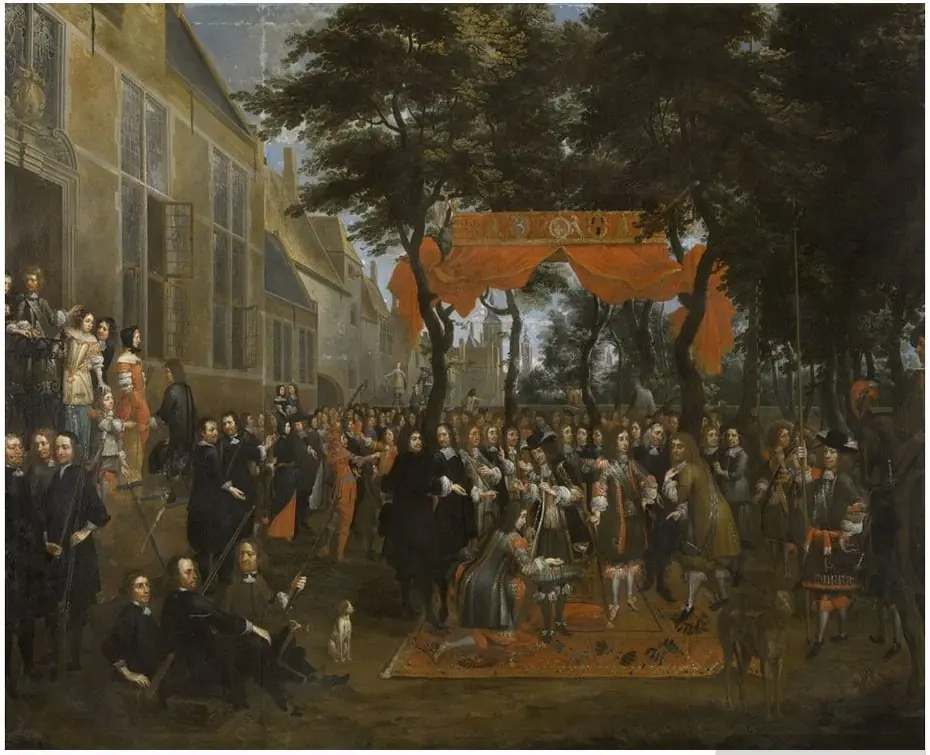 The Reception of Charles II and his Brothers
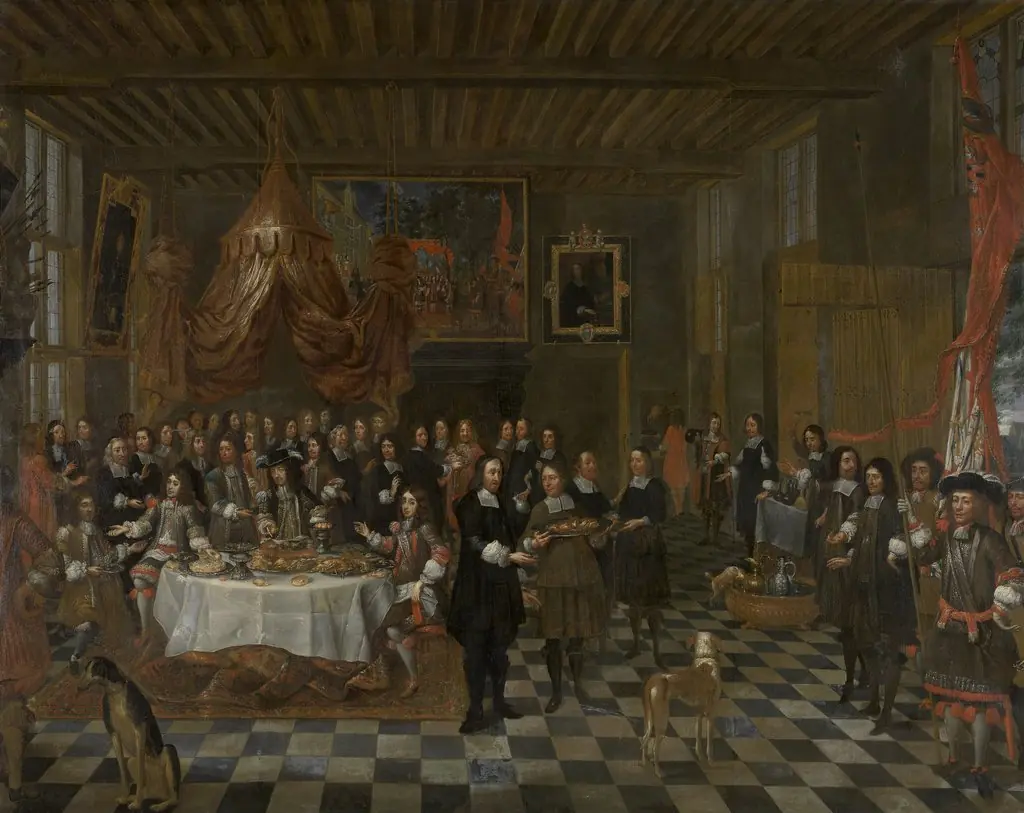 The Reception of Charles II and his Brothers in the Guild of Saint Barbara in Bruges
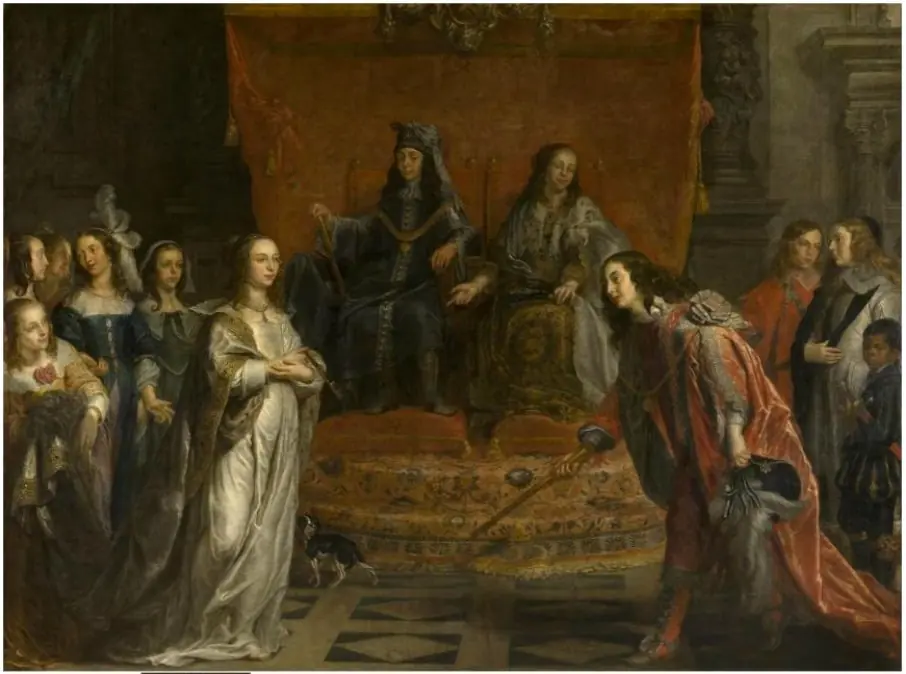 The Envoy
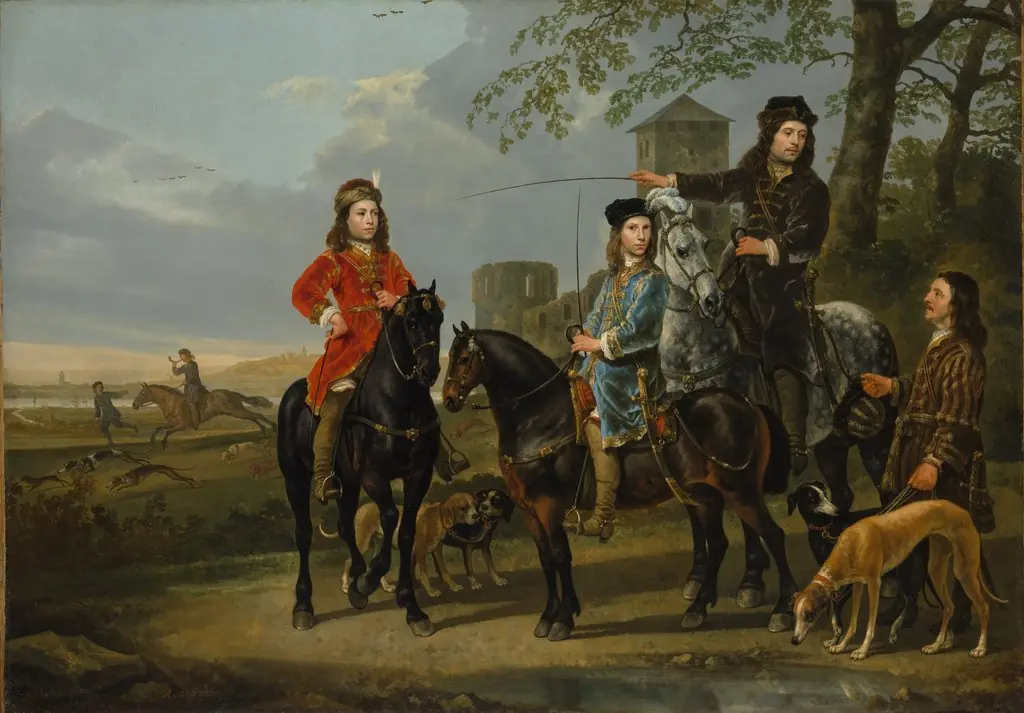 Equestrian Portrait of Cornelis (1639–1680) and Michiel Pompe van Meerdervoort (1638–1653) with Their Tutor and Coachman ("Starting for the Hunt")
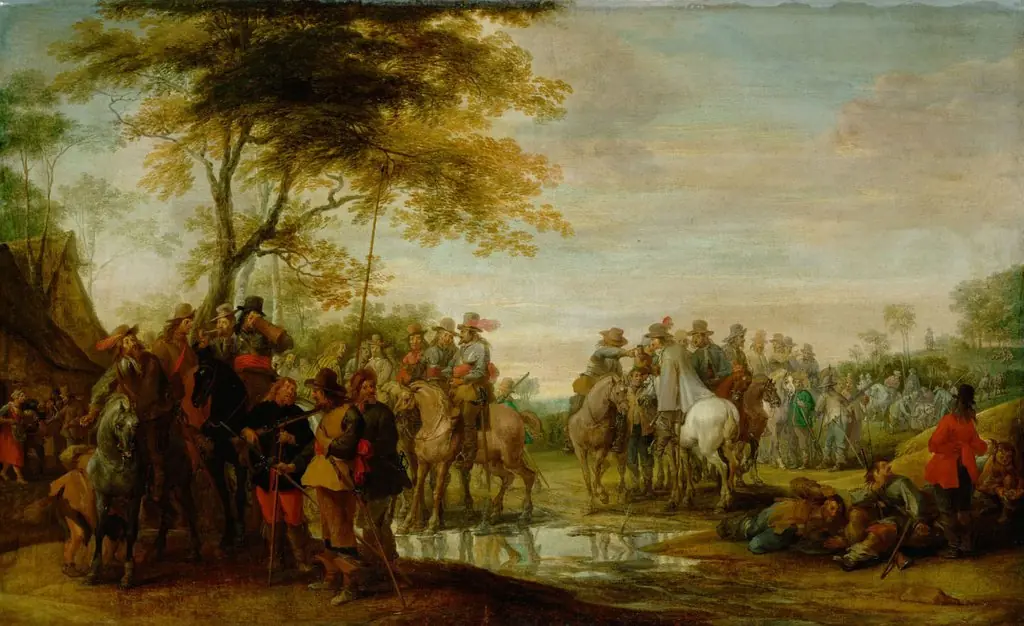 Cavalry troop
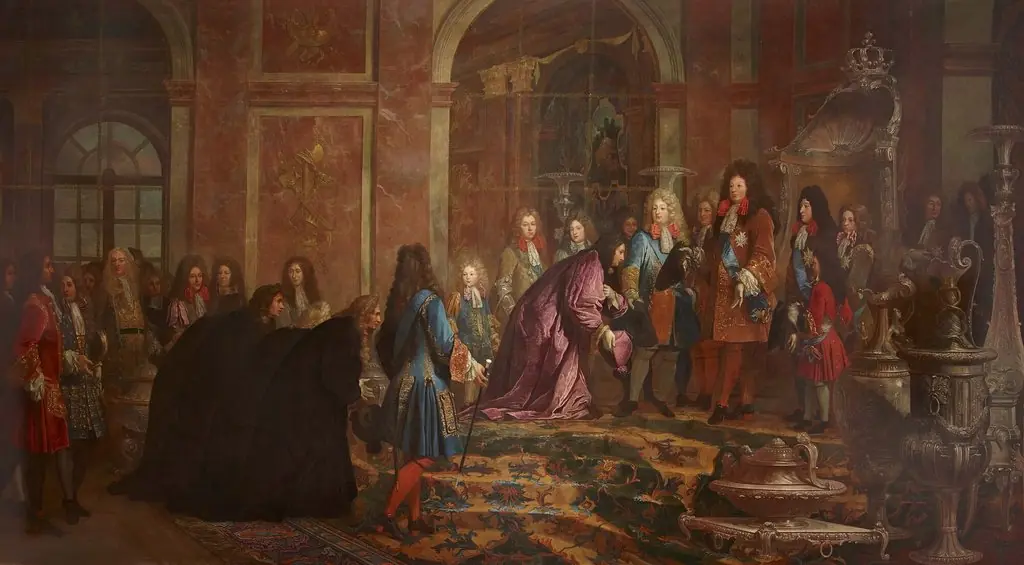 Reparations made to Louis XIV by the Doge of Genoa on 15 May 1685
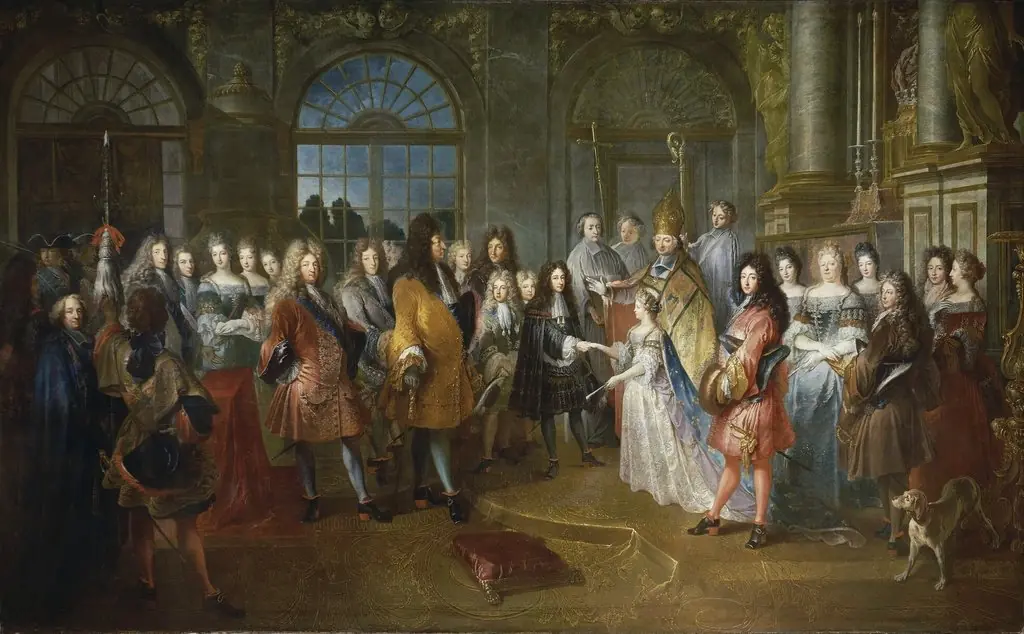 Mariage de Louis de France, duc de Bourgogne et de Marie-Adélaïde de Savoie, 7 décembre 1697
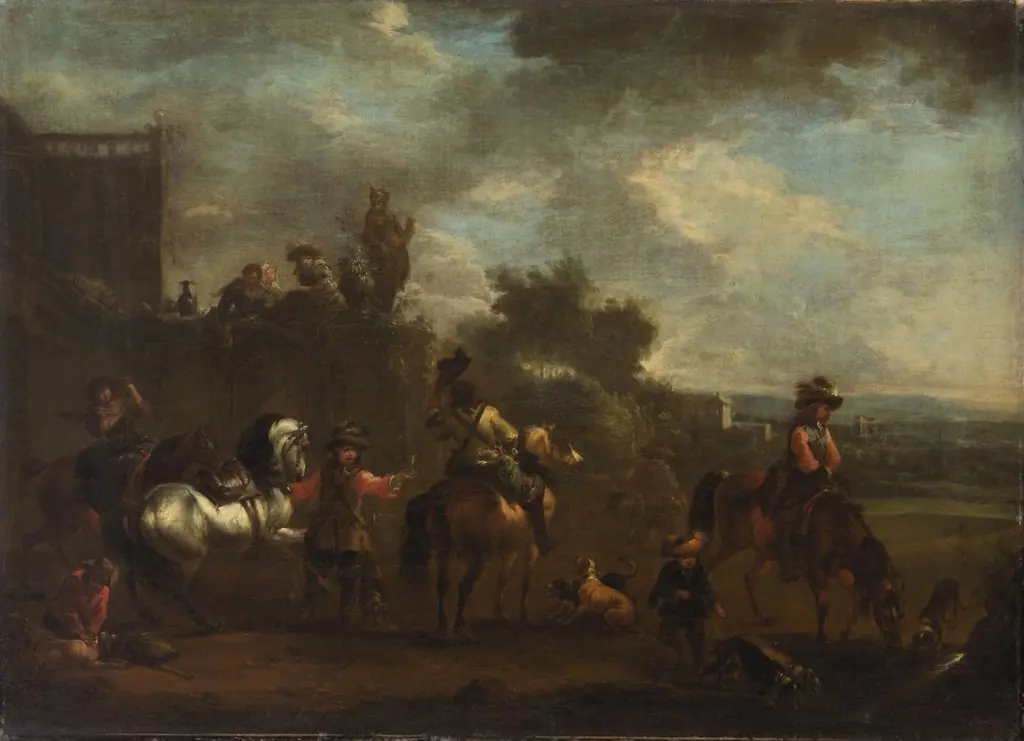 Ausritt zur Jagd