Artwork
Meeting of King Ferdinand and Cardinal-infante Ferdinand at Nördlingen
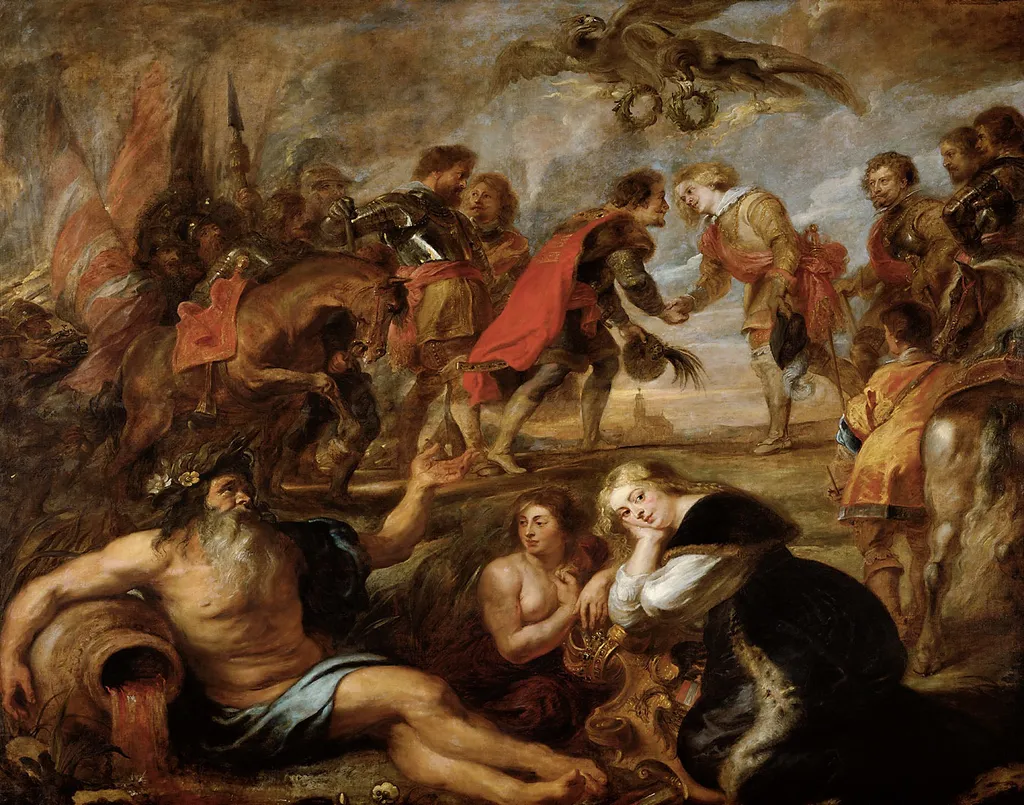
Meeting of King Ferdinand and Cardinal-infante Ferdinand at Nördlingen is an oil painting by the Flemish Baroque painting artist Peter Paul Rubens. It dates from 1634 and is held in the collection of the Kunsthistorisches Museum.
About this work
Subject & Meaning
As a history painting executed in 1634, the work serves to commemorate this significant military and diplomatic event during the Thirty Years' War.
The painting depicts the historical meeting between Cardinal-Infante Ferdinand of Austria and Ferdinand III, Holy Roman Emperor, following the Battle of Nördlingen. As a history painting executed in 1634, the work serves to commemorate this significant military and diplomatic event during the Thirty Years' War. The composition centers on the two royal figures, emphasizing their alliance and the political consequences of the battle.
By portraying these specific historical personages in the aftermath of conflict, the artwork functions as a piece of political propaganda, celebrating the Habsburg victory and the unity of the Spanish and Austrian branches of the dynasty.
Technique & Style
Executed in 1634, this history painting by Peter Paul Rubens utilizes oil paint applied to a canvas support. The work is characterized by its monumental scale, measuring 328 cm in height and 388 cm in width. As a large-format composition, it depicts the historical meeting of Cardinal-Infante Ferdinand and King Ferdinand III following the Battle of Nördlingen.
The piece is classified as a painting within the genre of history painting, reflecting the artist's approach to grand narrative subjects through the medium of oil on canvas.
History & Provenance
The painting was created by Peter Paul Rubens in 1634, executed in oil on canvas. According to the available records, it is based on an earlier work depicting the same encounter between King Ferdinand of Hungary and the Cardinal-Infante Ferdinand of Spain at Nördlingen.
The work is held in the collection of the Kunsthistorisches Museum, where it remains located. No further details regarding the original commission, intermediate ownership, or transfer history are documented in the provided sources.
The painting Meeting of King Ferdinand and Cardinal-infante Ferdinand at Nördlingen is held in the collection of the Kunsthistorisches Museum in Vienna. Created in 1634 by Peter Paul Rubens, the work is cataloged within the museum's holdings as a history painting executed in oil on canvas. The source material does not provide a specific inventory or accession number for the piece, nor does it list any exhibition history or past display locations.
Context
The work occupies a pivotal position in Rubens' oeuvre as a mature expression of the history-painting genre, reflecting the diplomatic and dynastic themes prominent in early 17th-century European art. Scholarship emphasizes its role in capturing the political symbolism of the Habsburg courts, particularly the meeting between Ferdinand of Hungary and his cousin, the Cardinal-Infante Ferdinand of Spain, following the 1634 Battle of Nördlingen. The painting's composition and execution demonstrate Rubens' synthesis of classical rhetoric with contemporary narrative realism, influencing later academic approaches to historical subject matter.
Its formal qualities and thematic depth continue to inform studies of Baroque visual culture and the intersection of art with statecraft.
Overview
Executed in oil in 1634, this large-scale history painting by Peter Paul Rubens records a moment from the Battle of Nördlingen. The canvas captures a diplomatic encounter between the Holy Roman Emperor Ferdinand III and his half‑brother, Cardinal‑Infante Ferdinand of Austria, set against the smoky ruins of a battlefield. Currently it belongs to the collection of the Kunsthistorisches Museum in Vienna.
Artist & collection
Artist
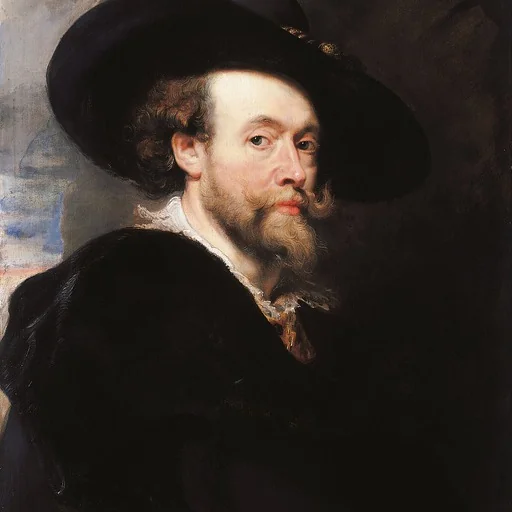
Sir Peter Paul Rubens ( ROO-bənz; Dutch:; 28 June 1577 – 30 May 1640) was a Flemish artist and diplomat.

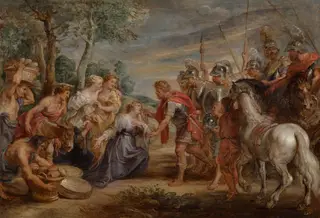
- The Meeting of David and Abigail
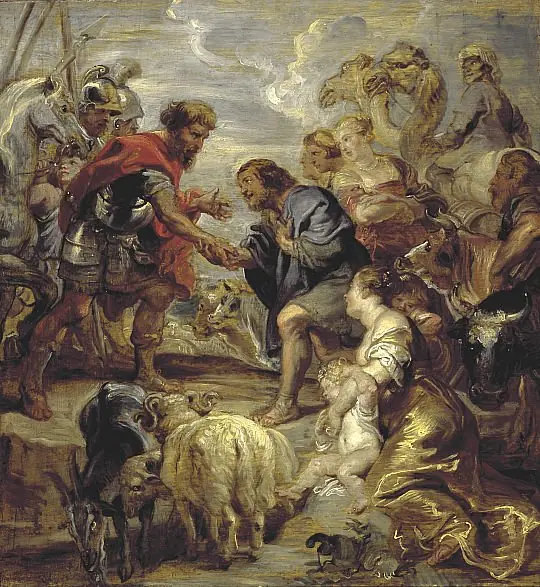 The Reconciliation of Jacob and Esau
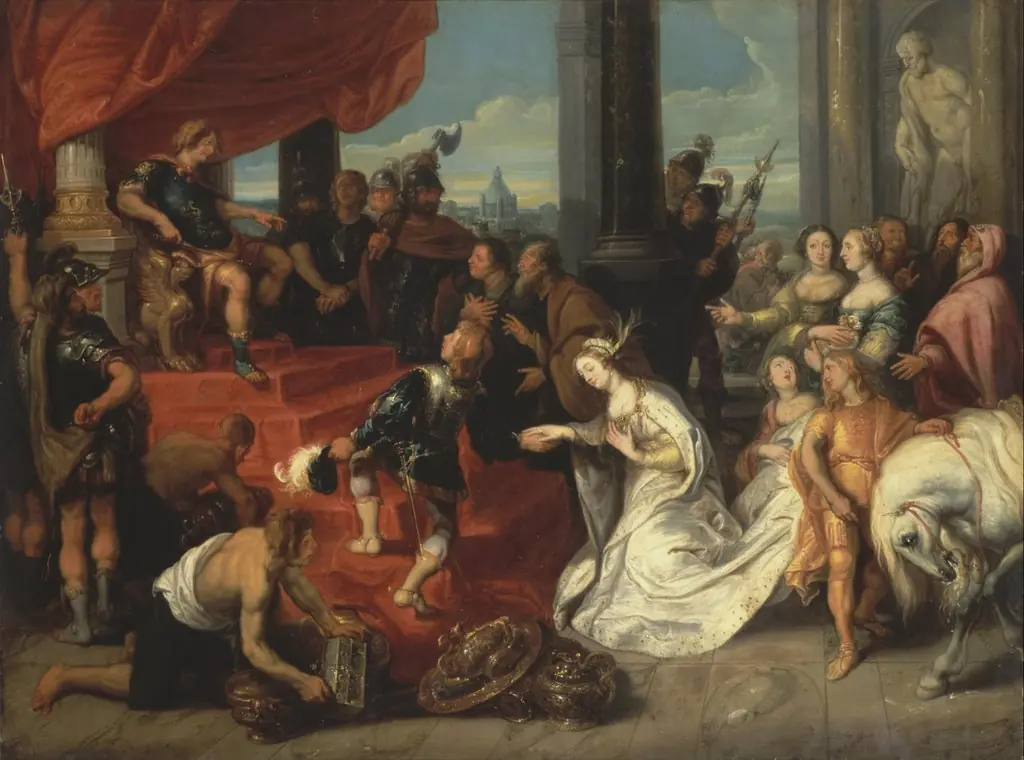 The Magnanimity of Scipio Africanus
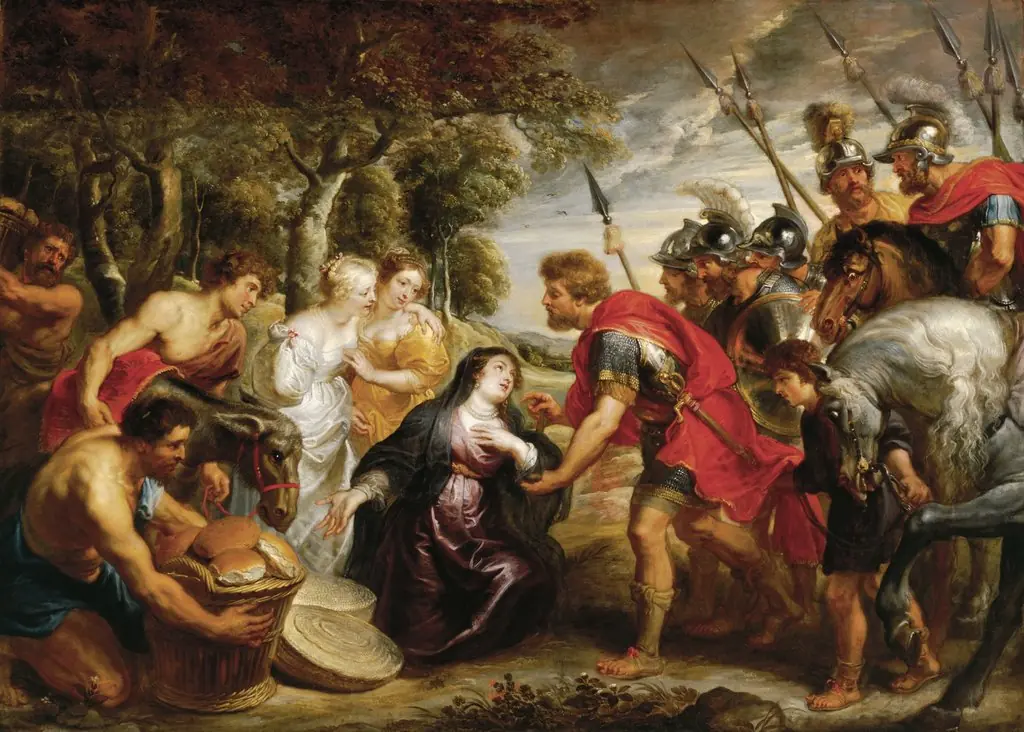 The Meeting of David and Abigail
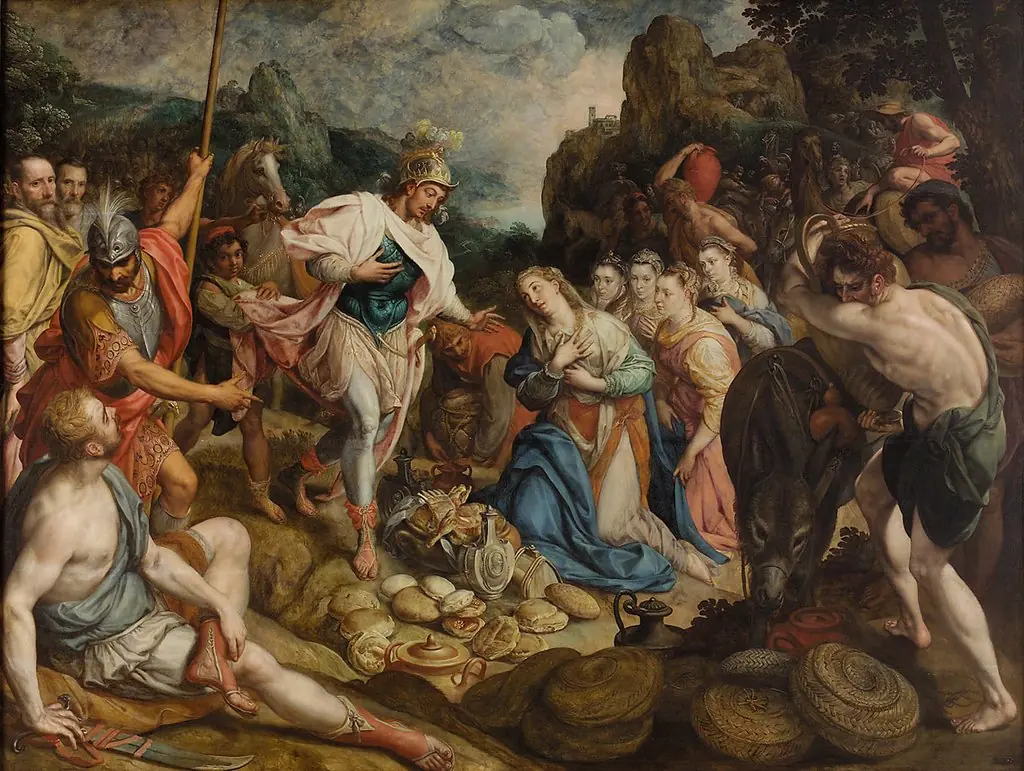 David and Abigail
 David Meeting Abigail
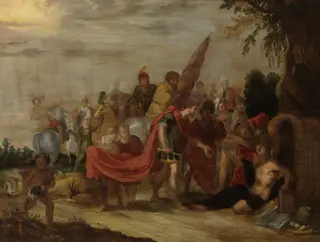 Alexander en Diogenes
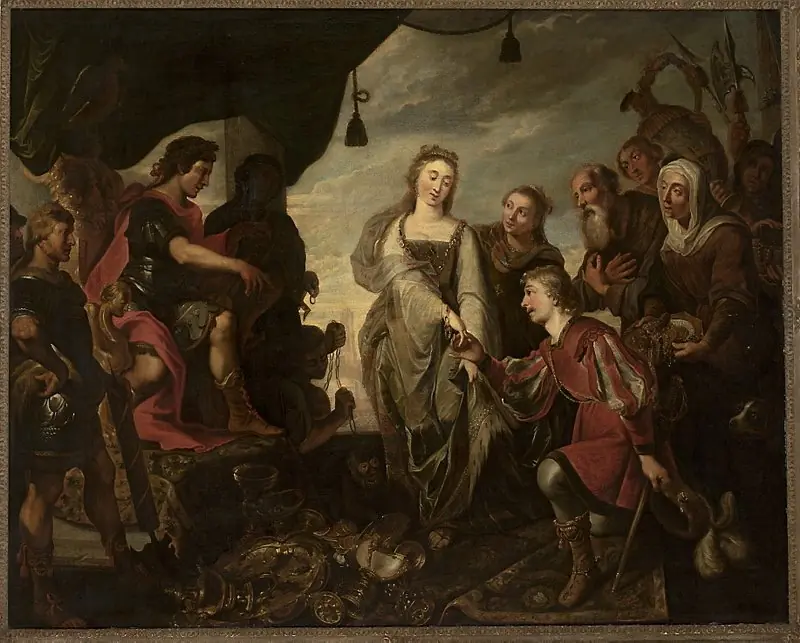 Magnanimity of Scipio (Titus Livius XXVI; 50)
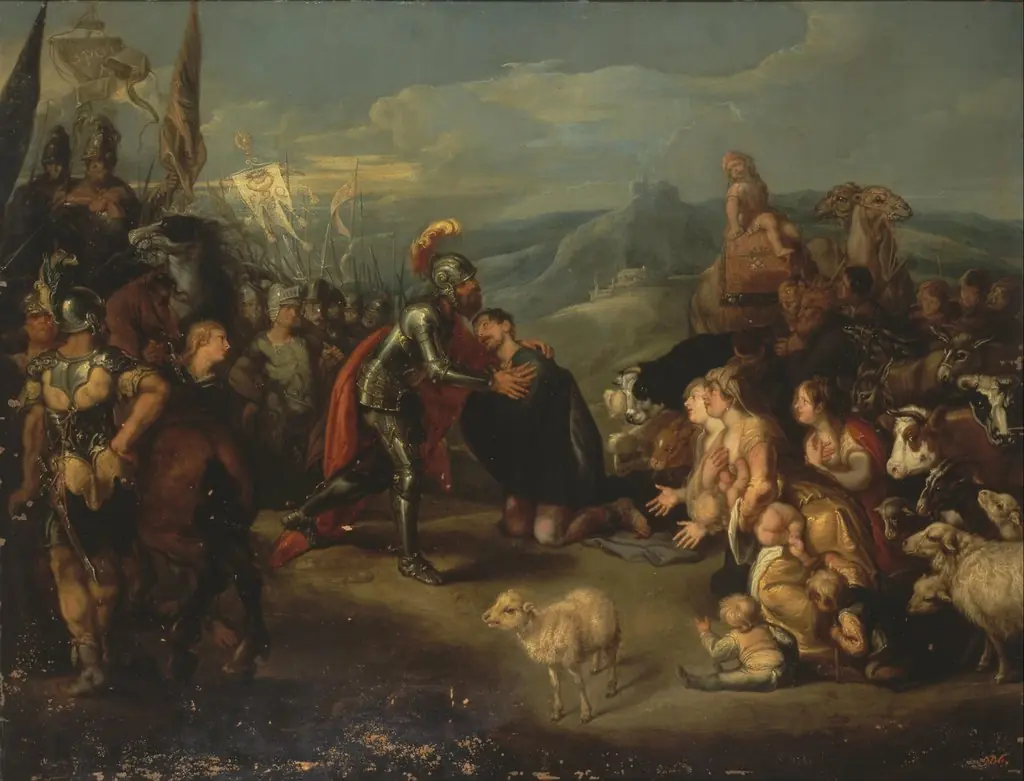 Meeting of Esau and Jacob
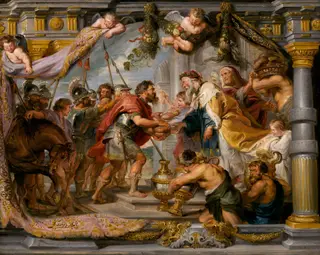 The Meeting of Abraham and Melchizedek
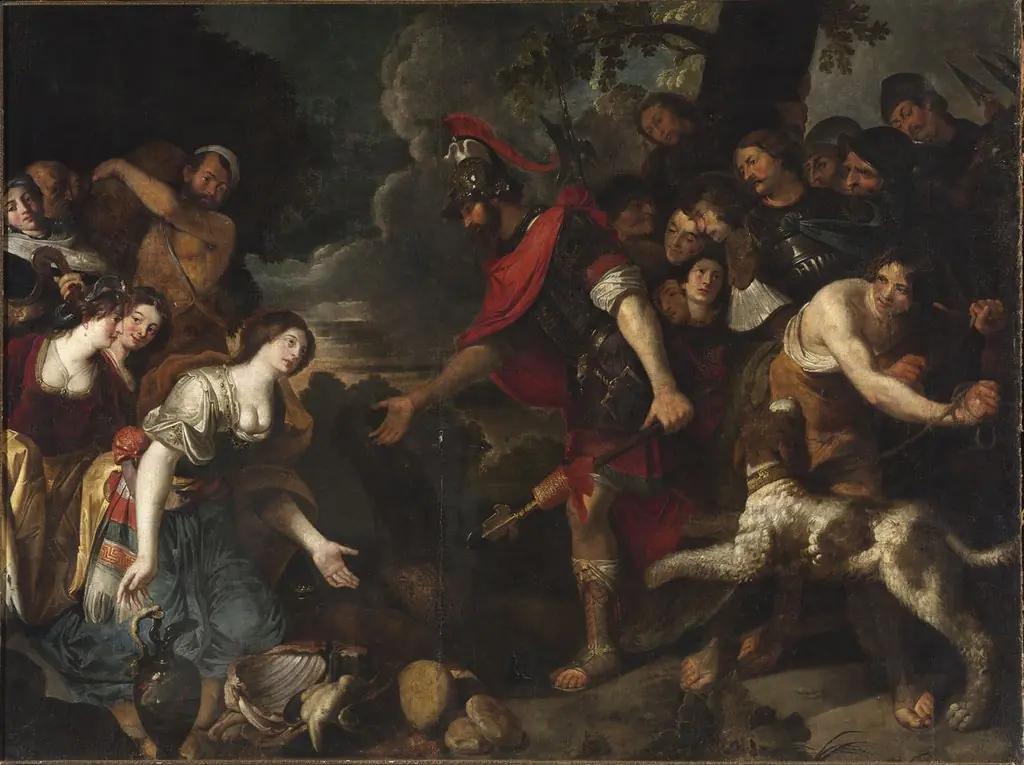 The Meeting of David and Abigail
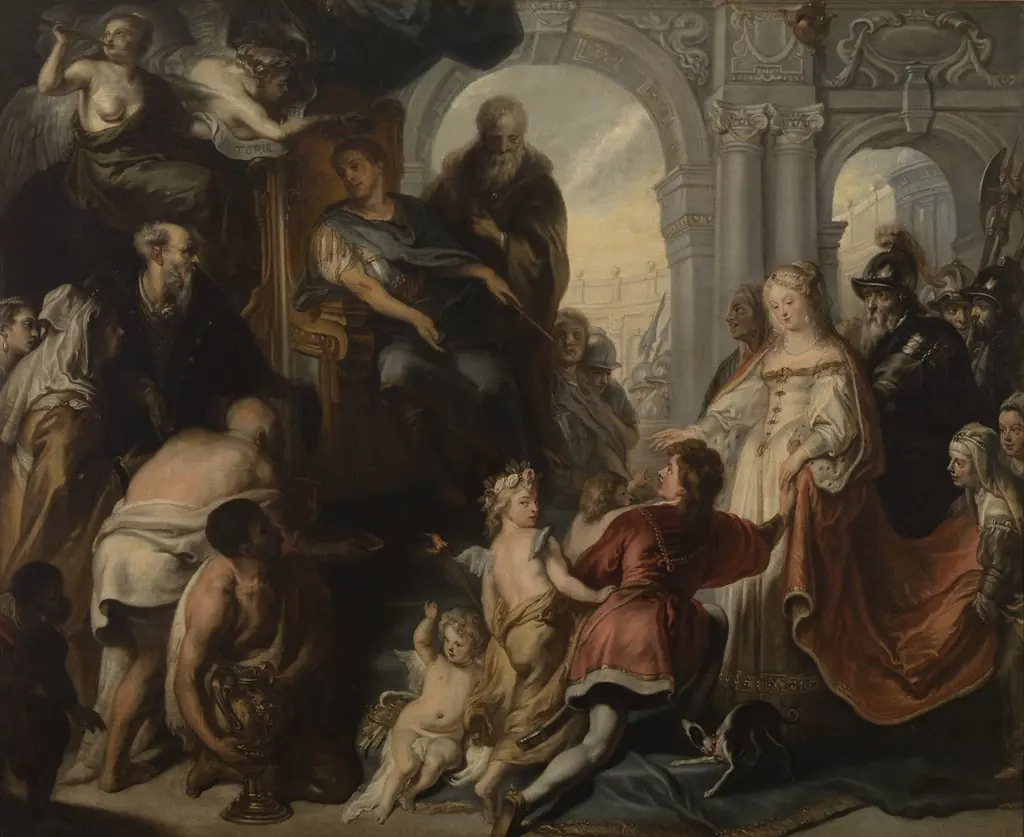 The Continence of Scipio Africanus