Artwork
The Adoration of the Magi Set in a Border
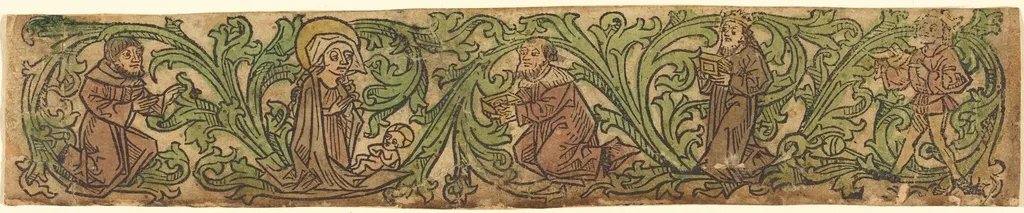
The Adoration of the Magi Set in a Border is an ink print by the Renaissance artist German 15th Century. It dates from 1480 and is held in the collection of the National Gallery of Art. This hand‑colored woodcut presents a narrow, elongated composition depicting five robed figures arranged in a single line.
About this work
Overview
This hand‑colored woodcut presents a narrow, elongated composition depicting five robed figures arranged in a single line. Central to the scene is a child held by a man, while another figure carries a staff, a third sits with a harp, and the remaining figures flank the group. The image is framed by a decorative border of stylized green vines and leaves.
Subject & Meaning
The central infant, presumed to be the newborn Jesus, anchors the narrative of the Adoration of the Magi, though the traditional three wise men are absent. The surrounding figures, including a staff‑bearing man and a harpist, suggest a courtly or devotional setting, emphasizing reverence through their formal postures.
Technique & Style
Executed as a woodcut, the design was carved into a block of wood and printed in flat black before being hand‑colored with limited pigments, red, light green, brown, and yellow. The coloration is applied in uniform washes without gradation, and the figures are rendered with stiff, linear outlines, reflecting an early print aesthetic rather than naturalistic modeling.
History & Provenance
The work belongs to the early European print tradition, where woodcuts were commonly used for devotional images. Its hand‑coloring indicates a later stage of production, likely intended for private devotion or as a portable illustration of a biblical episode.
Context
During the period when woodcut printing flourished, artists often employed decorative borders of foliage to frame religious scenes, integrating text or symbolic motifs. The stylized vines here echo contemporary manuscript illumination and serve to contain the narrative within a defined visual field.
Artist & collection

Artist
This 15th-century German artist carved vivid religious scenes into metal and wood, then hand-painted them in bright, symbolic colors.

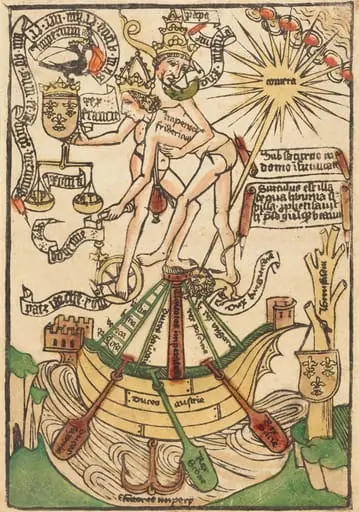 Allegory of the Meeting of Pope Paul II and Emperor Frederick III
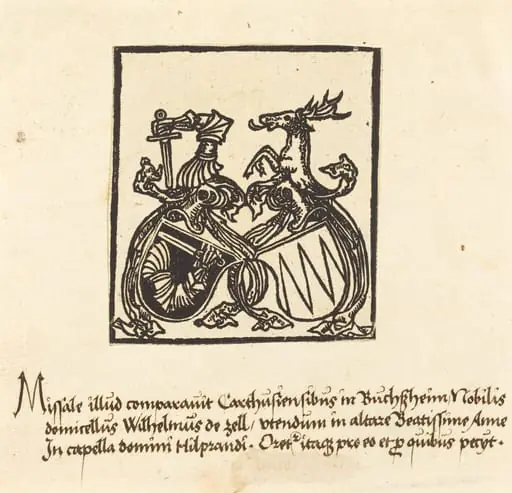 Bookplate of Wilhelm von Zell
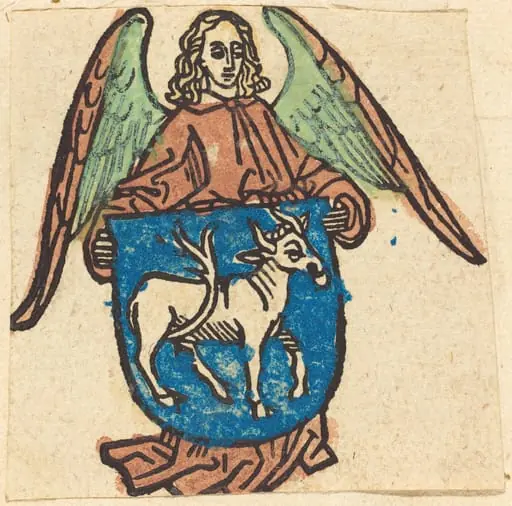 Bookplate of Hilprand Brandenburg of Bibrach
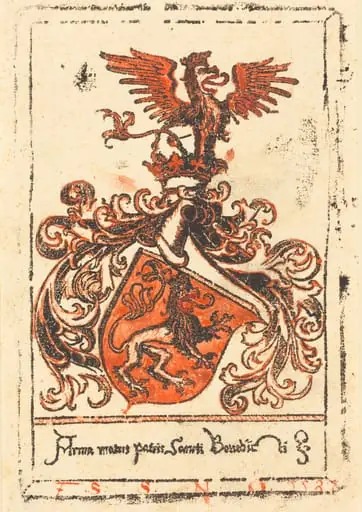 Bookplate of the Abbey of Ottobeuren
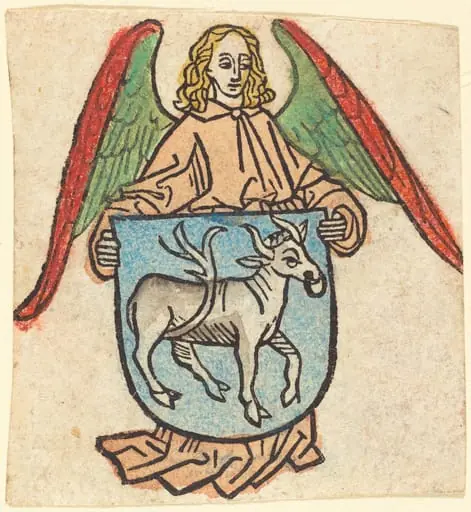 Bookplate of Hilprand Brandenburg of Bibrach
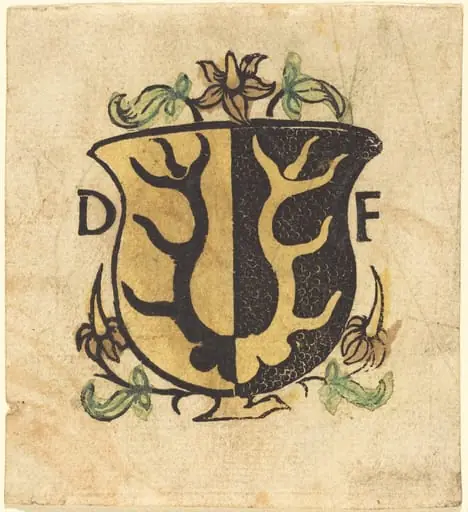 Bookplate of Dominicus Frauenfelder
![Studies for Six Figures (sheet from a model book) [recto], by German 15th Century](https://artifactworldgallery.com/img/german-15th-century--studies-for-six-figures-sheet-from-a-model-book-recto--4837429e0755bc3f-w320.webp) Studies for Six Figures (sheet from a model book) [recto]
Studies for Six Figures (sheet from a model book) [recto]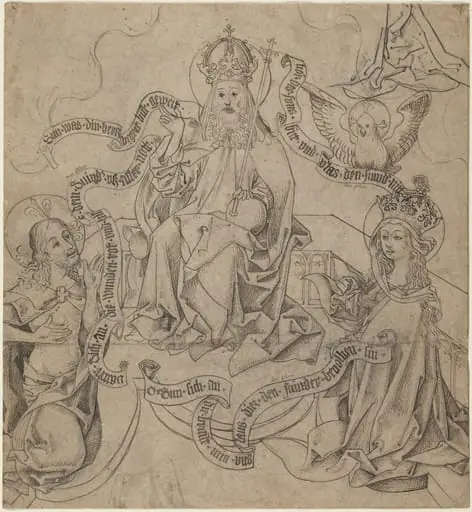 Christ and Mary Interceding with God the Father