Artwork
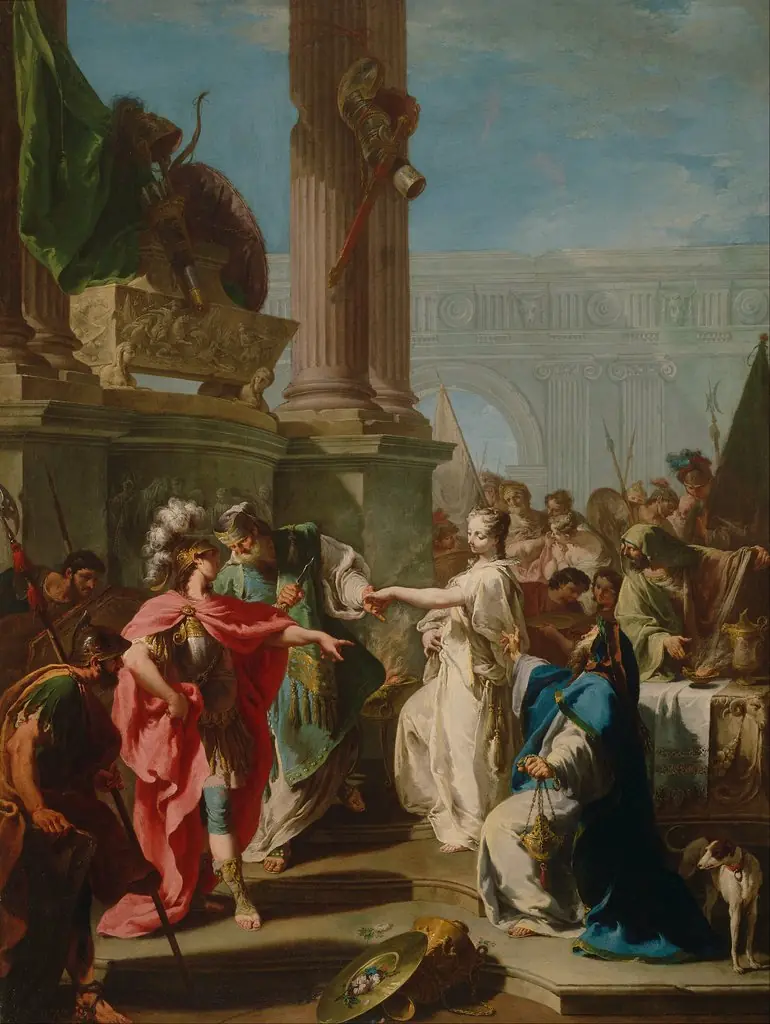
The Continence of Scipio
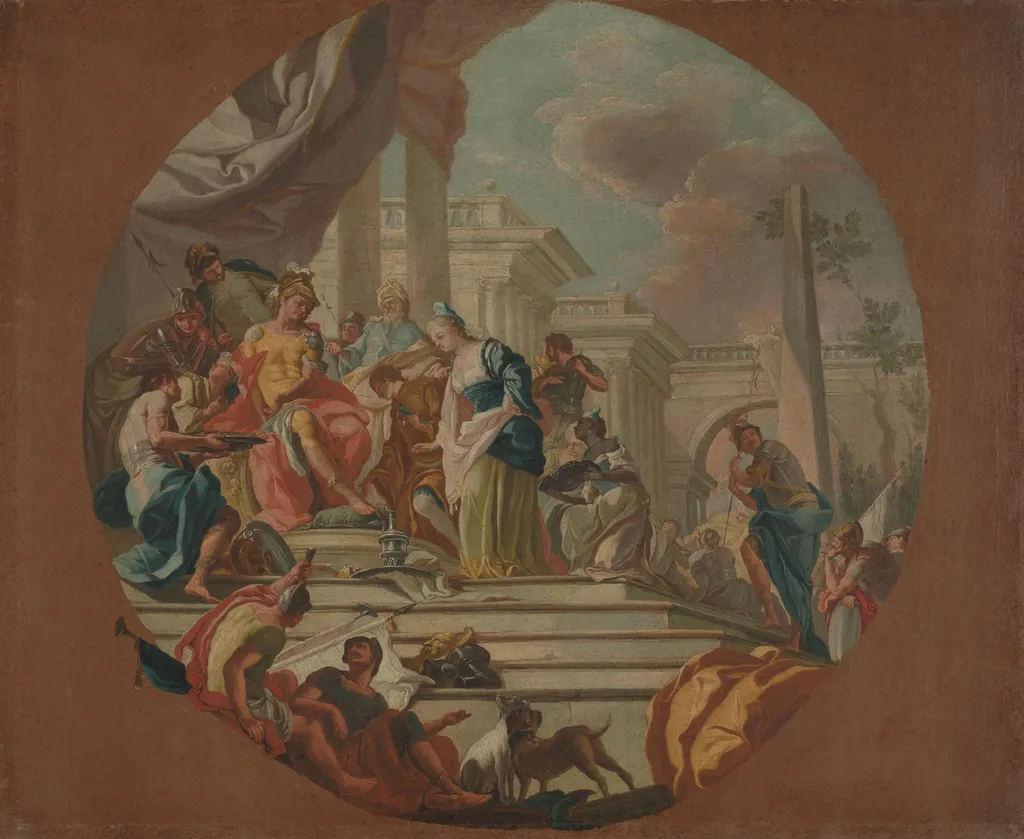
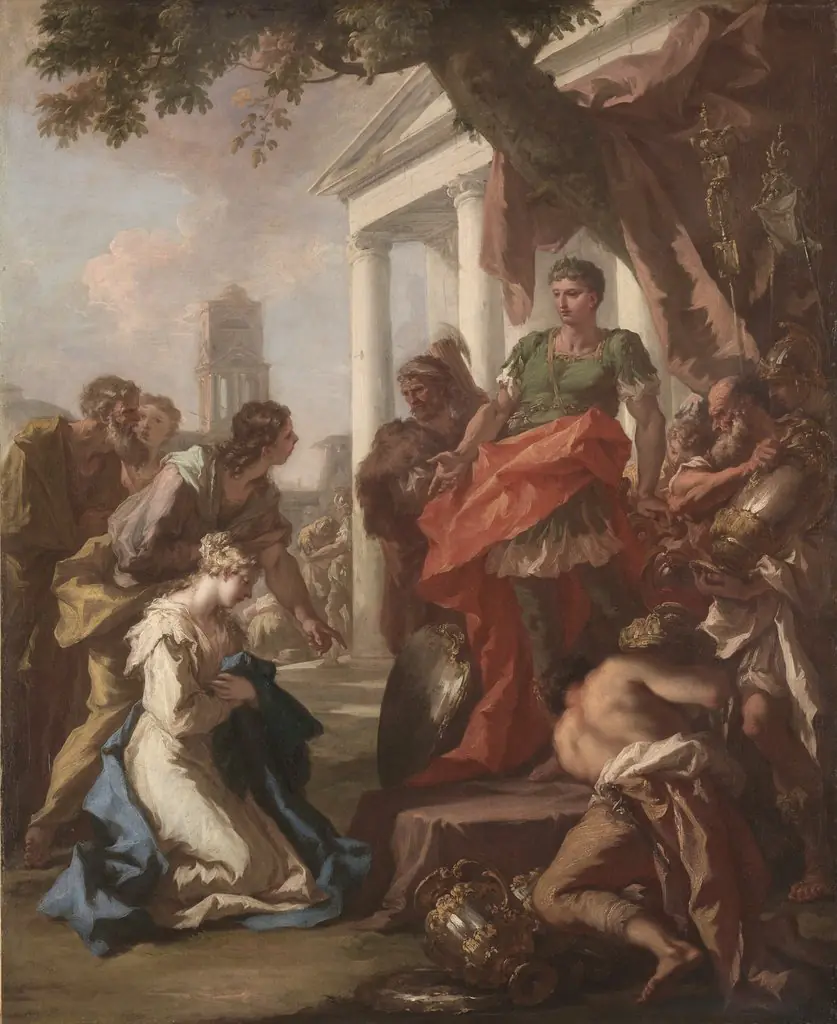
The Continence of Scipio is an oil painting by the Rococo painting artist Giacinto Diano. It dates from 1767 and is held in the collection of the Rijksmuseum.
About this work
Technique & Style
The Continence of Scipio is an oil painting executed on canvas, a support-and-medium pairing typical of mid-eighteenth-century Italian history painting.
The Continence of Scipio is an oil painting executed on canvas, a support-and-medium pairing typical of mid-eighteenth-century Italian history painting. The work is relatively modest in scale, measuring 63 cm in height by 77 cm in width, and is classified as a history painting. The attribution recorded in the collection data lists both Giacinto Diano and Francesco de Mura as associated creators, suggesting collaborative or revised authorship. No information on handling, condition, or specific stylistic qualities is available in the provided sources.
History & Provenance
The painting was completed in 1767 by Giacinto Diano, as indicated by its documented date of execution and the artist’s recorded activity in that year. The work entered the collection of the Rijksmuseum, where it remains located. Its provenance is tied to the broader European tradition of history painting, reflecting the period’s emphasis on classical narratives rendered in oil on canvas.
The dimensions of the work, measuring 63 cm in height and 77 cm in width, align with the scale typical of cabinet paintings from the mid-18th century.
Overview
Giacinto Diano's 1767 painting, The Continence of Scipio, is an oil-on-canvas work exemplifying the Rococo style with emerging Neoclassical elements.
Subject & Meaning
The scene depicts a historical narrative, showing figures in classical attire amidst an architectural setting, with a central interaction between a seated figure and a woman, surrounded by others displaying various emotions.
Own this work as a print
Artist & collection
Artist
Giacinto Diano or Diana (28 March 1731 – 13 August 1803) was an Italian painter, active in Southern Italy in a style that mixes Rococo and Neoclassicism.

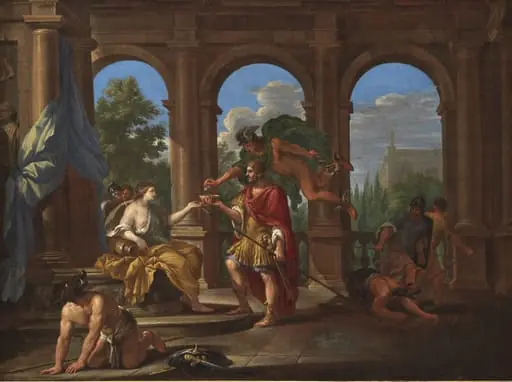 Circe and Ulysses
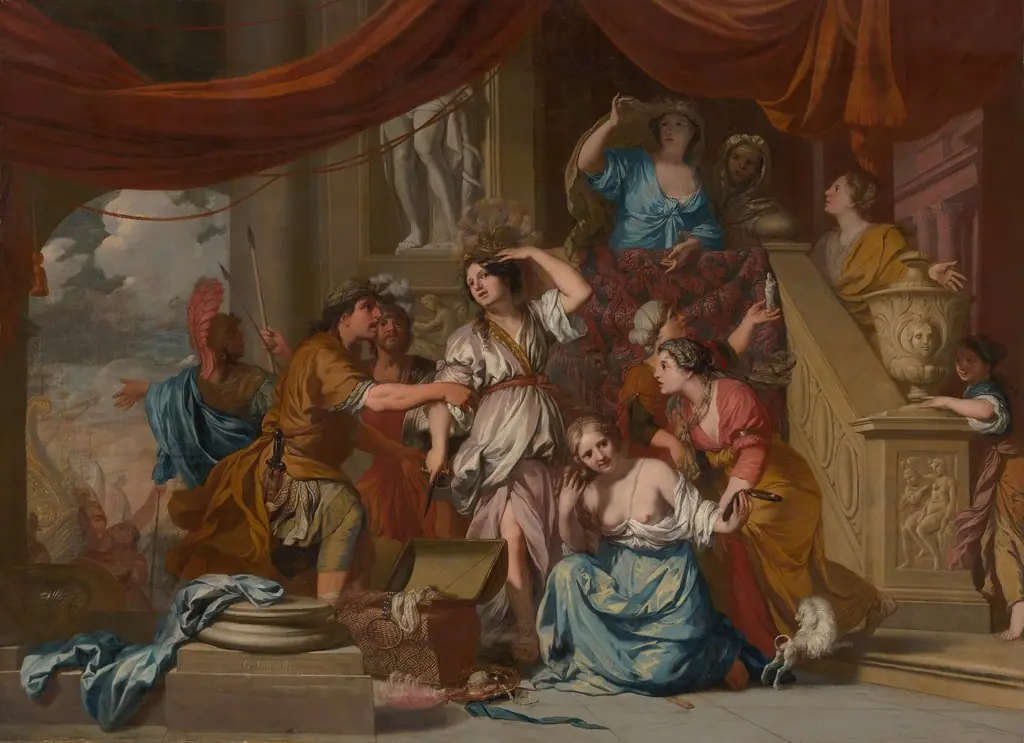 Achilles Discovered among the Daughters of Lycomedes
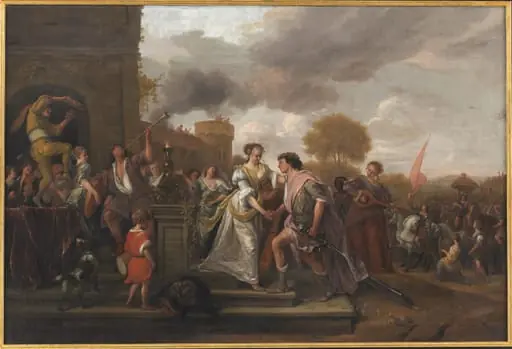 David Returning Victorious after Defeating Goliath and the Philistines
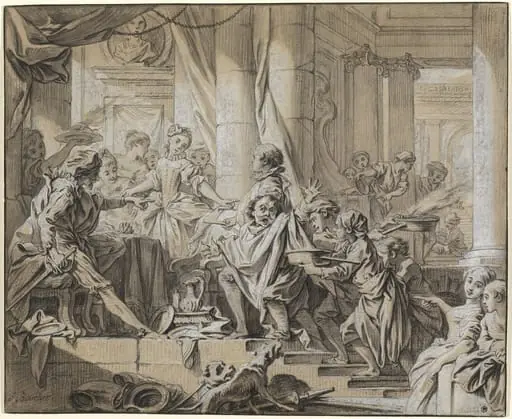 Sancho Fleeing from the Servants of the Duke
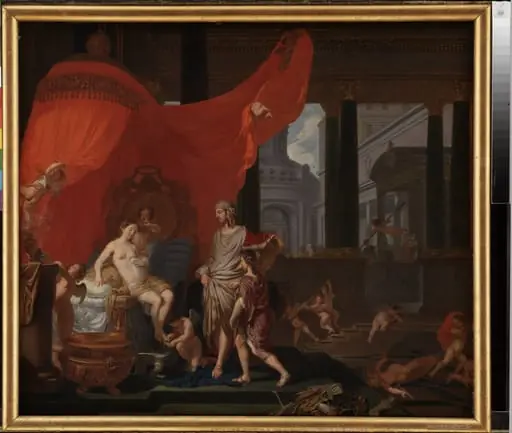 The Wedding of Alexander and Roxana
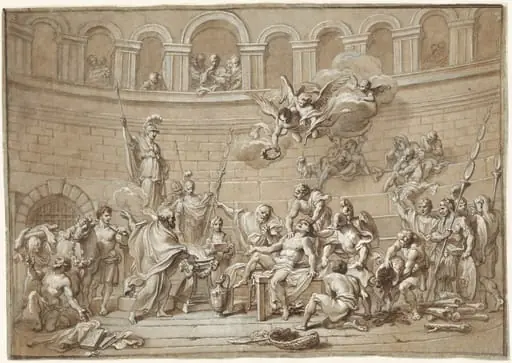 Martyrdom of Saint Lawrence
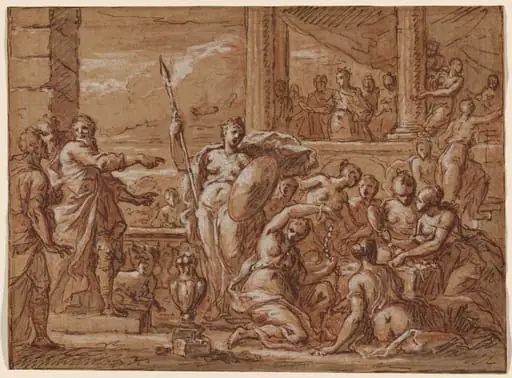 The Discovery of Achilles among the Daughters of Lycomedes
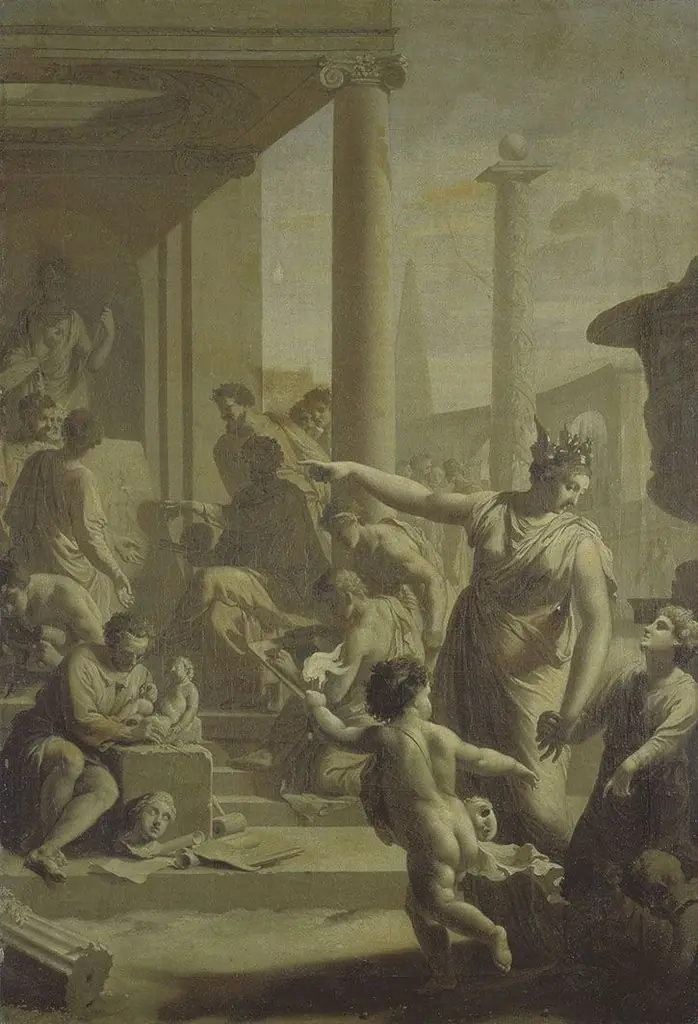 Allegorie op de schilderkunst
 The Sacrifice of Polyxena in Malibu