Artwork
The Annunciation
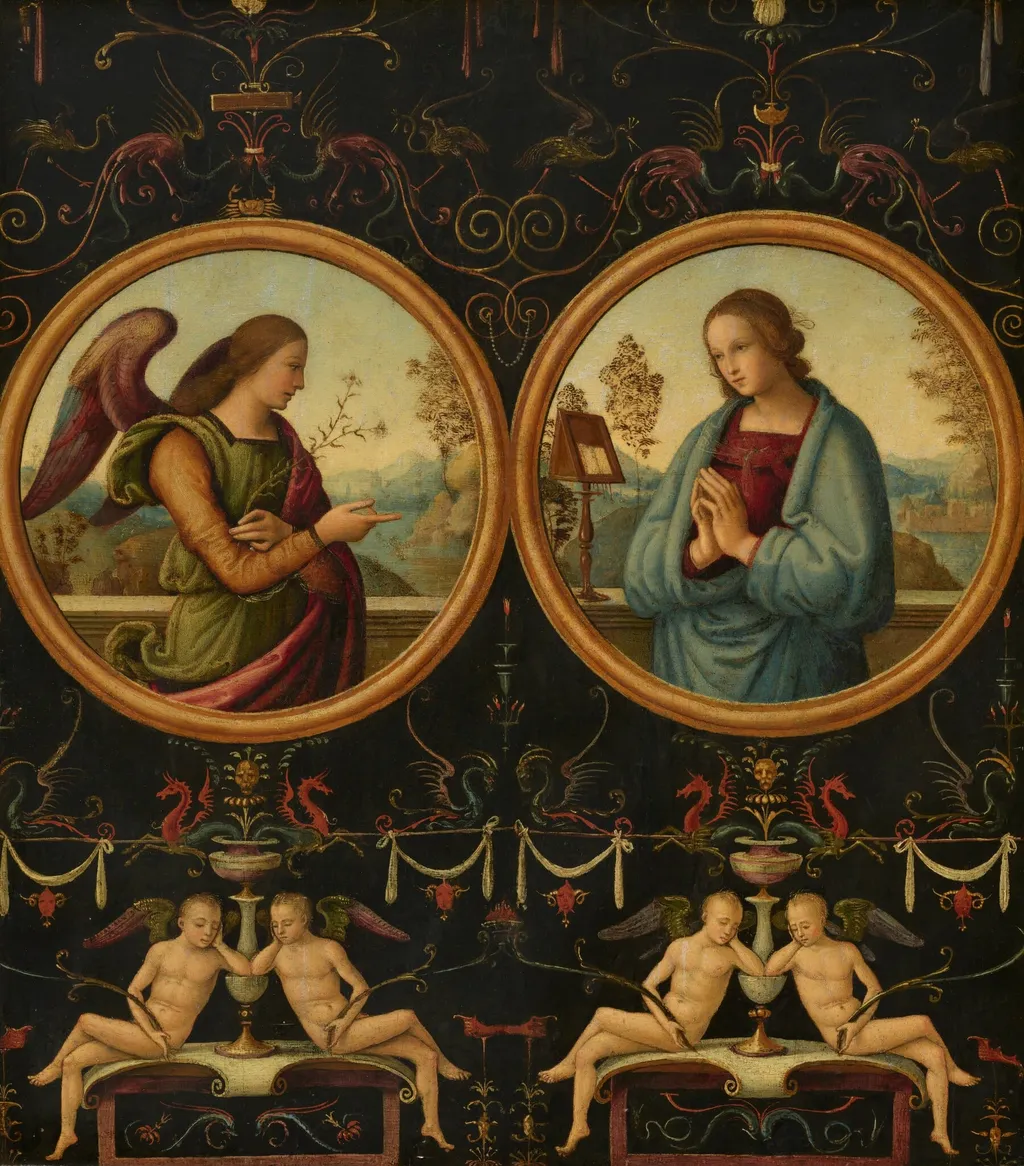
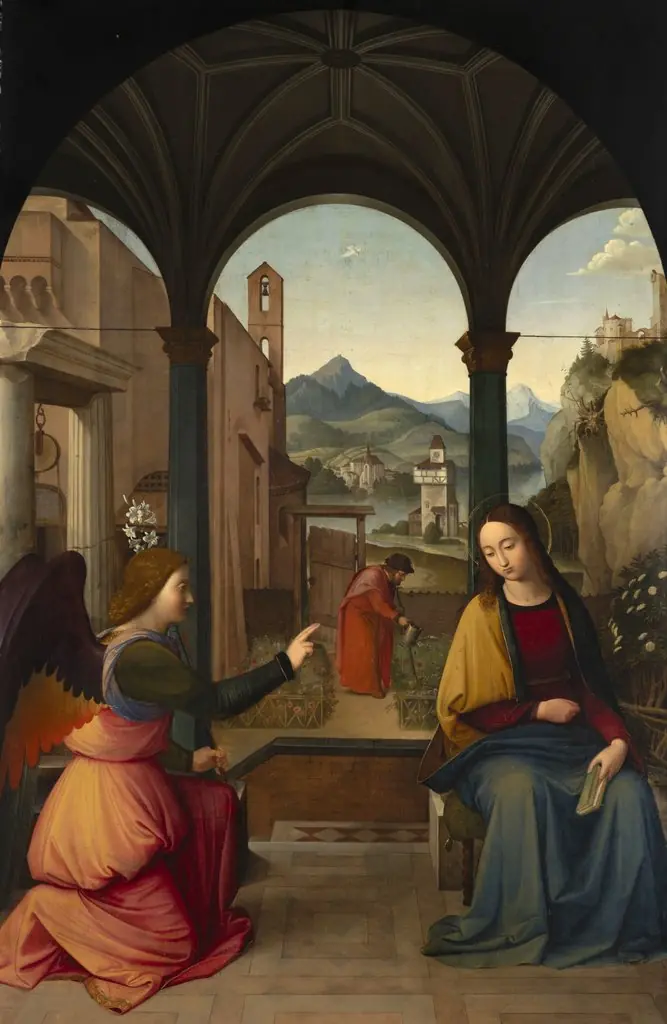
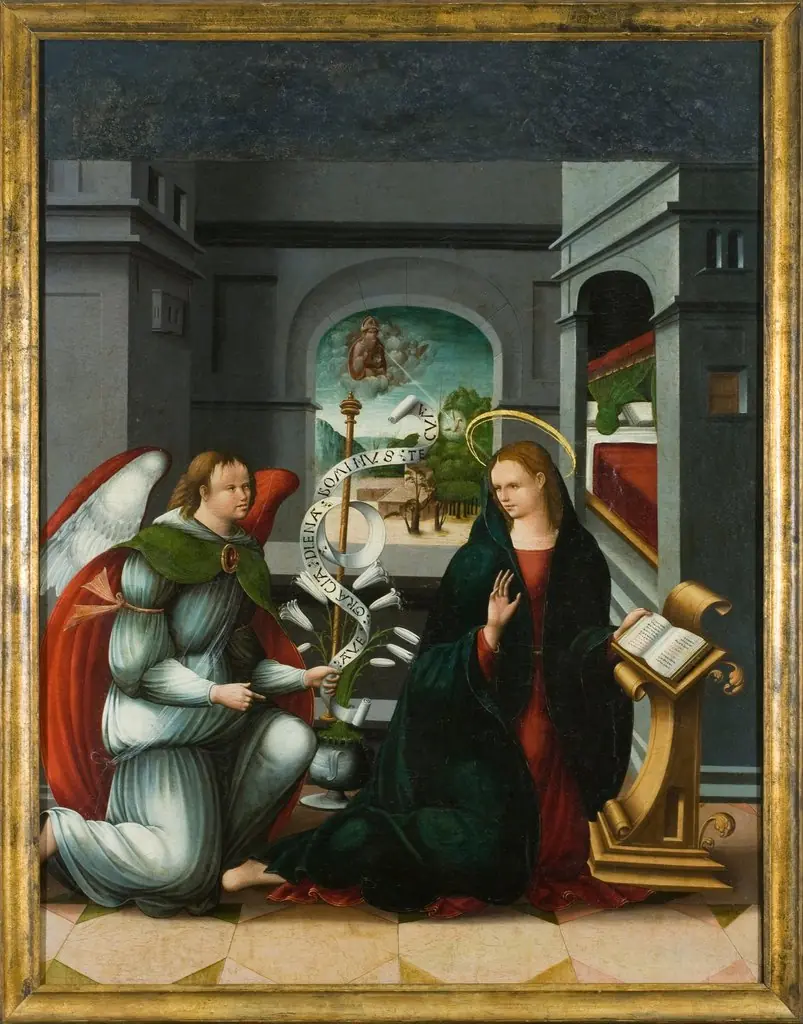
The Annunciation is an oil painting by the Early Renaissance artist Giannicola di Paolo. It dates from 1512 and is held in the collection of the National Gallery of Art.
About this work
Subject & Meaning
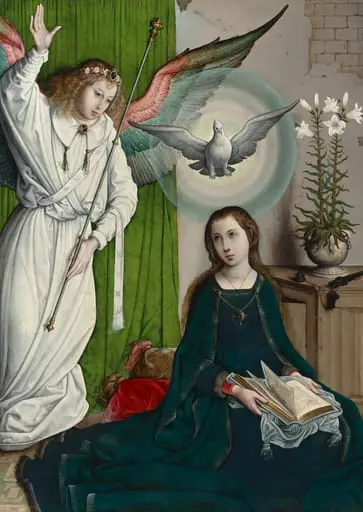
Symbolic elements, such as lilies, representing Mary's purity, and a dove, signifying the Holy Spirit, frequently accompany the figures.
Giannicola di Paolo's The Annunciation (1512) depicts the biblical moment from the Gospel of Luke (1:26–38) when the archangel Gabriel announces to the Virgin Mary that she will conceive Jesus. The iconography adheres to traditional representations of the scene: Gabriel, often shown kneeling or in mid-gesture, delivers the divine message, while Mary is portrayed in a posture of humility or surprise, sometimes holding a book symbolizing her piety. Symbolic elements, such as lilies, representing Mary's purity, and a dove, signifying the Holy Spirit, frequently accompany the figures.
The work embodies the theological concept of the Incarnation, marking the intersection of divine will and human receptivity, and underscores Mary's role as the vessel of salvation in Christian doctrine.
Technique & Style
The Annunciation by Giannicola di Paolo is executed in oil on panel, a support and medium combination typical of early sixteenth-century Italian devotional painting. The work measures 40.3 cm in height by 35.9 cm in width, indicating a modest, intimate scale suited to private devotion. Its religious genre and iconographic program focus on the figures of the Angel Gabriel and the Virgin Mary.
The painting is held in the Samuel H. Kress Collection at the National Gallery of Art in Washington, D.C., having entered the foundation in 1935 and been gifted to the NGA in 1939.
History & Provenance
The Annunciation was executed in 1512 by the Italian painter Giannicola di Paolo as an oil work on panel. Its early ownership is documented in an 1836 sale catalogue listing it as belonging to William G. Coesvelt of London; it was subsequently sold at Christie & Manson in June 1840 to Farquhar. The painting entered the collection of Granville Edward Harcourt Vernon and, by inheritance, passed to his wife Lady Selina Vernon, who retained it at least until 1894.
It later belonged to Count Alessandro Contini Bonacossi before being acquired by the Samuel H. Kress Foundation in 1935, which gifted the work to the National Gallery of Art in 1939.
Context
The Annunciation by Giannicola di Paolo, executed in 1512 on oil-on-panel, exemplifies early sixteenth-century Italian religious painting. Originally catalogued as a Raphael work in the 1836 Coesvelt sale, the attribution was later corrected to the Umbrian painter Giannicola di Paolo, a transition documented in provenance records and confirmed by Fern Rusk Shapley's 1979 catalogue entry. The panel entered the National Gallery of Art through the Samuel H. Kress Foundation gift in 1939 and has been lent for exhibition, including shows organized by Lady Hervey in 1883 and 1893–94.
Its iconography, depicting the Angel Gabriel announcing to the Virgin Mary, aligns with contemporary devotional practices and underscores the artist's role in disseminating Annunciation imagery within the Italian Renaissance.
Overview
Giannicola di Paolo's "The Annunciation," an oil painting on panel from 1512, depicts the biblical encounter between the Archangel Gabriel and the Virgin Mary. This religious work captures the moment Gabriel announces to Mary that she will conceive the Son of God, a central narrative in Christian art. The artist employs a delicate palette and precise rendering to convey the scene's spiritual significance.
Own this work as a print
Artist & collection

- The Annunciation
 The Annunciation
 The Annunciation
 Legnica polyptych - left wing internal - upper panel - obverse: Annunciation; reverse: St Lawrence, St Vincent the Levite. St John the Baptist
 Winged Altar
 Anunciação
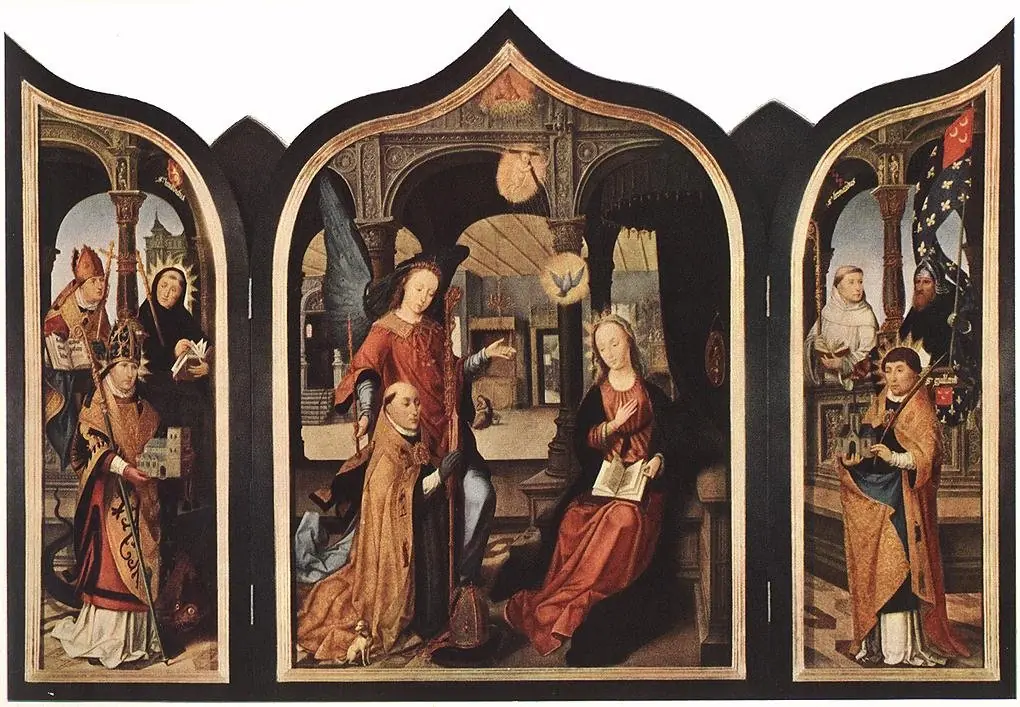 Annunciation
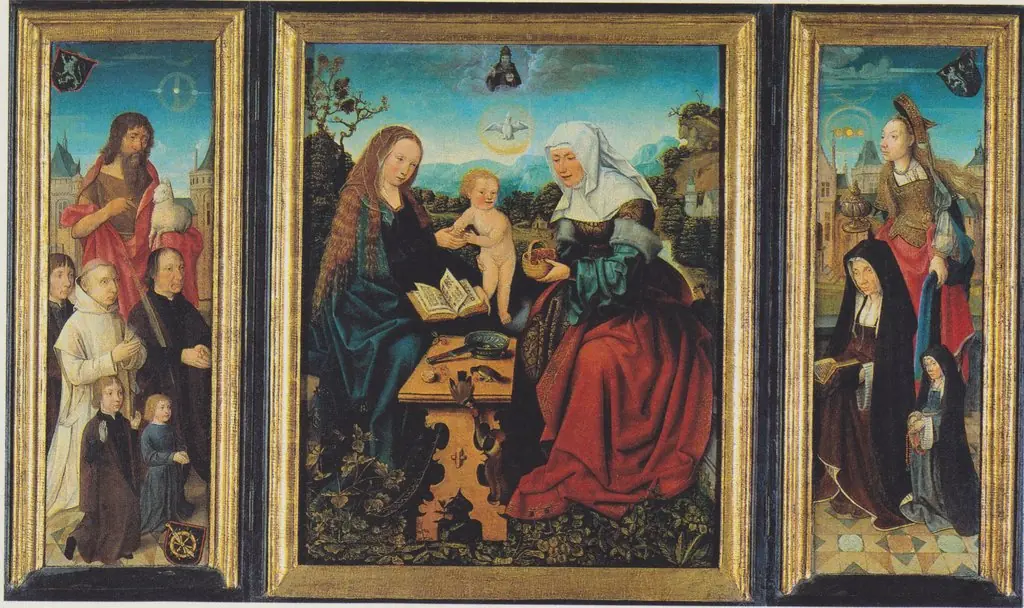 Portrait of Dirck van Heemskerck van Beest & sons with John the Baptist, Madonna and Child with St Anne, and Gertruid van Diemen & daughter with Mary Magdalene
 L'Annonciation
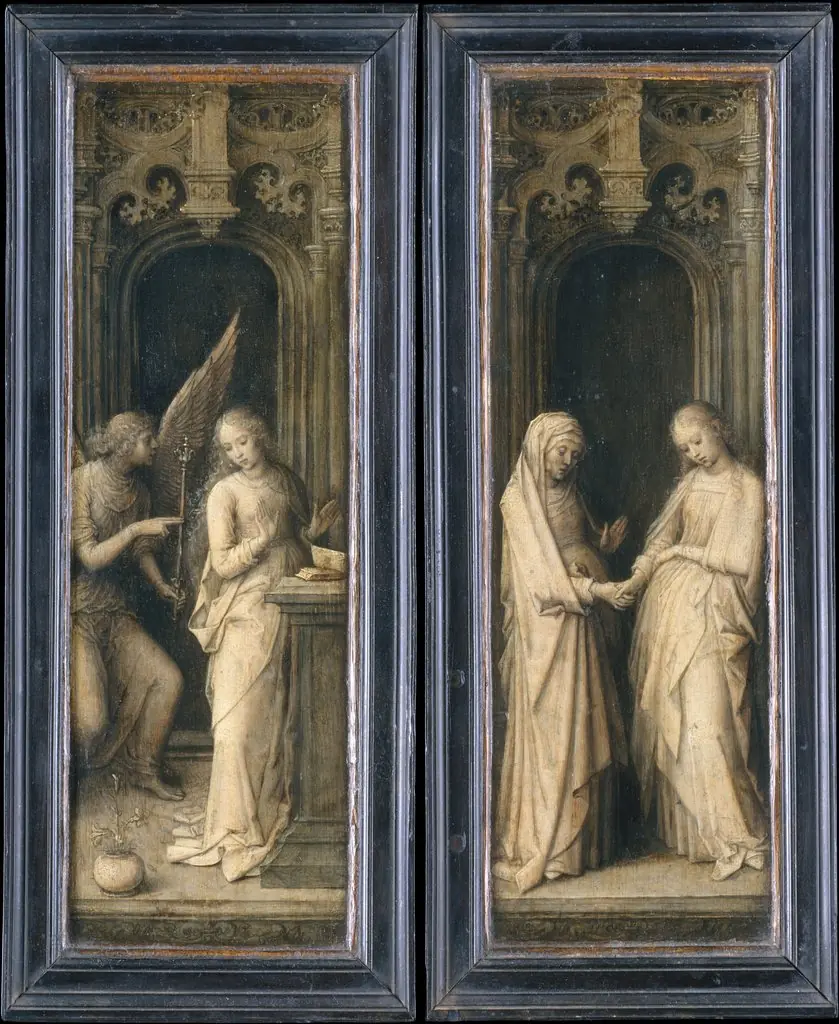 The Life of the Virgin
 The Virgin and Child with the Young St. John
 Annunciation