Artwork
The Annunciation
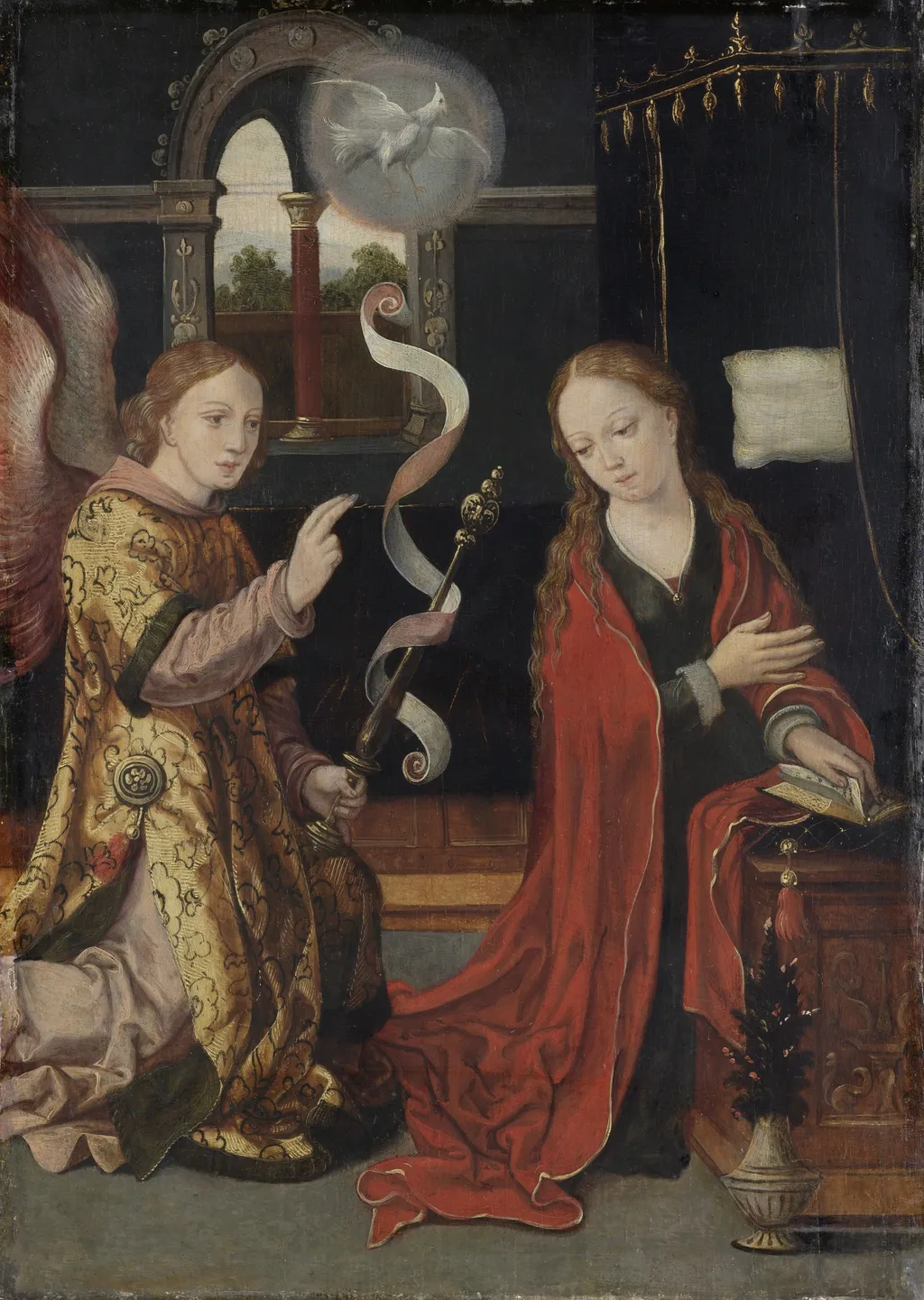
The Annunciation is an oil painting. It dates from 1550 and is held in the collection of the Rijksmuseum.
About this work
Subject & Meaning
The composition focuses on these central figures to convey the theological significance of the event without extraneous narrative details.
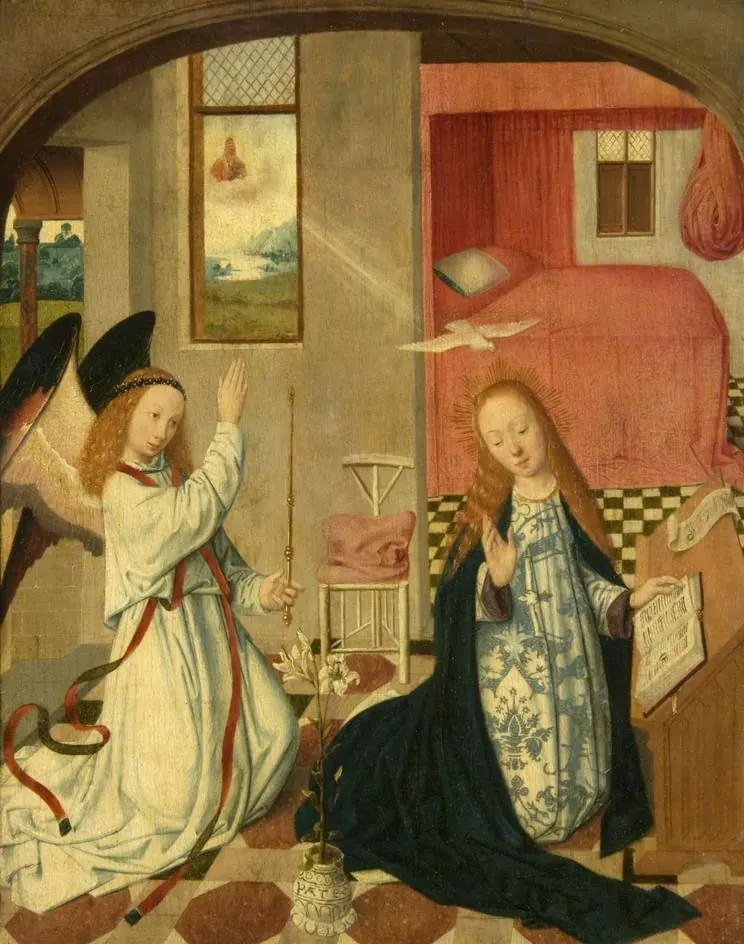
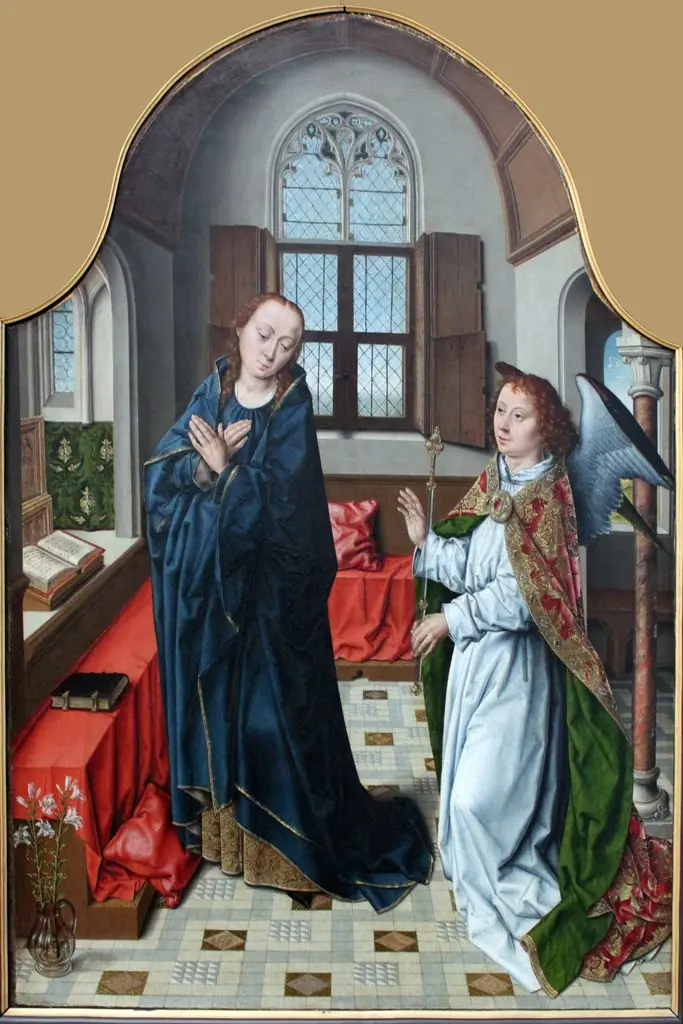
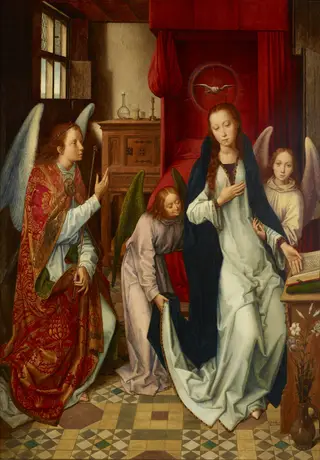
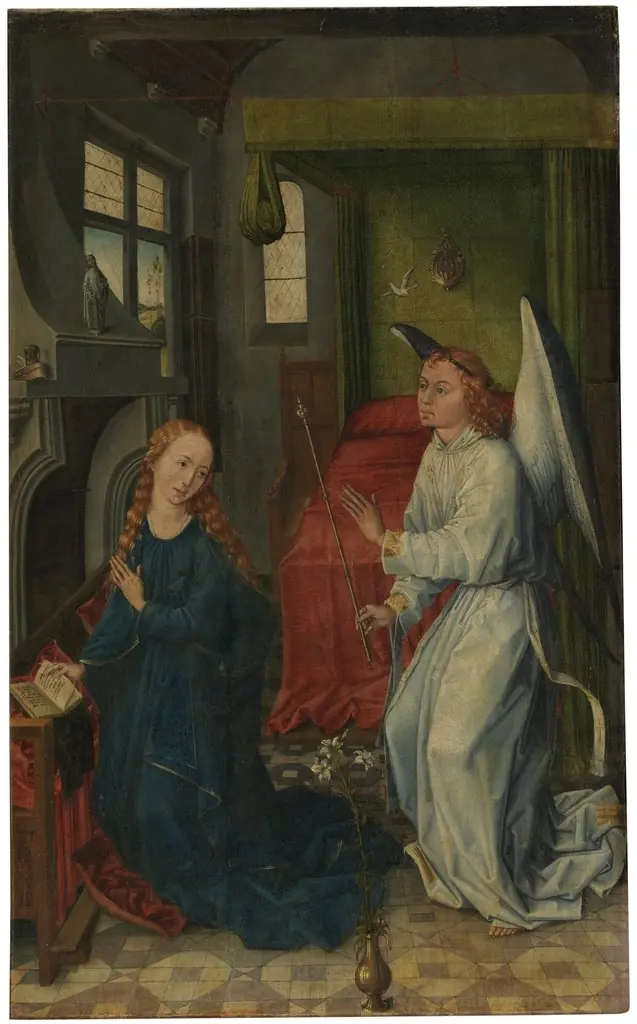
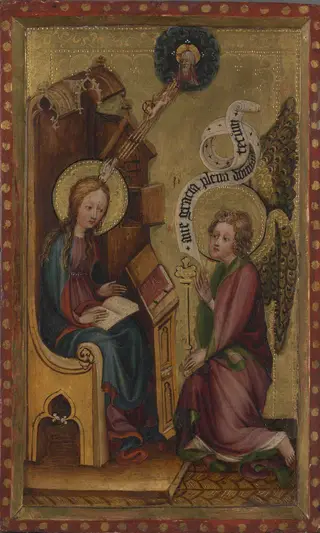
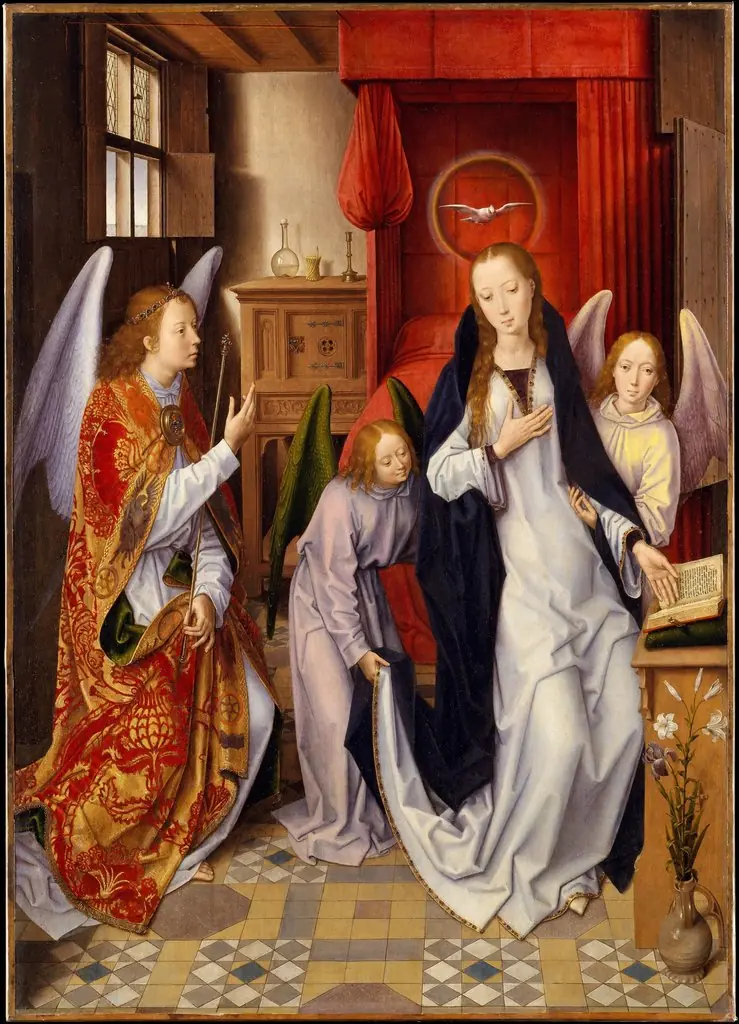
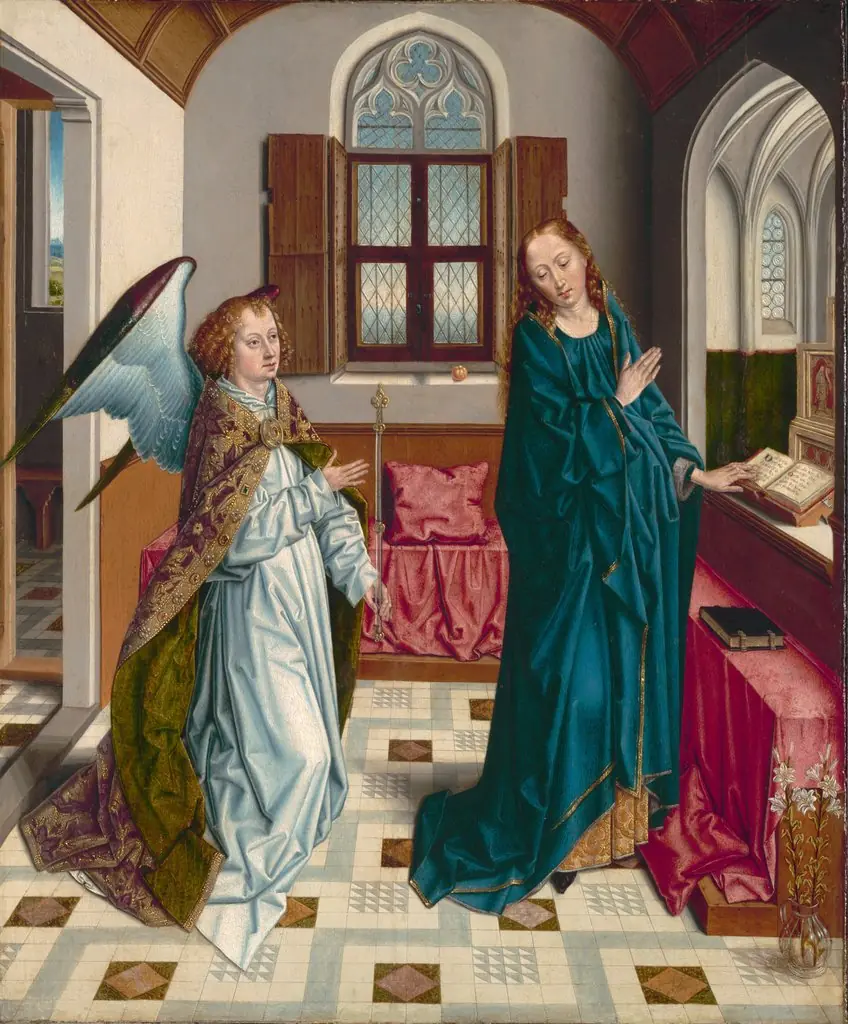
The work depicts the biblical Annunciation, a religious scene illustrating the moment the angel Gabriel announces to the Virgin Mary that she will conceive and bear the Son of God. Visually, the painting features the angel and the woman, accompanied by a book, which serves as a key iconographic element representing Mary's literacy and her role in salvation history. As a religious genre piece, the artwork represents the divine intervention and the inception of the Incarnation.
The composition focuses on these central figures to convey the theological significance of the event without extraneous narrative details.
Technique & Style
The work is an oil painting on wooden panel, measuring 43.2 cm in height and 30 cm in width. Executed circa 1550, it depicts the moment of the Annunciation with a woman, an angel, and a book, reflecting a religious genre typical of Dutch art. The composition is rendered in oil paint, employing delicate handling that emphasizes the narrative interaction between the figures. The piece was originally owned by Cornelis Hoogendijk and is now part of the Rijksmuseum's collection.
History & Provenance
The Annunciation was created in 1550 as an oil painting on panel, commissioned within a religious context typical of the period. Its creation history is tied to the artist identified via Wikidata and dated to 1550, with precise dimensions of 43.2 cm by 30 cm recorded in the source. The work entered the ownership of Cornelis Hoogendijk, marking an early provenance link before its inclusion in the Rijksmuseum collection, where it remains housed and displayed as part of its religious art holdings.
The Annunciation is held in the collection of the Rijksmuseum in Amsterdam. The work, an anonymous oil painting on panel created in 1550, is part of the museum's holdings of religious art. Historical records indicate the painting was previously owned by Cornelis Hoogendijk before entering the museum's collection.
The source material does not provide a specific inventory or accession number for the work, nor does it list any exhibition history.
Context
The work titled The Annunciation was created by an anonymous artist in 1550 using oil paint on panel, depicting a woman, an angel, and a book, and belongs to the religious art genre. It measures 43.2 cm in height and 30 cm in width. The painting is part of the Rijksmuseum collection, owned by Cornelis Hoogendijk, and is classified as a religious artwork within the broader corpus of early modern religious paintings.
Scholarship situates it within the context of 16th-century Dutch religious art, reflecting devotional practices of the period. Its stylistic and thematic elements contribute to understanding anonymous authorship in Counter-Reformation visual culture.
Legacy
The Annunciation exerted significant influence on religious painting in the Dutch Golden Age, particularly shaping depictions of angelic encounters through its compositional balance and naturalistic detail. Its formal study of light and drapery informed subsequent artists' technical approaches to sacred narratives. The work remains frequently cited in art historical surveys as a benchmark for 16th-century Dutch biblical illustration, with its stylistic elements documented in major museum collections.
Overview
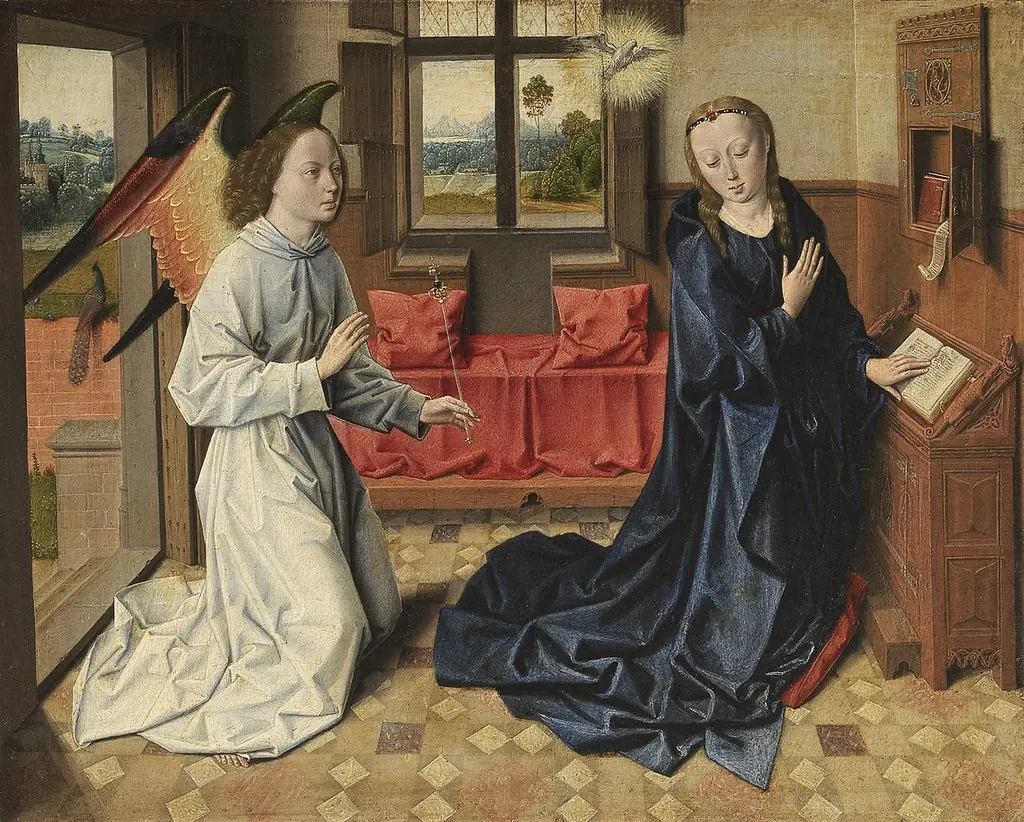
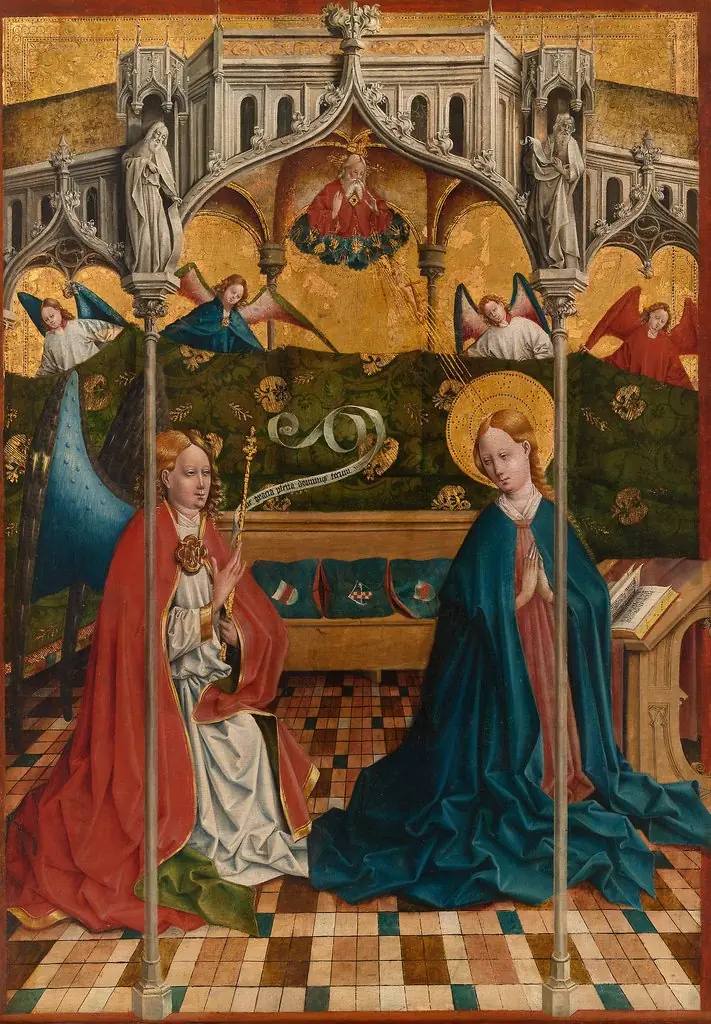
The work portrays the biblical moment of the Annunciation within an intimate interior. The Virgin Mary is seated, hands clasped in prayer, a book open on her lap, while an angel in a gold‑ patterned robe approaches, holding a scepter topped with a flowing ribbon. A white dove hovers above a window, indicating the presence of the Holy Spirit.
Artist & collection