Artwork
Plaque of George Washington
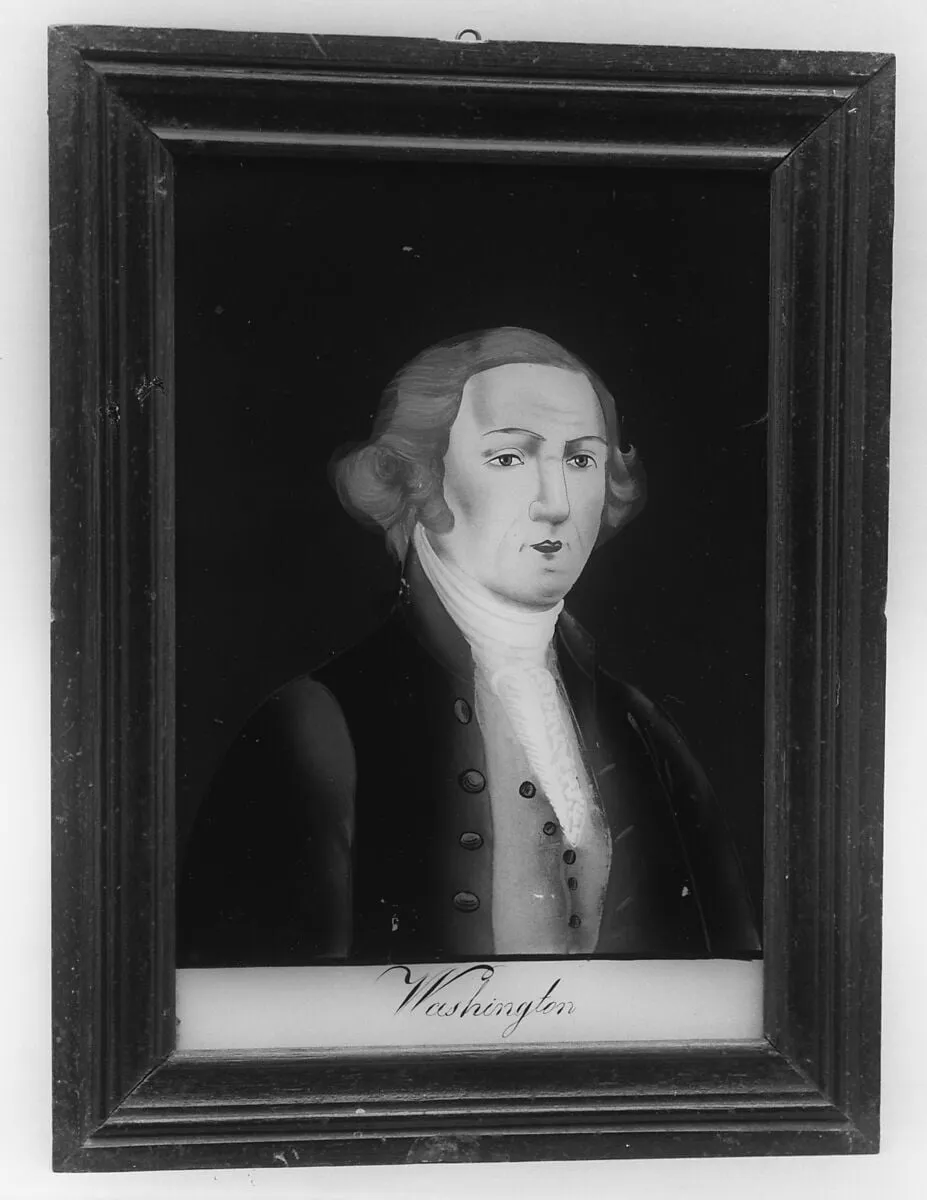
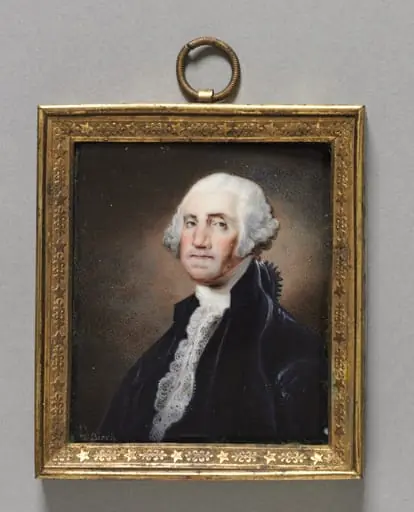
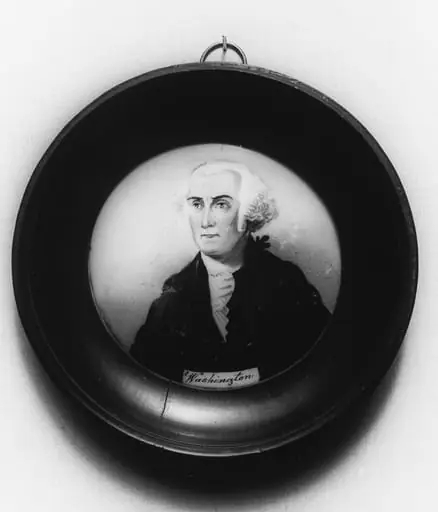
Plaque of George Washington is a glass painting by the American Impressionist artist Gilbert Stuart. It dates from 1803 and is held in the collection of the Metropolitan Museum of Art.
About this work
Subject & Meaning
As a painted-glass plaque, it functions both as a decorative object and a commemorative likeness, embodying early American reverence for its inaugural leader.
The plaque is a painted-glass portrait of George Washington, the first President of the United States, rendered by Gilbert Stuart in 1803. It belongs to The American Wing of the Metropolitan Museum of Art and is classified as a portrait. The work depicts Washington as a mature man, emphasizing his status as a national founding figure.
As a painted-glass plaque, it functions both as a decorative object and a commemorative likeness, embodying early American reverence for its inaugural leader.
Technique & Style
Gilbert Stuart's 1803 Plaque of George Washington is executed in painted glass, a technique that involves applying pigments directly onto a glass support rather than a traditional canvas or panel. The work takes the form of a small-format portrait, measuring 20.3 cm in height by 13.7 cm in width, with the elongated vertical proportions typical of a commemorative plaque. Its classification within The American Wing of the Metropolitan Museum of Art reflects its function as a portable, intimate portrait object.
The medium of painted glass lends the surface a luminous, reflective quality, distinguishing the piece stylistically from Stuart's more widely known oil portraits and underscoring its character as a decorative memorial likeness of the sitter.
History & Provenance
The Plaque of George Washington was created in 1803 by the American artist Gilbert Stuart. Executed in painted glass, the work measures 20.3 centimetres in height and 13.7 centimetres in width. Stuart, renowned for his portraiture, produced this piece as a depiction of the first U.S. president.
The plaque is held within the collection of the Metropolitan Museum of Art in New York, where it is classified under The American Wing as a portrait. While the specific commission details and original patron are not recorded, the work's inception is firmly dated to 1803. A specific accession number and exhibition history are not provided in the available documentation.
Overview
Gilbert Stuart, an American portraitist, created the Plaque of George Washington in 1803. This work is a painted glass portrait depicting the first U.S. president. Stuart, born in the Rhode Island Colony in 1755, is recognized for his significant contributions to American portraiture.
The use of glass as a medium for this detailed image distinguishes it within his oeuvre and the broader context of early American art.
Legacy
Gilbert Stuart's influence on American art is largely defined by his extensive portraiture. Among his most celebrated works is the Athenaeum Portrait of George Washington, which became the definitive visual reference for the president. This particular image gained widespread recognition and was later adopted as the basis for the likeness of Washington found on the United States one-dollar bill, cementing its place in national iconography.
Artist & collection

Artist
Gilbert Stuart (né Stewart; December 3, 1755 – July 9, 1828) was an American painter born in the Rhode Island Colony who is widely considered one of America's foremost portraitists.