Artwork
Horatio Gates
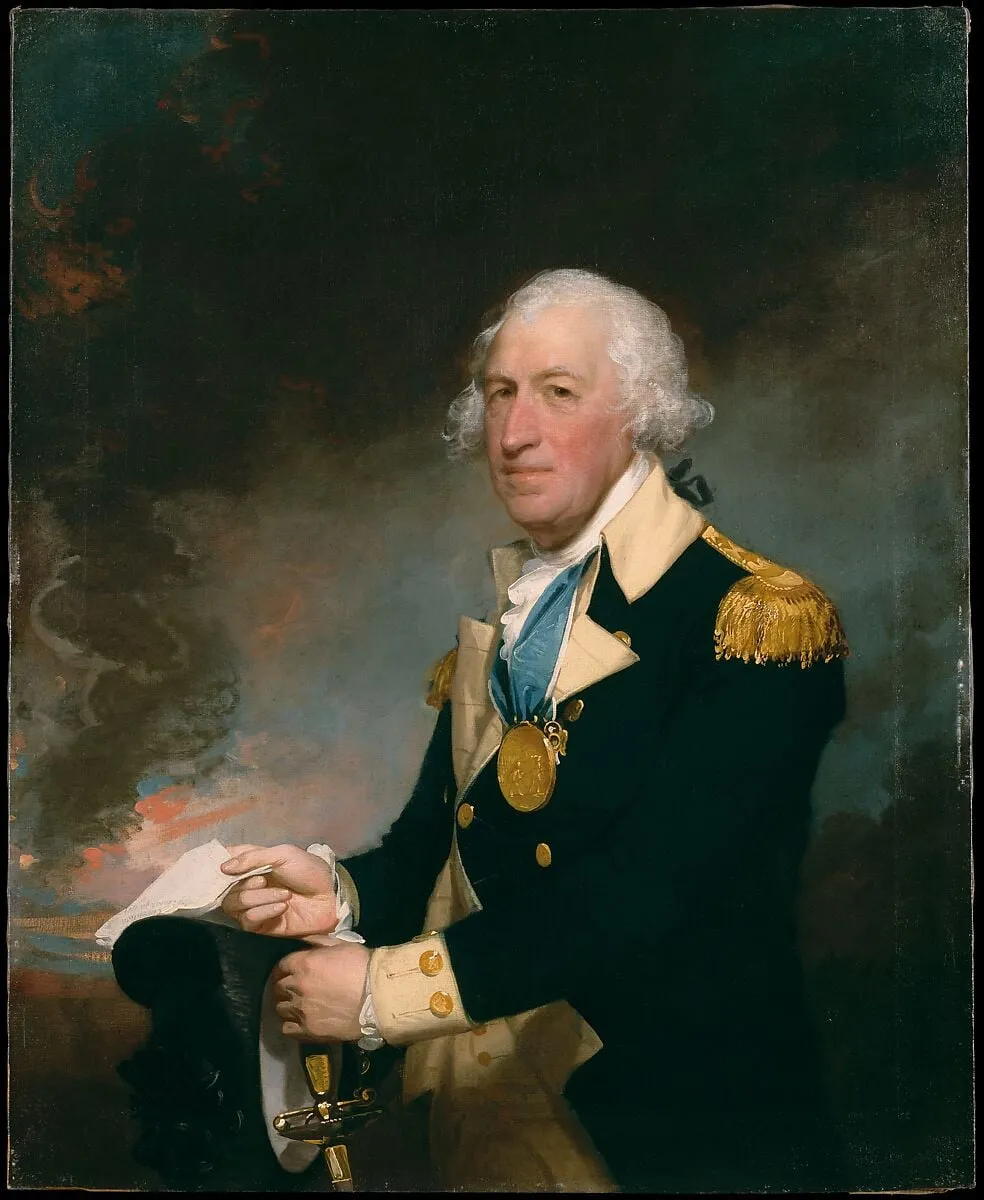
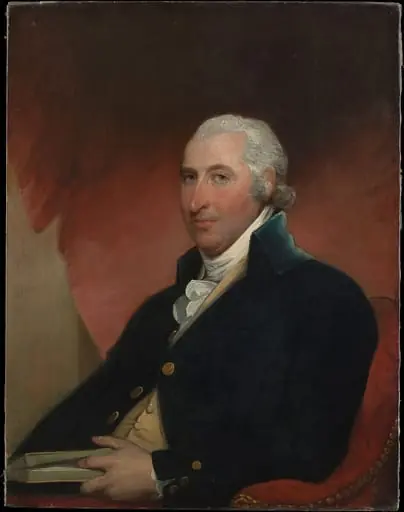
Horatio Gates is an oil painting by the American Impressionist artist Gilbert Stuart. It dates from 1794 and is held in the collection of the Metropolitan Museum of Art.
- Accession no.
- 1977.243
- Credit line
- Gift of Lucille S. Pfeffer, 1977
About this work
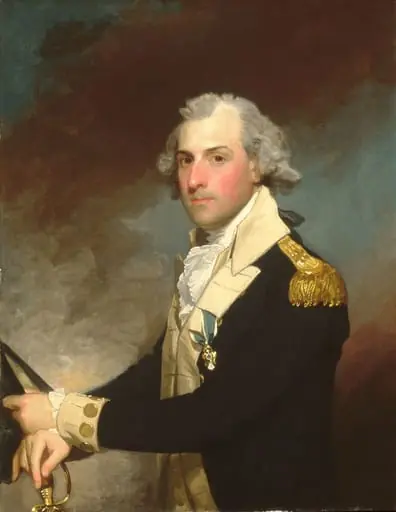
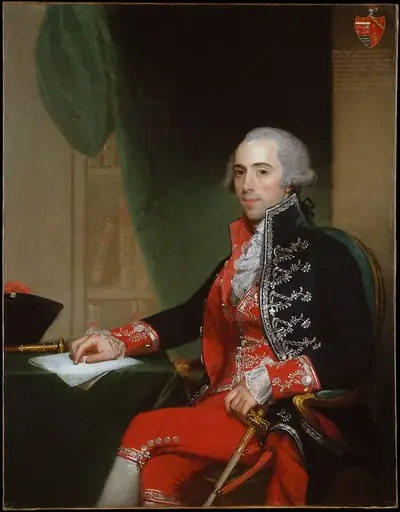
Horatio Gates sits in a chair, serious-faced, in the dress of his day. A general of the American Revolution, he is rendered with close attention to his face and uniform. Gilbert Stuart painted him in oil in 1794.
Subject & Meaning
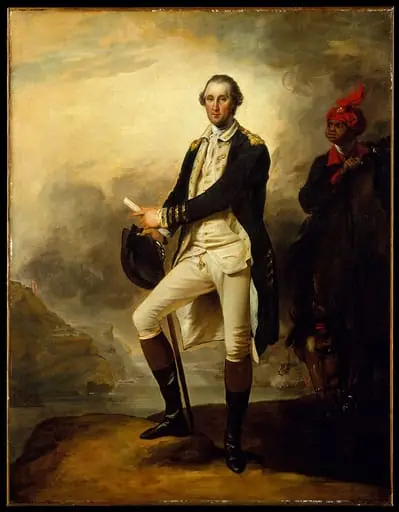
He holds a copy of the convention he signed with the British commander John Burgoyne, and a gold medal awarded by Congress commemorates his triumph at Saratoga.
The portrait shows General Horatio Gates in the blue and buff uniform of an American major general, signaling his service in the Continental Army. He holds a copy of the convention he signed with the British commander John Burgoyne, and a gold medal awarded by Congress commemorates his triumph at Saratoga. The painting's British-influenced execution, combining Gainsborough-like brushwork with Romney-like clarity, reflects Gilbert Stuart's London training while presenting Gates as the celebrated victor of Saratoga.
Stuart painted him during a brief stay in New York after years abroad, a sitting made memorable by their shared Madeira. The work remained in the family of Colonel Ebenezer Stevens before entering the Metropolitan Museum of Art.
Technique & Style
Executed in oil on canvas, Gilbert Stuart's portrait of Horatio Gates measures 112.4 by 91.1 centimeters and belongs to the Metropolitan Museum of Art's American Wing. The work reflects Stuart's years in London, combining the painterly handling associated with Gainsborough and the tight clarity associated with Romney, a blend that has led it to be described as a distinctly British portrait. Stuart depicts Gates in the blue and buff uniform of an American major general, treating the uniform with precise draftsmanship while rendering the face and hands with looser, more painterly modeling.
The commemorative gold medal struck by Congress and the convention document Gates holds are rendered with crisp, descriptive clarity, contrasting with the softer handling of the background.
History & Provenance
Horatio Gates is an oil-on-canvas portrait painted by Gilbert Stuart in 1794. After returning from Britain and Ireland to escape creditors, Stuart executed the work during a brief stay in New York before relocating to Philadelphia. Gates sat for the portrait, and the artist and sitter enjoyed Madeira together; the painting reflects Stuart's British training.
Following its completion it passed to the family of Gates's friend Colonel Ebenezer Stevens. It is now part of the Metropolitan Museum of Art, New York, in The American Wing. The painting entered the museum through an unspecified acquisition route and remains in the permanent collection; no record of subsequent loans or temporary exhibitions is documented in the available sources.
Context
Gilbert Stuart's 1794 portrait of Horatio Gates occupies a significant place in American art as a work that bridges British portrait traditions with American revolutionary subject matter. Created shortly after Stuart's return from Britain, it is noted for combining the painterly manner of Thomas Gainsborough with the precise clarity of George Romney, applying a distinctly British aesthetic to an American general. The work also functions as a historical document of Gates's victory at Saratoga, depicting him in his major general's uniform, holding the surrender convention signed with John Burgoyne, and wearing the Congressional gold medal.
Scholarship situates the piece within Stuart's brief New York period and the personal rapport between artist and sitter. It also recalls the era's politics, including the Conway Cabal, an attempt to replace George Washington with Gates.
Overview
This oil on canvas by Gilbert Stuart depicts Horatio Gates, a prominent British-American military officer who served as a major general in the Continental Army during the American Revolutionary War. Painted shortly after Stuart's return to the United States, the portrait captures Gates in his military uniform, commemorating his significant contributions to the American cause, particularly his pivotal victory at the Battle of Saratoga.
Artist & collection

Artist
Gilbert Stuart (né Stewart; December 3, 1755 – July 9, 1828) was an American painter born in the Rhode Island Colony who is widely considered one of America's foremost portraitists.