Artwork
The Virgin and Child with John the Baptist and St. Lucia
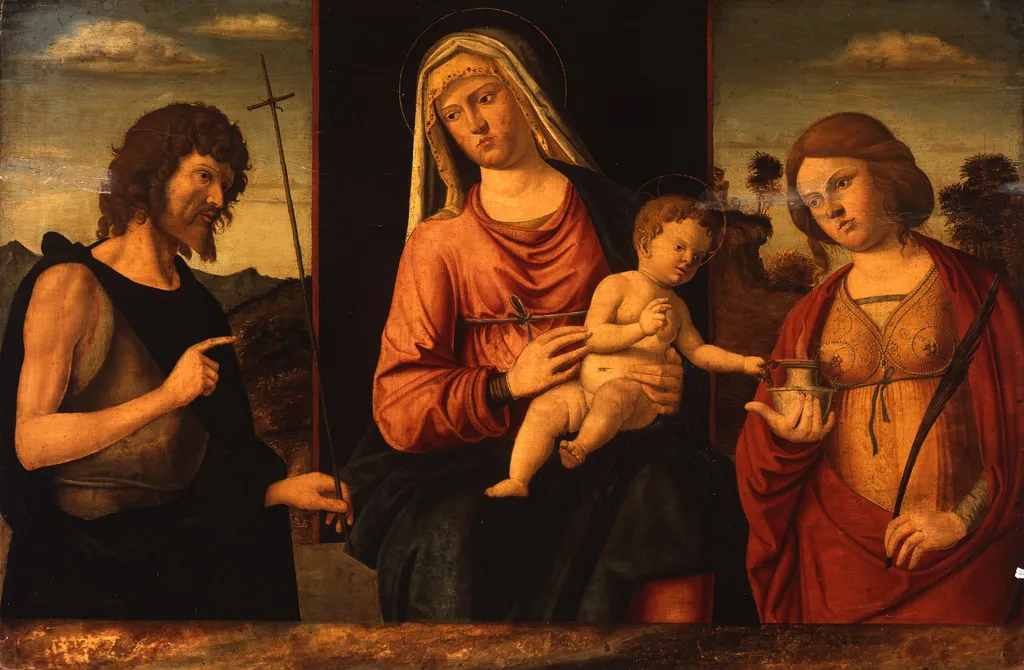
The Virgin and Child with John the Baptist and St. Lucia is a paint painting by the High Renaissance artist Giovanni Battista Cima da Conegliano. It dates from 1498 and is held in the collection of the Gemäldegalerie Berlin. The Virgin and Child with John the Baptist and St.
About this work
Technique & Style
The background is divided into three sections: a dark void behind the central pair, flanked by landscape panels with cloudy skies, distant mountains, and trees.
The work is painted in oil on poplar panel, the support favored by Venetian painters of the period. The background is divided into three sections: a dark void behind the central pair, flanked by landscape panels with cloudy skies, distant mountains, and trees. The palette is dominated by warm reds, deep browns, muted greens, and golden flesh tones. Light falls evenly across the figures, modeling their rounded forms with soft shadows. The brushwork appears smooth and blended, with careful attention to drapery folds and decorative details on the garments. A narrow ledge runs along the bottom edge, a device Cima frequently employed to create spatial depth. The surface shows fine craquelure and some visible abrasion, particularly in the sky areas. This handling is consistent with Cima's characteristic style, which combines clear light, contrasting colors, and a strong underlying geometric structure in compositions that have been described as both highly decorative and calmly weighty.
History & Provenance
Specific details of the commission and dating of this particular panel remain unrecorded in the available sources. The painting is now in the Gemäldegalerie, Berlin, where it is catalogued as part of the Solly Collection. No exhibition history is documented in the provided sources.
Context
Cima da Conegliano was active mainly in Venice from about 1490 to 1510, where he was one of the leading artists. His major works are almost all altarpieces, though he also produced numerous smaller pictures for private devotion, usually of the Virgin and Child. Nothing is known of his training, but his handsome and reflective style, which changed very little in the course of his career, was strongly influenced by Giovanni Bellini, not least in his use of beautiful landscape settings. He has been called 'the poor man's Bellini,' although because of his calm and weighty figures he was also known in the eighteenth century as 'the Venetian Masaccio.' The sacra conversazione format, in which the Virgin and Child are shown in the company of saints, became popular toward the end of Cima's career, and this work belongs to that late phase of his production.
Legacy
The specific later influence and cultural afterlife of this particular panel are not documented in the available sources. Cima da Conegliano's broader legacy rests on his popular devotional compositions, which were repeated in numerous versions by him and his workshop, and on his role in disseminating the Venetian Renaissance tradition of luminous color and landscape setting to a wide audience through altarpieces and private devotional works.
Own this work as a print
Artist & collection
Artist
Giovanni Battista Cima da Conegliano
Giovanni Battista Cima, also called Cima da Conegliano (c. 1459 – c. 1517), was an Italian Renaissance painter, who mostly worked in Venice. He can be considered part of the Venetian school, though he was also…

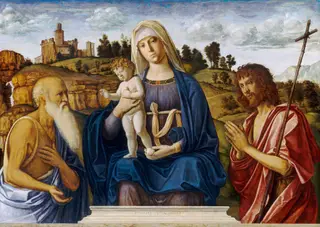 Madonna and Child with Saint Jerome and Saint John the Baptist
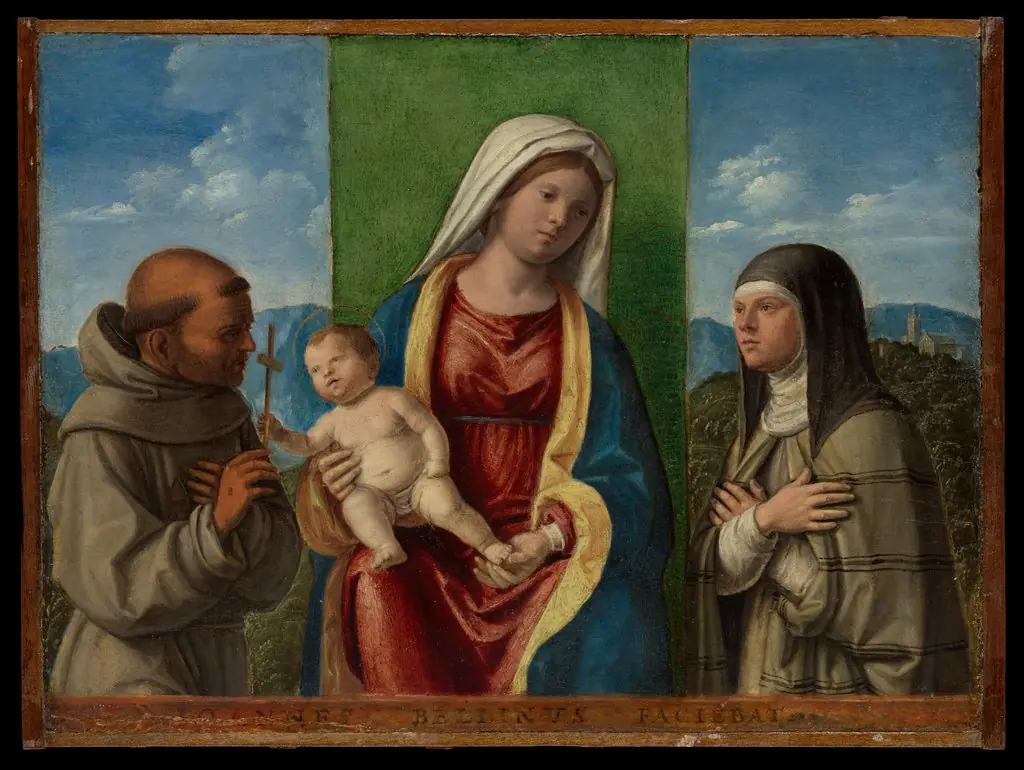 Madonna and Child with Saints Francis and Clare
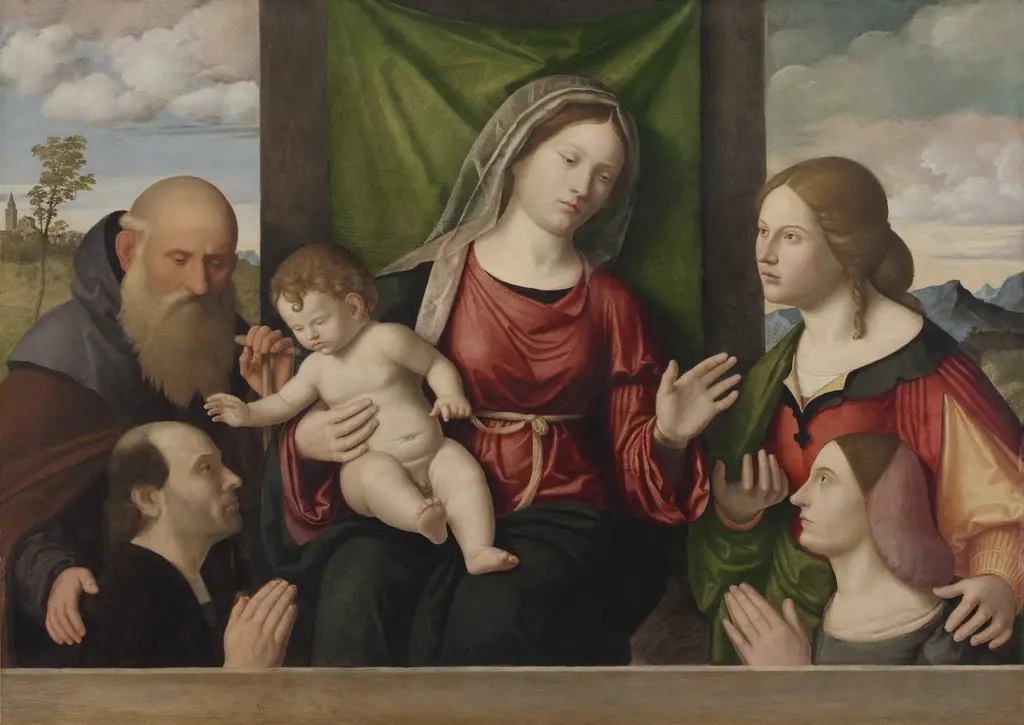 Virgin and Child with Saints and Donors
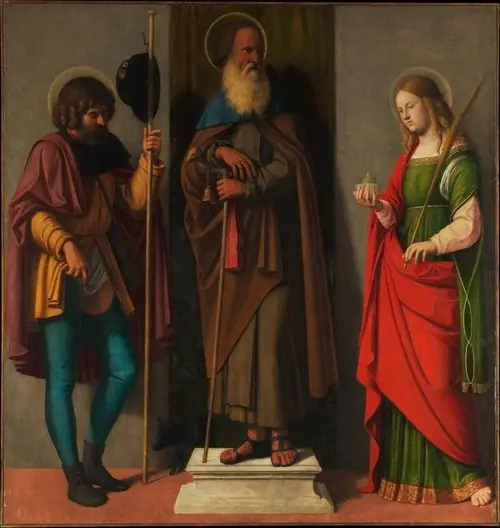 Saints Roch, Anthony Abbot and Lucy
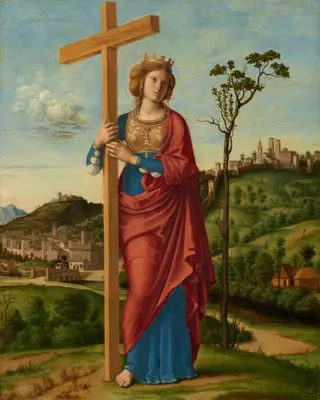 Saint Helena
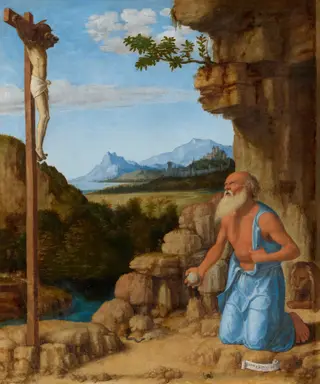 Saint Jerome in the Wilderness
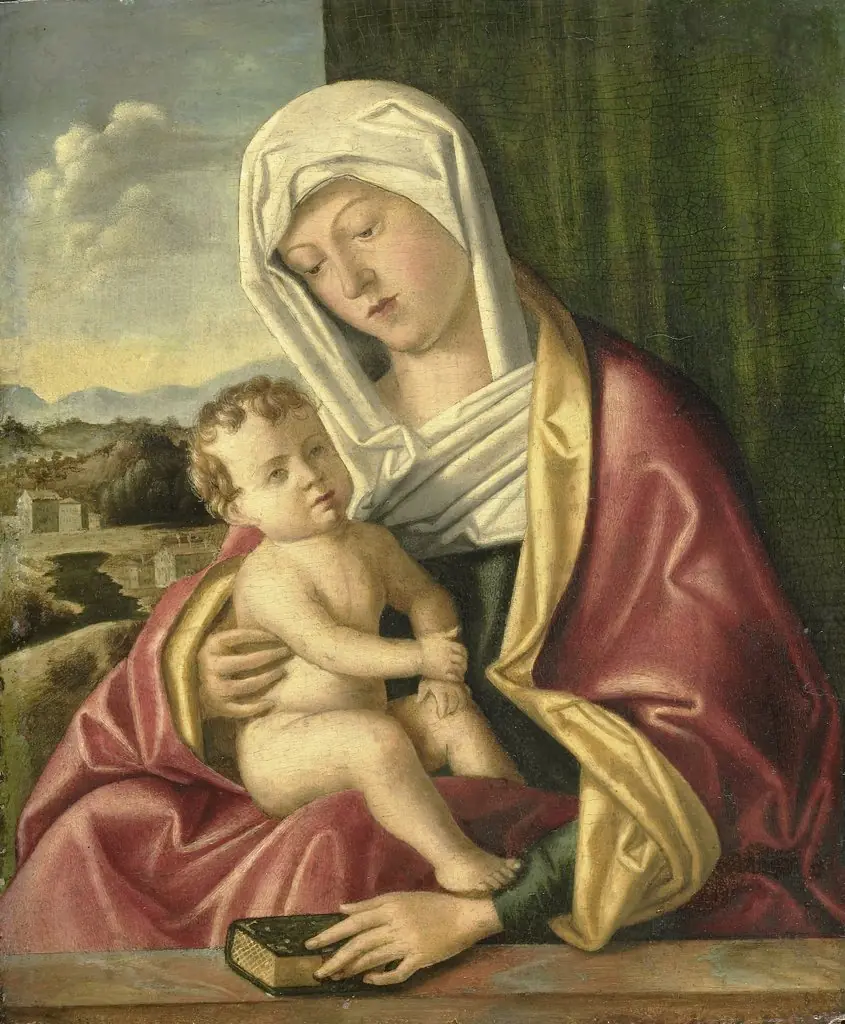 Virgin and Child
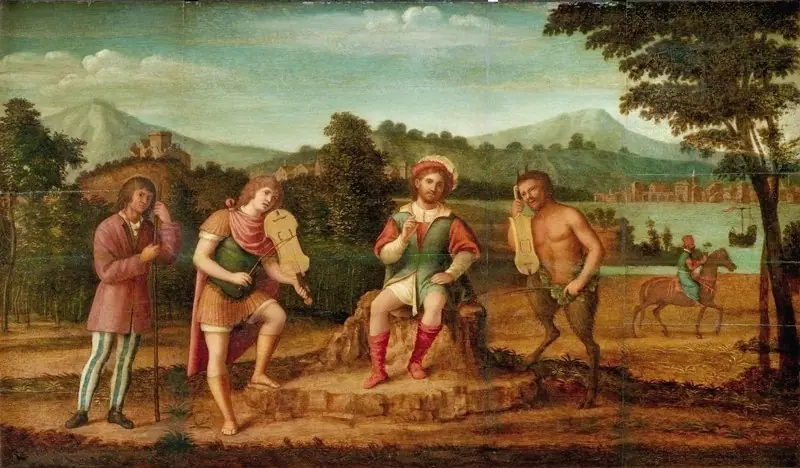 The Judgement of Midas. The Musical Contest between Apollo and Marsyas
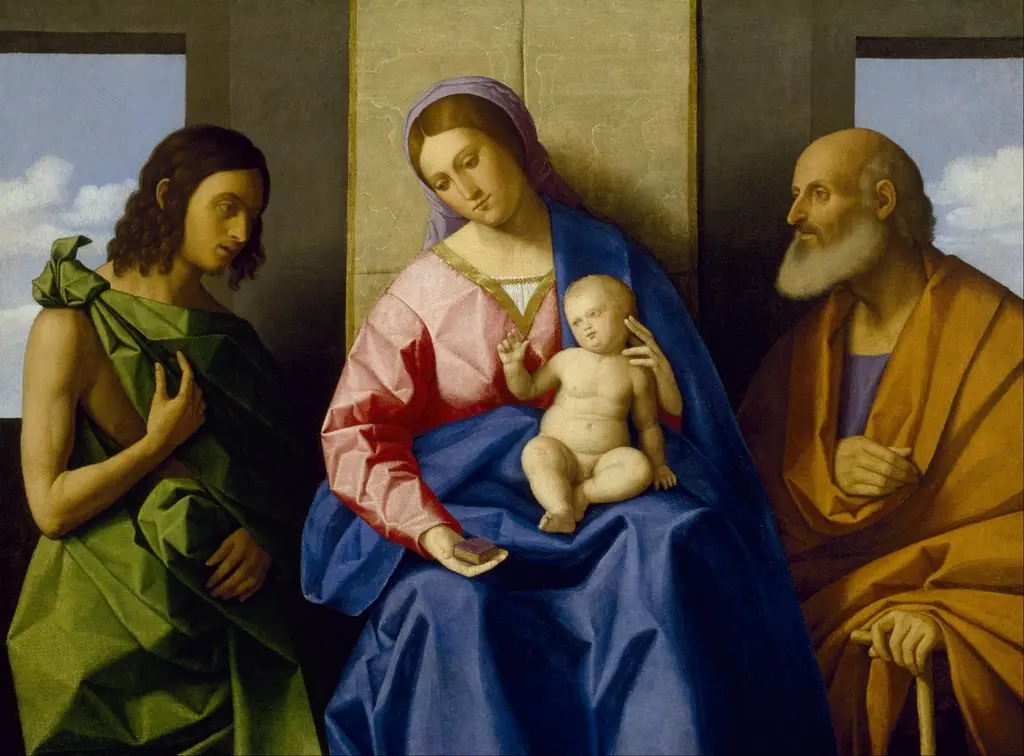 Virgin and Child with Saints John the Baptist and Joseph
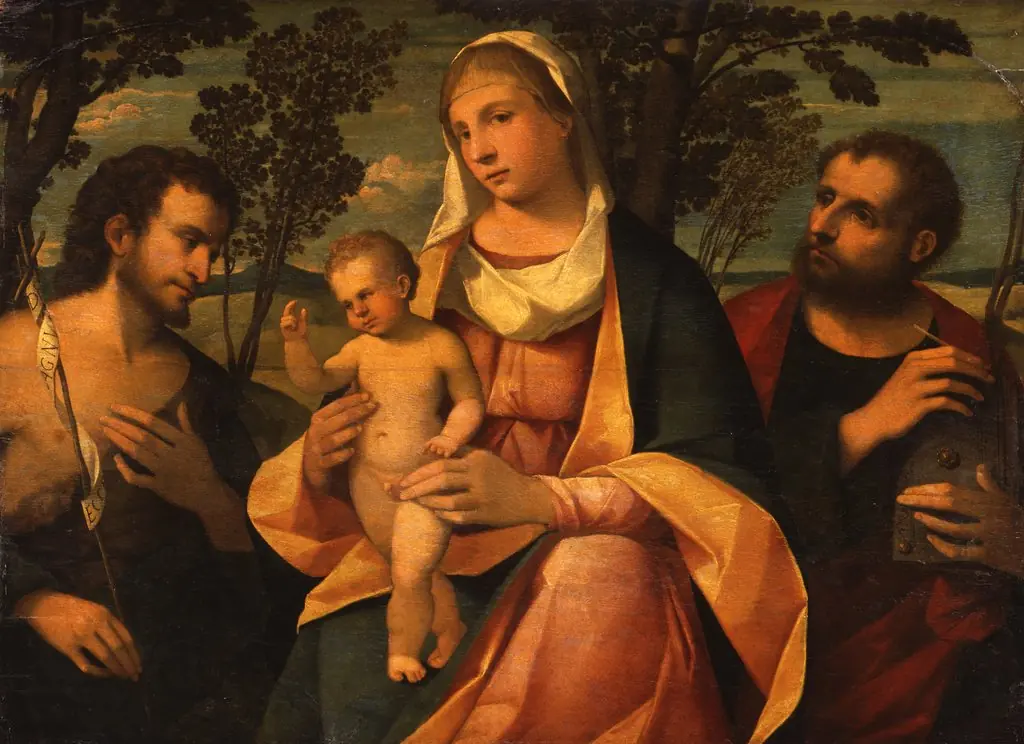 The Virgin with the Blessing Child and St. John the Baptist and Marcus the Evangelist
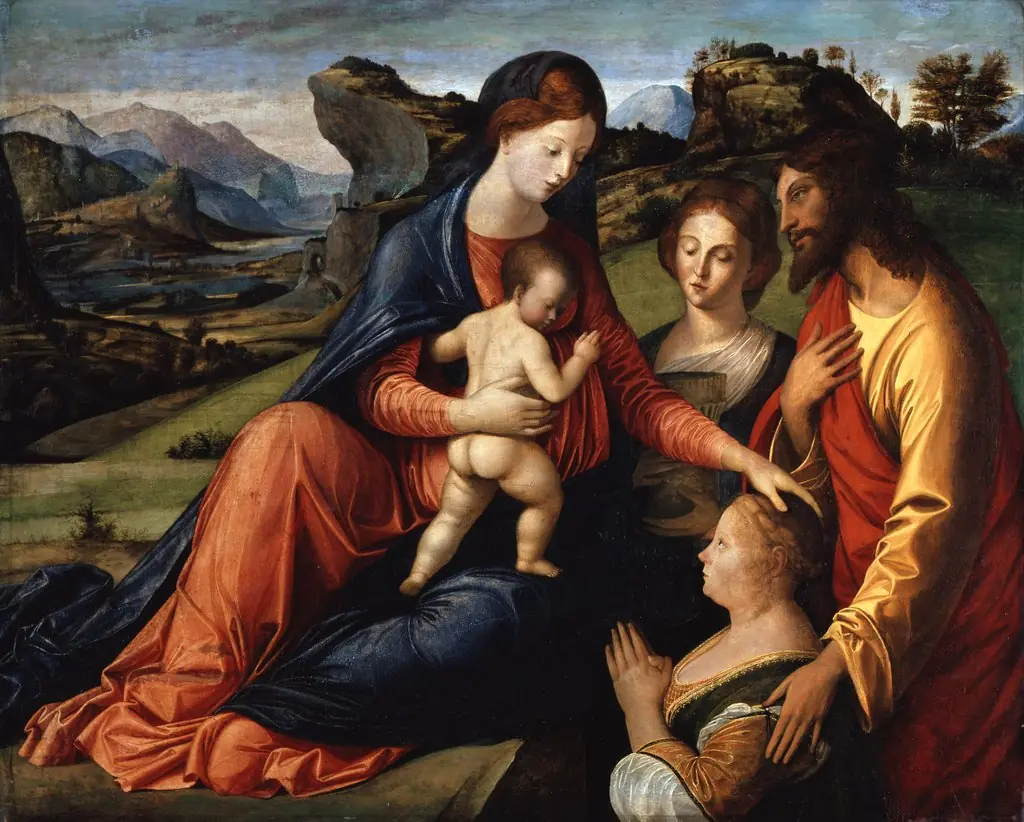 Virgin and Child with Saint Barbara, Saint John the Baptist and a female donor
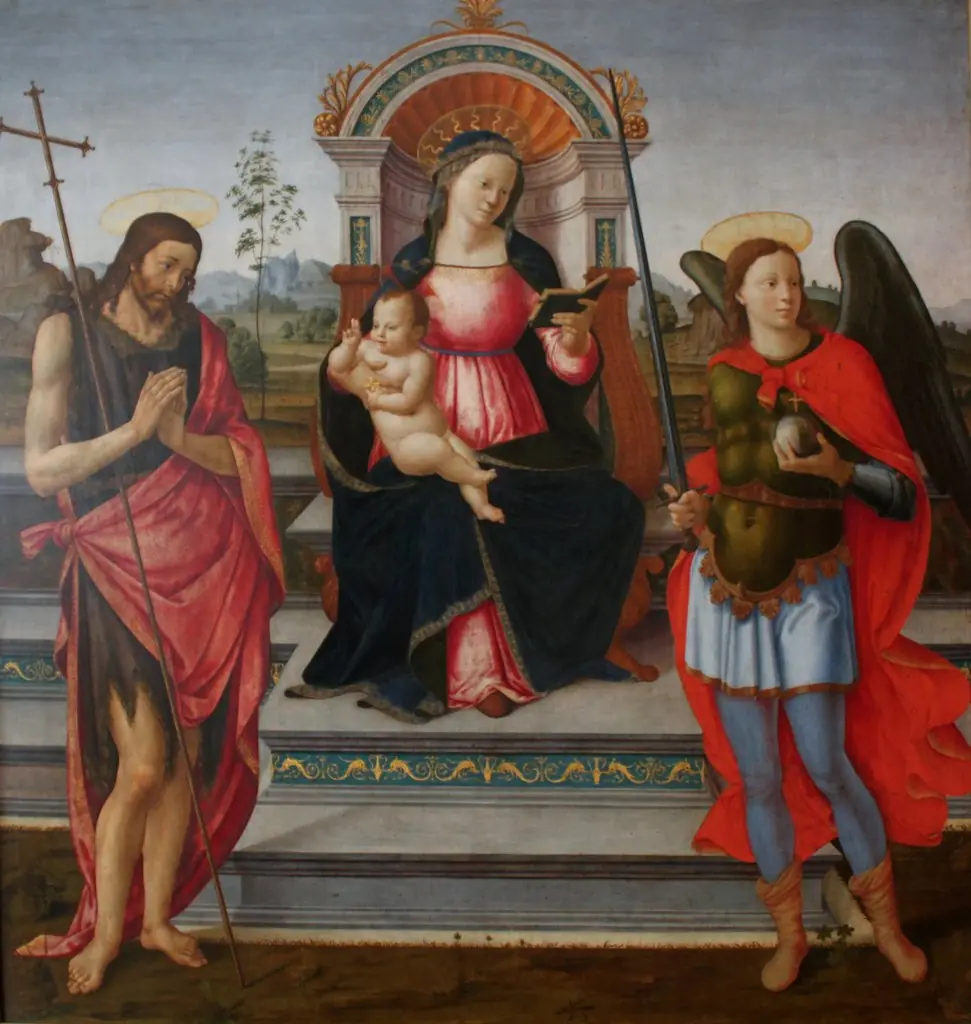 Madonna Enthroned with the blessing child, John the Baptist and St. Michael the Archangel
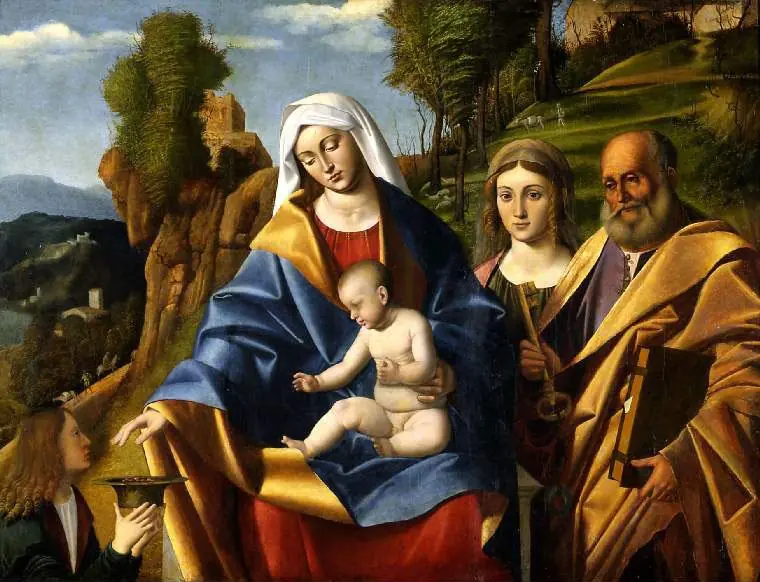 Virgin and Child with Saints,
 Madonna and Child with Saints
 The Engagement of St. Catherine of Alexandria
 Virgin and Child with Saint Mary Magdalene and Another Female Saint
 Holy Family with Child St. John