Artwork
Saint Helena
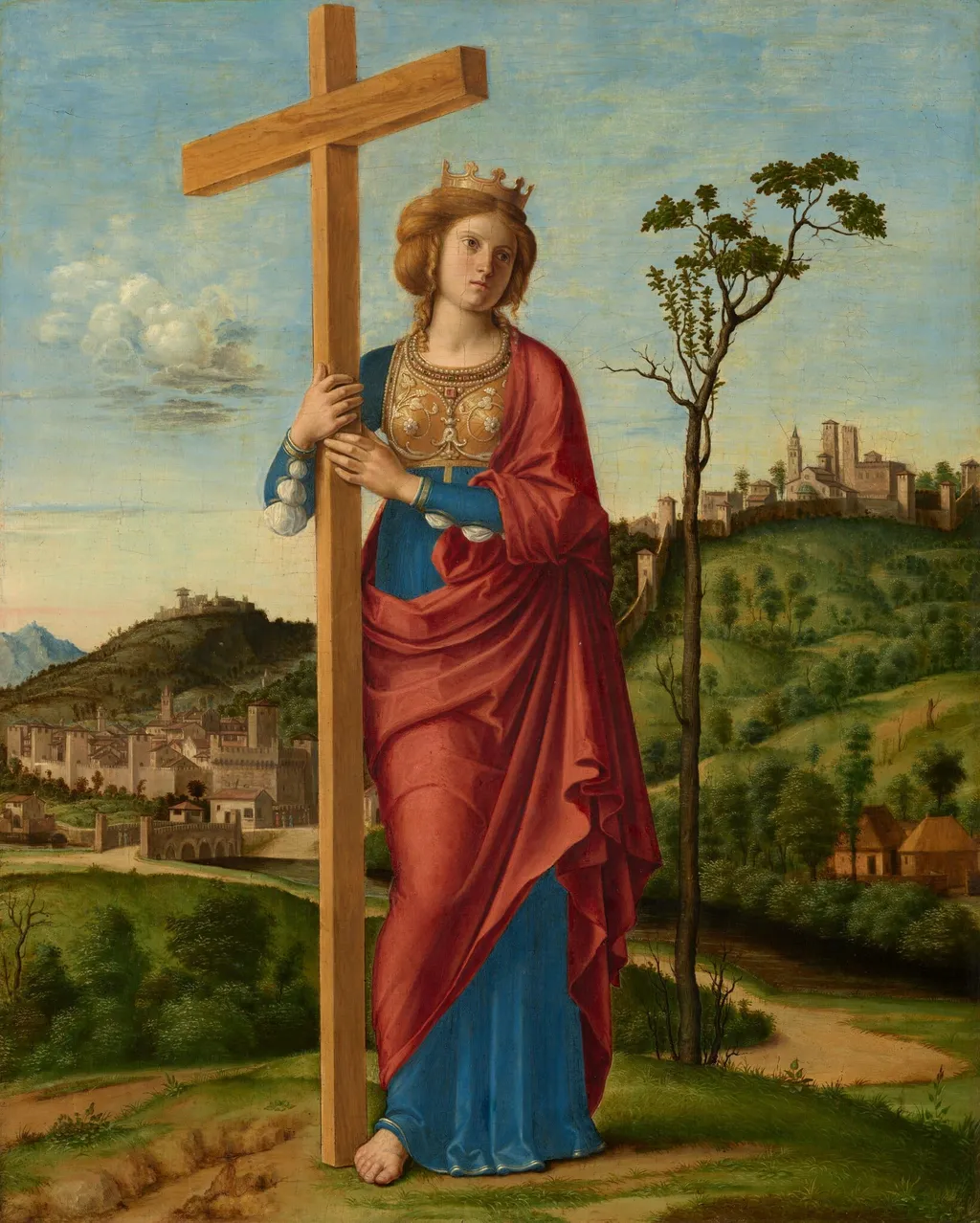
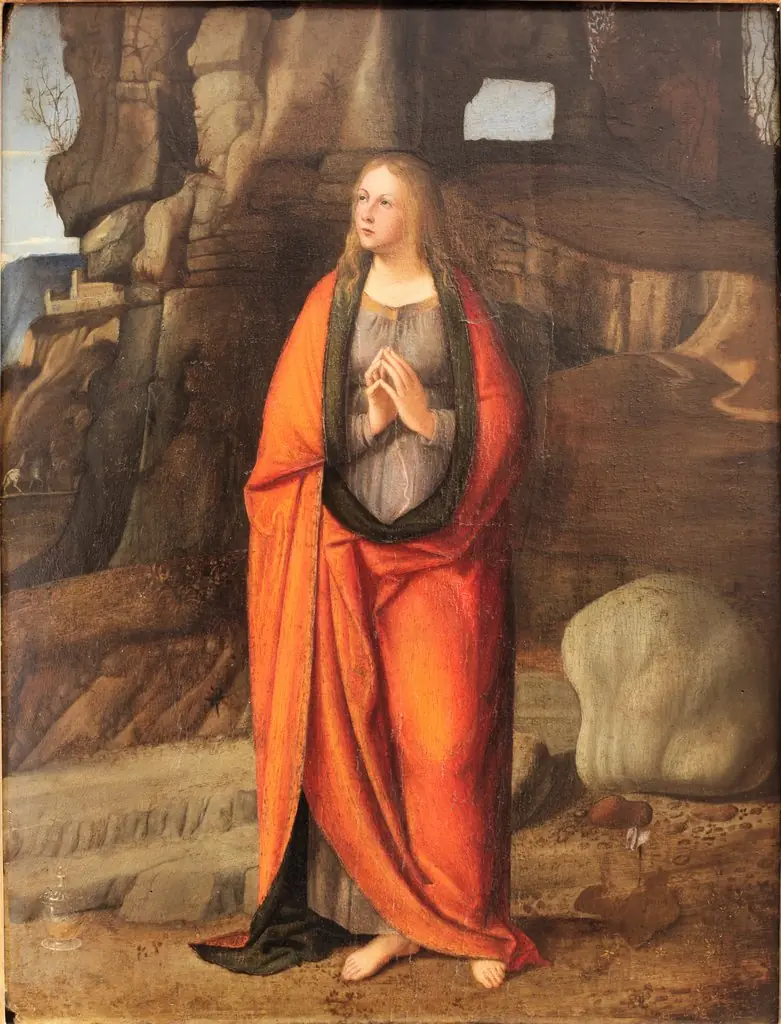
Saint Helena is an oil painting by the High Renaissance artist Giovanni Battista Cima da Conegliano. It dates from 1495 and is held in the collection of the National Gallery of Art.
About this work
A woman, likely a saint, stands in a plain setting in old-fashioned dress, her face calm. Cima worked the folds of her clothing in fine detail, the kind of careful handling of fabric typical of painters around 1495.
Subject & Meaning
The painting depicts Helena Augusta, also known as Saint Helena of Constantinople.
The painting depicts Helena Augusta, also known as Saint Helena of Constantinople. The central iconographic element is the saint leaning against or supporting herself upon a large cross, an attribute symbolizing her traditional role in the discovery of the True Cross. While the figure represents a specific religious historical personage, the work integrates this sacred subject with a highly detailed, recognizable landscape of the artist's native Conegliano.
The background features specific local landmarks, including the walls along the refosso, the Madonna bridge, a mill on the Monticano river, and the castle of San Salvatore di Susegana, grounding the holy figure within a tangible, contemporary setting rather than an abstract heavenly space.
Technique & Style
Cima da Conegliano’s Saint Helena (1495) is executed in oil on a poplar panel, measuring 40.2 by 32.2 centimeters []. The artist employed a meticulous layering technique characteristic of Venetian painting, blending fine glazes to achieve luminous flesh tones and rich drapery folds. The handling is precise, with delicate modeling of Helena’s features and the intricate gold embroidery on her robe, reflecting Cima’s training in the Bellini workshop [].
The landscape background demonstrates a keen observation of spatial recession, integrating topographical elements of Conegliano with atmospheric perspective []. The panel remains in stable condition, preserving its original vibrancy despite minor craquelure consistent with its age [].
History & Provenance
Attributed to Giovanni Battista Cima da Conegliano, Saint Helena was created in 1495. The earliest documented ownership traces to the Casa Boschi in Bologna, where it appeared in a 1777 inventory as a work by Leonardo da Vinci before later scholarship reattributed it. The painting remained in the Boschi collection until 1858, when it was sold.
By 1860, it entered the collection of Vincenzo or Gioacchino Valentini in Rome. It later passed to George John Browne, 3rd Marquess of Sligo, and subsequently to his daughter, Lady Isabel Mary Peyronnet Browne. The work was sold at Christie’s, London, in 1948.
After brief ownership by Dr. James Hasson, it was acquired in 1953 by a consortium including Thomas Agnew & Sons, M. Knoedler & Co., and Pinakos, Inc., before being purchased in January 1954 by the Samuel H. Kress Foundation, which gifted it to the National Gallery of Art in 1961.
Saint Helena is housed in the National Gallery of Art in Washington, D.C., where it has been part of the Samuel H. Kress Collection since its donation in 1961. The painting entered the museum’s holdings through the 1961 gift from the Samuel H. Kress Foundation and is recorded in the institution’s inventory of 15th‑century Italian works. Its earlier provenance includes ownership in the Boschi collection of Bologna, a sale in 1860, and subsequent private owners before acquisition by the Kress Foundation.
The artwork has been exhibited in the National Gallery’s permanent collection galleries, making it accessible to the public as part of the museum’s ongoing display of its collection.
Overview
Saint Helena is an oil-on-panel painting by the Venetian Renaissance master Cima da Conegliano, executed circa 1495. The work depicts Saint Helena, the mother of Emperor Constantine, standing in a three-quarter view against a serene landscape background characteristic of the artist's style. She is portrayed as a regal figure, holding the True Cross, which she is traditionally credited with discovering during her pilgrimage to Jerusalem.
Cima renders the saint with a calm, dignified expression, emphasizing her spiritual authority. The composition features the figure placed centrally, framed by a distant view of hills and a clear sky, a hallmark of Cima's integration of Venetian color and Umbrian spatial clarity. The artist demonstrates meticulous attention to the drapery of her robes, using light and shadow to define the heavy folds of her garments.
Painted during a period when Cima was refining his mature style, the work reflects the influence of Giovanni Bellini while showcasing the artist's distinct use of luminous color and atmospheric perspective. This painting stands as a significant example of late 15th-century religious art in the Veneto region, illustrating the transition from the Quattrocento to the High Renaissance through its balanced composition and devotional intensity.

Own this work as a print
Artist & collection
Artist
Giovanni Battista Cima da Conegliano
Giovanni Battista Cima, also called Cima da Conegliano (c. 1459 – c. 1517), was an Italian Renaissance painter, who mostly worked in Venice. He can be considered part of the Venetian school, though he was also…

 Madonna and Child with Saint Jerome and Saint John the Baptist
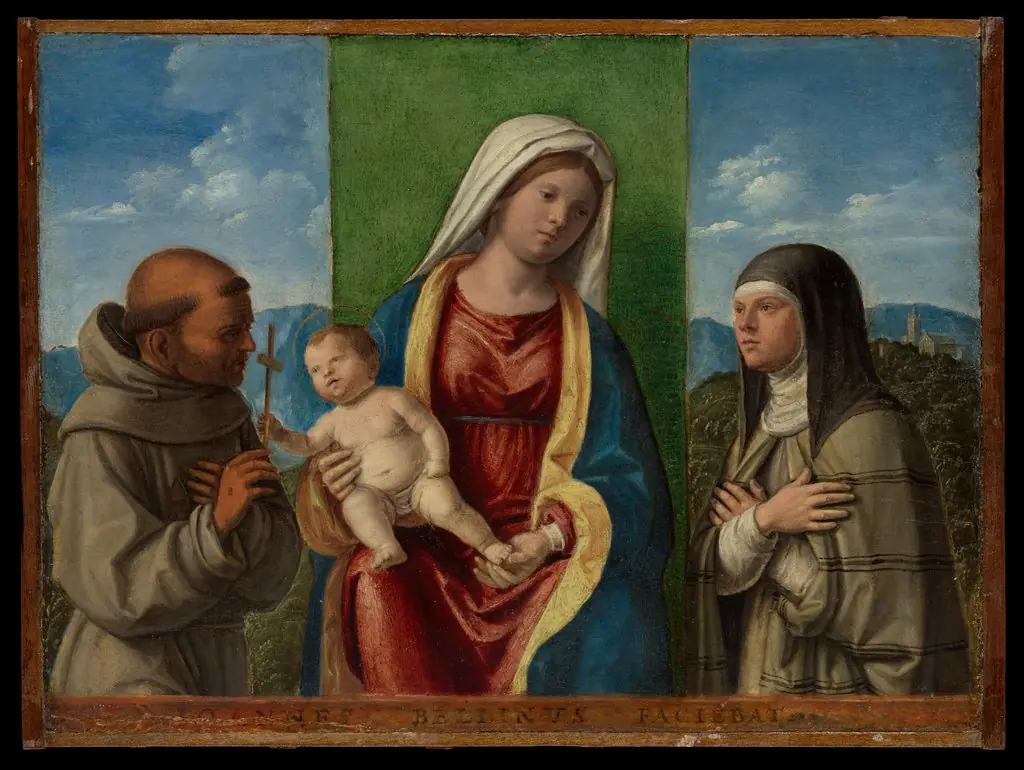 Madonna and Child with Saints Francis and Clare
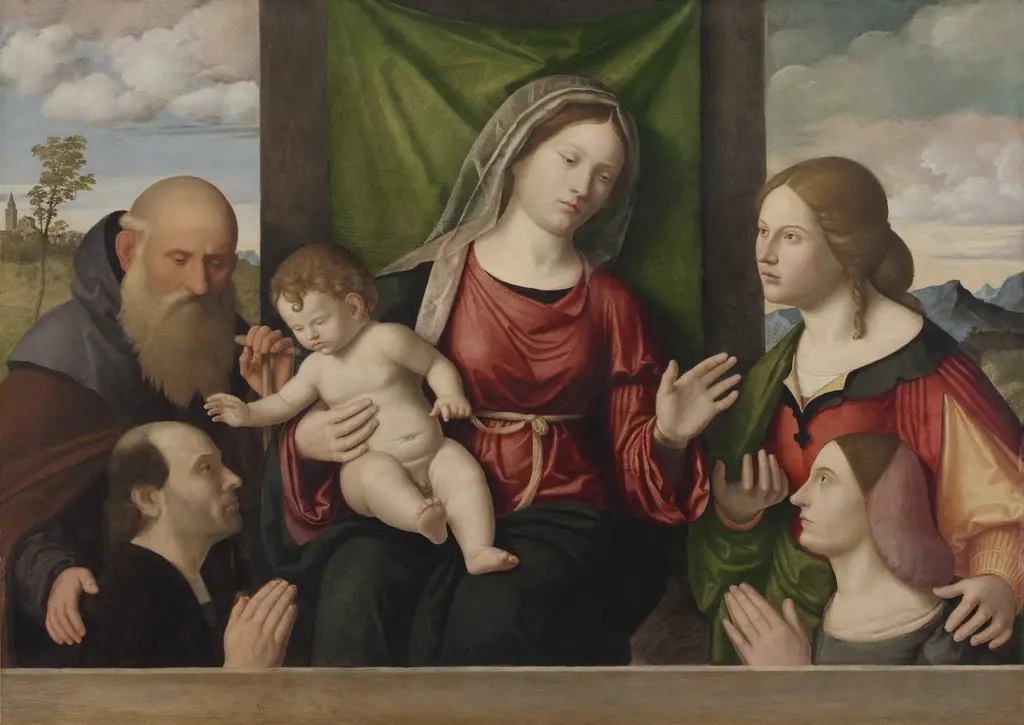 Virgin and Child with Saints and Donors
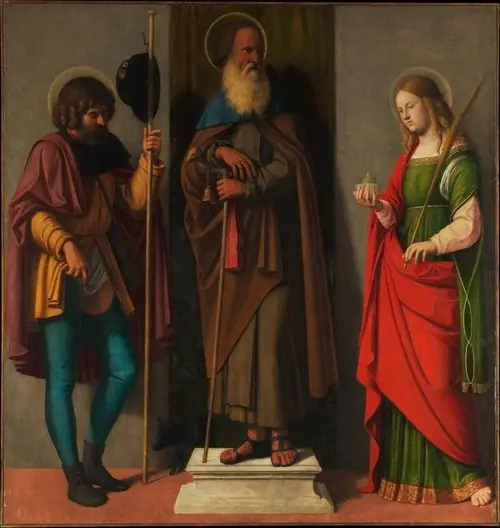 Saints Roch, Anthony Abbot and Lucy
 Saint Jerome in the Wilderness
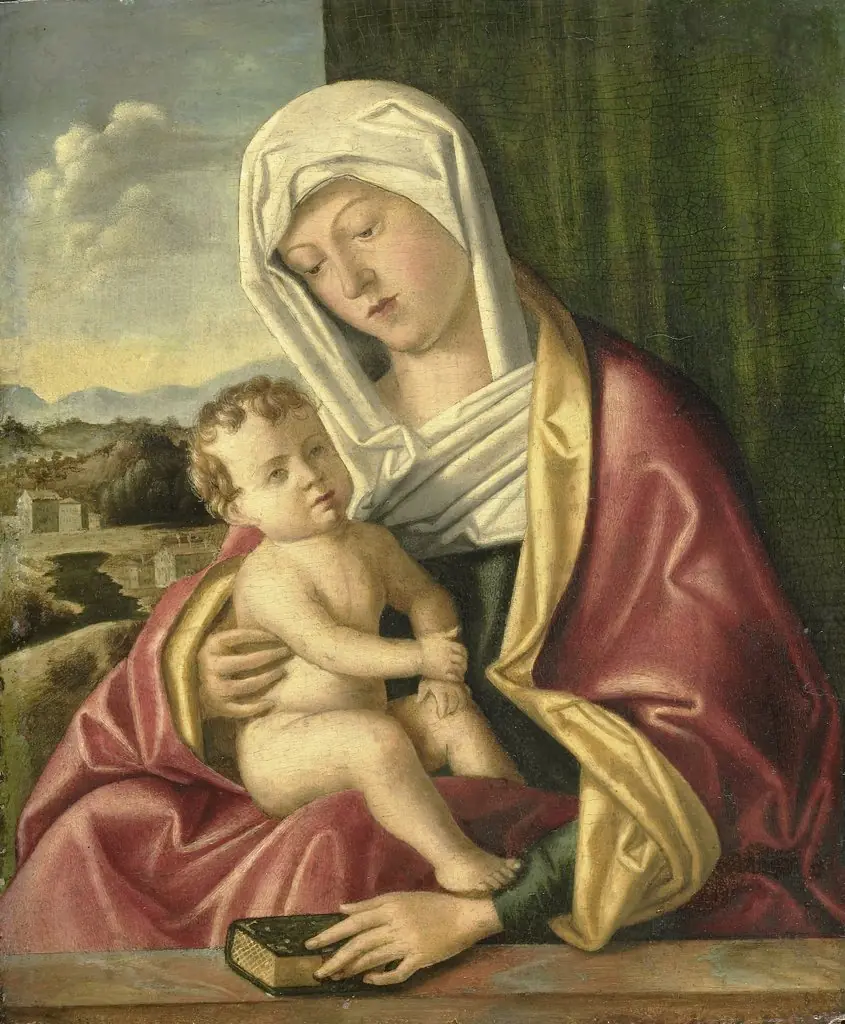 Virgin and Child
 The Judgement of Midas. The Musical Contest between Apollo and Marsyas
 Madonna and Child