Artwork
Virgin and Child
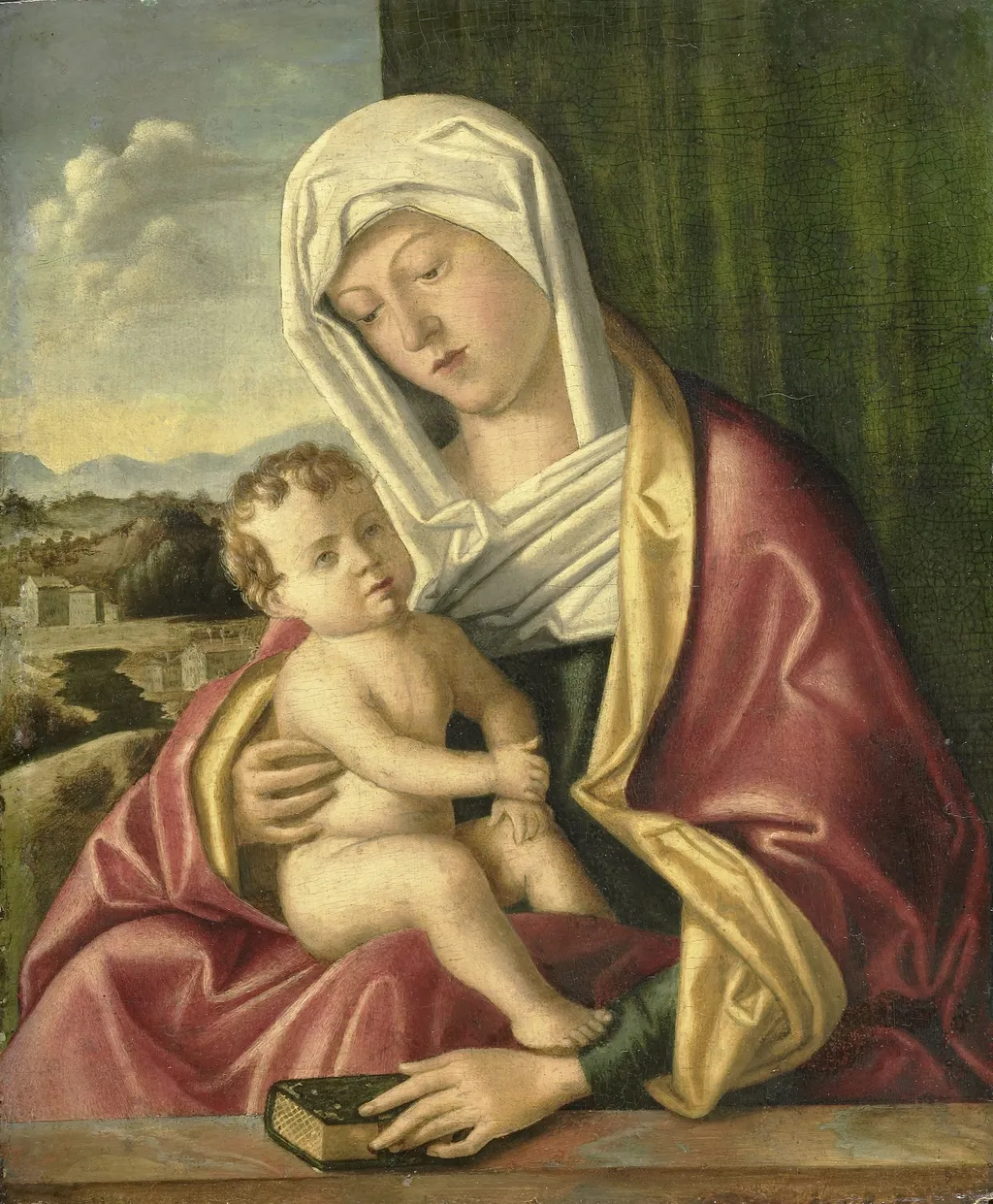
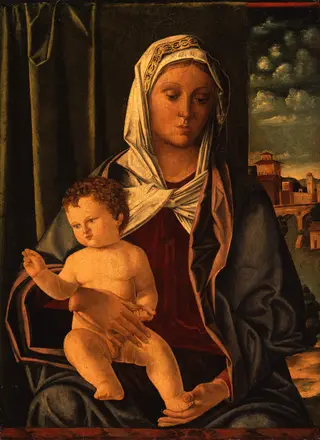
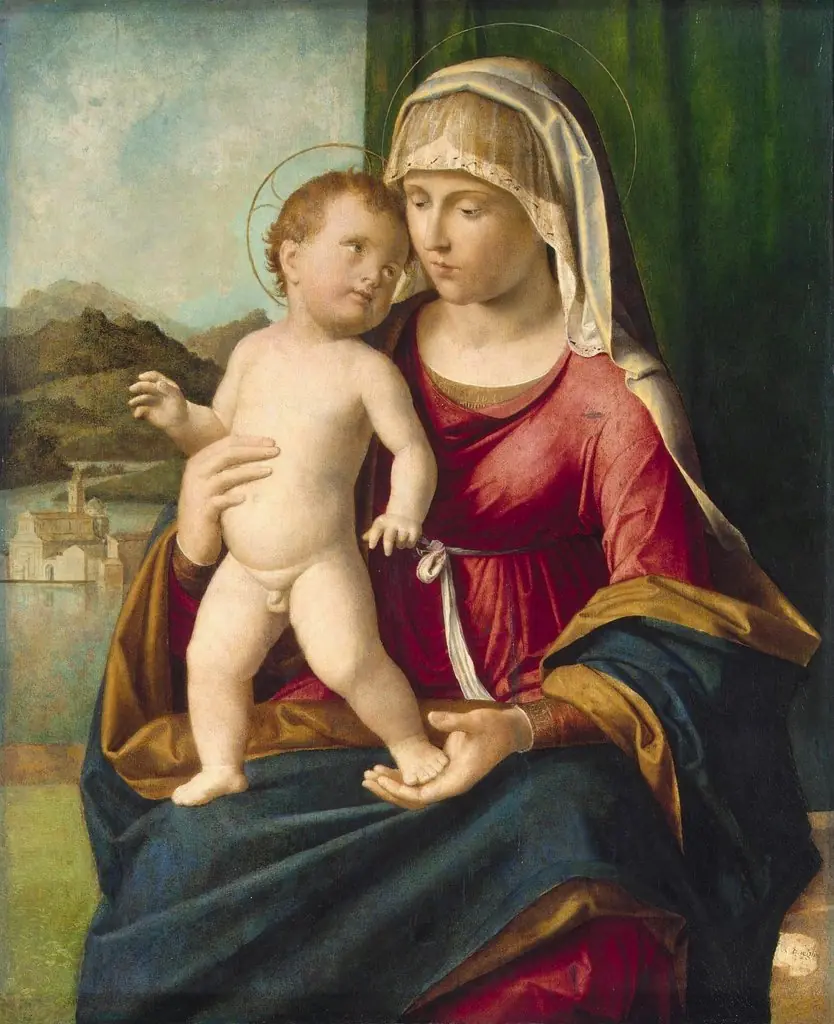
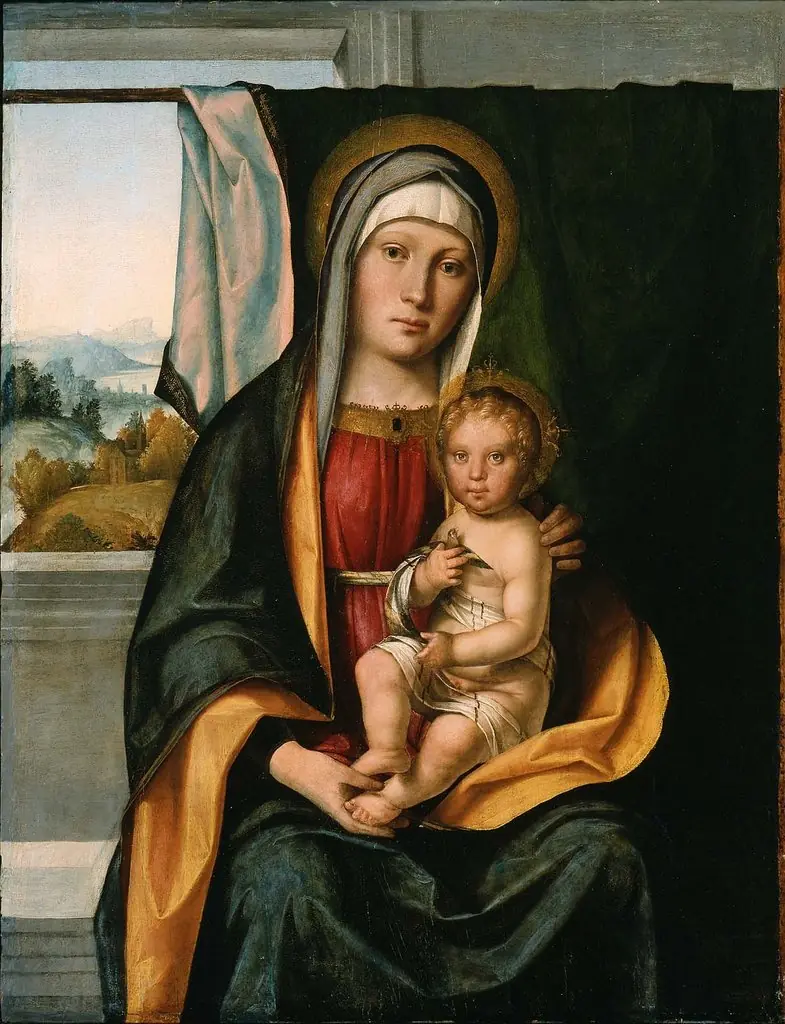
Virgin and Child is an oil painting by the Northern Renaissance artist Giovanni Battista Cima da Conegliano. It dates from 1500 and is held in the collection of the Rijksmuseum.
About this work
Subject & Meaning
Within the iconographic tradition, Mary is identified as the Theotokos, or Mother of God, and is rendered here as a woman and mother holding her son.
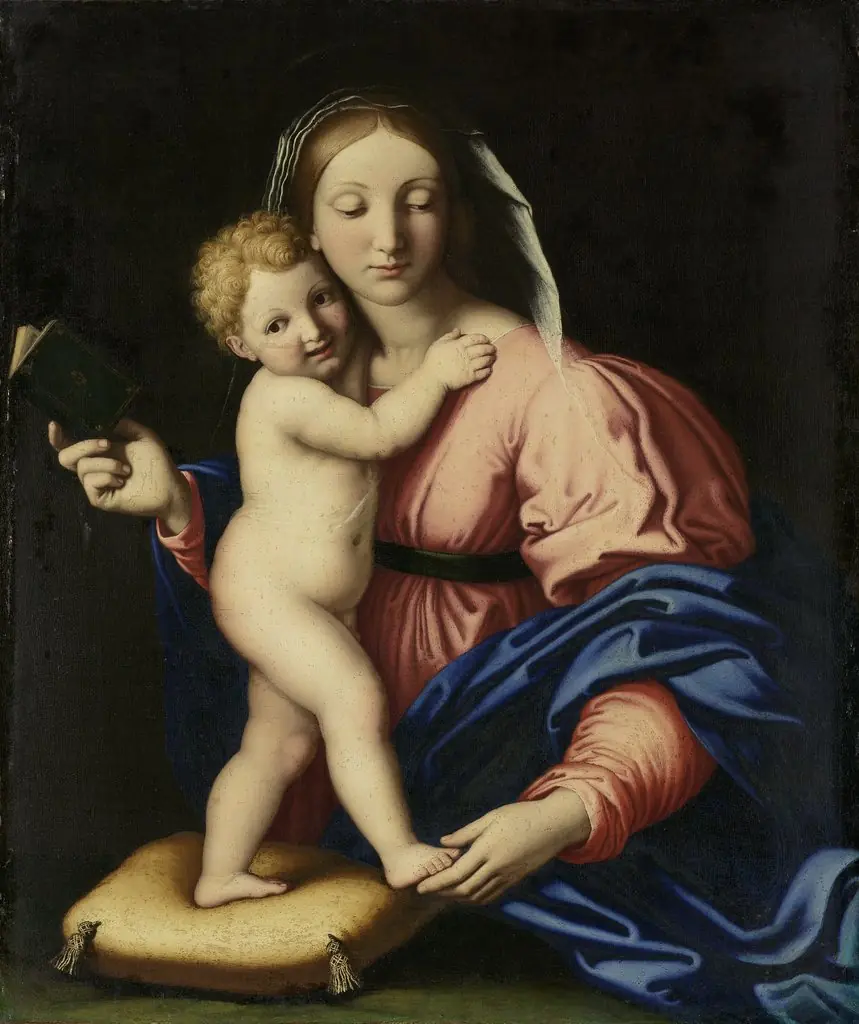
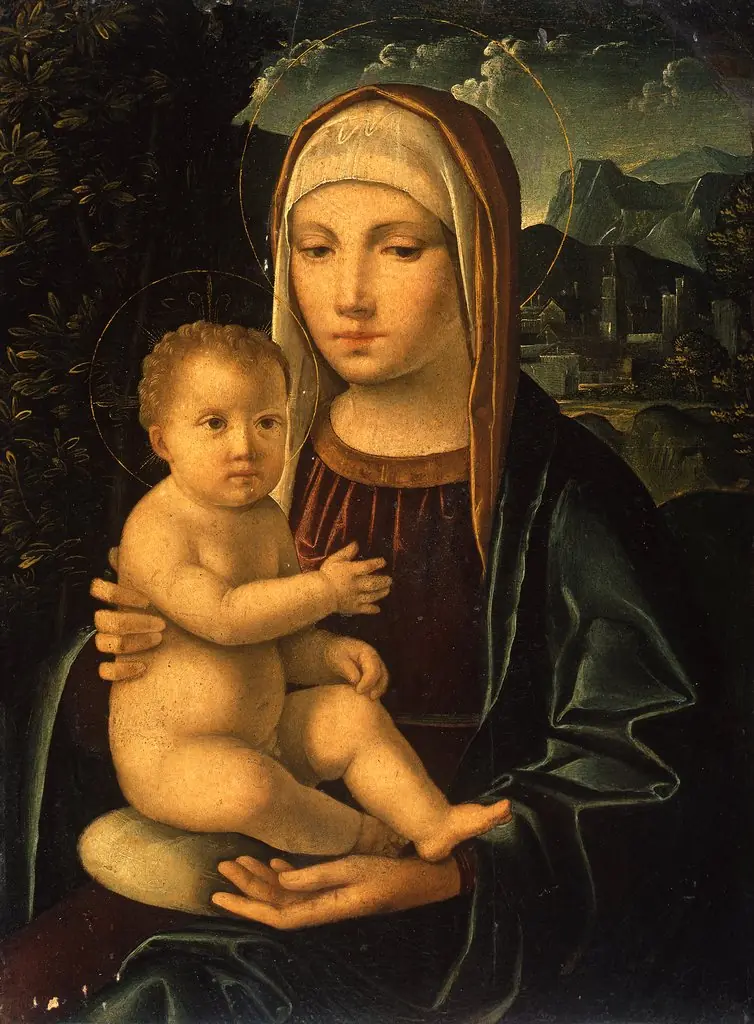
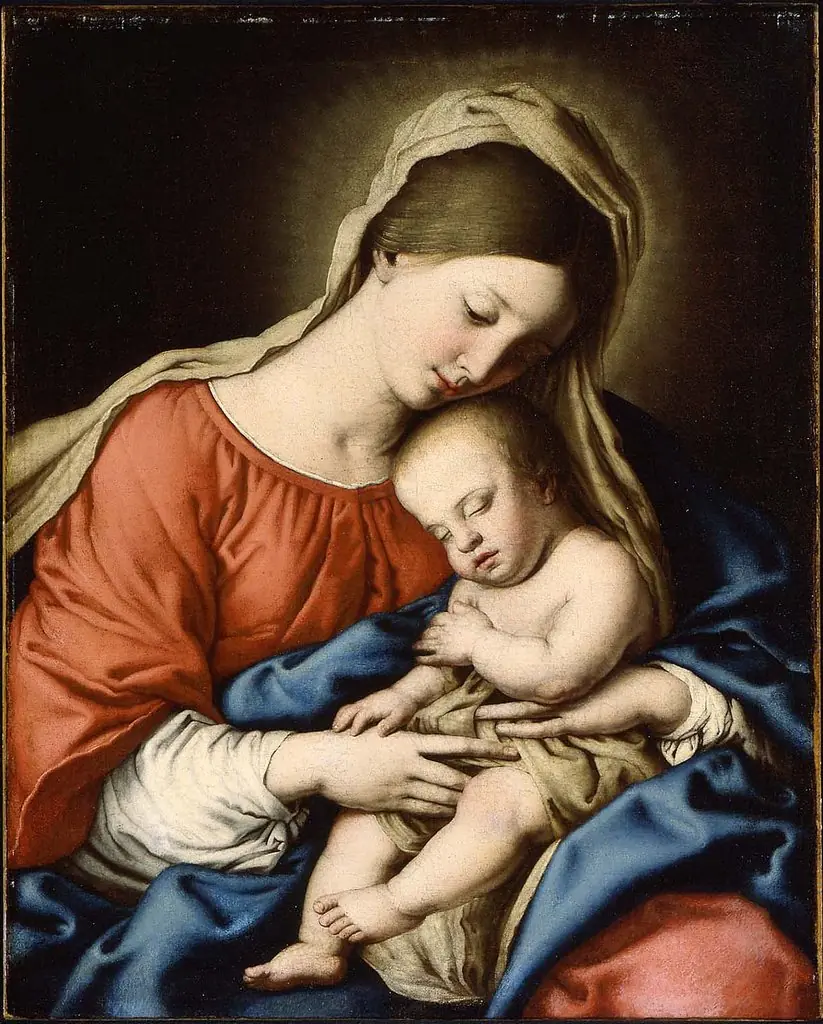
The painting depicts the Madonna and Child, a devotional subject in which the Virgin Mary is shown with the Christ Child. Within the iconographic tradition, Mary is identified as the Theotokos, or Mother of God, and is rendered here as a woman and mother holding her son. This maternal pairing embodies themes of divine incarnation and tender humanity, central to Christian sacred imagery.
The work belongs to the genre of religious art, situating the figures within a devotional context intended to inspire contemplation of the bond between mother and child and the spiritual significance of the Incarnation.
Technique & Style
The painting is executed in oil on a wooden panel, a technique typical of early 16th-century Italian painting. The surface bears the smooth finish of oil pigment applied to a solid support, allowing subtle gradations of light that model the Madonna's veil and the infant Christ's flesh. The composition centers the figures in a tight vertical format measuring 23.5 cm by 19.5 cm, emphasizing intimate proximity.
Formal qualities include a restrained palette, delicate chiaroscuro, and a balanced arrangement that reflects the influence of Giovanni Bellini's school.
History & Provenance
Created around 1500, the oil-on-panel painting Virgin and Child is attributed to Giovanni Battista Cima da Conegliano, though some cataloguing associates it with the school of Giovanni Bellini. The work depicts the Madonna and Child within the religious genre. Its documented ownership begins with Julius Wilhelm Edwin vom Rath, from whom it passed to the collector Jacques Goudstikker, before entering the collection of the Rijksmuseum in Amsterdam, where it remains.
The piece measures 23.5 cm in height and 19.5 cm in width. No inventory or accession number is provided in the available documentation, and no exhibition history is recorded.
Overview
Giovanni Battista Cima da Conegliano painted Virgin and Child in 1500, utilizing oil on panel. This work exemplifies the Northern Renaissance tradition, presenting a tender depiction of Mary with the infant Christ. The composition is characterized by its tranquil mood and the artist's distinctive approach to religious iconography, set against a detailed landscape. It is currently housed in the Rijksmuseum collection.
Context
Created at the turn of the 16th century, Virgin and Child reflects the artistic currents of the Northern Renaissance, particularly within the Venetian school where Cima was active. The Madonna and Child theme was a cornerstone of religious art during this period, frequently commissioned for private devotion and public display. Cima's interpretation contributes to this rich tradition, offering a characteristic blend of human tenderness and spiritual reverence.
Own this work as a print
Artist & collection
Artist
Giovanni Battista Cima da Conegliano
Giovanni Battista Cima, also called Cima da Conegliano (c. 1459 – c. 1517), was an Italian Renaissance painter, who mostly worked in Venice. He can be considered part of the Venetian school, though he was also…

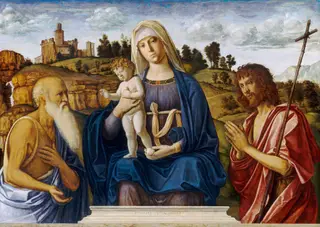 Madonna and Child with Saint Jerome and Saint John the Baptist
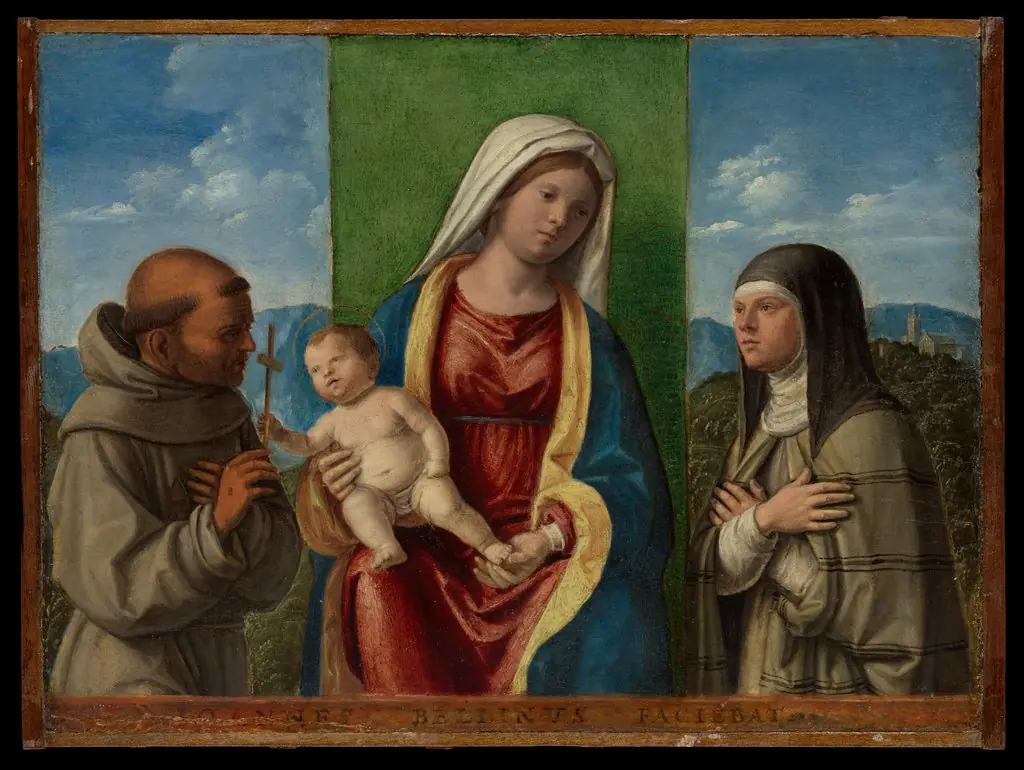 Madonna and Child with Saints Francis and Clare
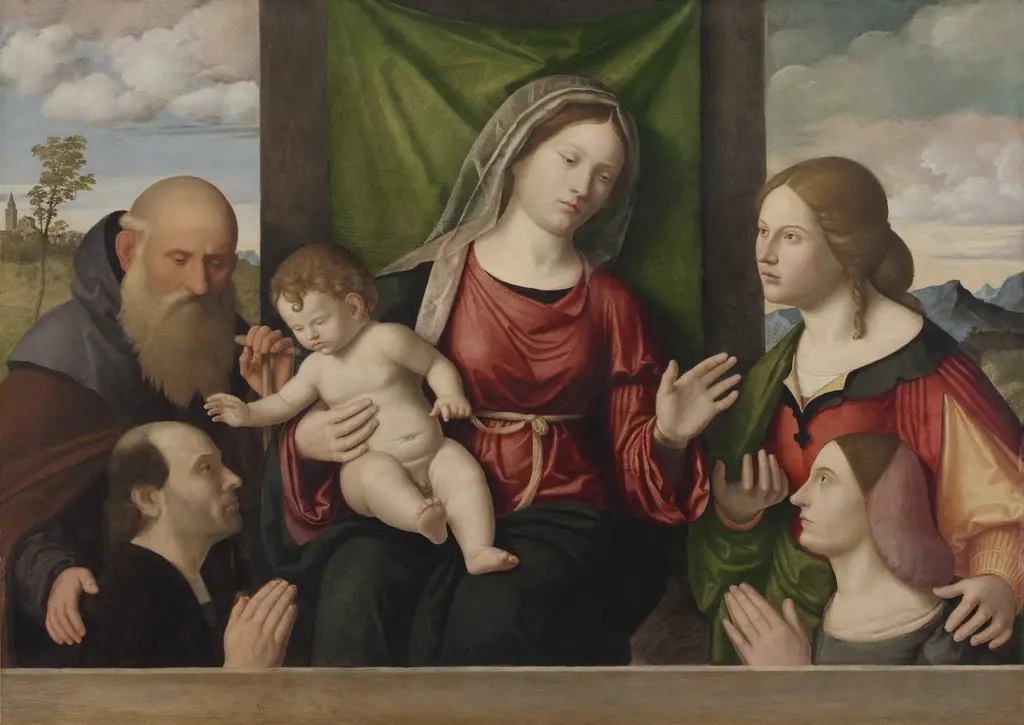 Virgin and Child with Saints and Donors
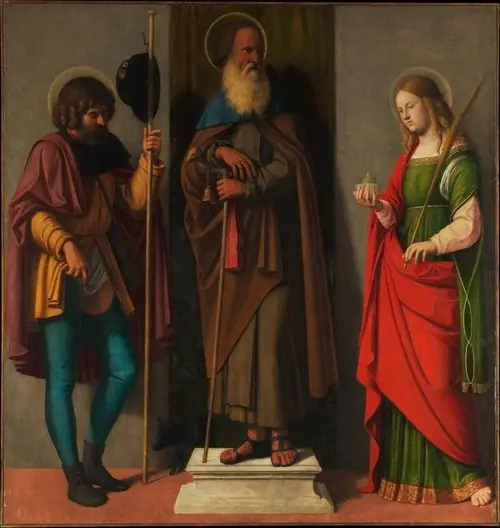 Saints Roch, Anthony Abbot and Lucy
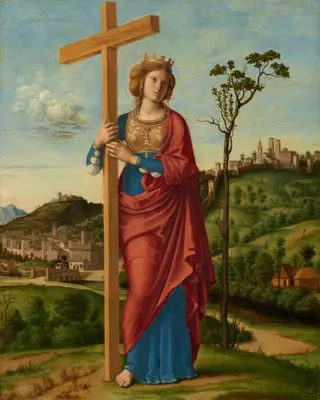 Saint Helena
 Saint Jerome in the Wilderness
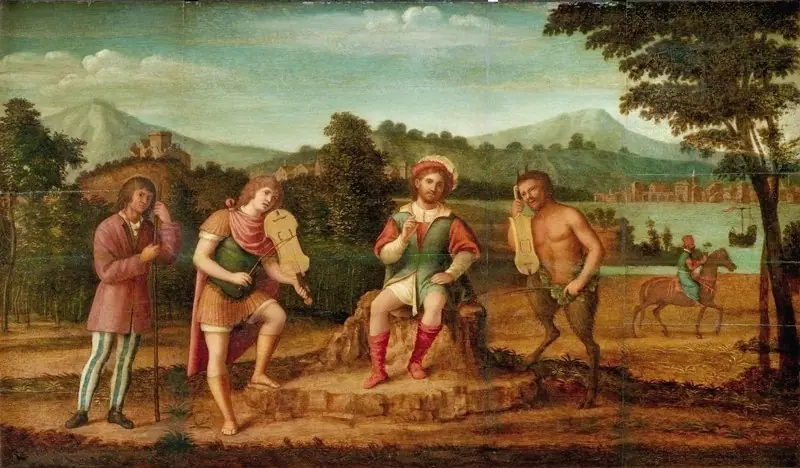 The Judgement of Midas. The Musical Contest between Apollo and Marsyas
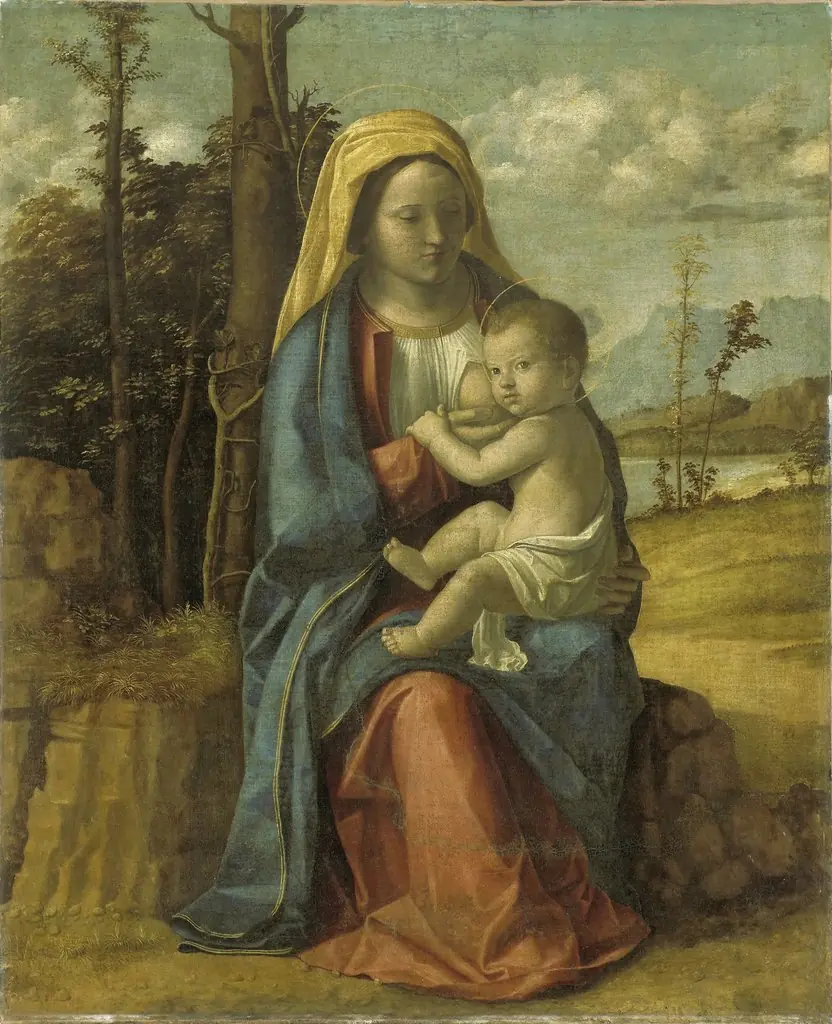 Madonna and Child