Artwork
View of Monte Amiata, Tuscany
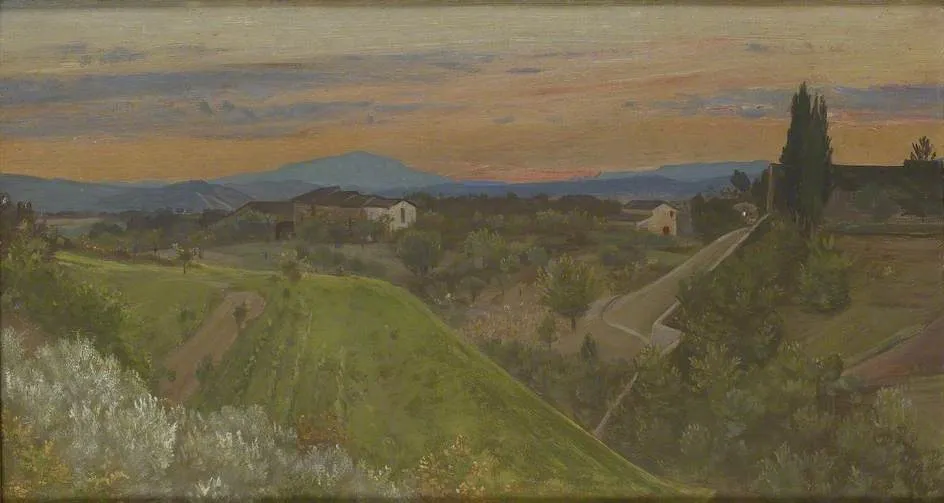
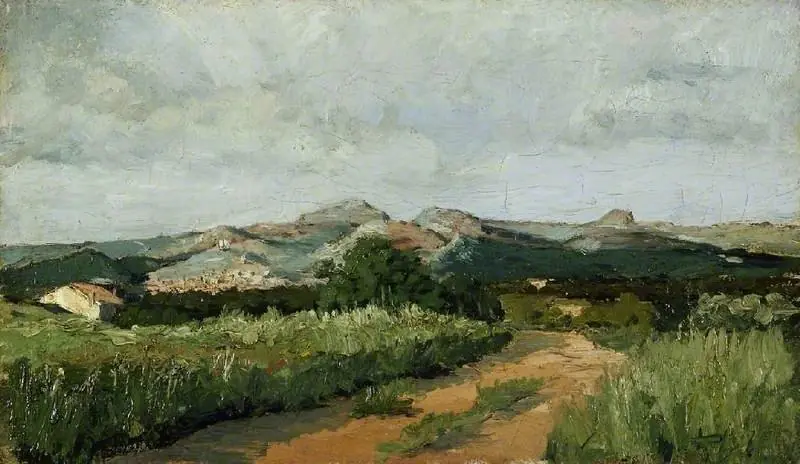
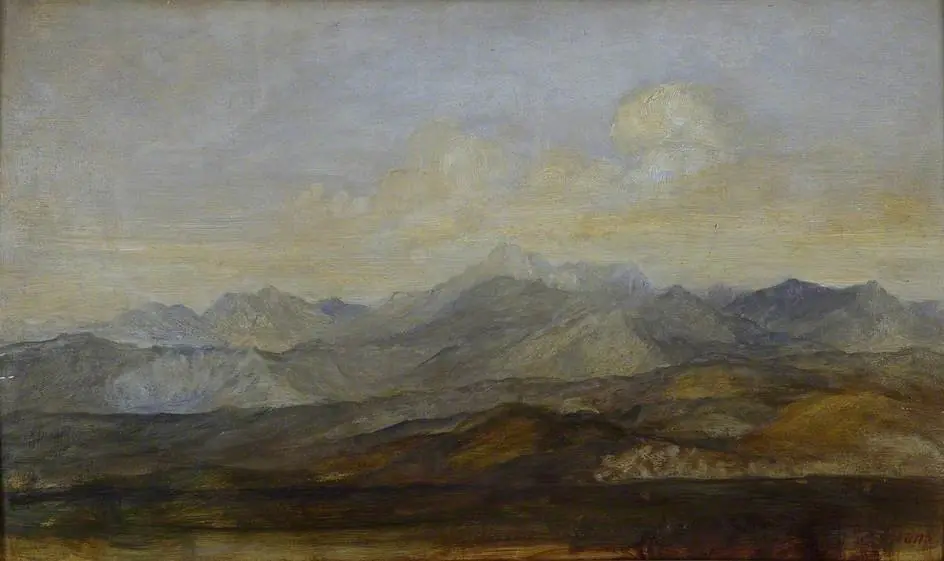
View of Monte Amiata, Tuscany is an oil painting by the Plein Air artist Giovanni Costa. It dates from 1890 and is held in the collection of the Ashmolean Museum.
About this work
Overview
Painted in 1890 by Giovanni Costa, known as Nino Costa, this oil-on-canvas landscape captures the rolling terrain of Monte Amiata in Tuscany.
Painted in 1890 by Giovanni Costa, known as Nino Costa, this oil-on-canvas landscape captures the rolling terrain of Monte Amiata in Tuscany. Costa, a dedicated plein air practitioner, rendered the scene through direct observation, prioritizing natural light and atmospheric conditions over idealized composition. The work reflects his lifelong commitment to depicting the Italian countryside with observational honesty.
Subject & Meaning
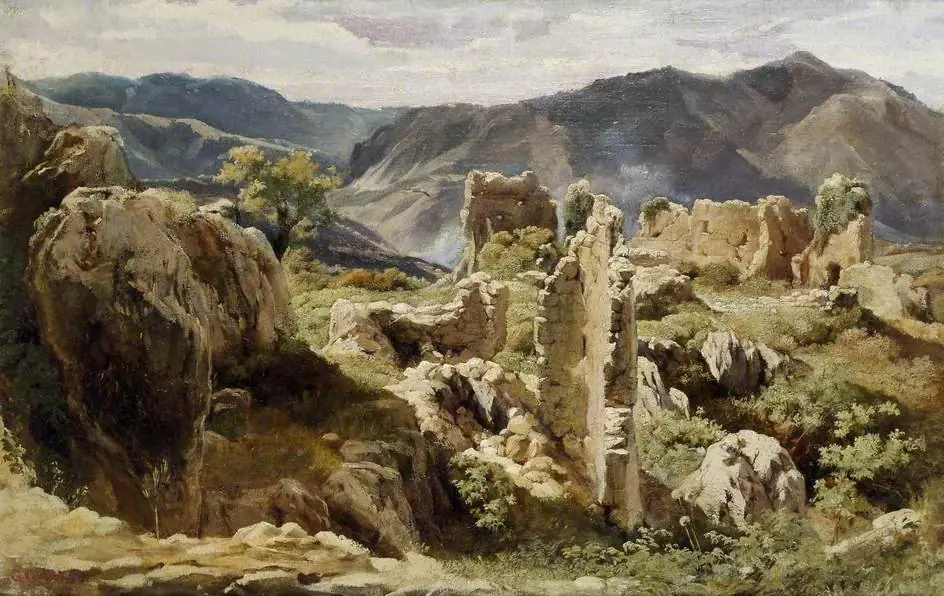
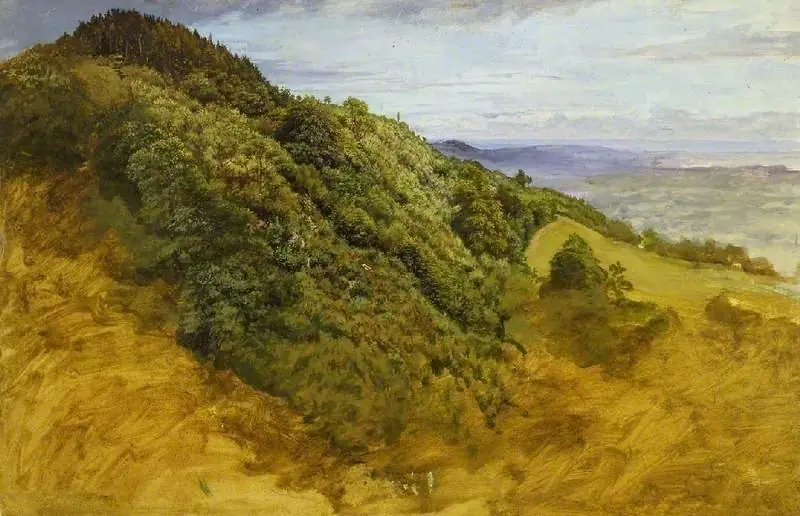
The painting presents a quiet, unembellished view of rural Tuscany, featuring distant hills, scattered dwellings, and dense undergrowth in the foreground. There is no human activity depicted, emphasizing solitude and the enduring presence of the land. The muted palette and subdued tones suggest a contemplative mood, aligning with Costa’s broader interest in the quiet dignity of the Italian landscape.
Technique & Style
Costa employed loose, visible brushwork to convey texture and movement across the terrain. Soft yellow hues in the sky transition into cool blue tones in the distant mountains, creating atmospheric depth. Foreground vegetation is rendered with varied strokes, suggesting density and natural growth. The technique avoids polish, favoring immediacy and tactile presence, characteristic of his plein air approach.
History & Provenance
Created during the later phase of Costa’s career, the painting belongs to a series of Tuscan landscapes he produced after returning from Rome and other urban centers. Though specific ownership history is not widely documented, the work aligns with his established practice of recording regional topography, often for private collectors and institutions interested in Italian natural heritage.
Context
Costa’s work emerged from a 19th-century Italian artistic movement that valued direct engagement with the land, partly as a cultural response to unification. While contemporaries focused on urban scenes or historical narratives, Costa turned to rural vistas, capturing regions like Monte Amiata as symbols of national identity rooted in geography rather than politics.
Legacy
Though less prominent in international art histories, Costa’s landscapes influenced regional Italian painters who sought to document the countryside with sincerity. His emphasis on naturalism and plein air methods contributed to a local tradition that valued observation over romanticism, leaving a quiet but persistent mark on Tuscan painting of the late 19th century.
Artist & collection

Artist
Giovanni Costa (15 October 1826 – 31 January 1903), often known as Nino Costa, was an Italian landscape painter and patriotic revolutionary.