Artwork
Saint Apollonia Destroys a Pagan Idol
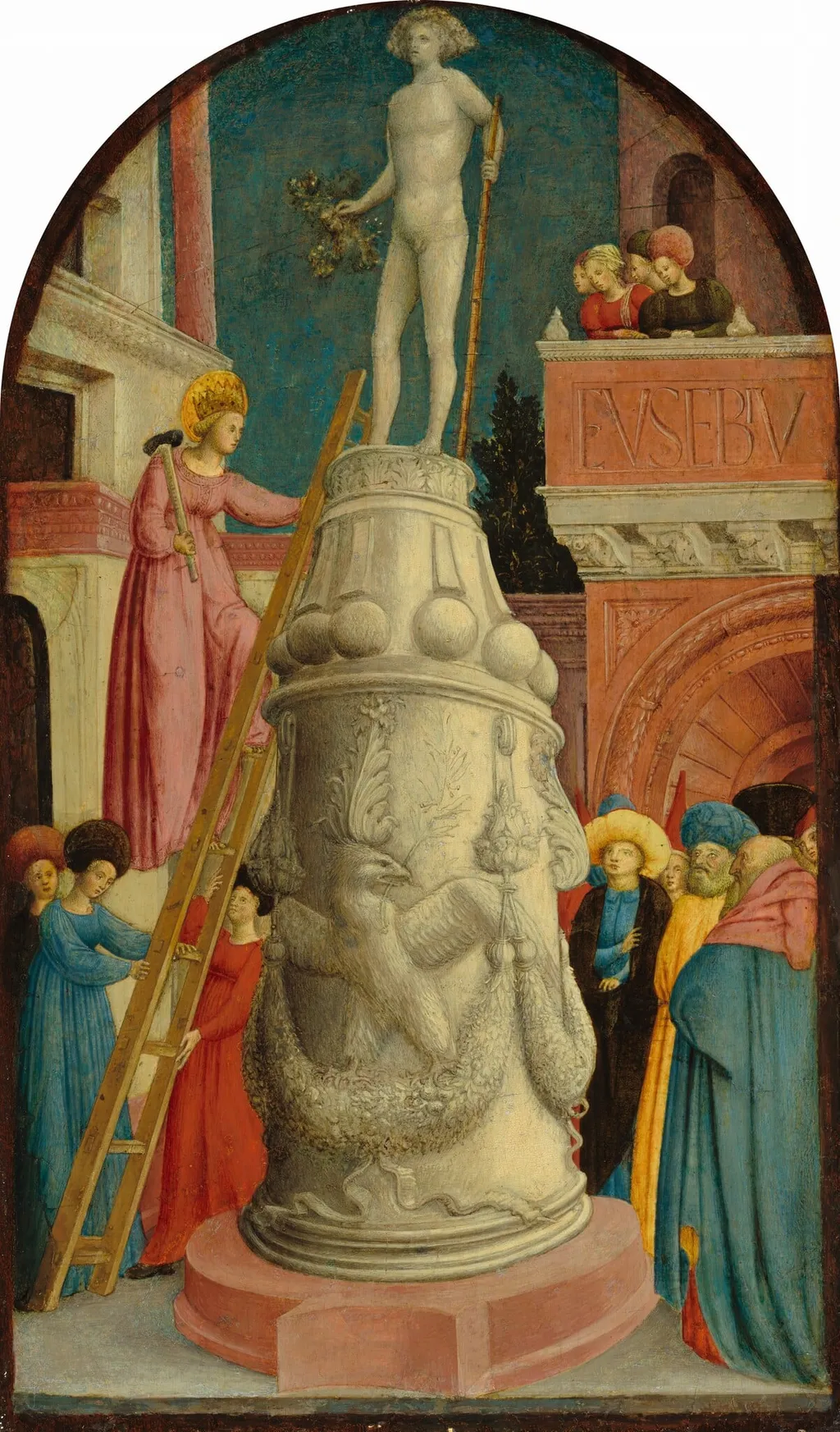
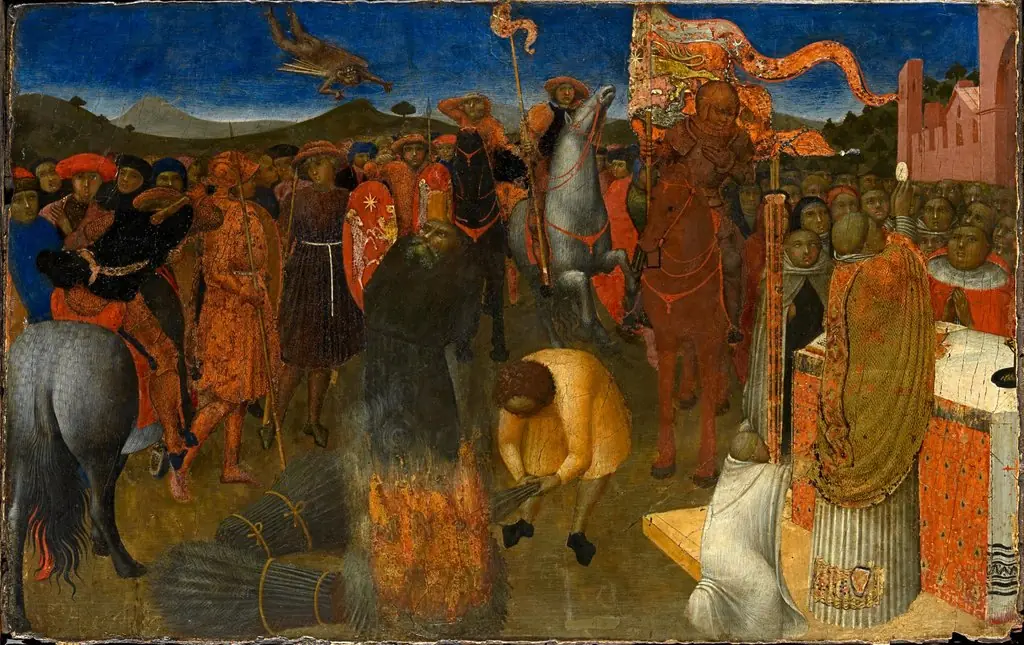
Saint Apollonia Destroys a Pagan Idol is a tempera painting by the Northern Renaissance artist Giovanni d'Alemagna. It dates from 1444 and is held in the collection of the National Gallery of Art.
- Inscription
- Inscribed:upper right on balcony parapet: EVSEBIV[S]
About this work
Subject & Meaning
The hammer and ladder function as attributes of martyrdom and ascent, symbolizing her violent resistance and the heavenly ladder to salvation.
The painting shows Saint Apollonia in the act of toppling a pagan idol with a hammer while a ladder and a statue lie nearby, visual cues that emphasize her role as a defender of Christianity against idolatry. The hammer and ladder function as attributes of martyrdom and ascent, symbolizing her violent resistance and the heavenly ladder to salvation. By depicting the destruction of the idol, the work underscores themes of iconoclasm and the triumph of the faith over pagan worship, reflecting the devotional focus of 15th‑century Tuscan religious art.
Technique & Style
The painting is executed in tempera on a poplar panel, a support typical of early 15th‑century panel painting, and belongs to the religious genre. Giovanni d'Alemagna depicts an iconoclastic scene featuring a hammer, a ladder and a pagan statue, emphasizing the saint’s destruction of idolatry. The composition relies on linear drawing and flat, vibrant color fields characteristic of the period, while the panel’s surface remains largely intact, reflecting careful handling and preservation.
History & Provenance
Painted by Giovanni d’Alemagna in 1443 in tempera on poplar, the panel entered the art market in the mid-1920s. By July 1926 it was with Count Alessandro Contini Bonacossi in Rome, where it was examined by Georg Gronau on 16 July 1926. On 6 April 1927 Contini Bonacossi sold the work, along with seven other paintings, to Samuel H. Kress in New York.
Kress later donated the panel to the National Gallery of Art, Washington, where it has remained since its accession in 1939.
The painting is held by the National Gallery of Art, Washington, D.C., as part of the Samuel H. Kress Collection. It was accessioned in 1939 following its donation by Kress to the Gallery. Its inventory number within the Kress Collection is 1939.1.106.
The work was previously owned by Count Alessandro Contini Bonacossi in Rome by July 1926, then purchased by Samuel H. Kress in April 1927 before being gifted to the National Gallery of Art in 1939.
Legacy
The painting entered the Samuel H. Kress Collection in 1927 and was donated to the National Gallery of Art in 1939, ensuring its public visibility and scholarly attention [1]. Its status as a tempera panel depicting Saint Apollonia’s destruction of a pagan idol has been cited in studies of 15th‑century iconoclast imagery, highlighting its role in the iconographic tradition of martyrdom and religious reform [2]. The work’s provenance from Count Alessandro Contini Bonacossi and subsequent acquisition by a major American collector underscore its significance within early 20th‑century art markets, contributing to the reassessment of Giovanni d'Alemagna’s oeuvre [1][2]
Overview
Saint Apollonia Destroys a Pagan Idol is a tempera painting on a poplar panel that captures a dramatic episode of religious defiance. The artwork presents Saint Apollonia in the act of demolishing a pagan statue, emphasizing her resolute stance against idolatry. The scene is rendered with a sense of immediate action and palpable tension, making it a dynamic representation of faith in conflict.
Context
This compelling depiction is attributed to the artist Giovanni d'Alemagna. His practice often engaged with religious narratives, reflecting the broader artistic trends and devotional needs of his time. Works such as "Saint Apollonia Destroys a Pagan Idol" contribute to understanding the visual culture and artistic output of the period, placing d'Alemagna within the context of artists who shaped religious imagery.
Own this work as a print
Artist & collection


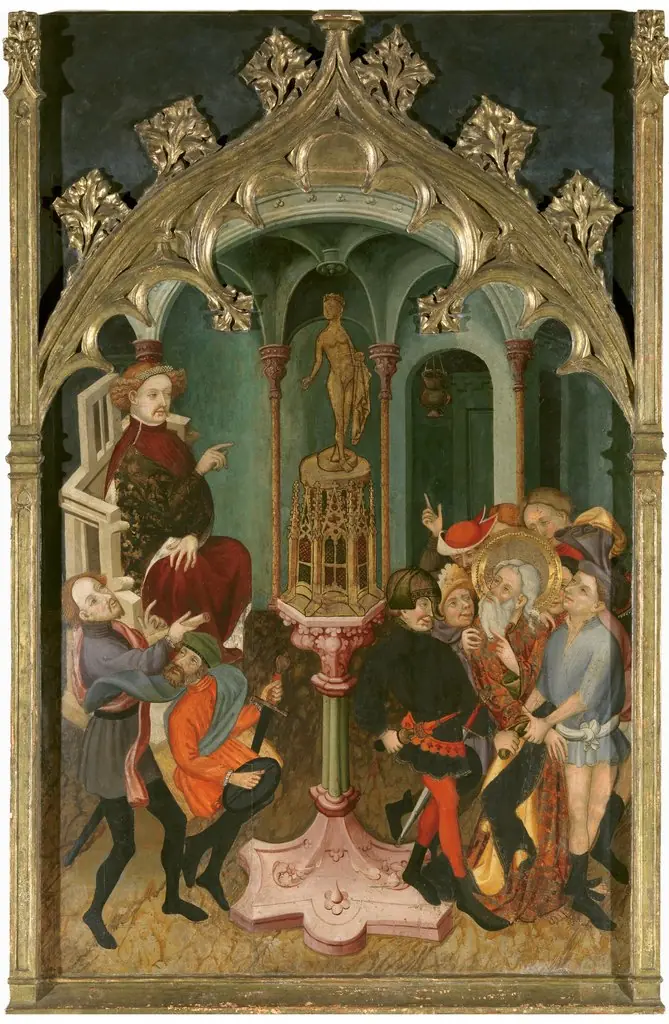
- Saint Andrew refusing to worship the Idol
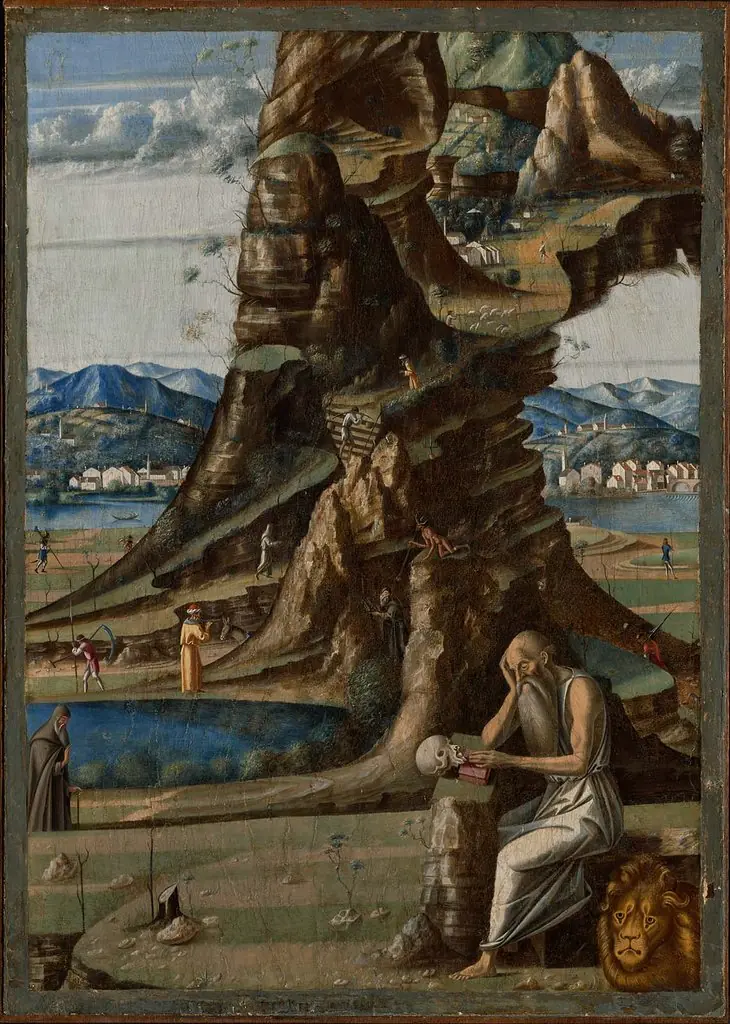 Saint Jerome in the Wilderness
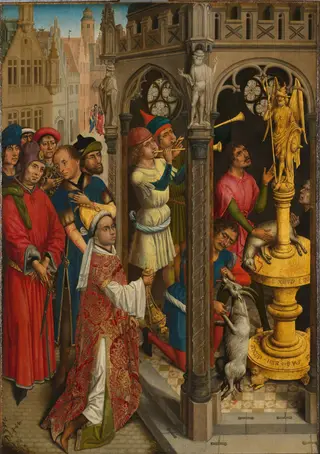 Augustinus offert aan een afgod der Manicheeërs (?)
 The Crucifixion
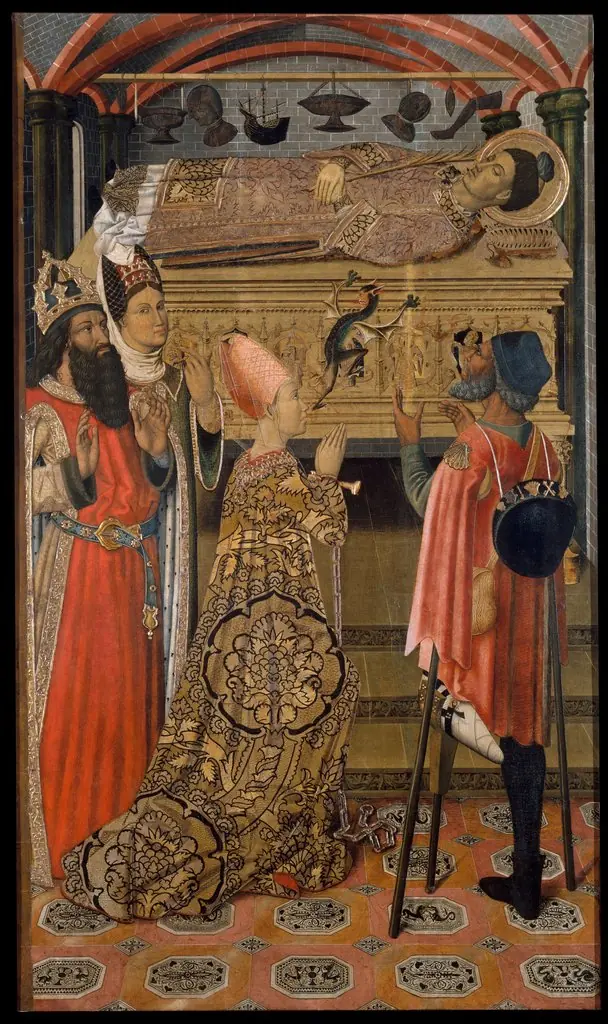 Princess Eudoxia before the Tomb of Saint Stephen
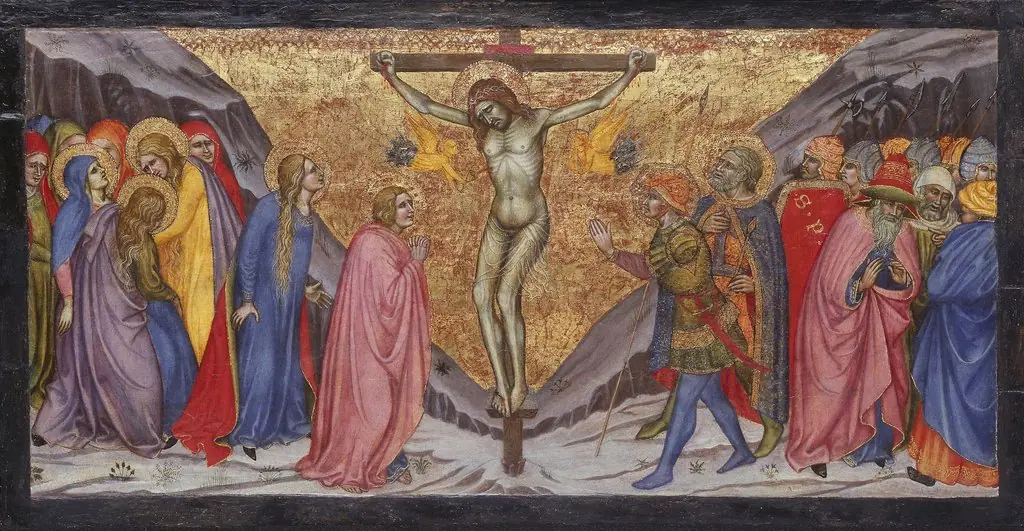 The Crucifixion
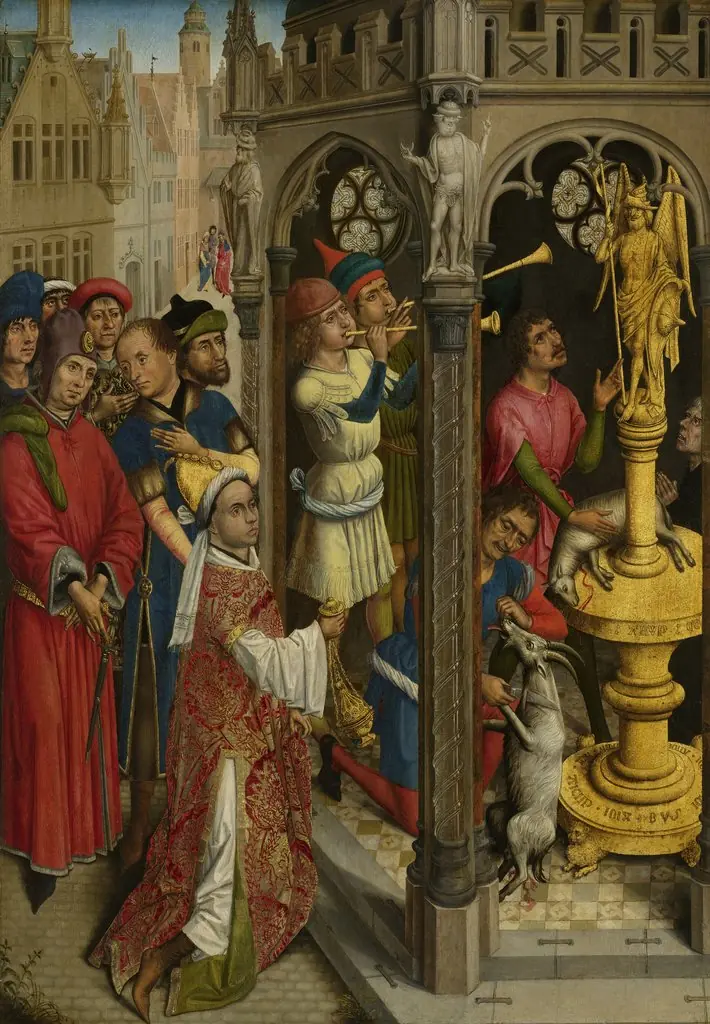 Augustine sacrificing to an idol of the Manichaeans (?)
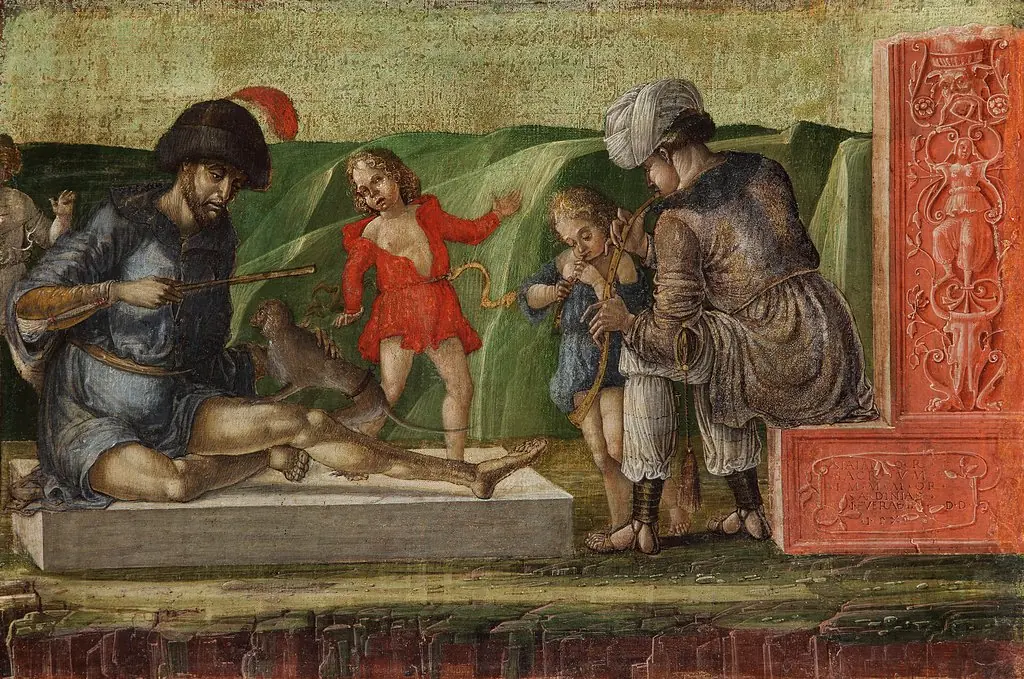 Musicians
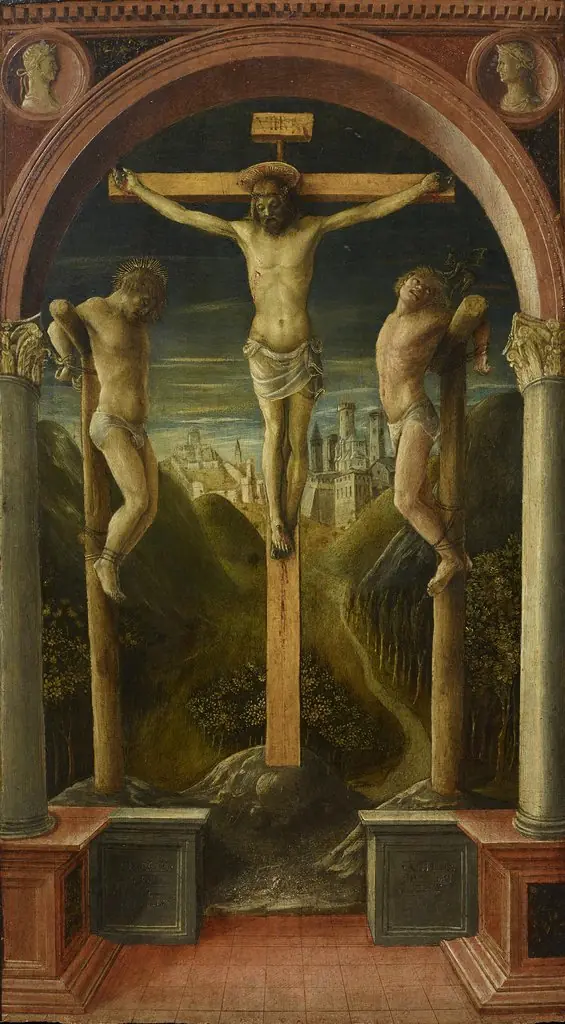 Crucifixion
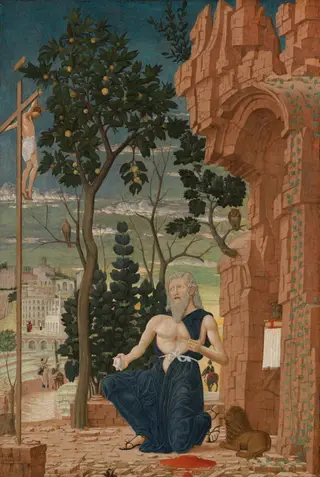 Saint Jerome in the Wilderness
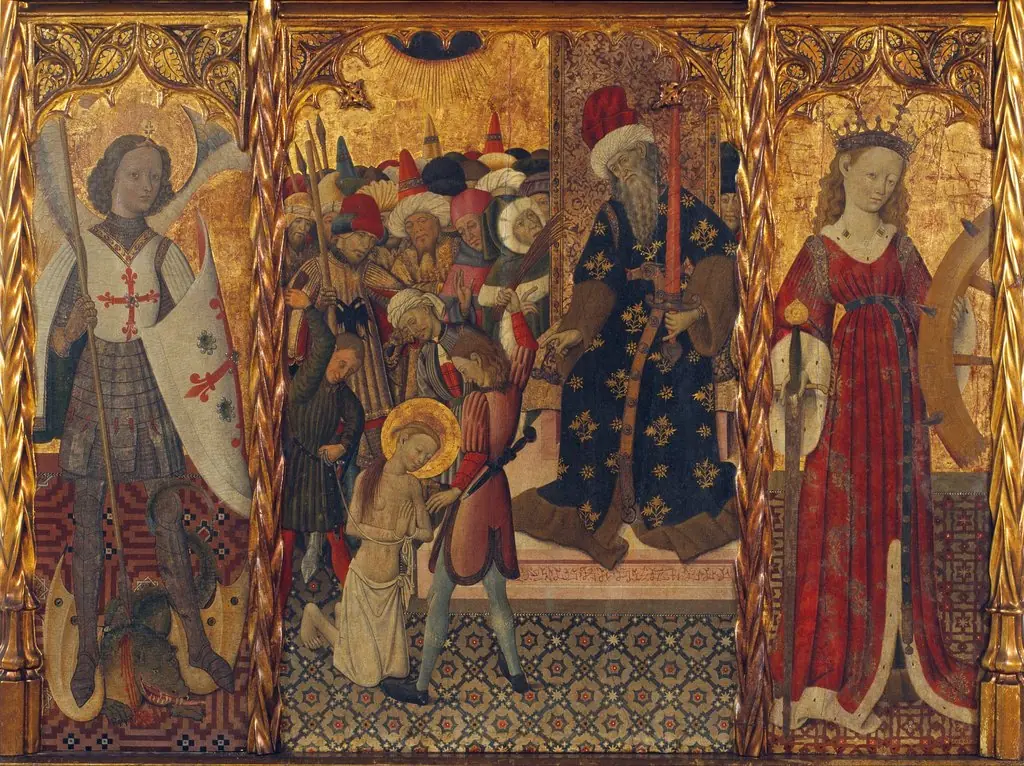 Saint Michael, Martyrdom of Saint Eulalia and Saint Catherine
 The burning of a heretic