Artwork
Saint Jerome in the Wilderness
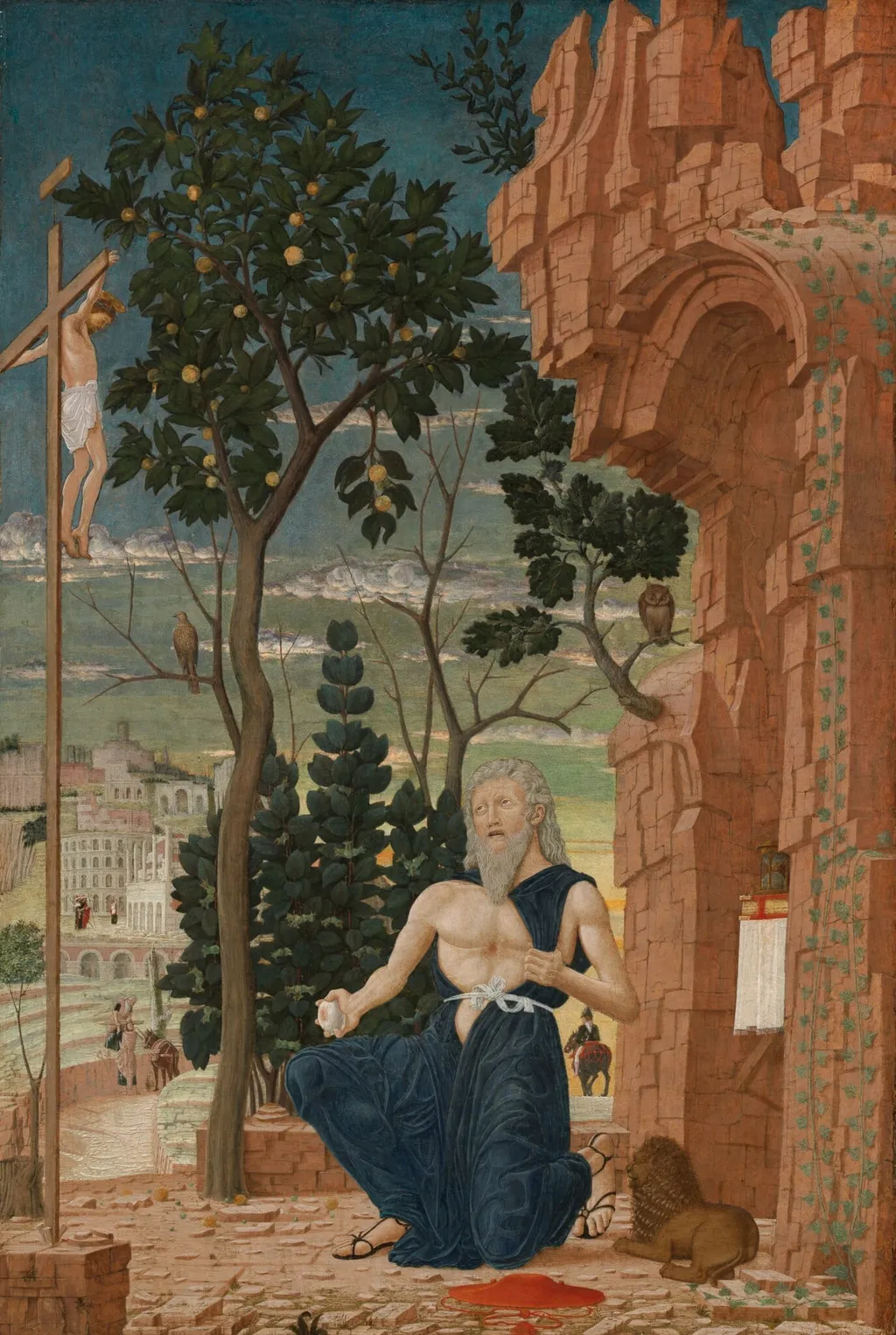
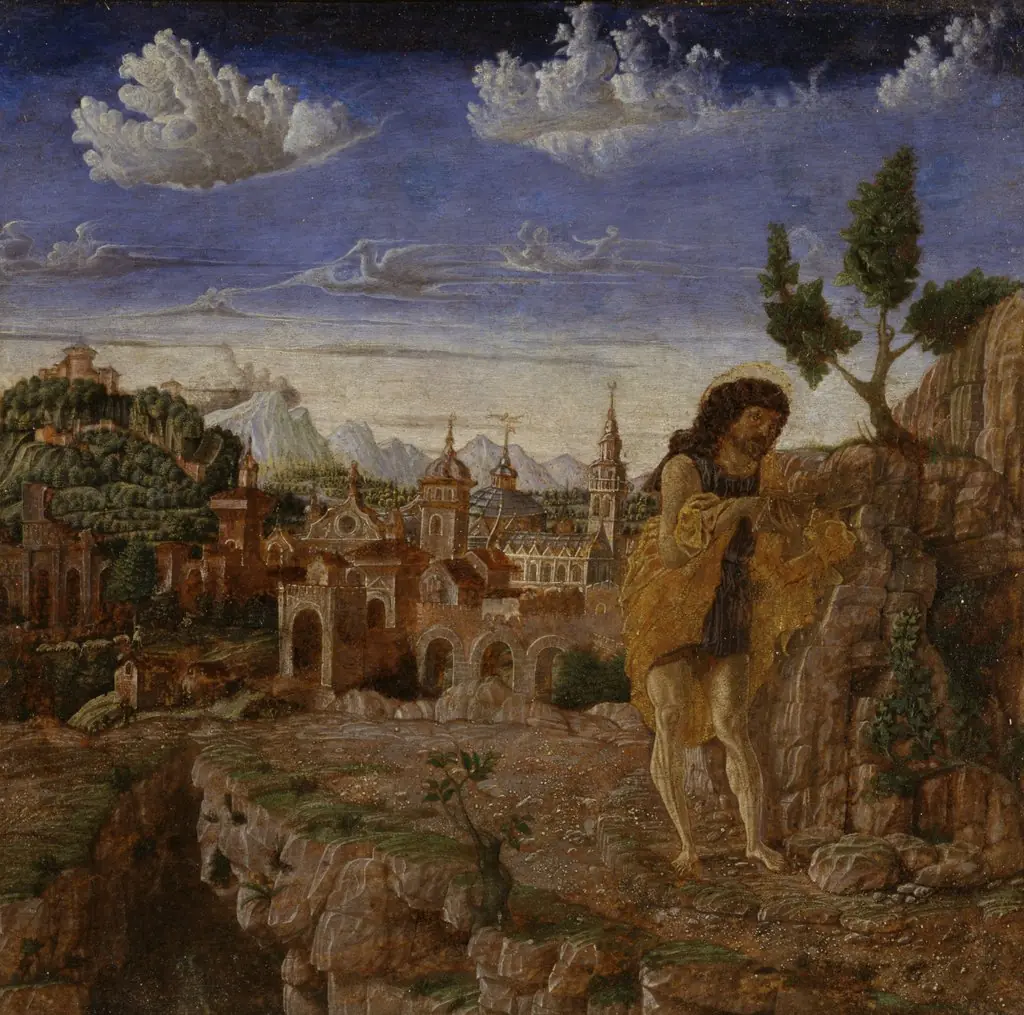
Saint Jerome in the Wilderness is a tempera painting by the Italo Byzantine artist Follower of Andrea Mantegna. It dates from 1475 and is held in the collection of the National Gallery of Art.
About this work
Subject & Meaning
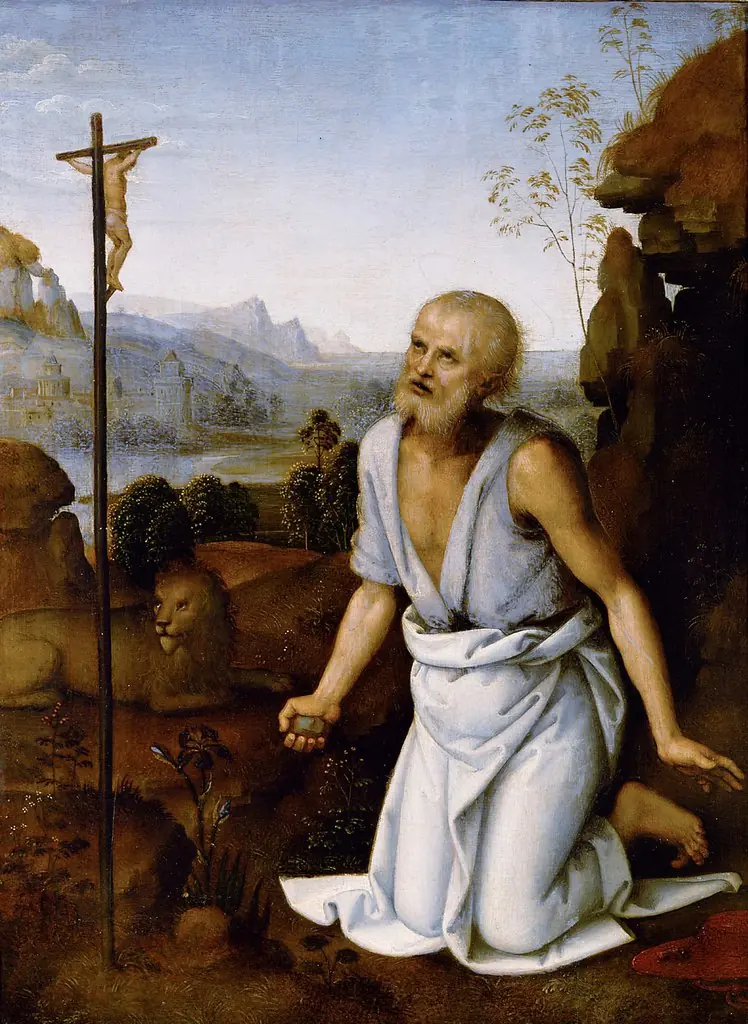
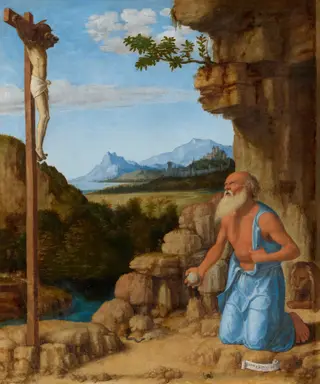
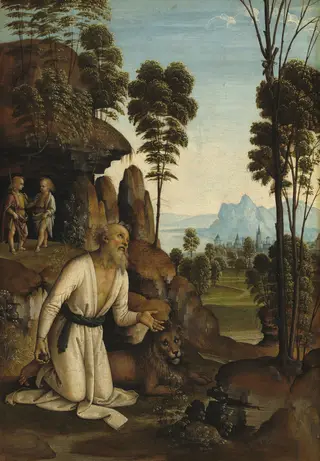
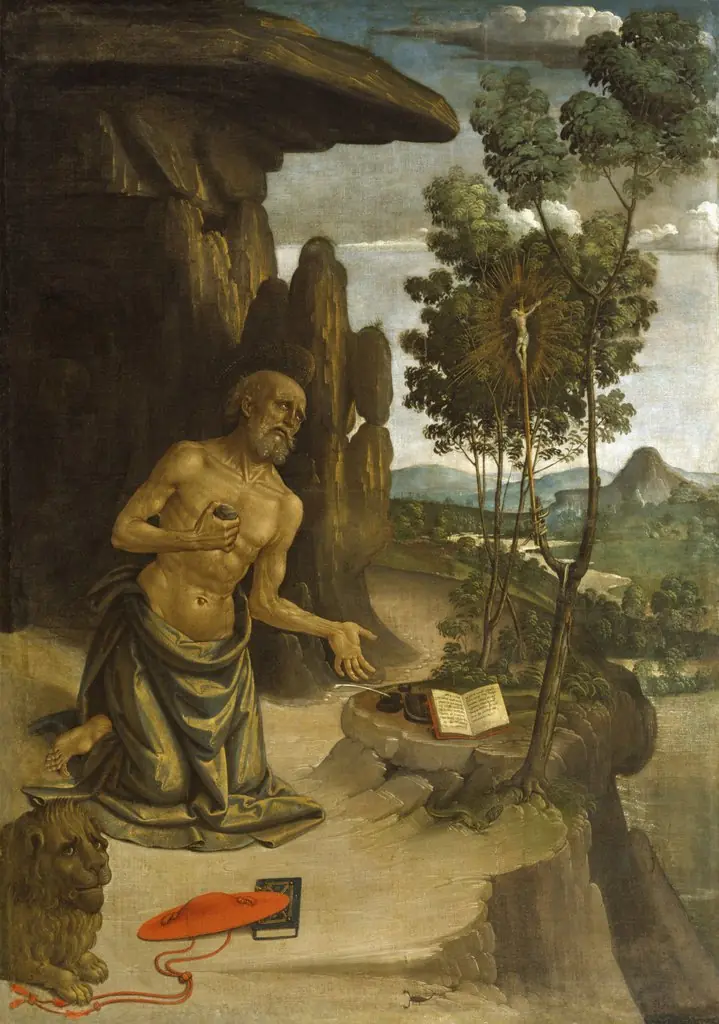
The painting shows the biblical hermit Saint Jerome retreating into a barren landscape, a motif that emphasizes his life of prayer and scholarly penance.
The painting shows the biblical hermit Saint Jerome retreating into a barren landscape, a motif that emphasizes his life of prayer and scholarly penance. By placing the saint in a rugged wilderness, the composition underscores themes of isolation and spiritual testing common in Renaissance devotional art. Jerome’s presence, linked to contemplative study and ascetic discipline, is rendered through his solitary figure and the stark terrain, inviting viewers to reflect on the tension between earthly knowledge and divine asceticism.
The work belongs to the religious genre and was created circa 1475, originally entering a private collection before its acquisition by the National Gallery of Art.
Technique & Style
The painting is executed in tempera on a poplar panel, the medium specified for the work and typical of late‑15th‑century Italian religious art. It represents Saint Jerome in the wilderness, a subject identified in both the catalog entry and Wikidata. The composition is classified as a religious painting, reflecting the devotional focus of the period.
The support consists of a single wooden panel, and the surface treatment allows the fine linear detail characteristic of tempera.
History & Provenance
The tempera-on-poplar panel Saint Jerome in the Wilderness was created circa 1475. The work’s early provenance traces to Ugo Bardini in Paris, whose father, Stefano Bardini, may have previously owned it. Sold in 1925 to Thomas Agnew & Sons in London, it passed the same year to Arthur J. Sulley & Co., also in London.
By 1927, Otto H. Kahn of New York had acquired it, and it entered the collection of the Duveen Brothers before being purchased on 26 April 1937 by The A.W. Mellon Educational and Charitable Trust. In 1937, the Trust gifted the painting to the National Gallery of Art, Washington, D.C.
The painting is held in the collection of the National Gallery of Art in Washington, D.C., specifically within the Andrew W. Mellon collection. Its path to the museum began with Ugo Bardini in Paris, who sold the work in 1925 to Thomas Agnew & Sons in London; it was subsequently transferred to Arthur J. Sulley & Co. that same year. By 1927, the piece was owned by Otto H. Kahn in New York.
Following a period with Duveen Brothers, Inc., the A.W. Mellon Educational and Charitable Trust purchased the work on April 26, 1937, and gifted it to the National Gallery of Art later that year. While specific inventory numbers are not cited in the provided records, its provenance is well-documented through these transactions.
Context
Scholarship generally attributes Saint Jerome in the Wilderness to Andrea Mantegna, situating the work at the cusp of his early career and linking it to his fascination with solitary religious figures. The painting’s composition, rendering of landscape, and use of tempera on poplar reflect Mantegna’s blend of Northern detail with Italian classicism, a hallmark of his broader oeuvre. Early 20th‑century critics highlighted its emotive intensity, while later studies emphasize its role in the transition from late Gothic symbolism to Renaissance naturalism.
Its provenance through prominent collectors and inclusion in the National Gallery of Art’s collection underscores its recognized significance within the narrative of European religious art.
Overview
Saint Jerome in the Wilderness is a tempera painting rendered on a poplar panel. This artwork depicts the revered scholar-saint seated within a rocky, verdant desert landscape, engrossed in a book. A lion rests nearby, a key symbolic element.
The small scale and intricate execution of the piece, characterized by a palette dominated by browns and greens, contribute to its contemplative and serene atmosphere, capturing a moment of spiritual solitude.
Artist & collection
Artist

![The Papacy Offered to Saint Gregory the Great [?], by Fra Angelico](https://artifactworldgallery.com/img/fra-angelico--the-papacy-offered-to-saint-gregory-the-great--6c28505dc47c9093-w320.webp)