Artwork
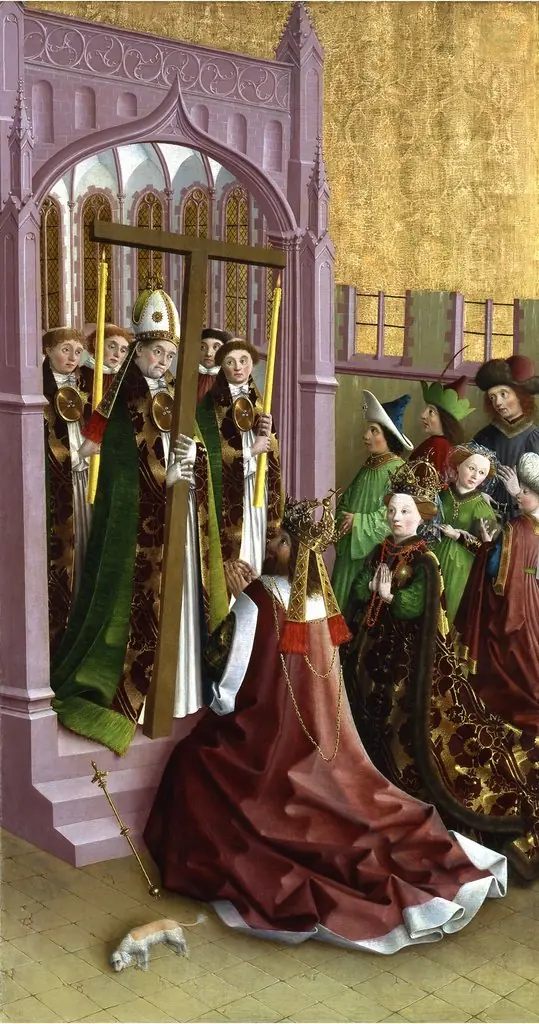
Augustine sacrificing to an idol of the Manichaeans (?)
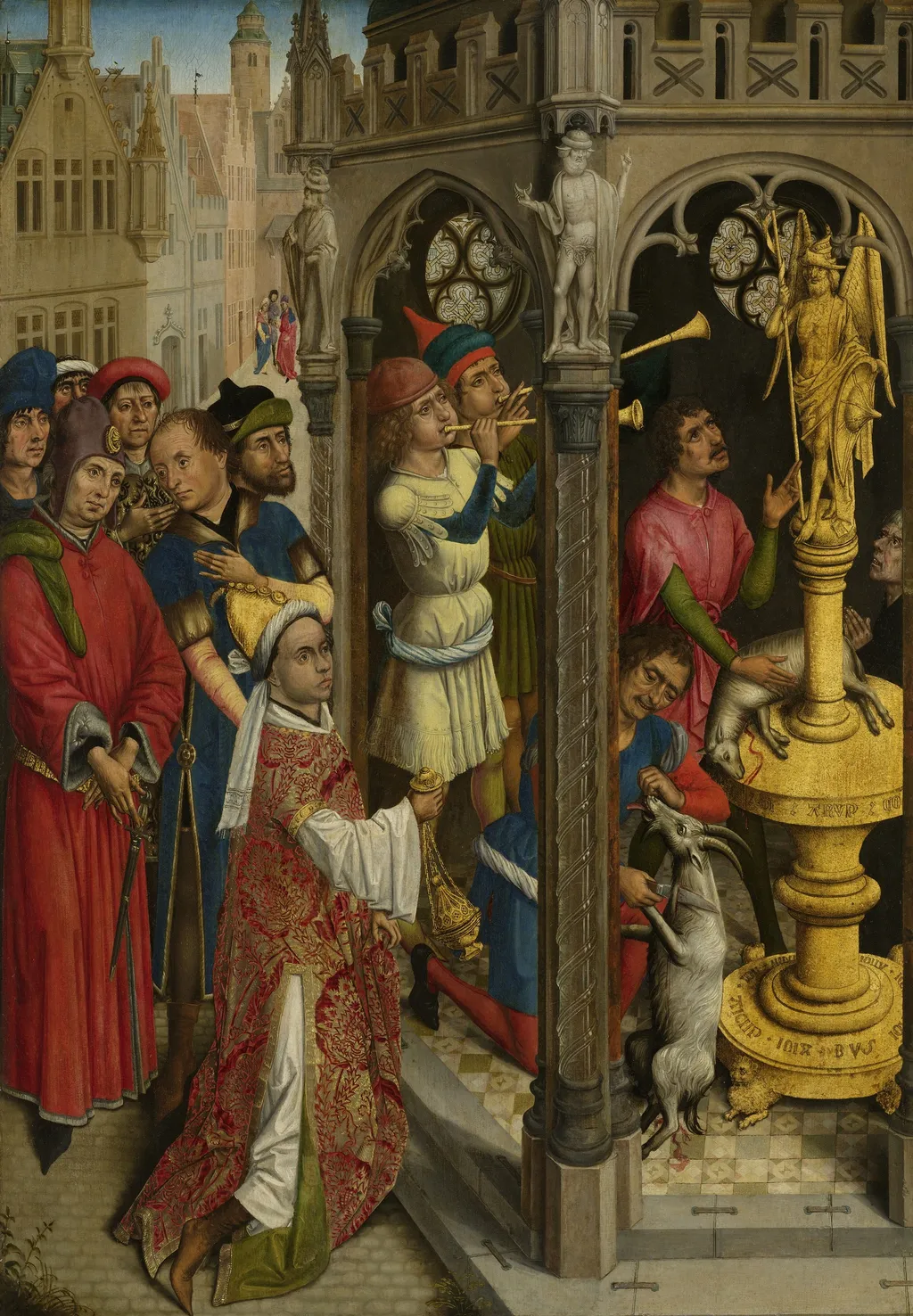
Augustine sacrificing to an idol of the Manichaeans (?) is an oil painting by the Northern Renaissance artist Aert van den Bossche. It dates from 1490 and is held in the collection of the Rijksmuseum.
About this work
Subject & Meaning
Executed in oil on panel around 1480 in Brussels, the painting belongs to the Early Netherlandish tradition and was later acquired by the Rijksmuseum.
The work portrays Augustine in the act of offering a sacrifice before an idol associated with Manichaean belief. The composition includes a bishop, a goat, a cult image and a sheep, elements that signal the religious context of the scene. Executed in oil on panel around 1480 in Brussels, the painting belongs to the Early Netherlandish tradition and was later acquired by the Rijksmuseum.
Its iconography reflects Augustine’s early adherence to Manichaeism before his conversion to Christianity, using the sacrificial gesture to dramatize the tension between heretical devotion and orthodox faith.
Technique & Style
The work is executed in oil on a wooden panel, a technique typical of Early Netherlandish painting in the late fifteenth century. Van den Bossche renders the sacrificial scene with fine brushwork that emphasizes texture and subtle chiaroscuro, creating a three‑dimensional space through layered glazes. The composition is tightly organized, with a shallow depth of field that focuses attention on the central figure of Augustine and the idol, while the surrounding details, such as the goat and cult image, are rendered in precise, almost microscopic detail.
The panel measures 97.3 cm by 68.5 cm and is housed in the Rijksmuseum. The surface remains largely intact, showing the characteristic glossy finish of oil paint applied to panel.
History & Provenance
Painted by Aert van den Bossche in 1480 in Brussels, the work is an oil painting on panel measuring 97.3 cm by 68.5 cm. It portrays Augustine in the act of sacrificing to a Manichaean idol, surrounded by a bishop, goat, cult image and sheep. The piece belongs to the Early Netherlandish religious genre and was created using oil paint.
The painting is presently held in the Rijksmuseum collection and is also listed among the holdings of the Mauritshuis, reflecting its recognized status in Dutch museum inventories. No earlier ownership records or commissioning details are documented in the available sources.
Overview
Aert van den Bossche, an Early Netherlandish painter, created Augustine sacrificing to an idol of the Manichaeans (?) around 1490. This oil painting, a product of the Northern Renaissance, portrays a complex religious scene involving a bishop, an idol, and sacrificial animals. It is currently housed in the Rijksmuseum collection, offering insight into late 15th-century religious art.
Own this work as a print
Artist & collection
Artist
Aert van den Bossche or the Master of the Crispinus and Crispinianus-Legend (also known as Aert Panhedel, Aert van Panhedel, Arnoul de Panhedel, Arnoul Vanden Bossche and Harnoult van den Boske) was an Early…

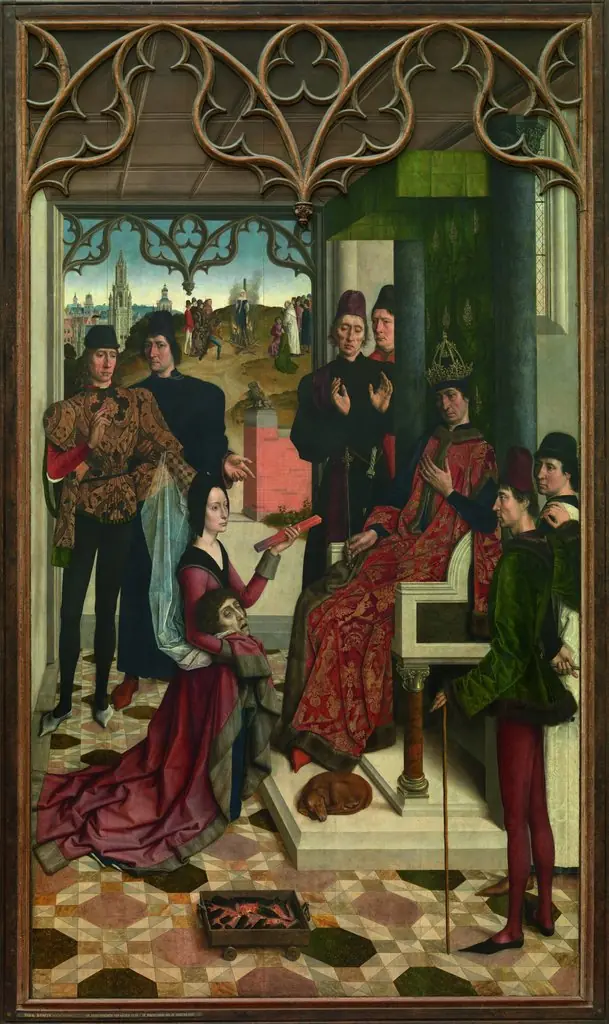 Justice of Emperor Otto III: The Trial by Fire
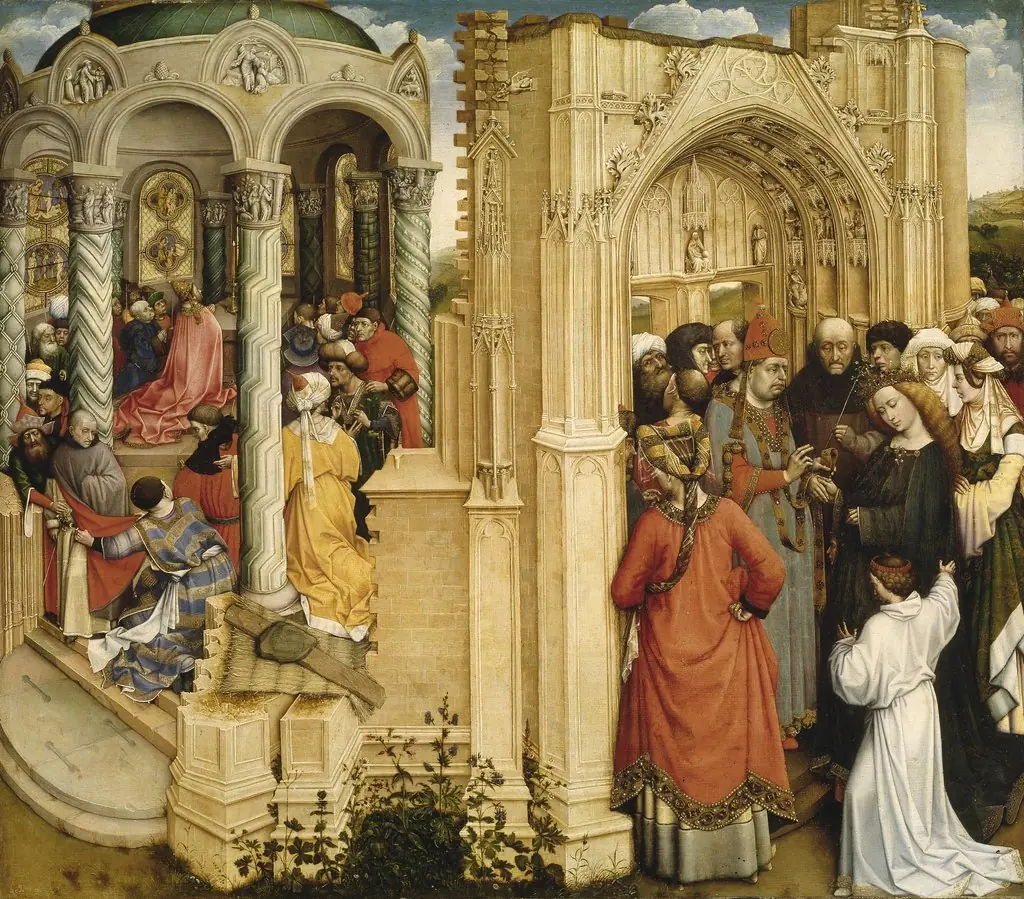 Marriage of the Virgin
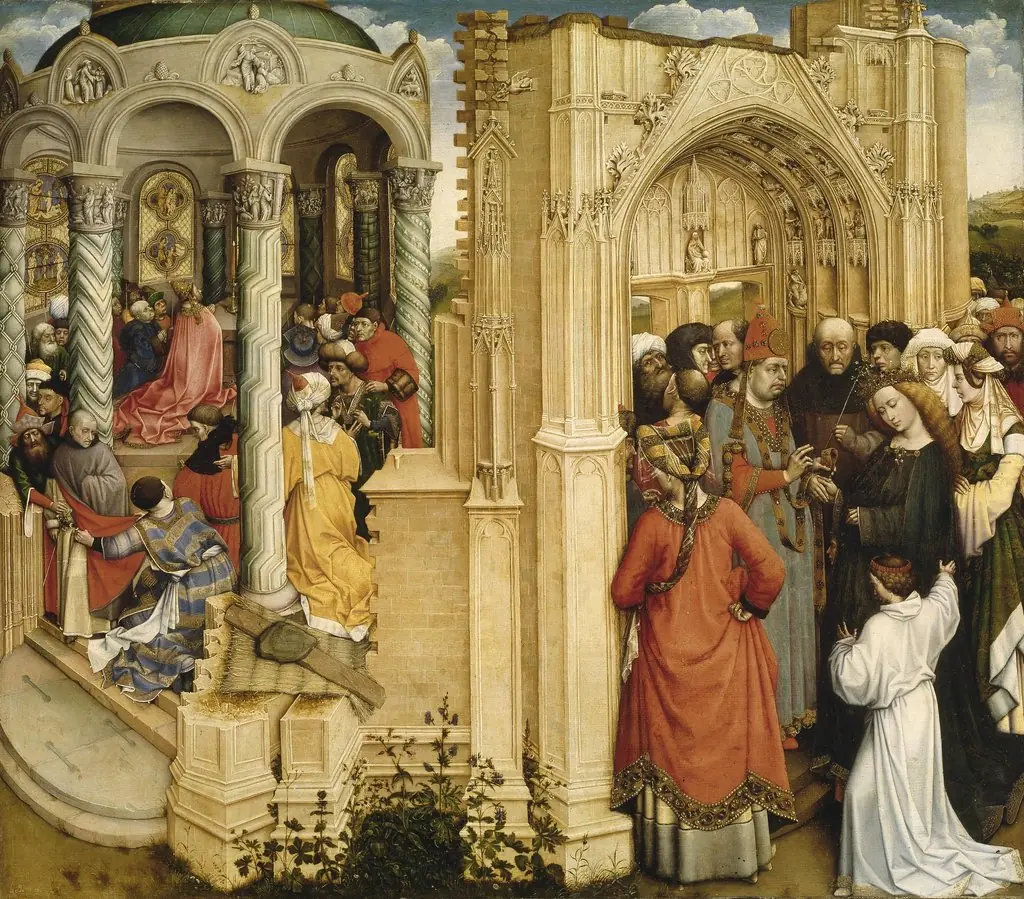 The miracle of the flowering rod (left); the marriage of Mary and Joseph (right)
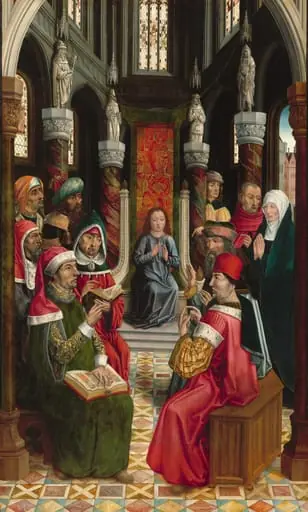 Christ among the Doctors
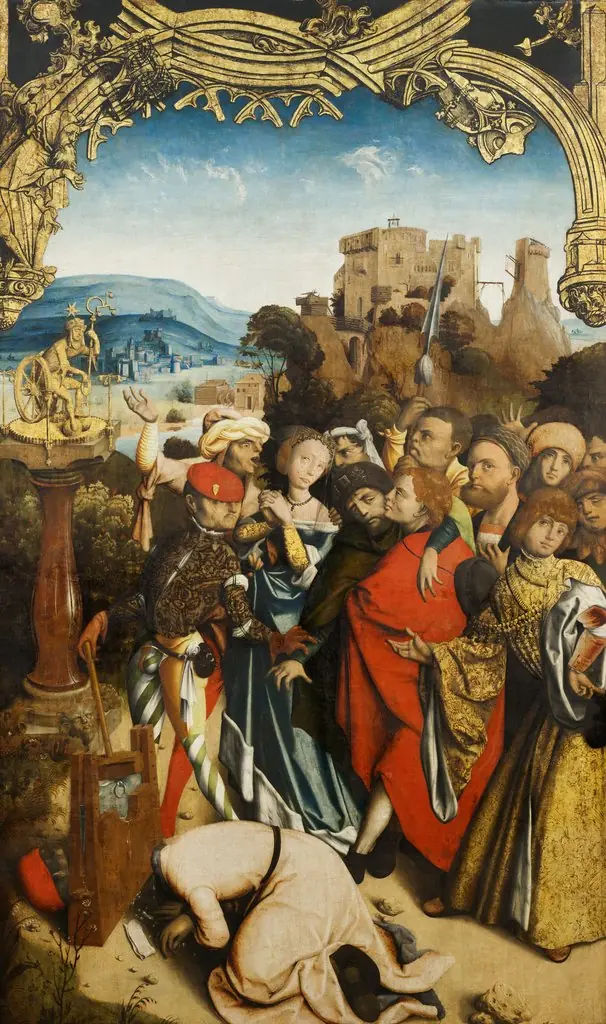 Martyrium der hll. Cantius, Cantianus und Cantianilla (Innenseite); Auferstehung Christi (Außenseite)
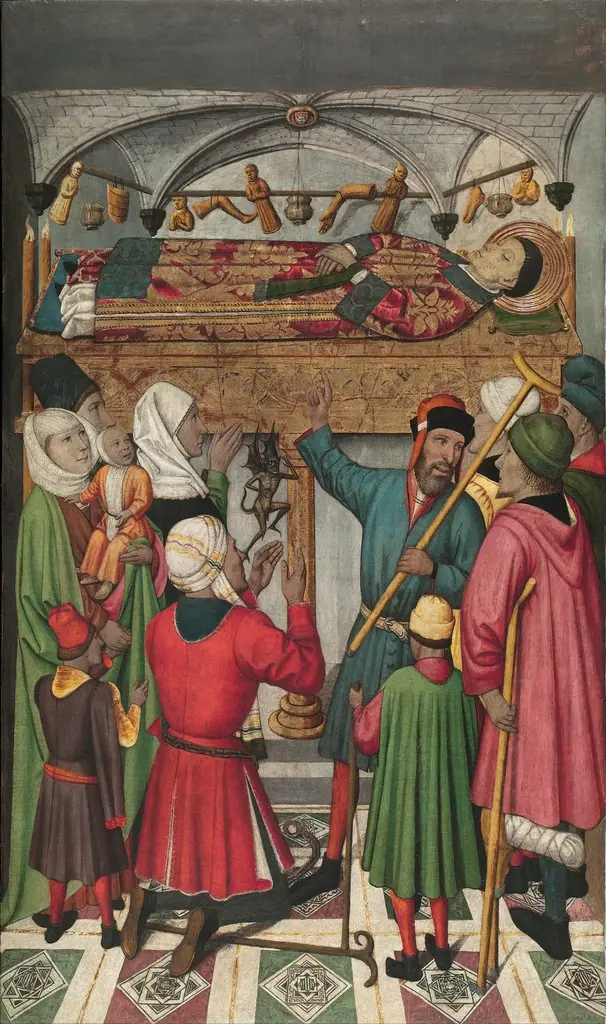 Posthumous Miracles by Saint Vincent
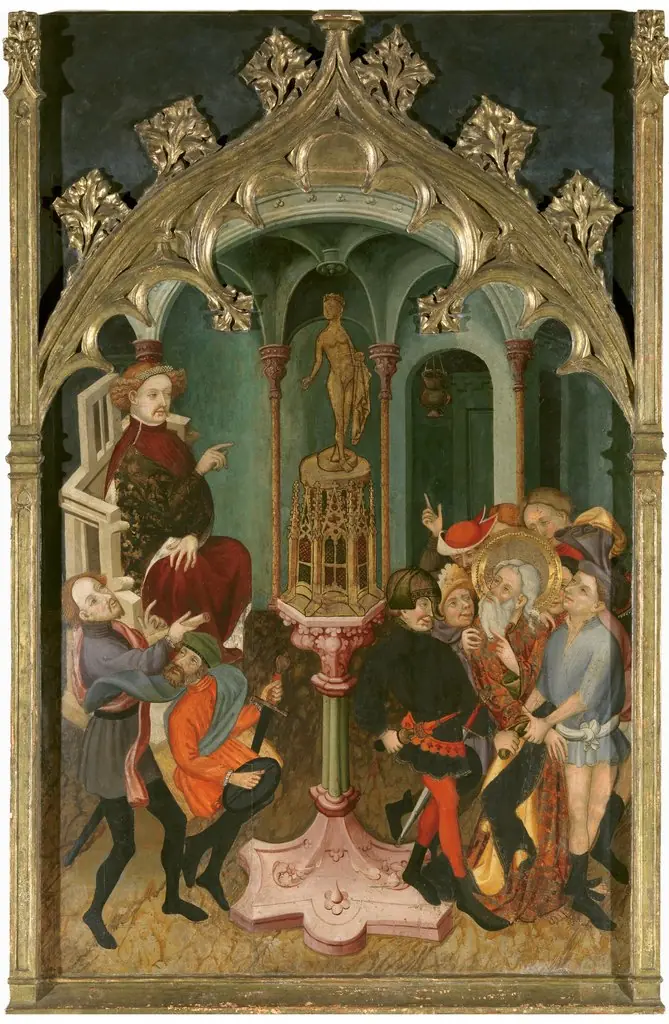 Saint Andrew refusing to worship the Idol
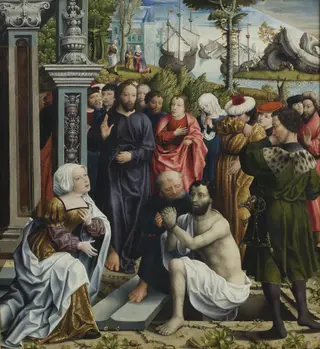 The Raising of Lazarus
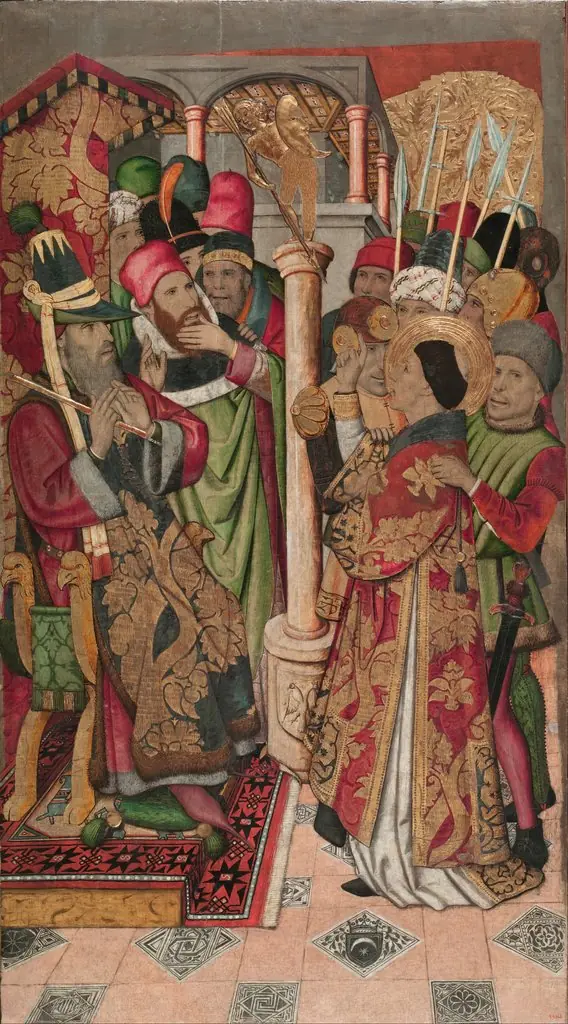 Saint Vincent before Dacian
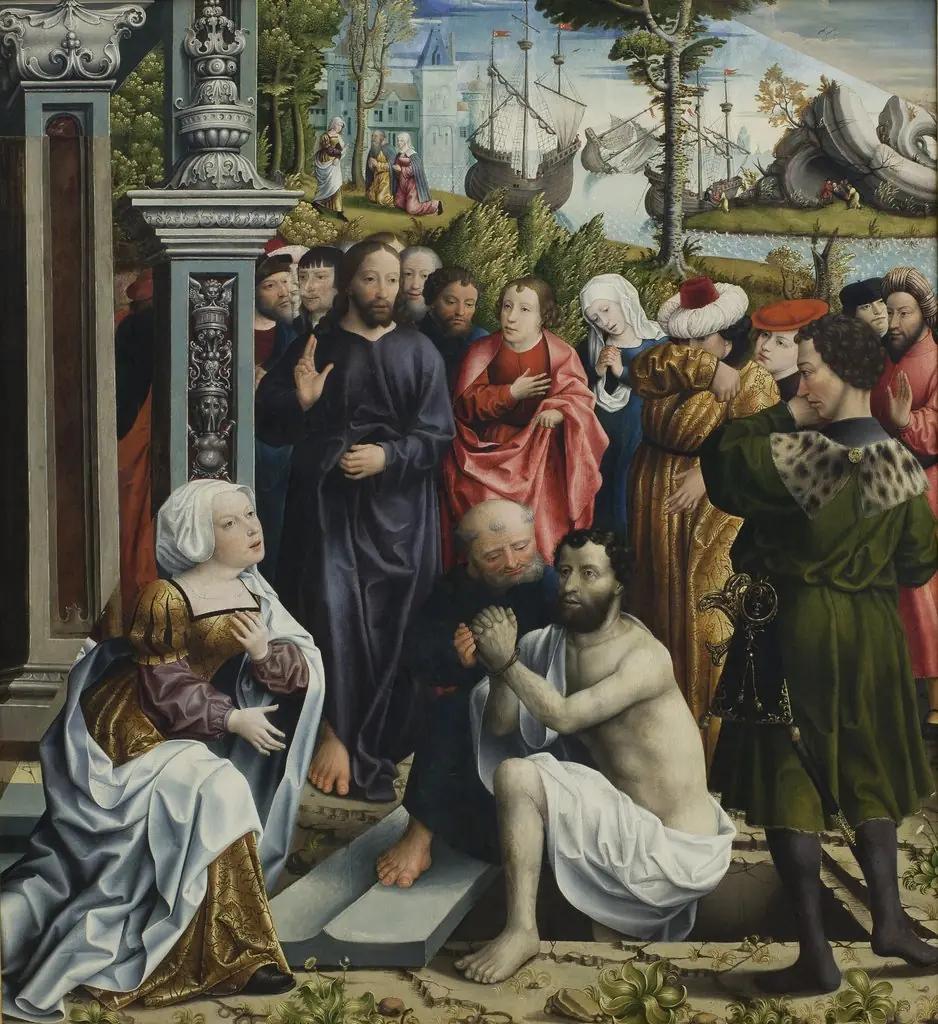 The Raising of Lazarus
 Darmstadt Altarpiece: Constantine and His Mother Helena Venerating the True Cross
- Augustinus offert aan een afgod der Manicheeërs (?)