Artwork
Saint Matthew and the Angel
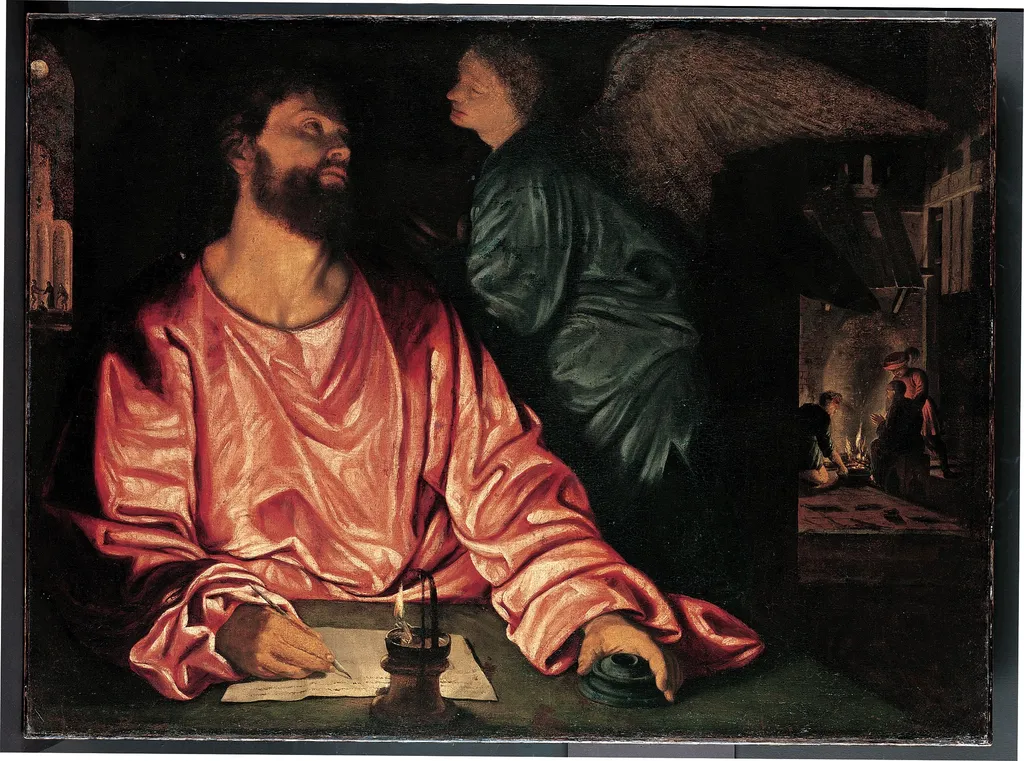
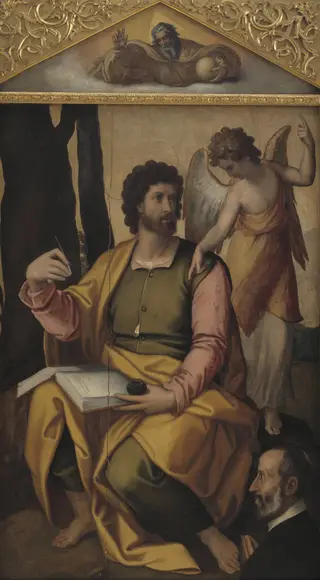
Saint Matthew and the Angel is an oil painting by the Mannerist artist Giovanni Girolamo Savoldo. It dates from 1530 and is held in the collection of the Metropolitan Museum of Art.
About this work
Subject & Meaning
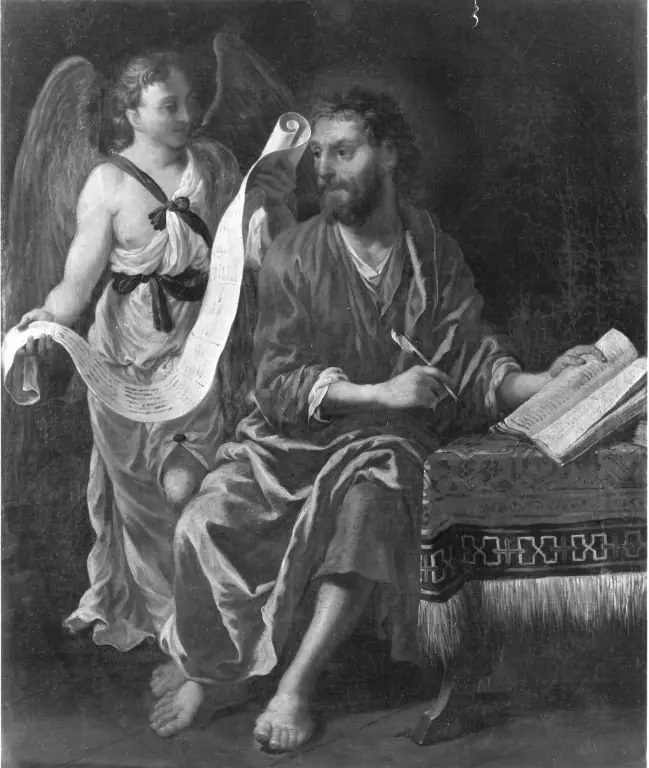
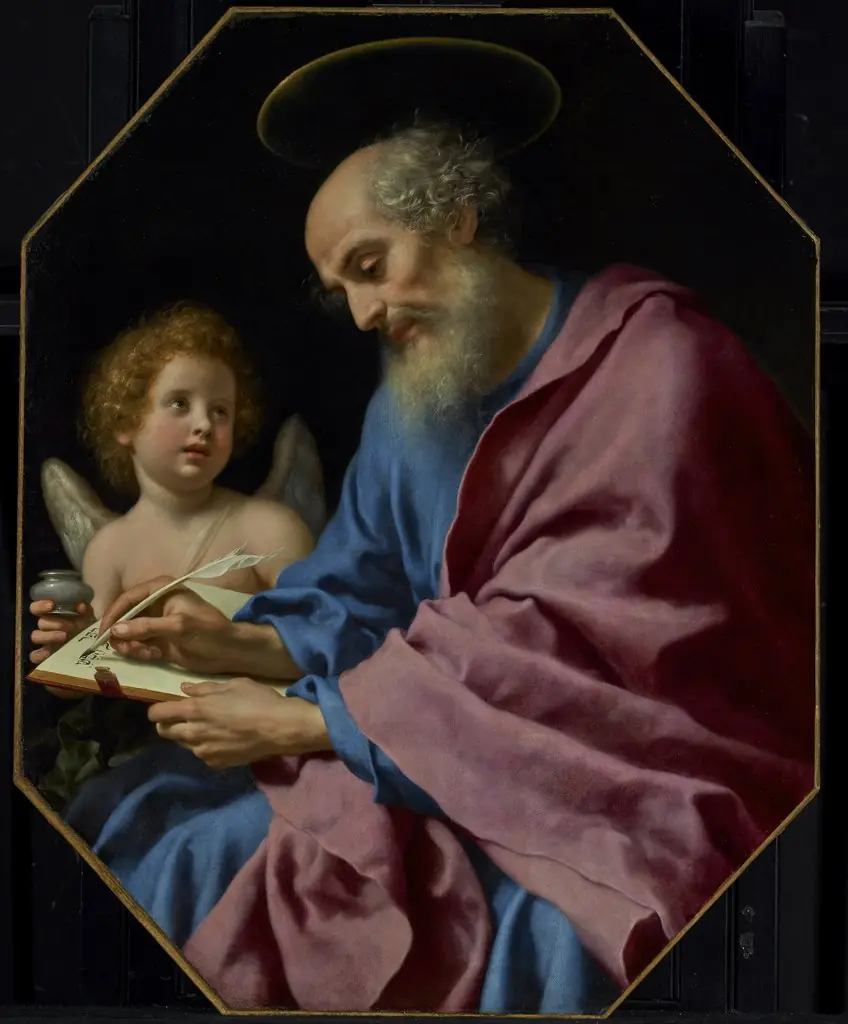
The painting depicts the Apostle Matthew seated at a table, writing his Gospel under the direct inspiration of an angel positioned to his right.
The painting depicts the Apostle Matthew seated at a table, writing his Gospel under the direct inspiration of an angel positioned to his right. This angel serves as the specific symbol for the evangelist, corresponding to the winged man of the tetramorph. The composition functions as a nocturne, illuminated primarily by a single candle in the foreground, which casts dramatic chiaroscuro effects on the subject's pink velvet tunic and the writing implements.
Background elements through two openings provide deeper symbolic meaning: servants warming themselves by a fire and figures near a moonlit tower allude to Matthew's hospitality toward the eunuchs of the Queen of Ethiopia, his future martyrdom, and the resurrection of the Ethiopian king's son. The work emphasizes Lombard naturalism through its realistic rendering of the desk, candle, and heavy fabric drapery.
Technique & Style
The work is an oil on canvas painting measuring roughly 124.5 × 93.3 cm, created circa 1530–1535. It is executed in oil paint on a canvas support typical of Savoldo’s nocturnal genre. The composition relies on a single candle flame that illuminates the figure of Saint Matthew and the attendant angel, producing strong chiaroscuro and a veristic rendering of everyday objects such as a sheet of paper, pen, and inkwell.
Dense, layered brushstrokes give the pink velvet habit a tactile weight, a hallmark of Savoldo’s style. Radiographic imaging has uncovered a hidden drawing of a woman on the right half of the canvas. The painting’s naturalistic detail and dramatic lighting influenced the young Caravaggio.
History & Provenance
Giovanni Girolamo Savoldo painted Saint Matthew and the Angel as an oil on canvas work circa 1530–1535, a dating supported by multiple records (1,2,3,5). The painting was created for a private studiolo, though documentary evidence also links it to the Zecca in Milan (3,4,5). Its religious subject depicts the apostle Matthew writing under the guidance of an angel, a composition that art historians note influenced the young Caravaggio (3).
X‑ray analysis revealed a hidden drawing of a woman on the right half of the canvas (3). The work entered the collection of the Metropolitan Museum of Art in New York, where it remains on view (2).
Saint Matthew and the Angel is held by the Metropolitan Museum of Art in New York, where it is part of the museum's collection (accession number not specified in the sources). The painting, dated c. 1530–1535, entered the museum's holdings at an undocumented date and has been included in the Met's permanent European paintings galleries, occasionally appearing in thematic exhibitions on Renaissance art and nocturnal painting, though no dedicated exhibition record is documented.
Context
Saint Matthew and the Angel is regarded as one of the finest examples of the nocturnes for which Giovanni Girolamo Savoldo became renowned, a body of work that secured his reputation for dramatic candlelit scenes. Originally produced for a private studiolo or, according to one documentary hypothesis, for the Zecca in Milan, the painting reflects the Lombard naturalist tradition through its meticulous rendering of the desk, quill, inkwell, and candle, and through the dense, heavy brushwork that gives Matthew's rose velvet tunic its tactile presence. The work's chiaroscural effects and its use of an interior light source are considered hallmarks of Savoldo's mature style.
Scholarship has further proposed that the canvas exerted a formative influence on the young Lombard painter Caravaggio, shaping his celebrated nocturnal visions. The painting is referenced in Pierluigi De Vecchi and Elda Cerchiari's survey I tempi dell'arte.
Legacy
Saint Matthew and the Angel is widely recognized as a defining example of the nocturne genre, a category central to Giovanni Girolamo Savoldo's enduring reputation. The painting's mastery of light and intimate realism established a significant legacy, most notably influencing the young Caravaggio. Art historical analysis suggests that Savoldo's depiction of a candlelit interior directly inspired the Lombard master's famous nocturnal visions.
The work's fame is further anchored in its technical virtuosity, particularly its dense brushwork and dramatic chiaroscuro effects, which remain celebrated as hallmarks of Savoldo's style. Originally created for a private studiolo or the Milan mint, the piece has secured its status as a masterpiece of Lombard naturalism. Its preservation in the Metropolitan Museum of Art ensures continued scholarly attention regarding its impact on the development of Baroque lighting techniques.
Overview
Giovanni Gerolamo Savoldo's oil painting, Saint Matthew and the Angel, created around 1530-1535, depicts the evangelist Matthew receiving divine inspiration. This work exemplifies the artist's distinctive approach to religious subjects. Currently housed at the Metropolitan Museum of Art in New York, it is recognized for its dramatic lighting and intimate portrayal of the biblical narrative.
Own this work as a print
Artist & collection
Artist
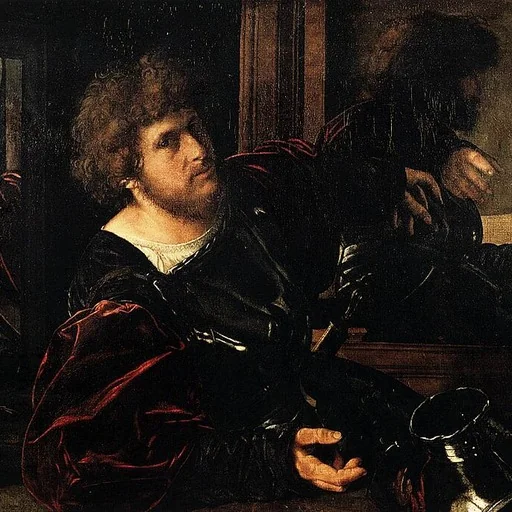
Giovanni Girolamo Savoldo, also called Girolamo da Brescia (c. 1480–1485 – after 1548), was an Italian High Renaissance painter active mostly in Venice, although he also worked in other cities in northern Italy. He is…