Artwork
Elijah Fed by the Raven
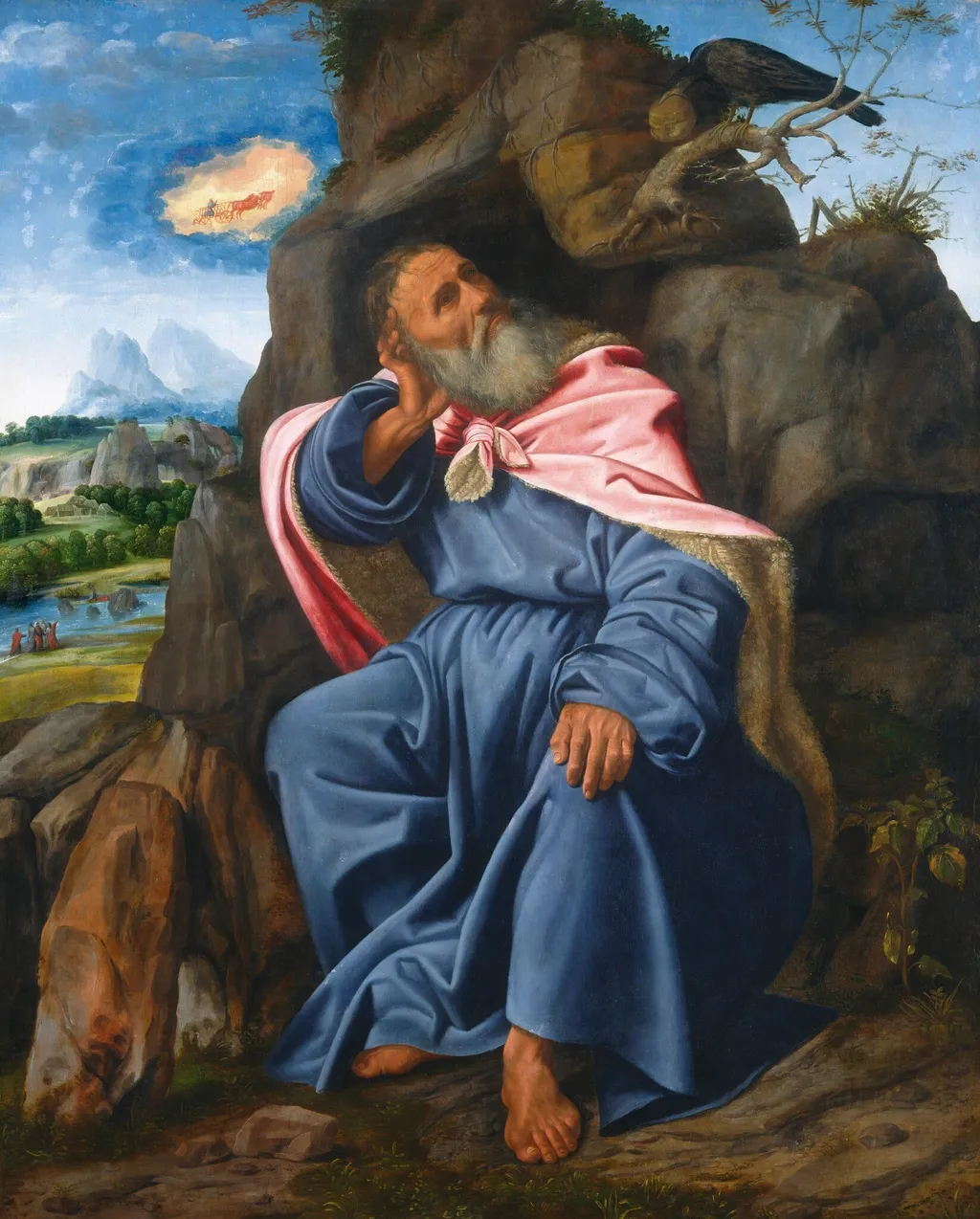
Elijah Fed by the Raven is an oil painting by the Early Renaissance artist Giovanni Girolamo Savoldo. It dates from 1510 and is held in the collection of the National Gallery of Art.
About this work
Subject & Meaning
The iconography centers on the encounter between the human prophet and the bird, which acts as the divine messenger bringing sustenance.
Giovanni Girolamo Savoldo's 1510 painting depicts the biblical prophet Elijah, illustrating a specific narrative from religious tradition where the figure is sustained by a raven. As a work of religious art, the composition focuses entirely on this singular divine interaction, serving as a visual representation of God's providence and care for his servants during times of isolation. The iconography centers on the encounter between the human prophet and the bird, which acts as the divine messenger bringing sustenance.
While the specific symbolic nuances of Savoldo's interpretation are not detailed in the available records, the subject matter fundamentally represents the theme of miraculous survival and faith. The work's classification as religious art underscores its intended function as a devotional image, likely commissioned for a monastic setting to inspire contemplation on divine protection.
Technique & Style
Executed in 1510, this religious painting utilizes oil as its primary medium. The work was originally created on a panel support but has subsequently been transferred to canvas. While specific details regarding the artist's brushwork, surface condition, or distinct stylistic handling are not explicitly detailed in the available records, the physical dimensions of the piece are established at 168 cm in height and 135.6 cm in width.
The transfer from panel to canvas represents a significant technical intervention in the object's history, altering its original structural composition while preserving the painted surface. The work is currently classified as a painting within the collection of the National Gallery of Art.
History & Provenance
The work, titled Elijah Fed by the Raven, was probably commissioned around 1510 by a Carmelite monastery in Brescia, Italy, and later entered the Manfrin family collection in Venice. It passed by inheritance to Pietro Manfrin, then to Giulia‑Giovanna Manfrin‑Plattis, and after her death was divided between her sons, with the painting sold at Hôtel Drouot in Paris in 1870 (no. 73) to Charles A. Loeser. Loeser’s heirs transferred it to Count Alessandro Contini Bonacossi in Florence, who sold it in 1954 to the Samuel H. Kress Foundation; the foundation gifted the work to the National Gallery of Art in 1961. The painting is dated to 1510 and executed in oil on panel transferred to canvas.
Elijah Fed by the Raven is held by the National Gallery of Art in Washington, D.C., as part of the Samuel H. Kress Collection. The painting entered the Kress Foundation in 1954 via Count Alessandro Contini Bonacossi of Florence, and was gifted to the NGA in 1961. Its documented provenance traces back to a possible commission around 1510 by a Carmelite monastery in Brescia, after which it entered the Manfrin collection in Venice.
It passed through inheritance to Pietro Manfrin and then Giulia-Giovanna Manfrin-Plattis, before being divided between Marquis Antonio-Maria Plattis and Bortolina Plattis, widow of Baron Sardagna. The work was sold at the Plattis sale at the Hôtel Drouot in Paris on 13 May 1870 (lot 73). Charles A. Loeser acquired it in Florence from the 1890s; it later passed to his daughter Mrs. Ronald Calnan in Milan, before its 1954 sale to Contini Bonacossi and subsequent acquisition by the Kress Foundation.
Context
The painting is a religious work by Giovanni Girolamo Savoldo dated to around 1510 that depicts the biblical figure Elijah; its devotional subject reflects early‑16th‑century Carmelite patronage and later entered a distinguished collection lineage that led to the National Gallery of Art in Washington, D.C. Scholarship on Savoldo’s oeuvre places this piece within the artist’s broader practice of combining Venetian coloristic intensity with Lombard narrative clarity, and its inclusion in the Samuel H. Kress Collection has sustained academic interest in its stylistic and iconographic qualities.
Legacy
The painting entered the Samuel H. Kress Collection in 1954 after its sale by Count Alessandro Contini Bonacossi, having previously passed through the Manfrin family and a Carmelite monastery in Brescia. It now resides in the National Gallery of Art, Washington, D.C., where it is displayed as part of the Kress Collection and studied as a 1510 oil on panel by Giovanni Girolamo Savoldo depicting the biblical figure Elijah. Its documented provenance and inclusion in a major public collection have contributed to scholarly discussions of Savoldo’s late Venetian style and the iconography of Elijah in Renaissance art.
Overview
Giovanni Girolamo Savoldo's Elijah Fed by the Raven, painted around 1510, is an oil on panel work later transferred to canvas. This religious painting illustrates a moment from the Old Testament, depicting the prophet Elijah receiving sustenance from a raven. The composition emphasizes a quiet, contemplative scene, characteristic of Savoldo's approach to sacred narratives.
Own this work as a print
Artist & collection
Artist
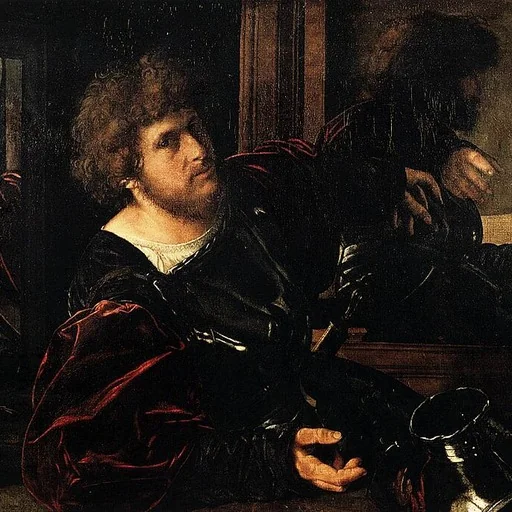
Giovanni Girolamo Savoldo, also called Girolamo da Brescia (c. 1480–1485 – after 1548), was an Italian High Renaissance painter active mostly in Venice, although he also worked in other cities in northern Italy. He is…

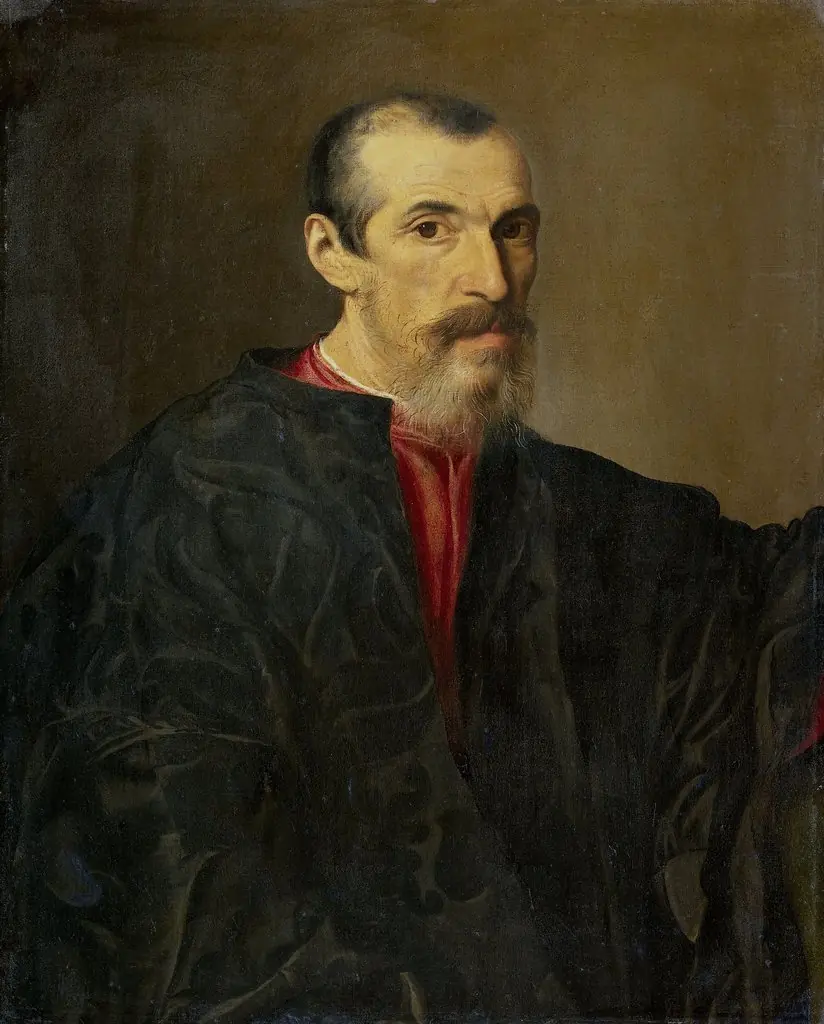
- Saint Jerome Reading in the Desert
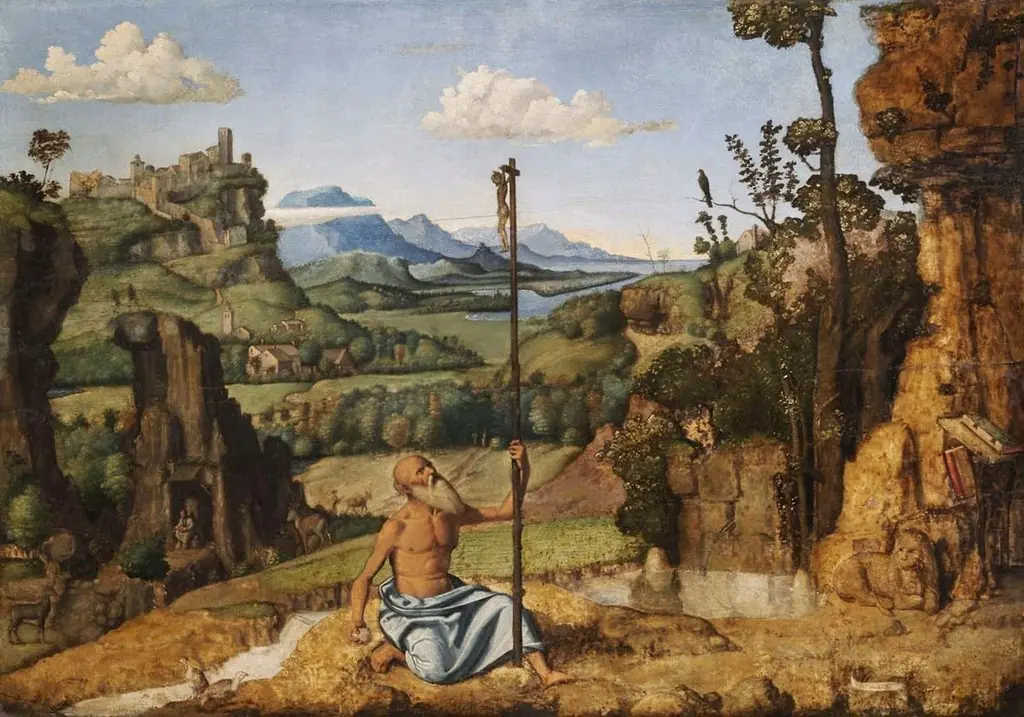 The Penitent St Jerome in the Wilderness
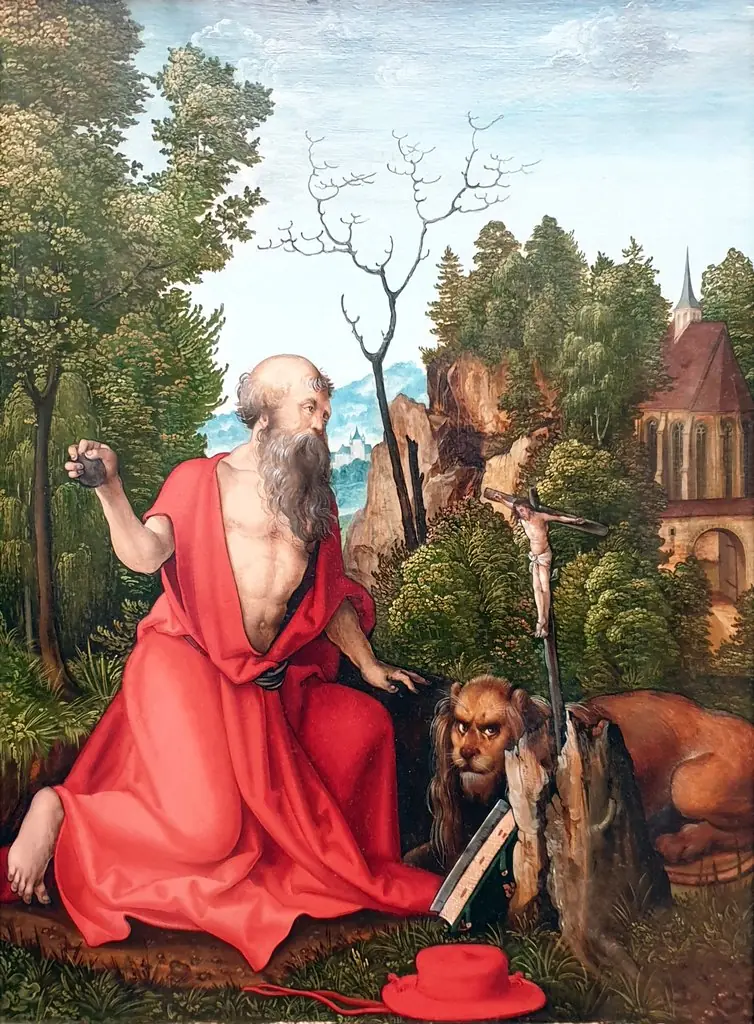 Saint Jerome
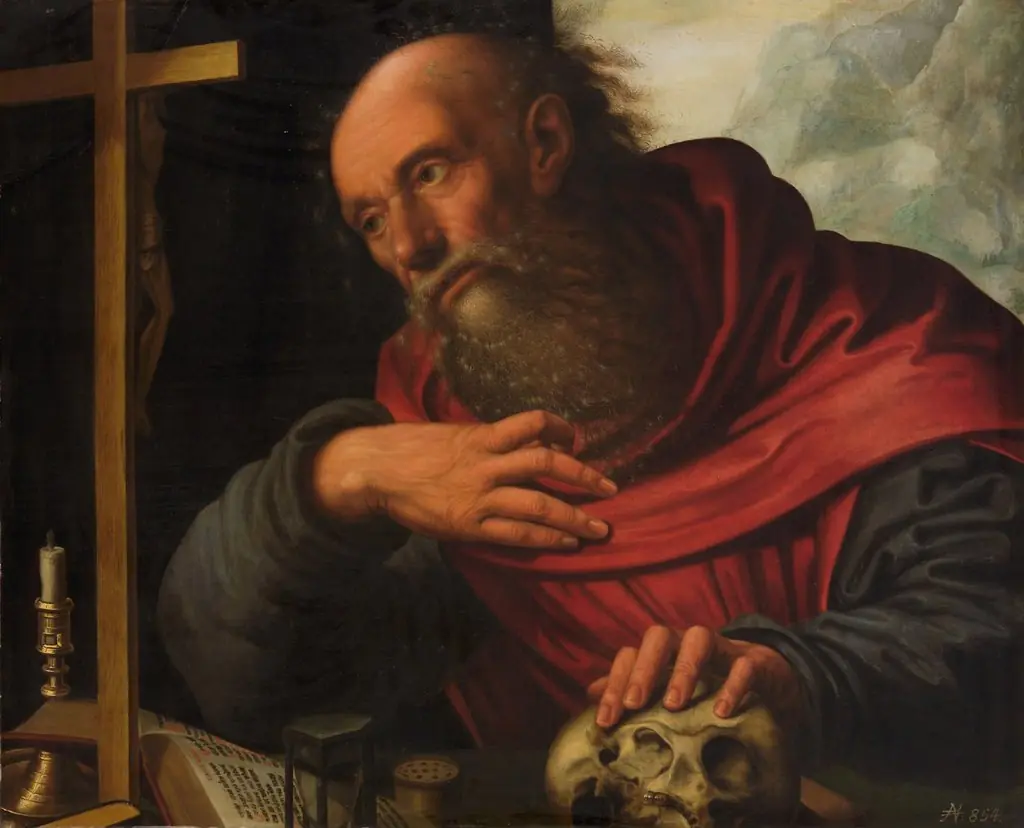 St. Jerome
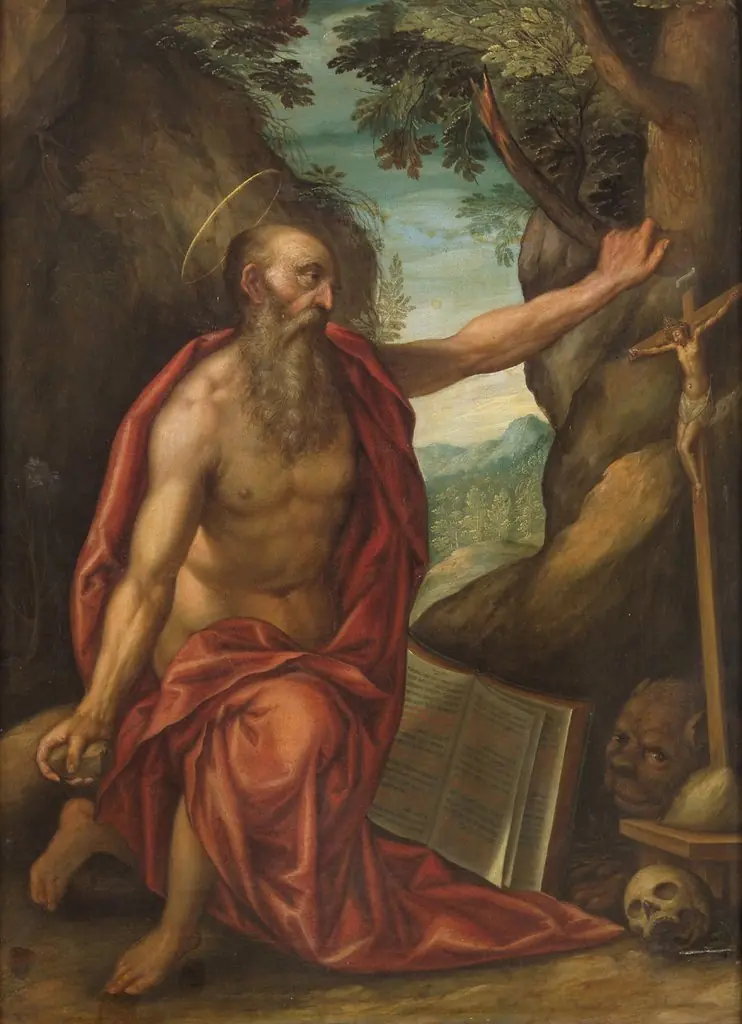 Penitent St Jerome
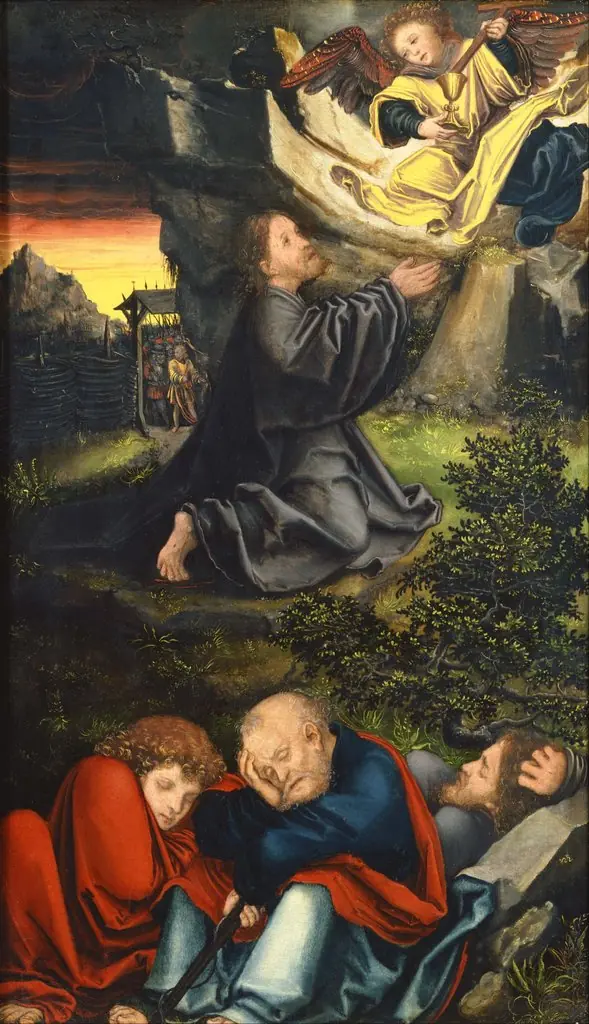 The Garden of Gethsemane
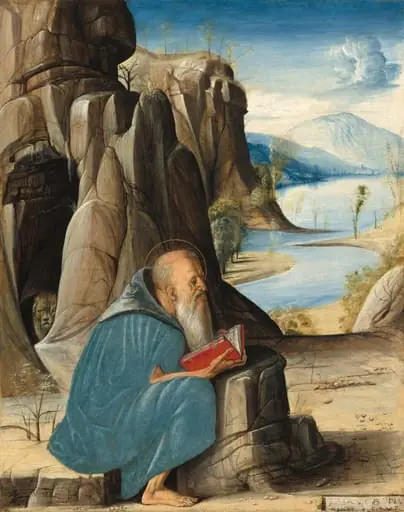 Saint Jerome Reading
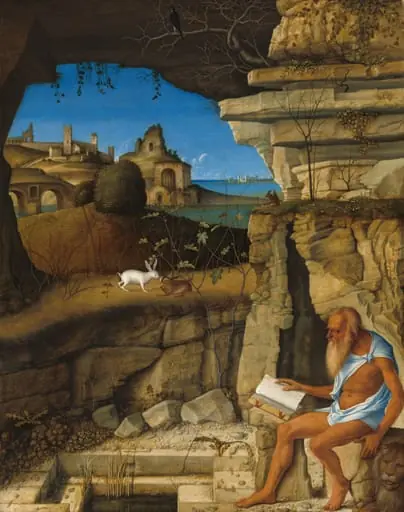 Saint Jerome Reading
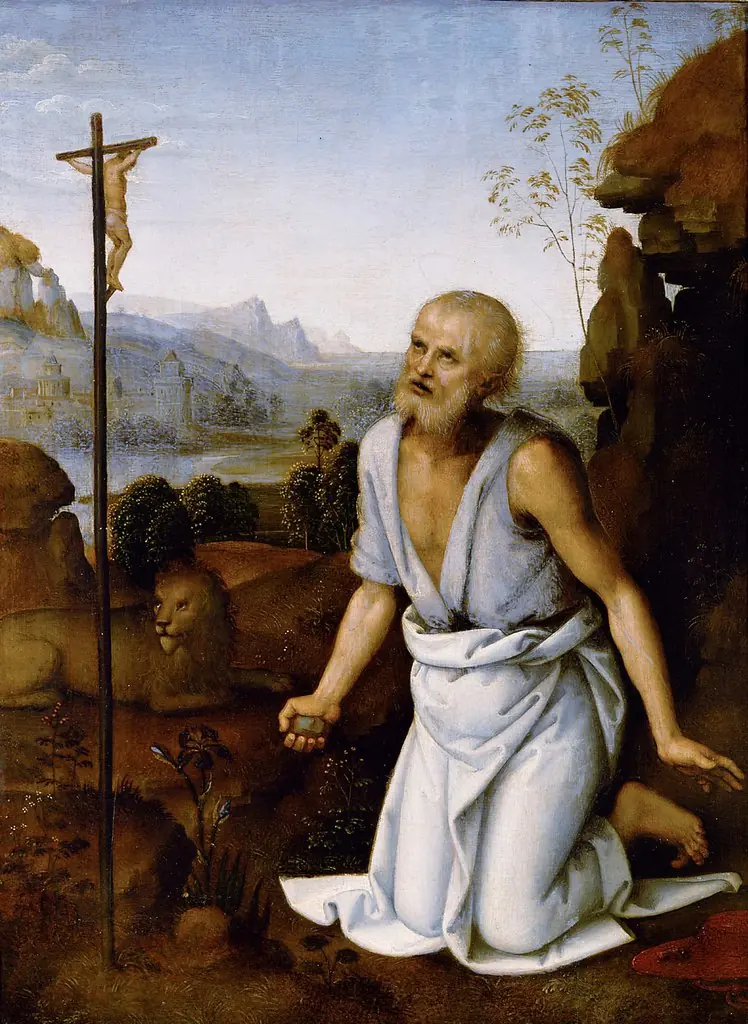 Saint Jerome Penitent
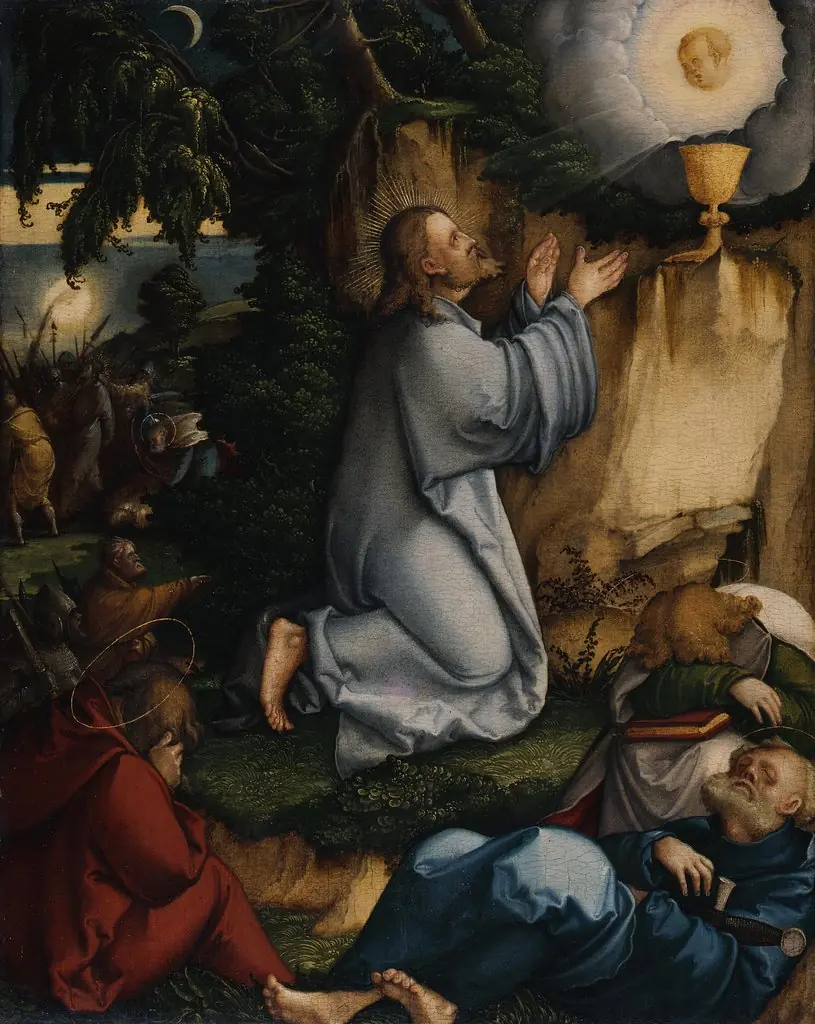 Christus am Ölberg und die Gefangennahme Christi
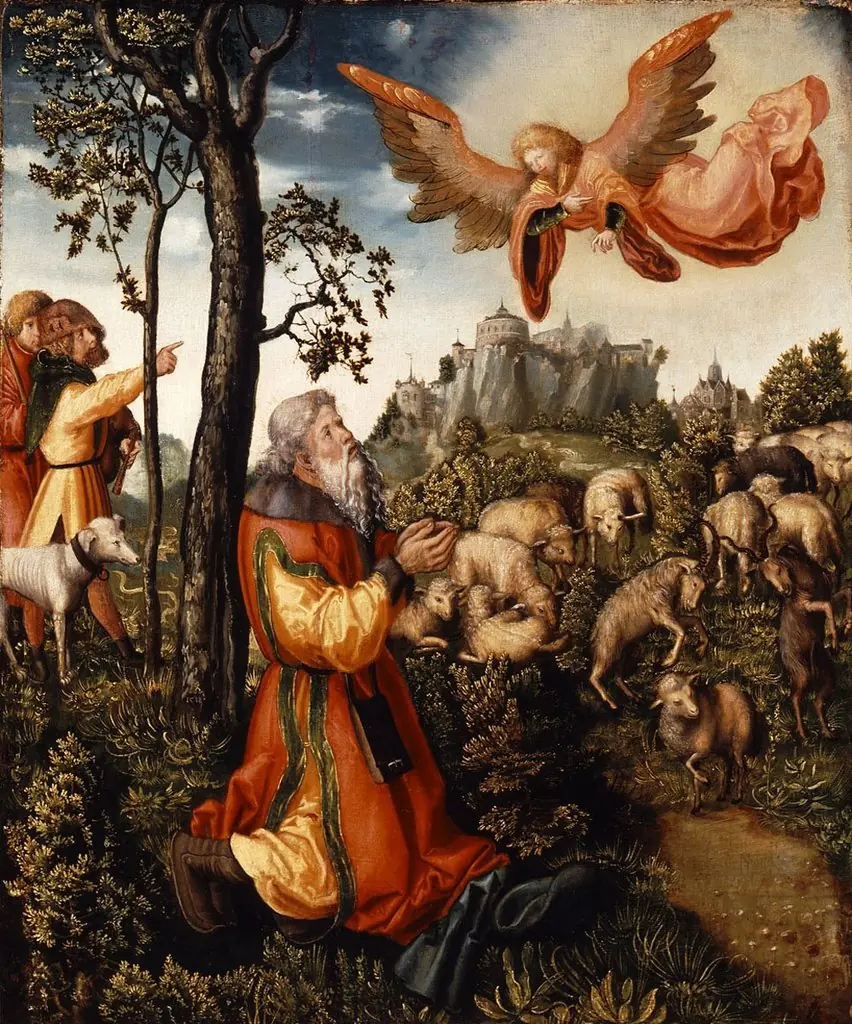 The Annunciation to Joachim
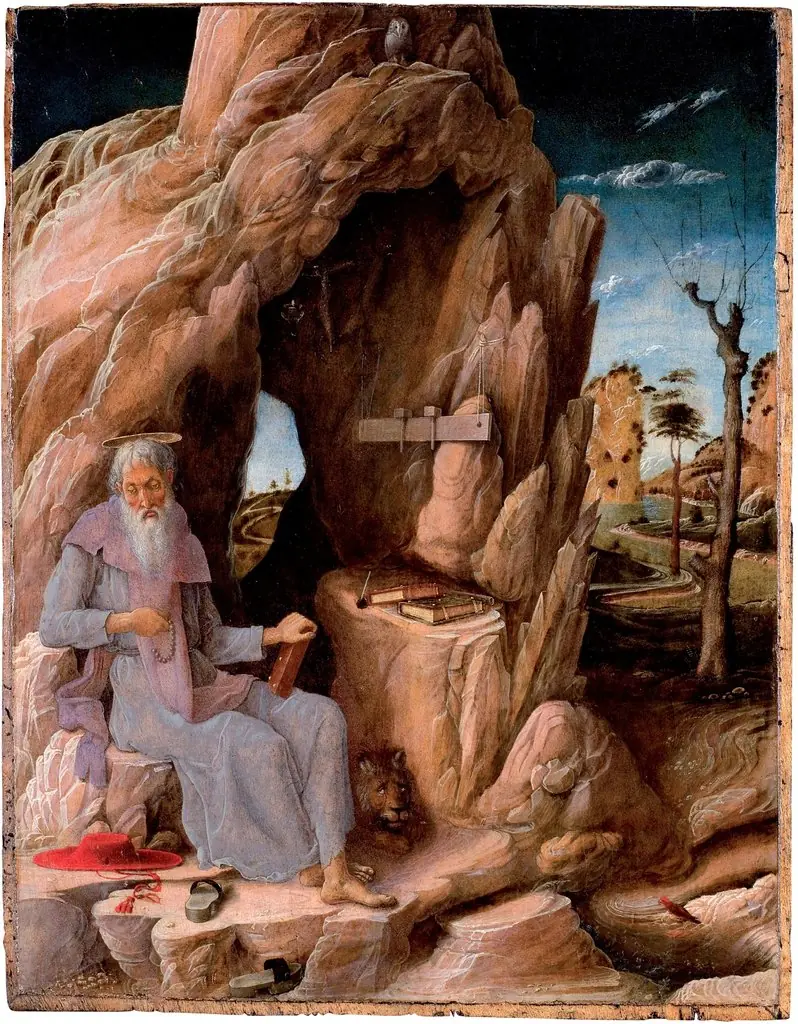 Saint Jerome in the desert