Artwork
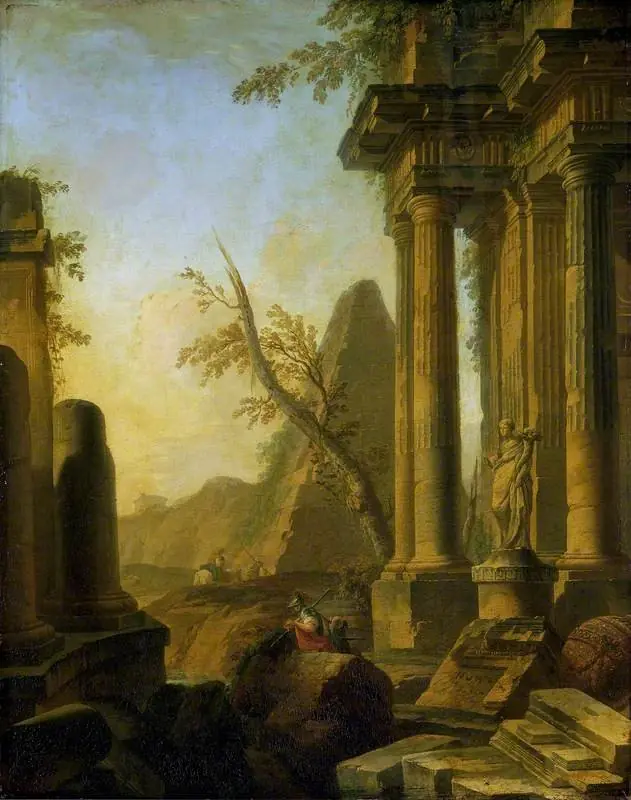
A Fountain with Classical Ruins
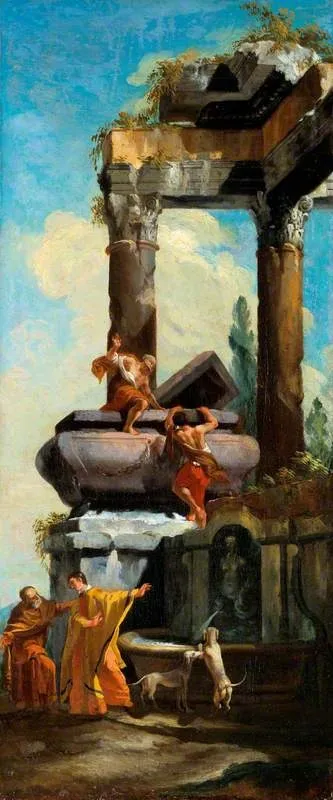
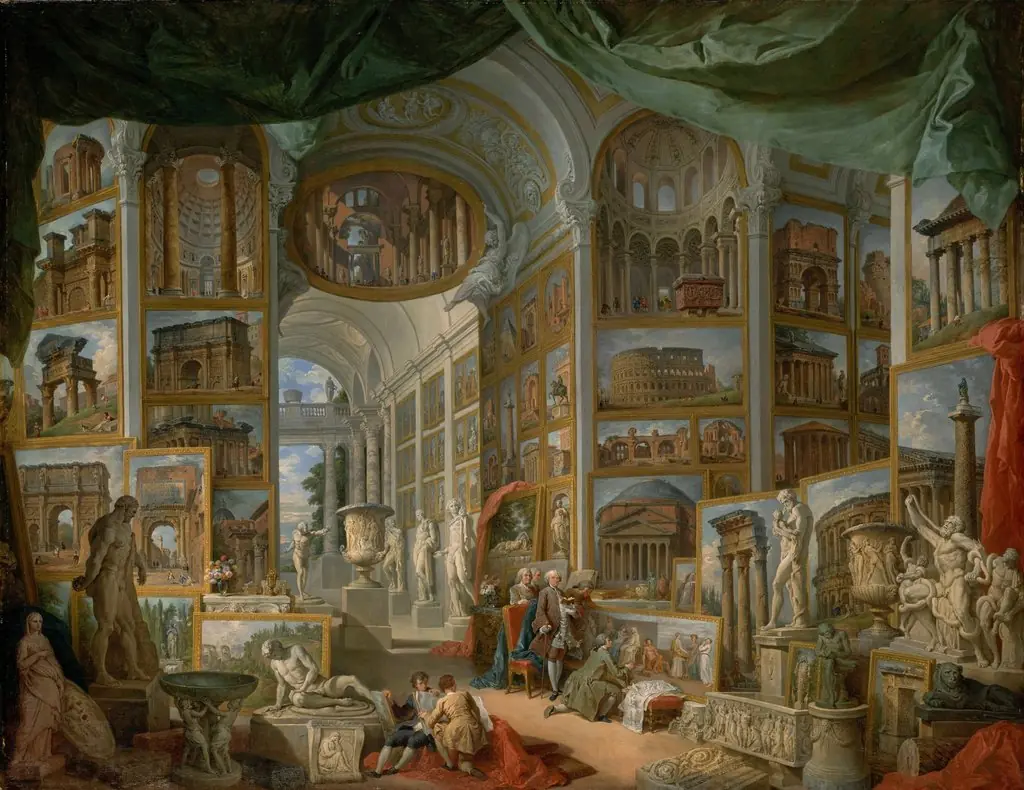
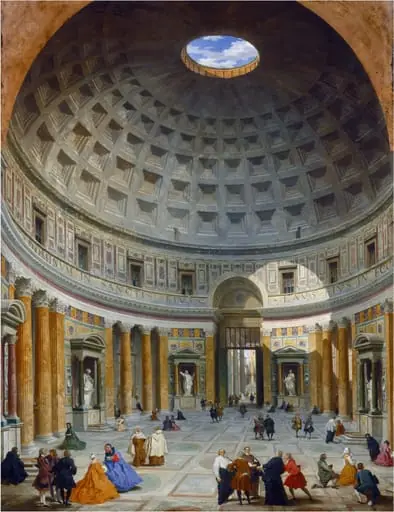
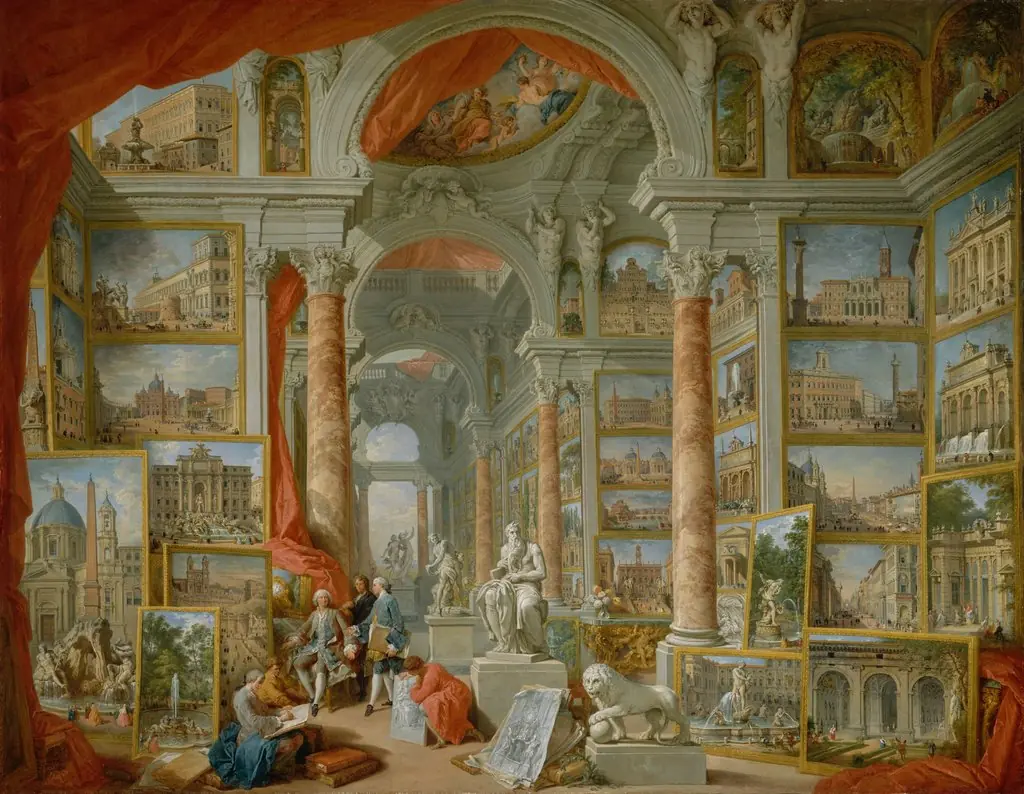
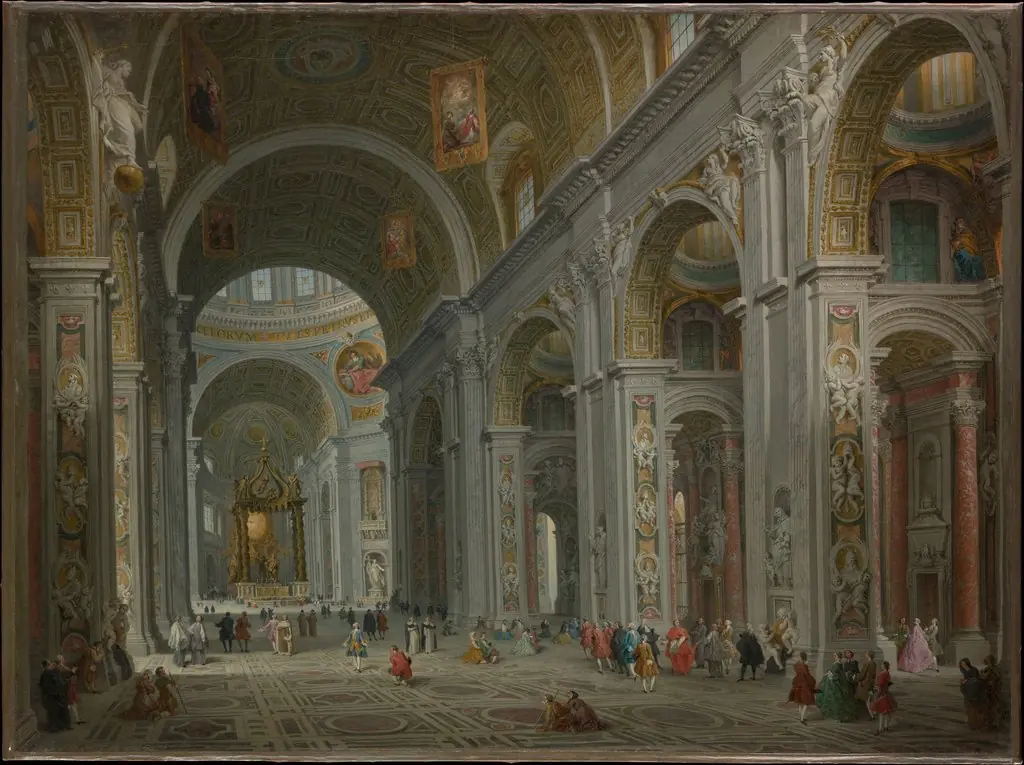
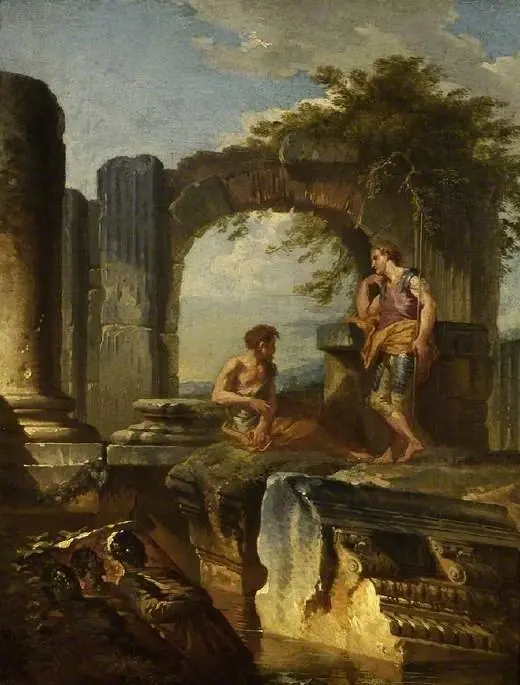
A Fountain with Classical Ruins is an oil painting by the Rococo painting artist Giovanni Paolo Panini. It dates from 1738 and is held in the collection of the Victoria and Albert Museum.
About this work
Overview
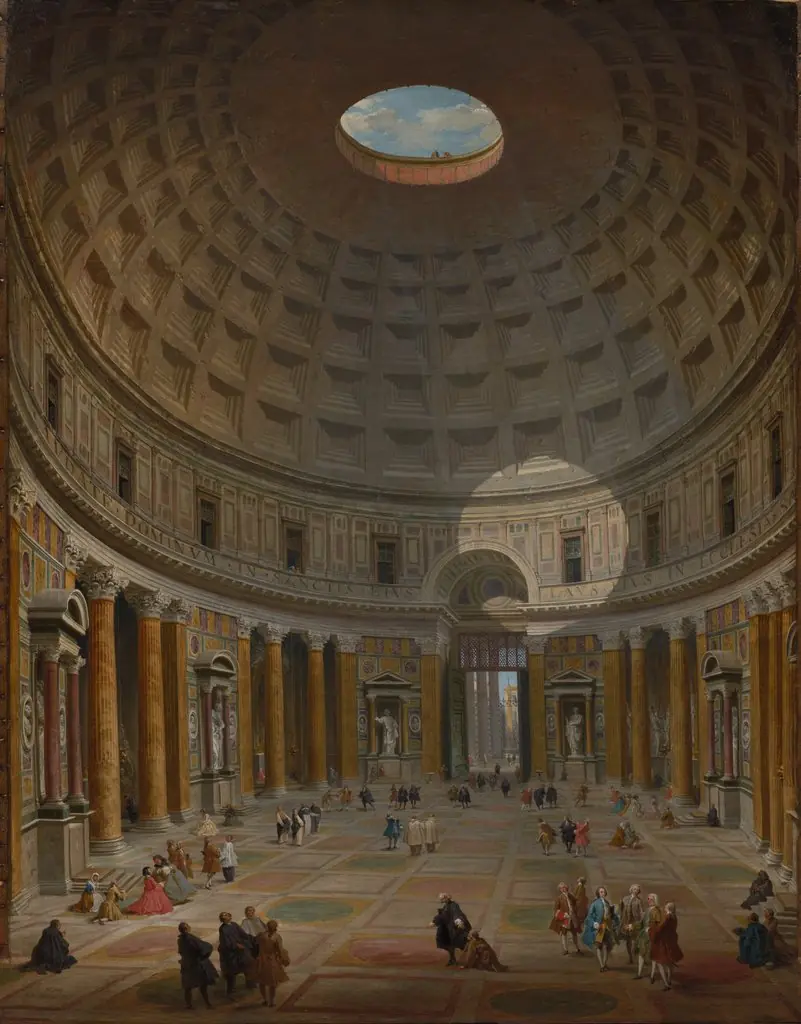
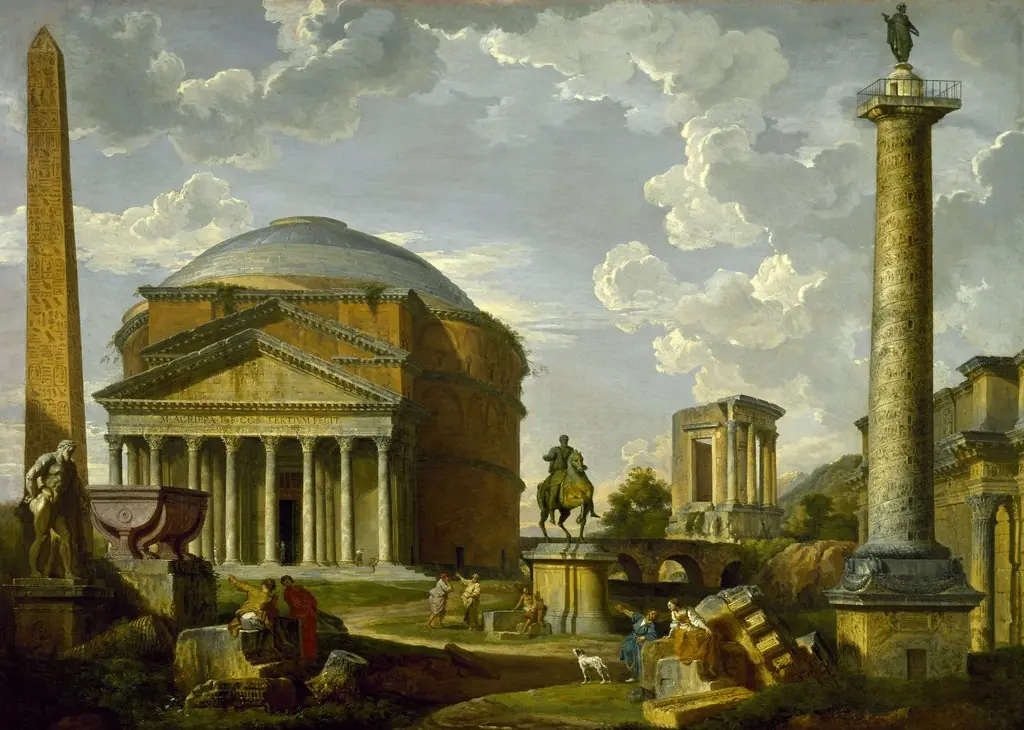
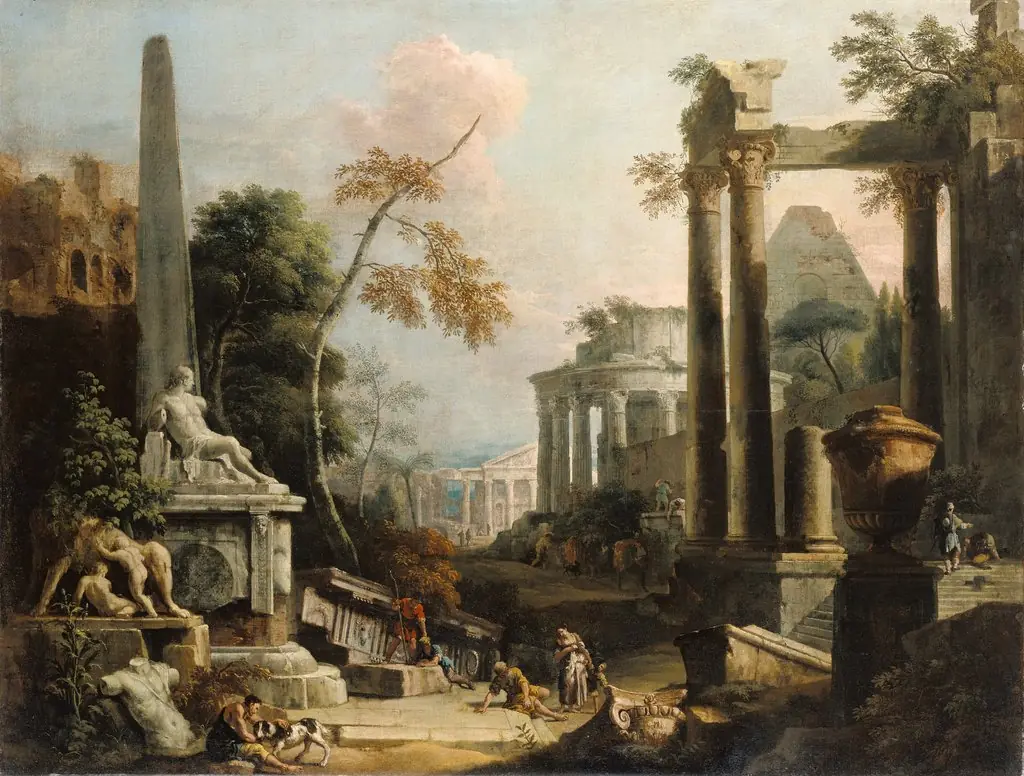
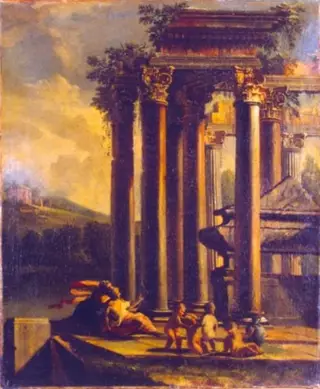
A Fountain with Classical Ruins, painted by Giovanni Paolo Panini around 1738, is an oil on canvas work showcasing the artist's signature vedute style, blending Roman antiquities with imaginative composition.
Subject & Meaning
The painting depicts a serene scene of a fountain amidst classical ruins, with two men and a dog as focal points. The figures' poses, a gesturing man in yellow and a contemplative man in orange, suggest a moment of quiet reflection, underscored by the contrast between warm, vibrant robes and the cooler, muted tones of the sky and ancient structures.
Technique & Style
Panini employs a Rococo style, evident in the decorative detail and elegant lightness. The work also features chiaroscuro, with strong light and dark contrasts creating depth and volume, characteristic of Baroque influences on his technique.
History & Provenance
Created in the mid-18th century, the painting is now part of the Victoria and Albert Museum's collection, reflecting its significance in the context of European Baroque and Rococo art.
Context
As a vedute painter in 18th-century Rome, Panini's work catered to the demand for scenes of antiquity among European aristocrats and intellectuals, blending historical reverence with theatrical flair.
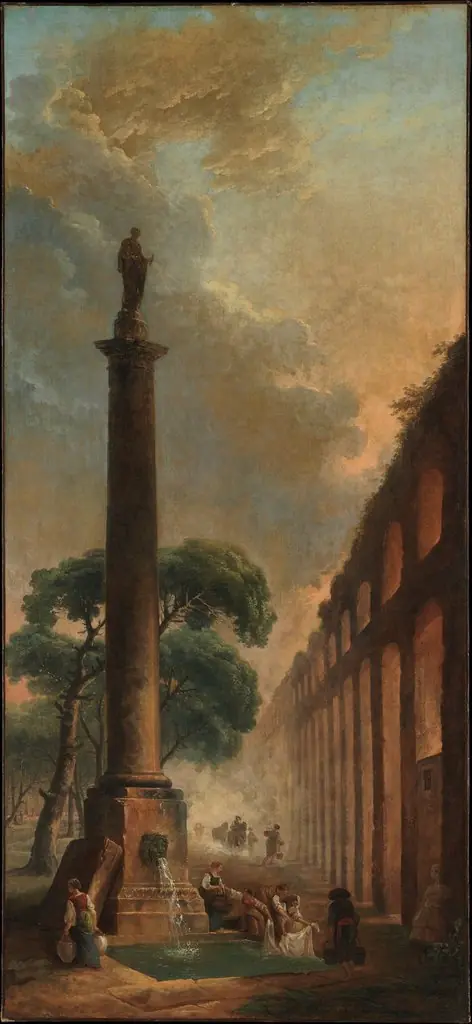
Artist & collection
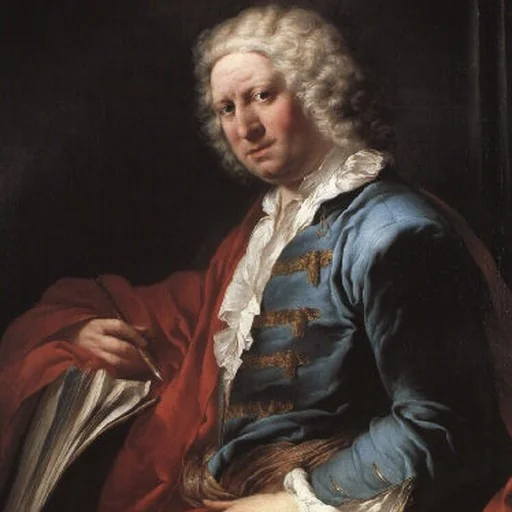
Artist
Giovanni Paolo, also known as Gian Paolo Panini or Pannini (17 June 1691 – 21 October 1765), was an Italian Baroque painter and architect who worked in Rome and is primarily known as one of the vedutisti ("view painters").