Artwork
Ancient Rome
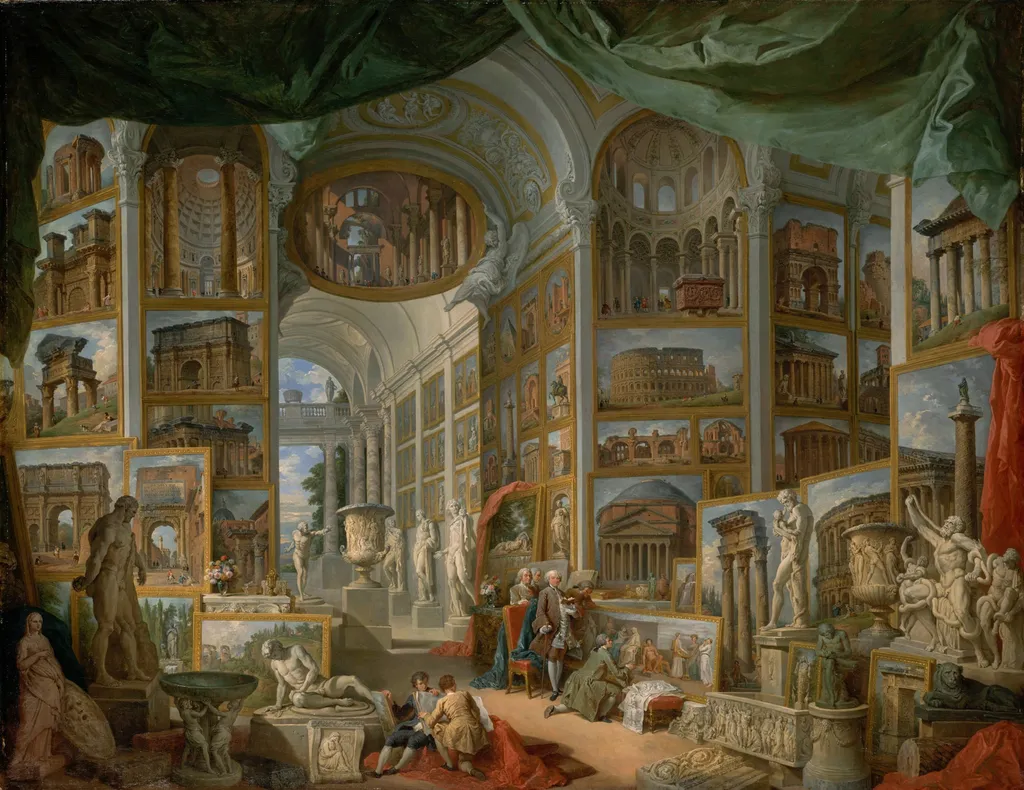
Ancient Rome is an oil painting by the Rococo painting artist Giovanni Paolo Panini. It dates from 1757 and is held in the collection of the Metropolitan Museum of Art.
About this work
Technique & Style
The handling of the oil medium allows Panini to render the textures of stone and human form with precise detail, characteristic of his veduta style.
Created in 1757, Giovanni Paolo Panini's Ancient Rome is an oil painting executed on a canvas support. The work measures 172.1 cm in height and 229.9 cm in width, presenting a substantial scale for its era. Stylistically, the composition functions as a capriccio, integrating depicted figures, sculptures, and architectural monuments within a constructed interior space.
The handling of the oil medium allows Panini to render the textures of stone and human form with precise detail, characteristic of his veduta style. The painting's formal qualities emphasize the grandeur of classical antiquity through a dense arrangement of historical elements, creating a cohesive visual narrative that blends real and imagined architectural features.
History & Provenance
Ancient Rome, an oil painting by Giovanni Paolo Panini dated 1757, traces its provenance through a sequence of distinguished French collectors. The documented ownership chain begins with Alexandre Joseph Paillet and continues through Casimir Perier, Camille Groult, and the painter Hubert Robert, before passing to the dealer Charles Sedelmeyer. The work is now held in the collection of the Metropolitan Museum of Art, where it is recorded as an oil-on-canvas painting measuring 172.1 by 229.9 centimeters.
The inception date of 1757 marks both the creation of the painting and the starting point of its recorded history.
Giovanni Paolo Panini's 1757 oil painting Ancient Rome is held in the collection of the Metropolitan Museum of Art. The work's provenance includes ownership by Charles Sedelmeyer, Hubert Robert, Alexandre Joseph Paillet, Casimir Perier, and Camille Groult prior to its acquisition by the museum. While the painting measures 172.1 by 229.9 centimeters, the provided records do not list a specific inventory or accession number, nor do they detail any public exhibition history for this specific version of the composition.
Legacy
The painting Ancient Rome by Giovanni Paolo Panini, completed in 1757, entered the collection of the Metropolitan Museum of Art and has been featured in its displays, reflecting a sustained scholarly and public interest in the work. Its provenance includes ownership by several notable collectors, Charles Sedelmeyer, Hubert Robert, Alexandre Joseph Paillet, Casimir Perier, and Camille Groult, underscoring its recognized value over subsequent centuries. The composition’s integration of architectural elements with contemporary figures has influenced later neoclassical interpretations of historic subjects, contributing to Panini’s lasting reputation as a chronicler of Roman antiquity.
Overview
Ancient Rome is an oil painting that portrays an elaborate, imagined architectural interior. The composition blends characteristics of a classical museum with elements of a fantastical cityscape, featuring numerous classical sculptures and figures. The artwork is distinguished by its intricate design and the profound illusion of spatial depth achieved through its multi-layered architectural elements, inviting viewers into a complex visual experience.
Subject & Meaning
The depicted space is populated by a multitude of classical statues, presenting both male and female nudes, some elevated on pedestals, others seemingly emerging from the floor. The walls are adorned with paintings of ancient Roman buildings, creating an impression of an endless gallery of ruins. A few figures, dressed in historical attire, wander through the scene, observing the art or seated on red cushions, lending a sense of scale and human presence.
Context
This painting aligns with a tradition of architectural fantasy, often referred to as capricci or vedute, which gained prominence in the 18th century. Its sophisticated use of layered perspectives and imagined architectural elements resonates with the work of artists such as Giovanni Paolo Panini, celebrated for his detailed depictions of real and imagined Roman ruins. Such works often explored the grandeur and decay of classical antiquity through elaborate compositions.
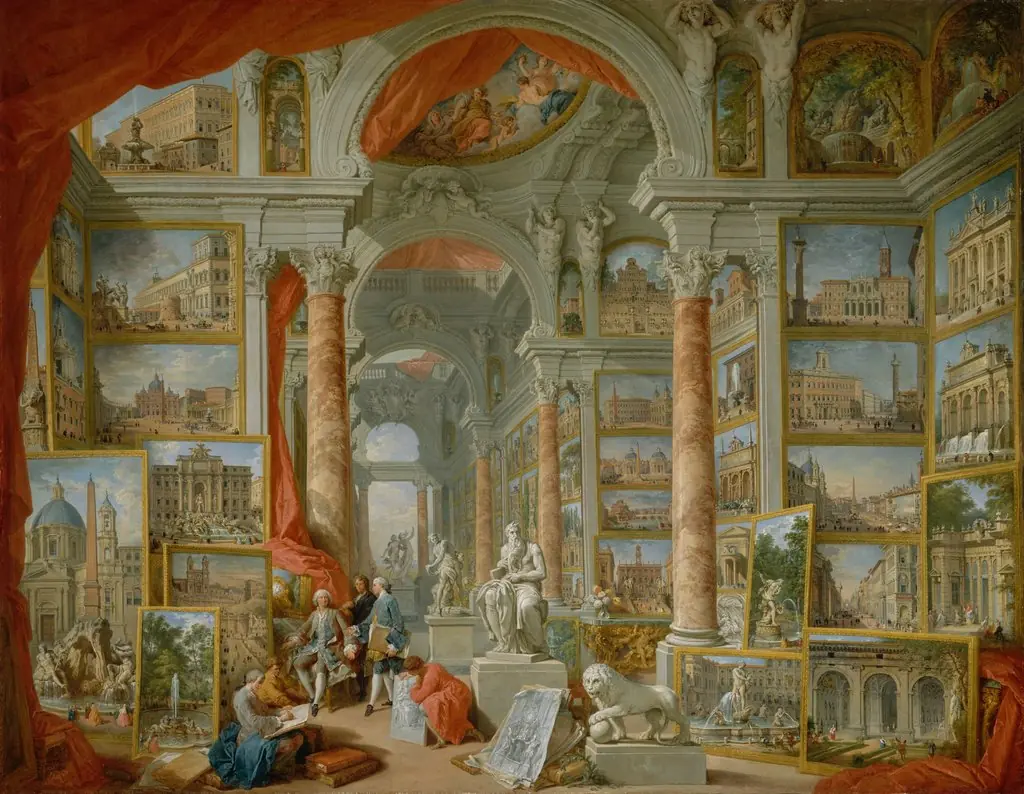
Own this work as a print
Artist & collection
Artist
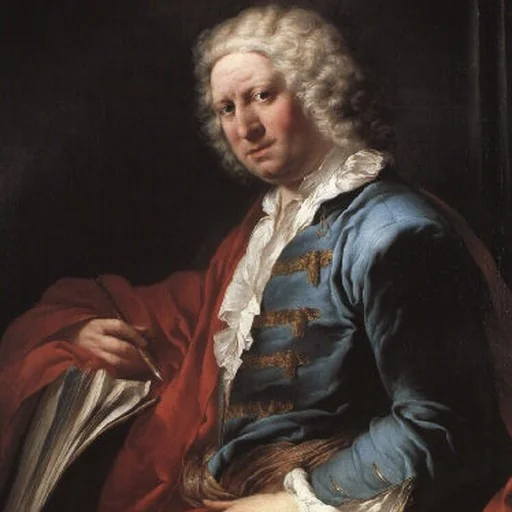
Giovanni Paolo, also known as Gian Paolo Panini or Pannini (17 June 1691 – 21 October 1765), was an Italian Baroque painter and architect who worked in Rome and is primarily known as one of the vedutisti ("view painters").

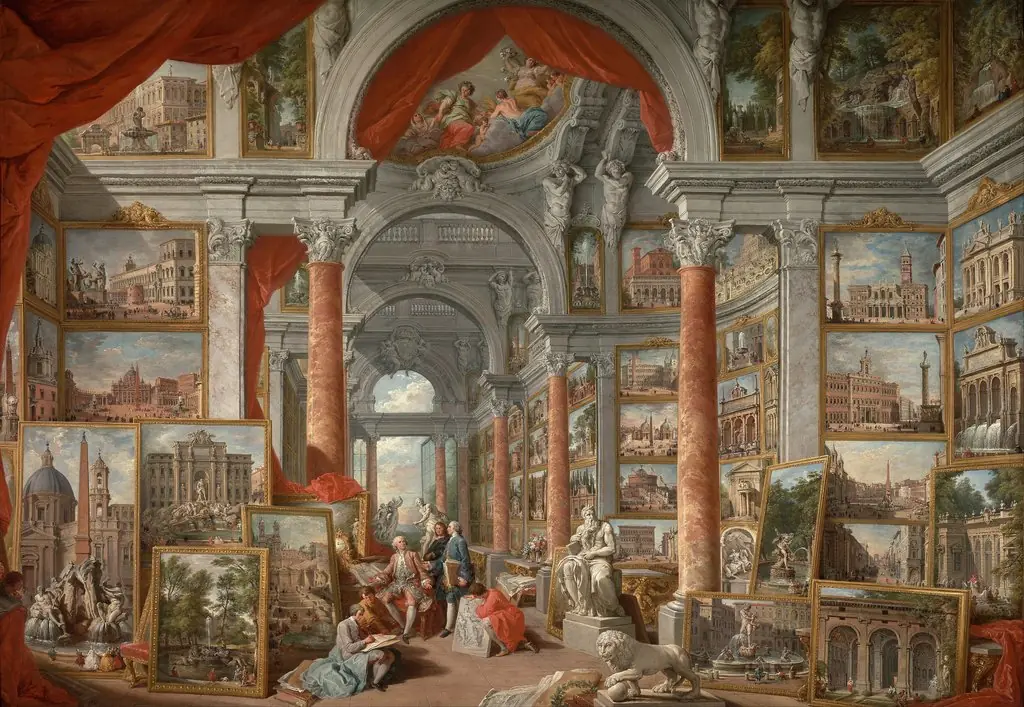
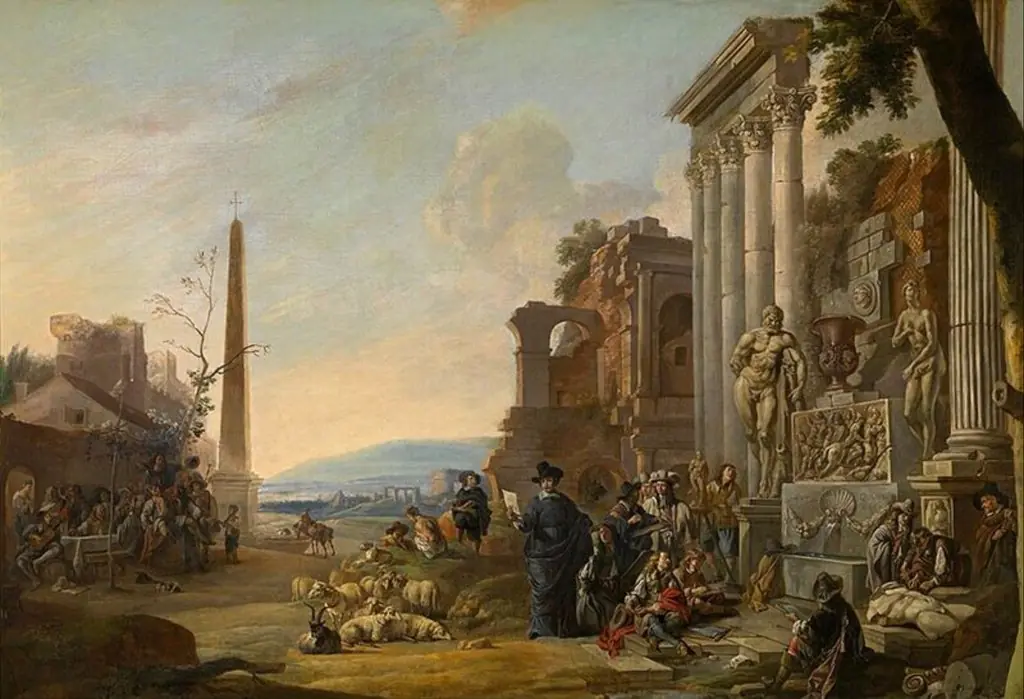 The Study of Art in Rome
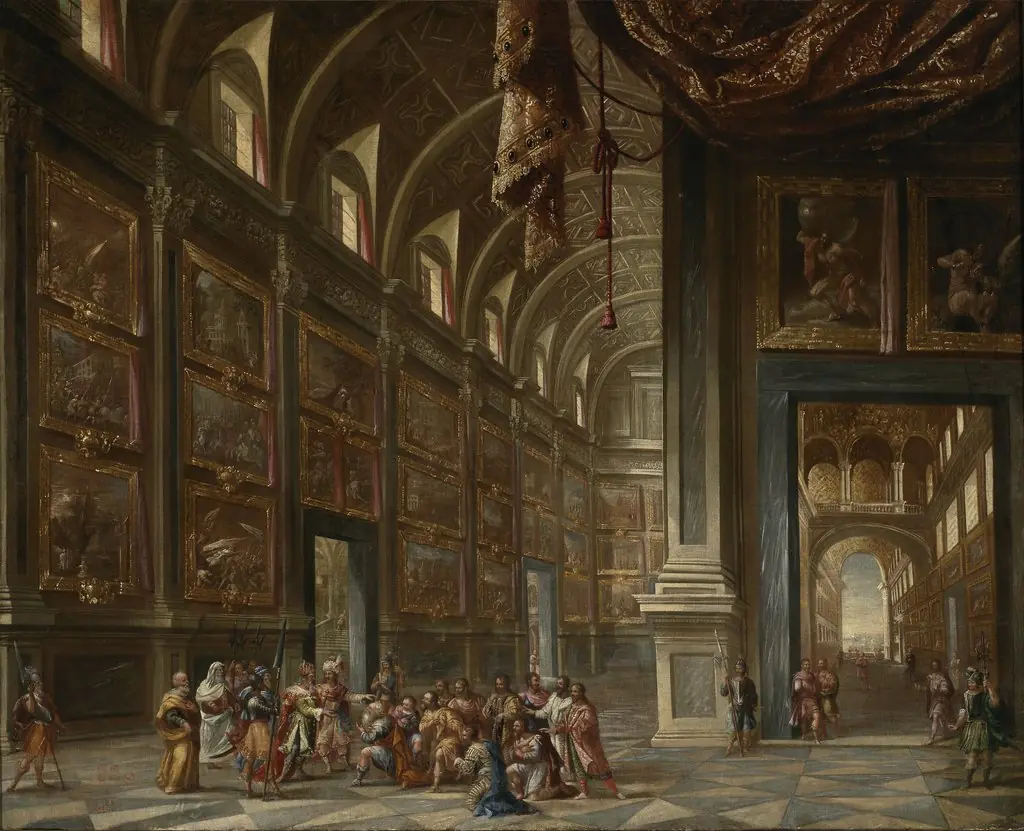 José mostrando a su padre y sus hermanos al Faraón
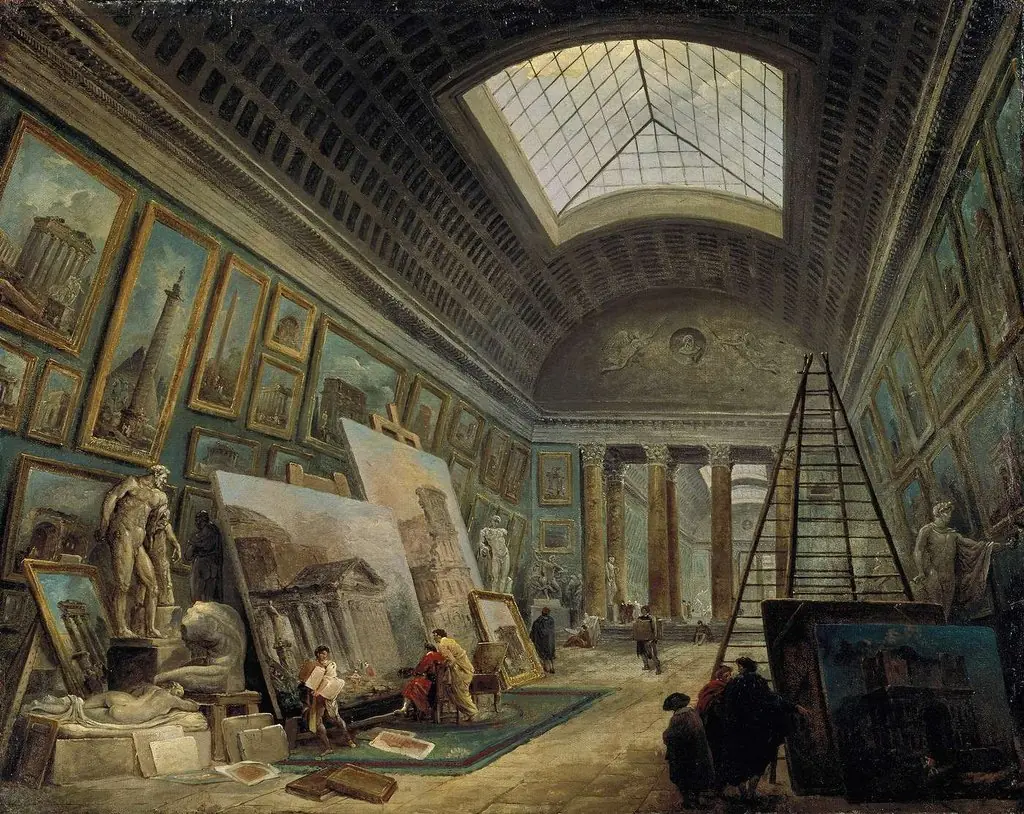 Imaginary View of the Grande Galerie in the Louvre
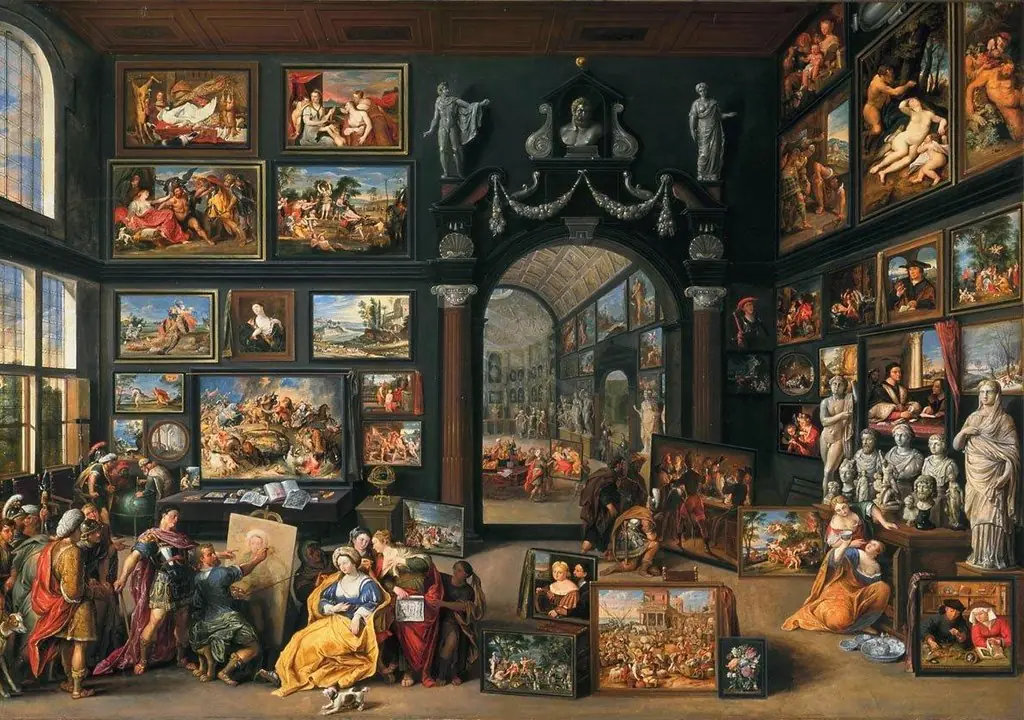 Appelles painting Campaspe
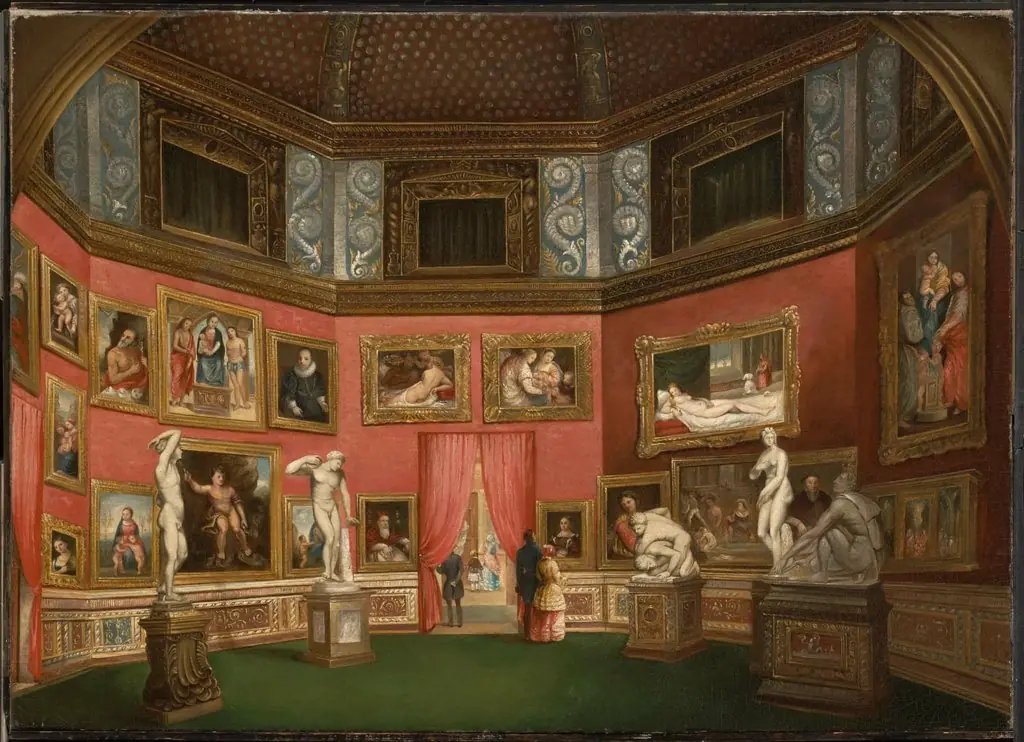 The Tribuna of the Uffizi
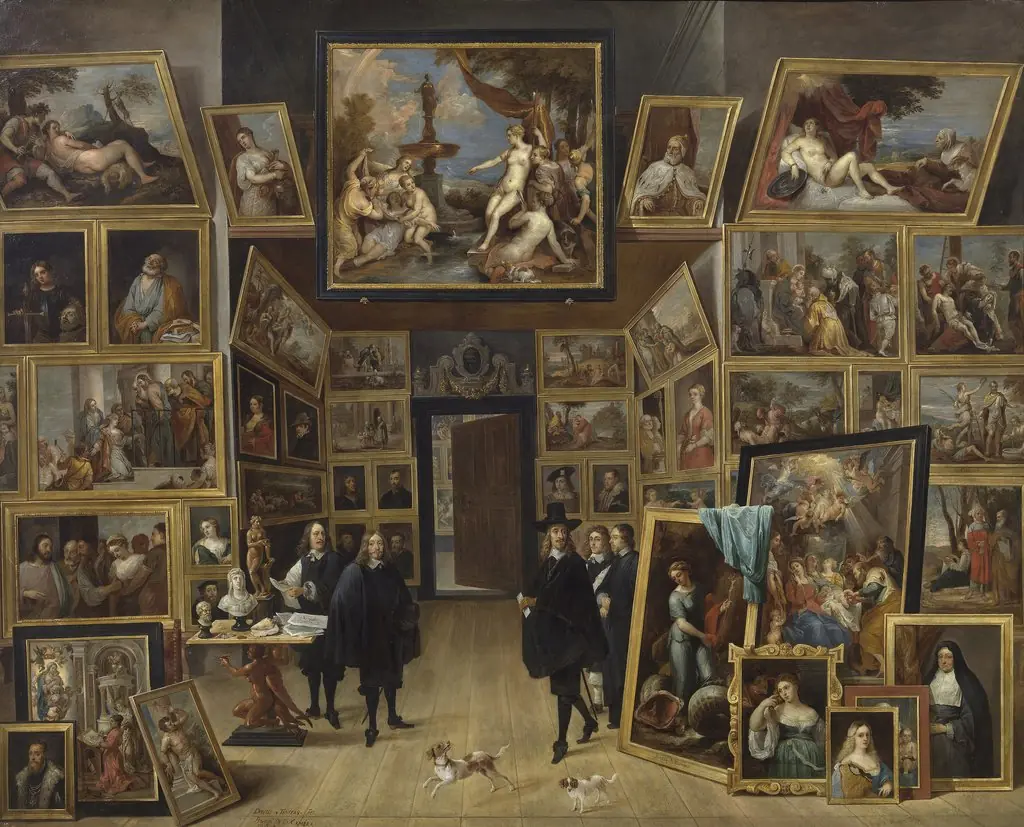 Archduke Leopold Wilhelm in his Gallery
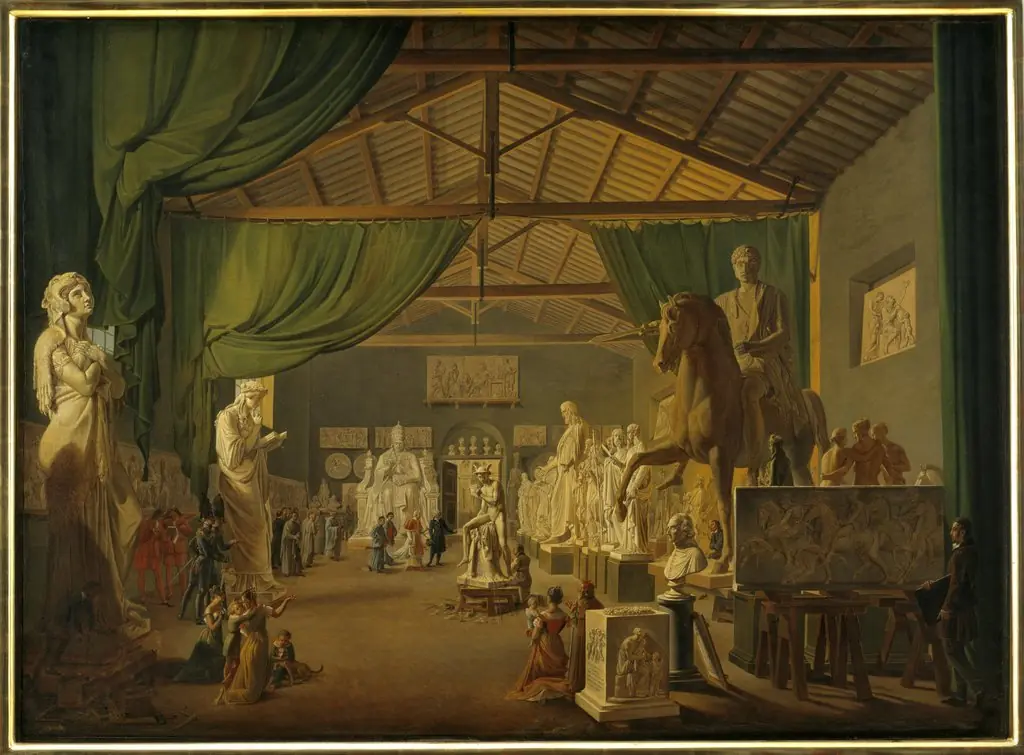 Pave Leo Xll aflægger besøg i Thorvaldsens værksteder ved Piazza Barberini, 18. oktober 1826
 Pope Leo XII Visiting Thorvaldsen's Studios in the Piazza Barberini, 18 October 1826