Artwork
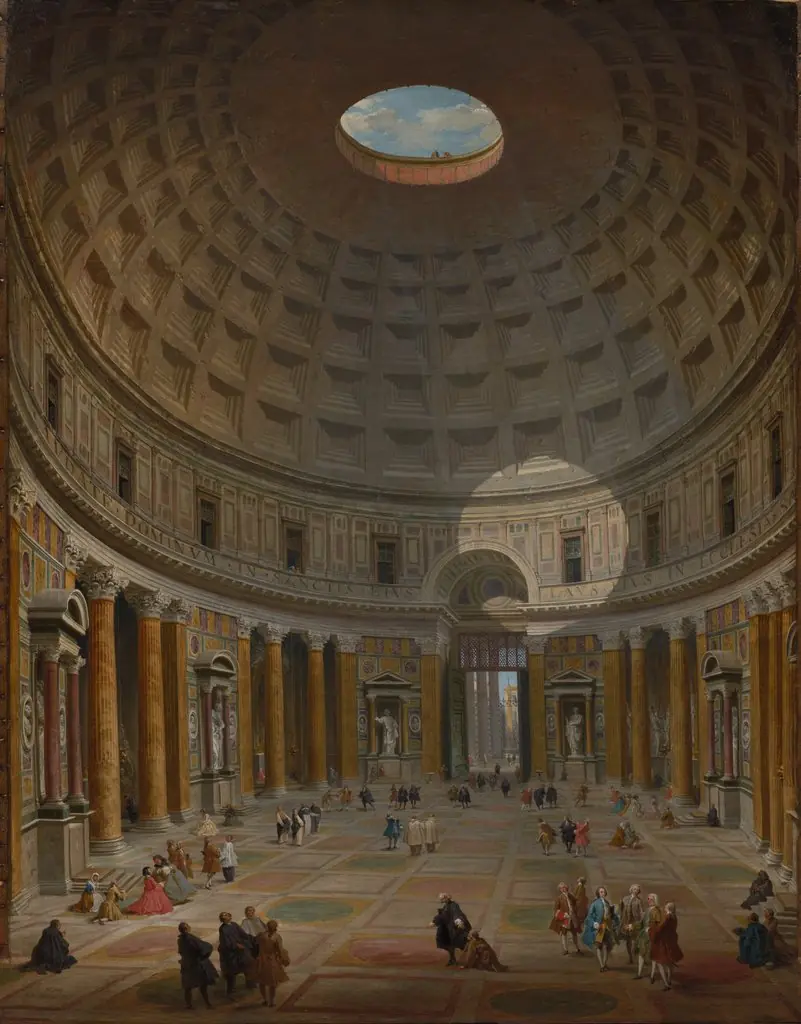
Interior of the Pantheon, Rome
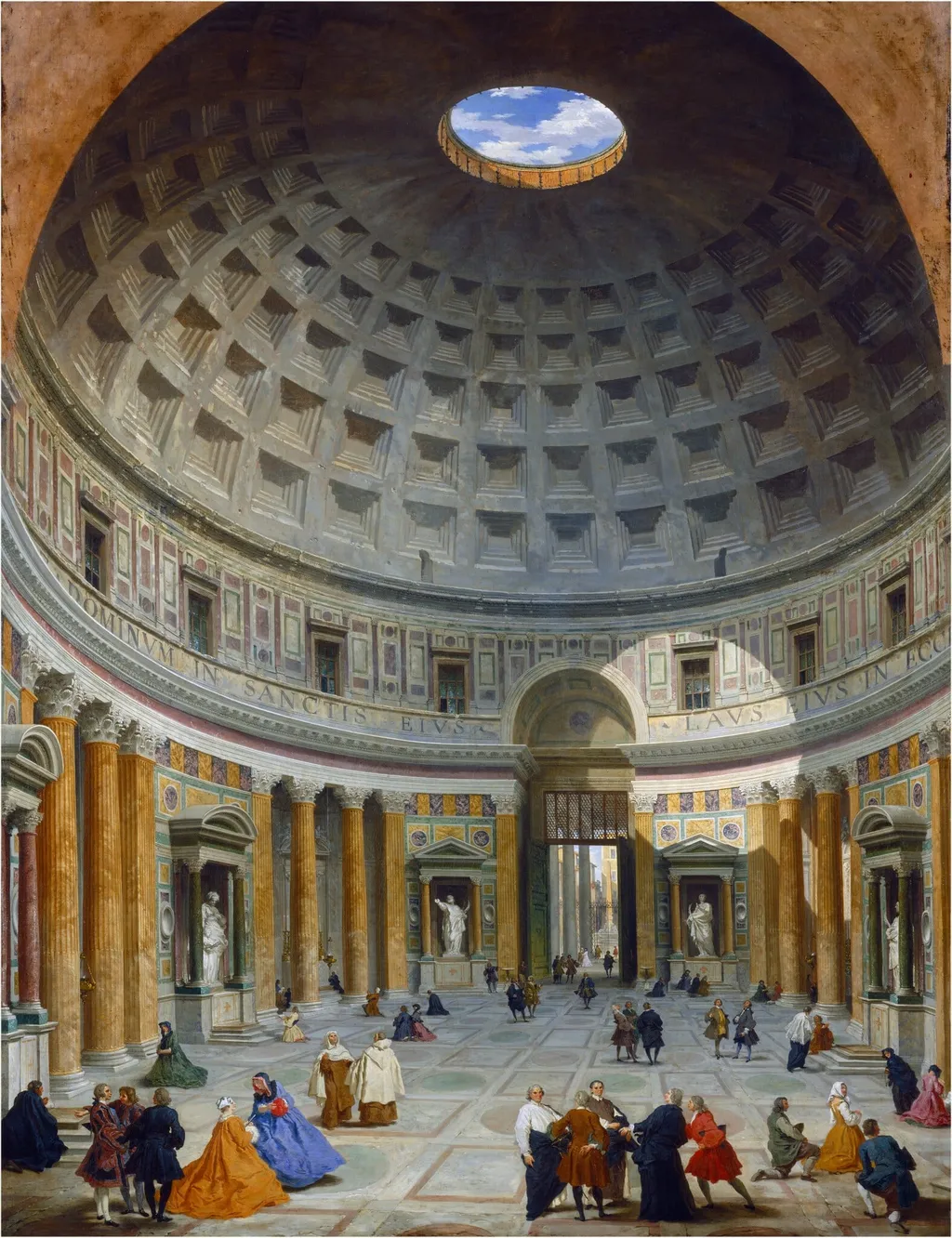
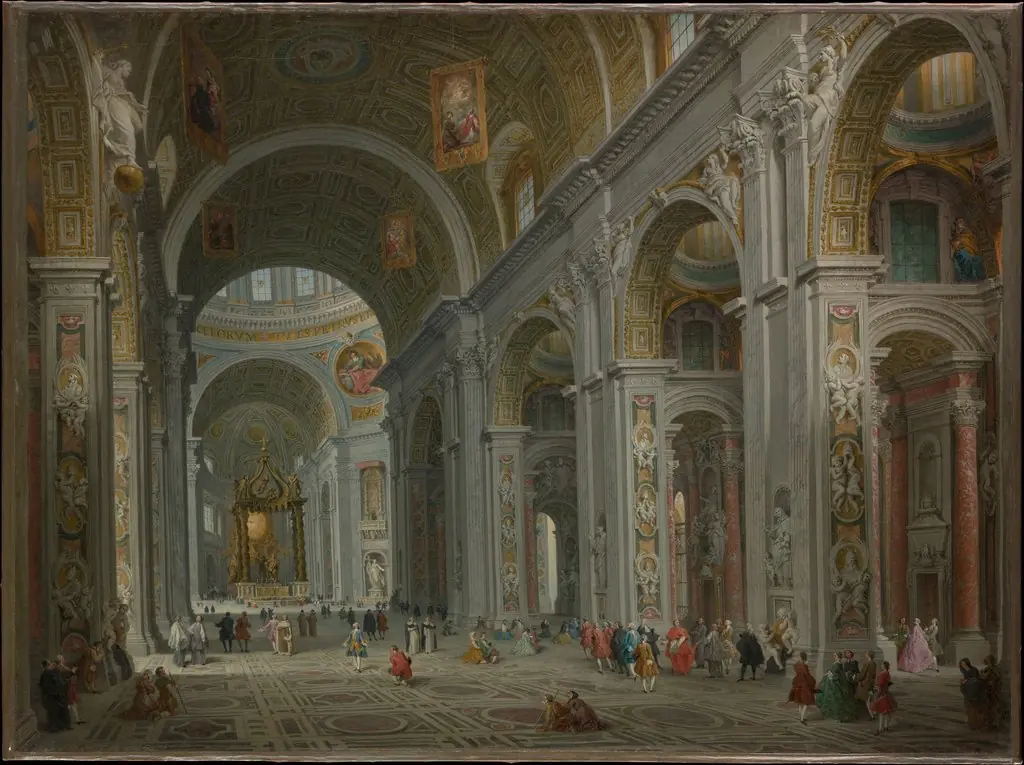
Interior of the Pantheon, Rome is an oil painting by the Baroque artist Giovanni Paolo Panini. It dates from 1734 and is held in the collection of the National Gallery of Art.
- Inscription
- Inscribed:on the collar of the dome: [LAVDATE] DOMINVM IN SANCTIS EIVS LAVS EIVS IN ECCLE[SIA SANCTORVM]
About this work
The vast interior of the Pantheon opens beneath its great dome, with small figures scattered through the space to give a sense of daily life. Giovanni Paolo Panini works light and shadow to build depth and volume. Oil on canvas, 1734.
Technique & Style
Warm, evenly diffused light models the space, while the cool palette of greys, ochres, and whites heightens the monument’s grandeur.
Executed in oil on canvas in 1730, Panini’s view renders the Pantheon’s interior through smooth, evenly applied paint that emphasizes architectural precision and luminous clarity. The handling favors crisp delineation of the coffered dome, Corinthian columns, and colored marbles, with minimal visible brushmarking to preserve optical clarity. Warm, evenly diffused light models the space, while the cool palette of greys, ochres, and whites heightens the monument’s grandeur.
The canvas support shows no major tears or deformations, indicating stable condition; minor craquelure is consistent with aged oil paint rather than active deterioration. Formal qualities pivot on rigorous linear perspective and measured symmetry, aligning the composition with topographical painting conventions to document rather than dramatize the ancient structure.
History & Provenance
Giovanni Paolo Panini created Interior of the Pantheon, Rome in 1730 as an oil on canvas painting. The artwork's early provenance traces to the Dowager Countess of Norfolk. It was sold at Christie's in London on November 20, 1925 (lot 69), where William Sabin purchased it.
Sabin presumably sold the painting to Count Alessandro Contini Bonacossi in Rome. Samuel H. Kress of New York acquired the work on October 5, 1927; notably, it was the first non-Renaissance Italian painting Kress collected. Kress subsequently gifted the painting to the National Gallery of Art in Washington, D.C., in 1939.
The painting is held in the National Gallery of Art, Washington, D.C., as part of the Samuel H. Kress Collection with accession number 1939.1.24. It entered the collection in 1939 as a gift from Samuel H. Kress. The work was previously owned by the Dowager Countess of Norfolk, sold at Christie’s, London in 1925, acquired by William Sabin, and then by Count Alessandro Contini Bonacossi in 1927 before Kress purchased it that same year.
Overview
Giovanni Paolo Panini's 'Interior of the Pantheon, Rome,' executed in 1734, is a celebrated veduta depicting the monumental interior of the ancient Roman temple. The composition centers on the vast coffered dome and the oculus, which serves as the primary light source, illuminating the marble revetment and the surrounding chapels. Panini populates the expansive floor with numerous figures, including tourists, scholars, and locals, arranged to demonstrate the building's immense scale and to document 18th-century cultural engagement with antiquity.
The artist employs precise linear perspective to guide the viewer's eye toward the central axis, while the interplay of natural light and shadow enhances the architectural volume and texture. Created during the height of the Grand Tour, this work exemplifies Panini's mastery in rendering architectural spaces with both topographical accuracy and atmospheric vitality. It stands as a significant example of Roman Baroque veduta painting, bridging the gap between documentary record and artistic idealization.
The painting reflects the artist's recurring fascination with Roman ruins and his ability to animate static architecture through human presence and dynamic lighting.
Subject & Meaning
The artwork meticulously renders the vast interior of the Pantheon, an enduring architectural achievement of ancient Rome, distinguished by its immense domed ceiling and open oculus. Panini integrated a multitude of small figures throughout the composition, depicting a range of visitors and inhabitants. This inclusion transforms the venerable monument from a static historical site into a dynamic, active environment, underscoring its continued relevance and daily use in contemporary Roman life.
Own this work as a print
Artist & collection
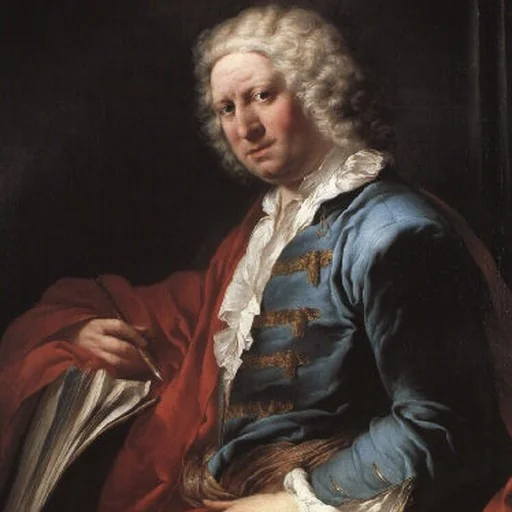
Artist
Giovanni Paolo, also known as Gian Paolo Panini or Pannini (17 June 1691 – 21 October 1765), was an Italian Baroque painter and architect who worked in Rome and is primarily known as one of the vedutisti ("view painters").