Artwork
Modern Rome
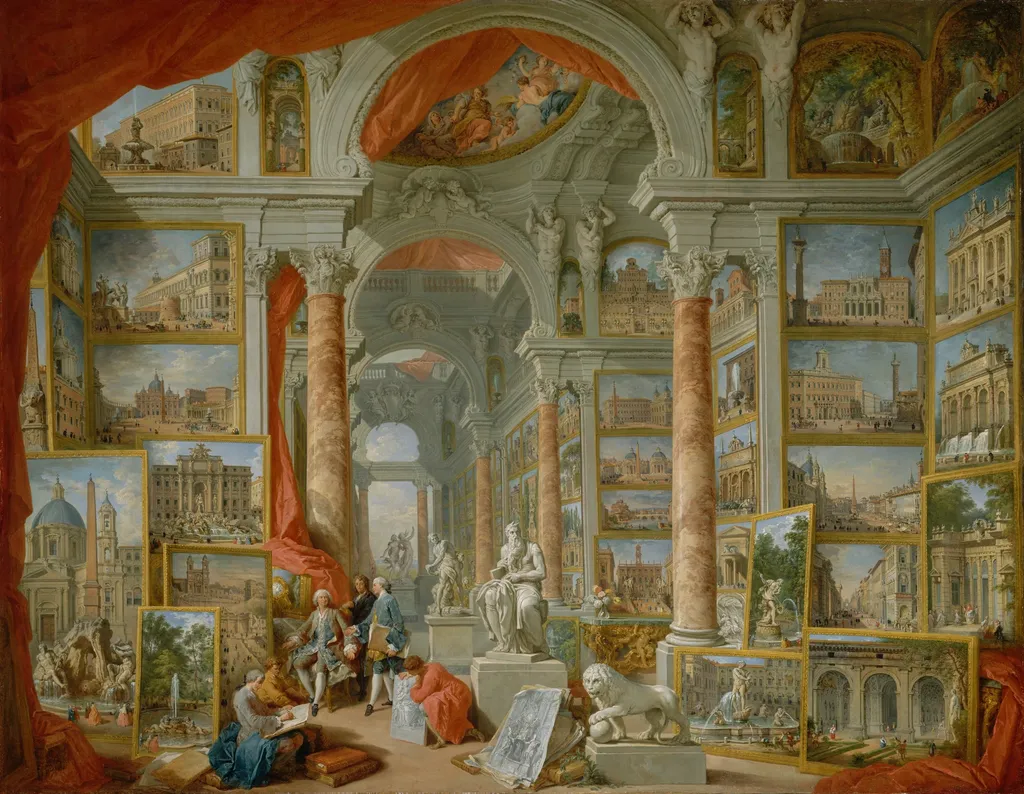
Modern Rome is an oil painting by the Rococo painting artist Giovanni Paolo Panini. It dates from 1757 and is held in the collection of the Metropolitan Museum of Art.
About this work
Technique & Style
The painting's formal qualities include a meticulous rendering of Roman landmarks bathed in a balanced, luminous atmosphere, typical of Panini's vedute style.
Modern Rome is an oil painting on canvas, created in 1757 by Giovanni Paolo Panini. Executed in oil paint, the work belongs to the cityscape genre and is specifically classified as a Veduta, reflecting the precise architectural documentation characteristic of 18th-century Roman vistas. The painting's formal qualities include a meticulous rendering of Roman landmarks bathed in a balanced, luminous atmosphere, typical of Panini's vedute style.
Its support, canvas, allows for the fine brushwork and subtle tonal transitions observed in the composition. The piece is housed in the Metropolitan Museum of Art, underscoring its historical and artistic significance.
History & Provenance
Modern Rome is a 1757 oil on canvas veduta painted by Giovanni Paolo Panini. The work was created in Rome and originally entered the market before passing through several private collections, including those of Charles Sedelmeyer, Hubert Robert, Alexandre Joseph Paillet, Casimir Perier, and Camille Groult. Its dimensions measure 172.1 × 233 cm, and it was later acquired by the Metropolitan Museum of Art, where it remains on view. The painting's provenance reflects a typical 18th-century circulation among European art dealers and collectors before institutional acquisition.
Context
Panini's 1757 oil on canvas exemplifies the veduta genre that documented contemporary Roman urban vistas with topographical precision. The work was acquired through a chain of private owners before entering the Metropolitan Museum of Art, reflecting the commercial circulation of such paintings among European connoisseurs. Art historical analyses position Panini alongside contemporaries such as Canaletto, noting his role in bridging vedute and the emerging interest in antiquarian subjects.
Scholarship emphasizes the painting's blend of architectural accuracy and idealized atmosphere, marking it as a transitional piece that anticipates later neoclassical reinterpretations of Rome's urban fabric.
Overview
Giovanni Paolo Panini, an Italian Baroque painter and architect, completed Modern Rome in 1757 using oil paint. This work belongs to his celebrated series of vedute, or detailed cityscapes, and is currently part of The Metropolitan Museum of Art's collection. The painting offers an imaginative yet organized compilation of Rome's renowned architectural landmarks and ancient ruins, presented within a distinct Rococo aesthetic. Panini was known for blending factual and fictional elements in his urban depictions.
Subject & Meaning
The painting depicts an elaborate interior space filled with numerous miniature framed images of Roman structures and ancient ruins. In the foreground, two elegantly dressed 18th-century men examine a sketchbook, while a sculptor attends to a statue nearby and a lion sculpture rests on the floor. This arrangement creates a comprehensive visual anthology, presenting a condensed survey of Rome's iconic domes, columns, and fountains within a single, richly decorated setting.
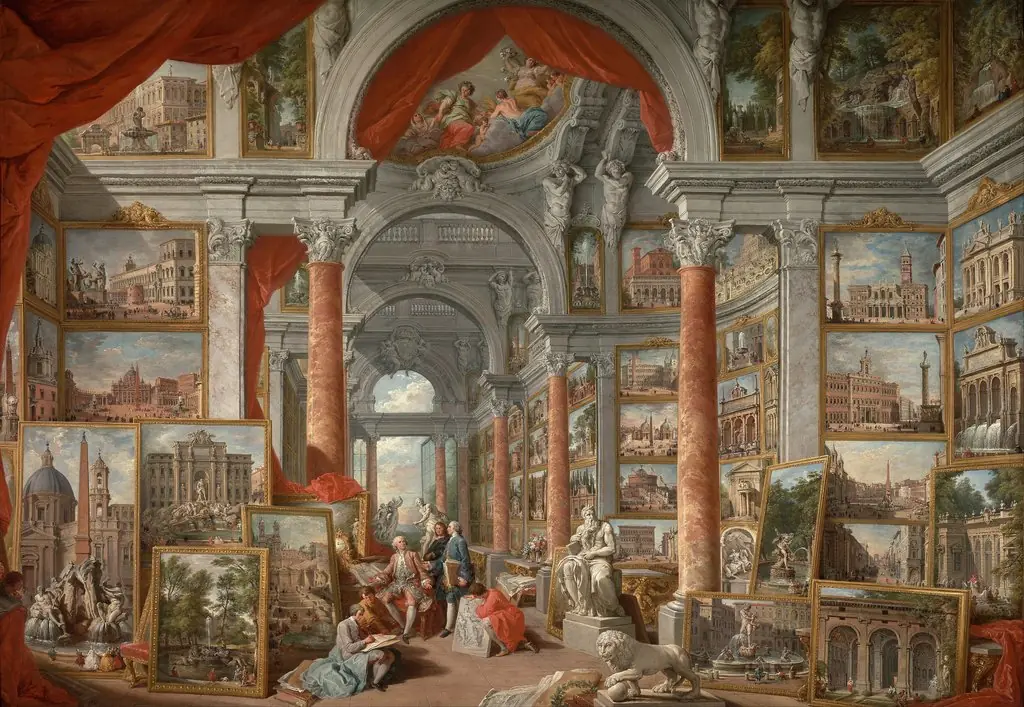
Own this work as a print
Artist & collection
Artist
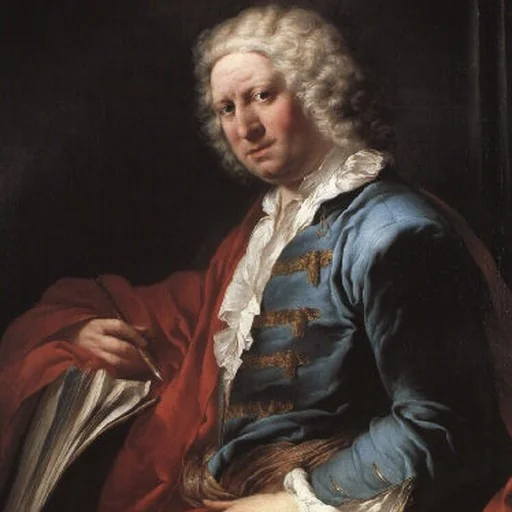
Giovanni Paolo, also known as Gian Paolo Panini or Pannini (17 June 1691 – 21 October 1765), was an Italian Baroque painter and architect who worked in Rome and is primarily known as one of the vedutisti ("view painters").

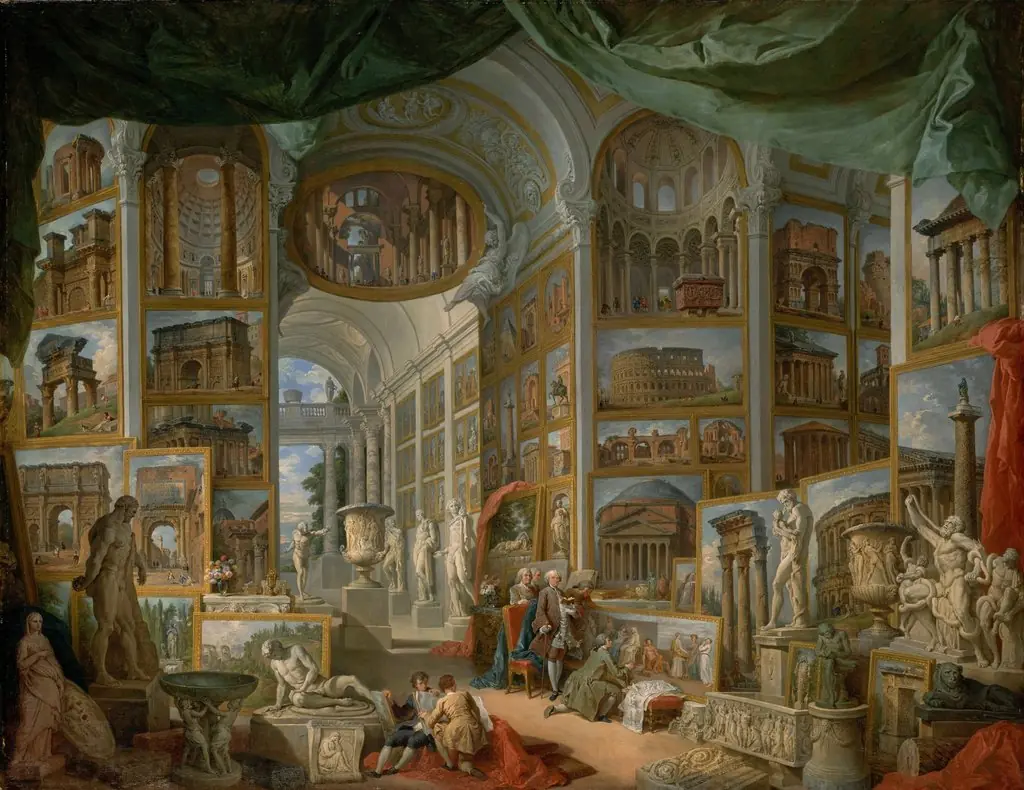
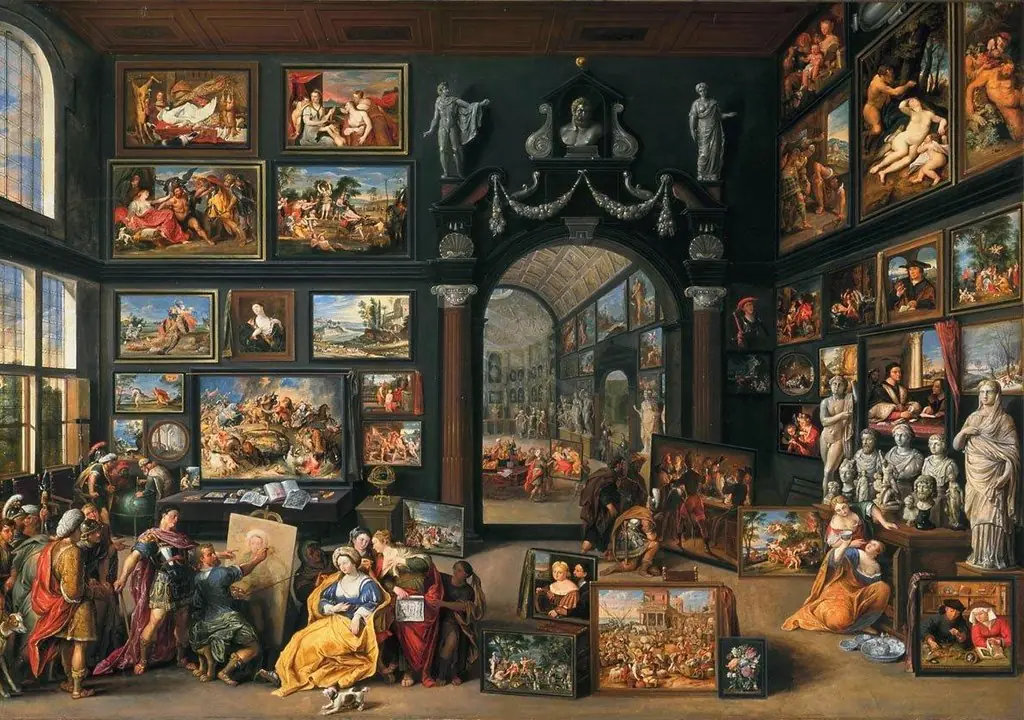 Appelles painting Campaspe
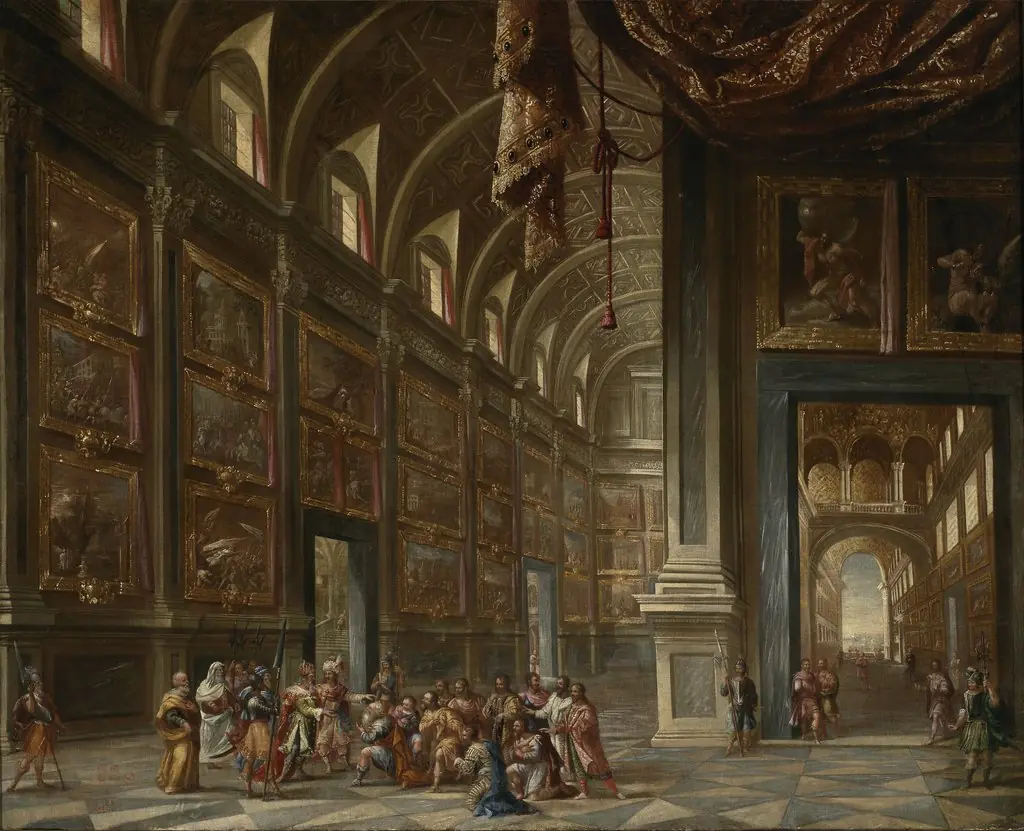 José mostrando a su padre y sus hermanos al Faraón
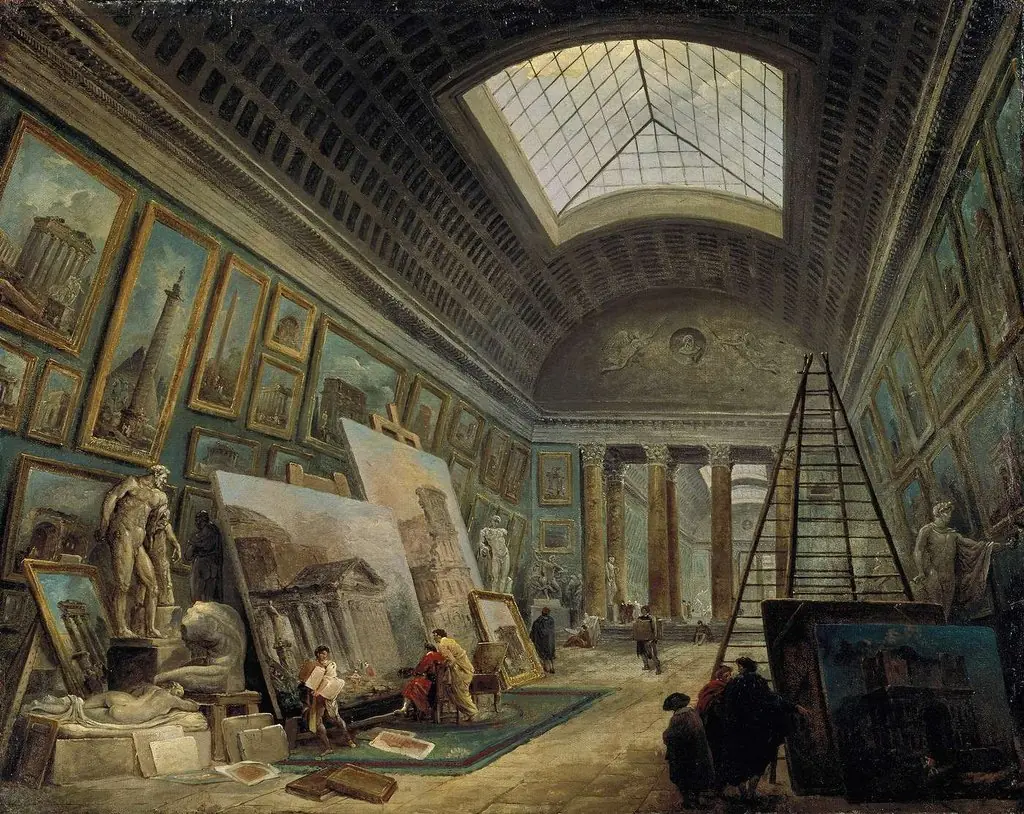 Imaginary View of the Grande Galerie in the Louvre
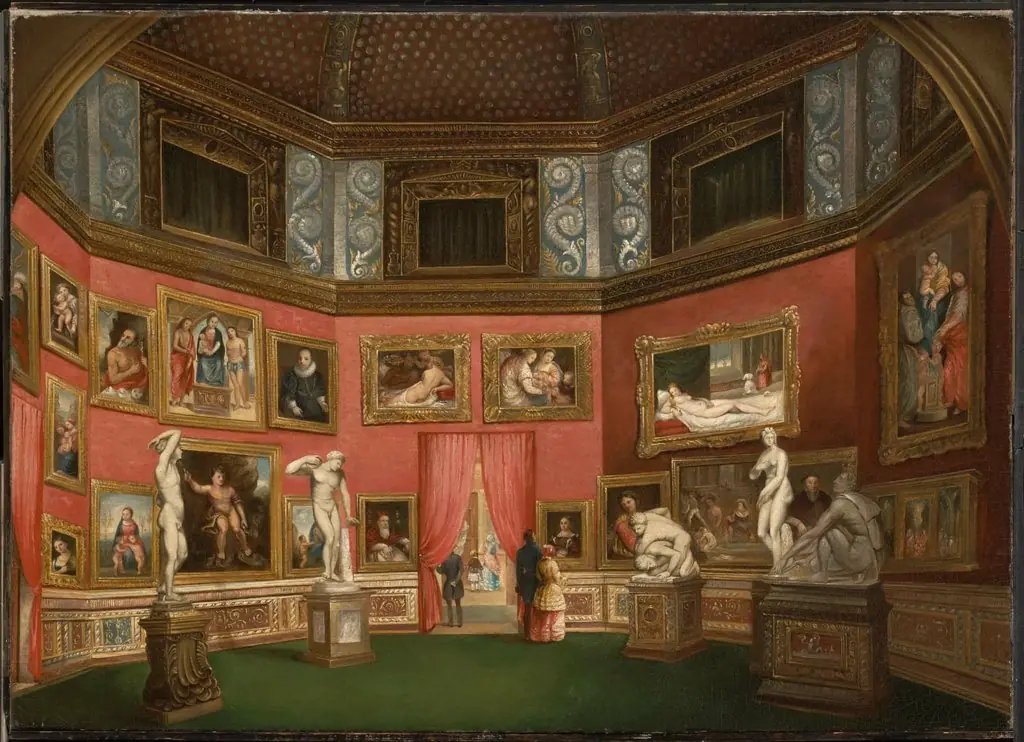 The Tribuna of the Uffizi
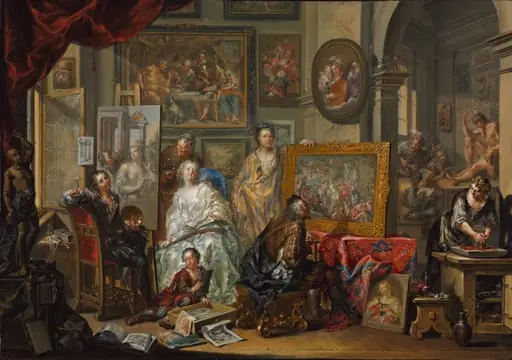 The Artist's Studio
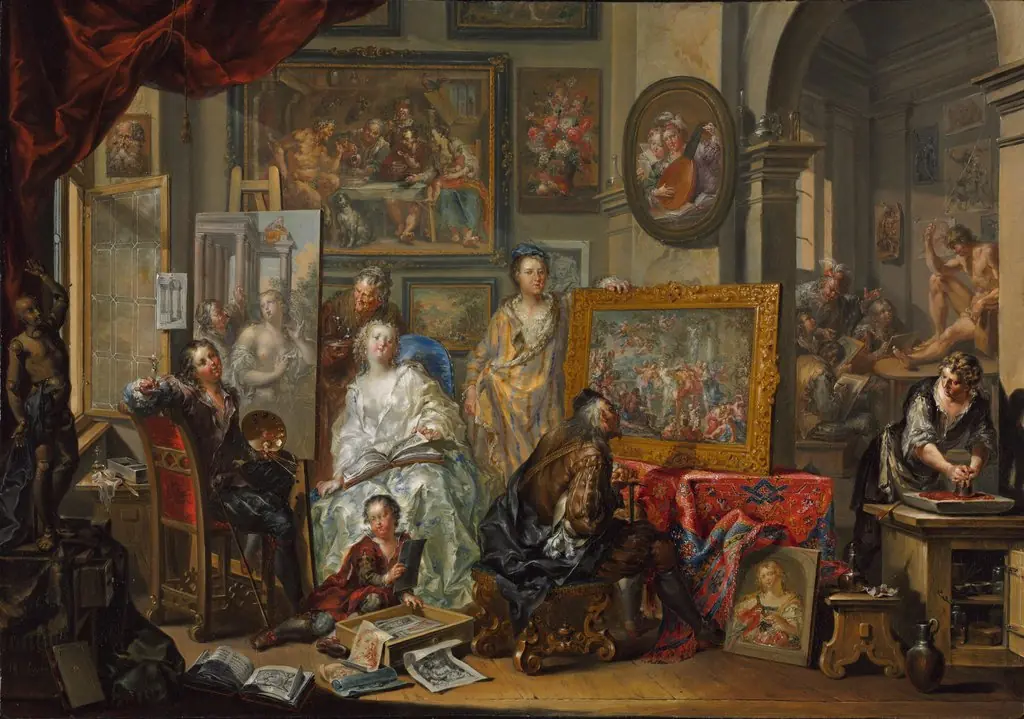 The Artist's Studio
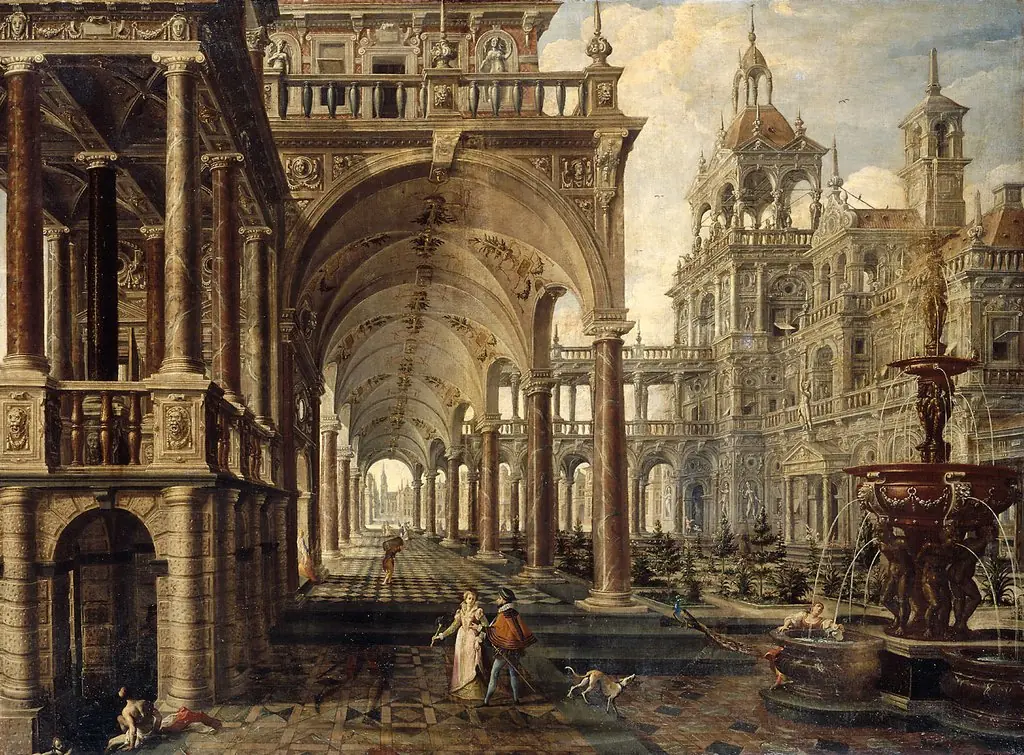 Palastarchitektur mit Badenden
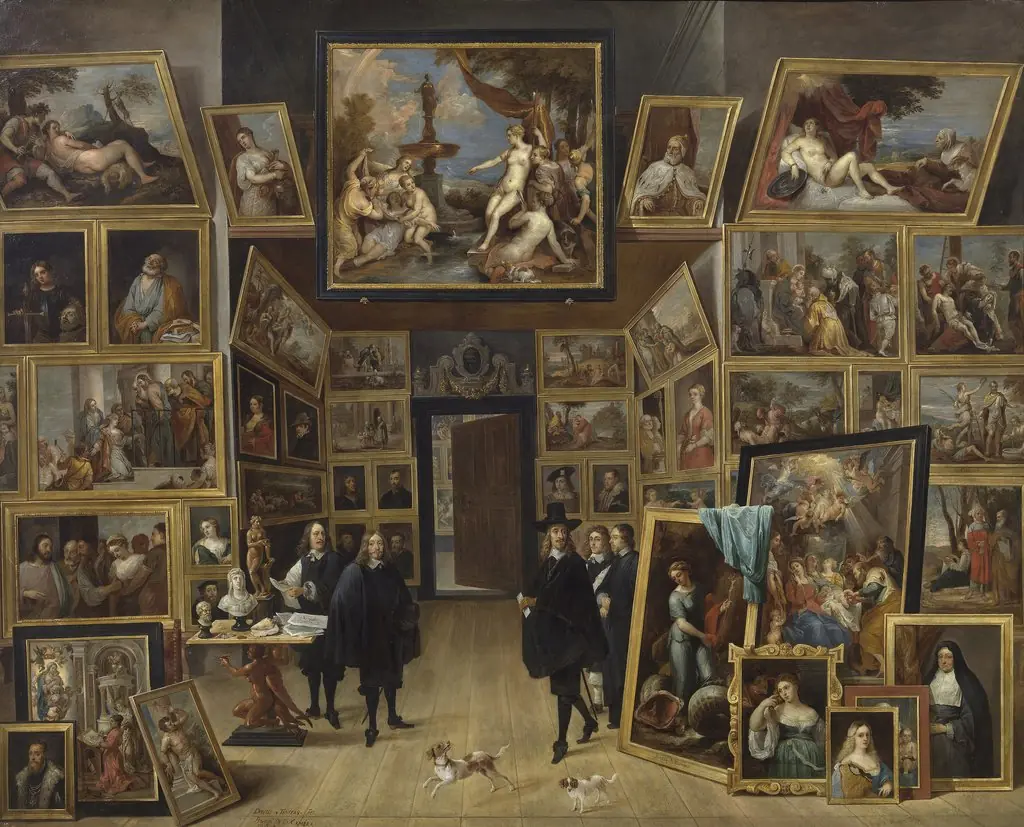 Archduke Leopold Wilhelm in his Gallery
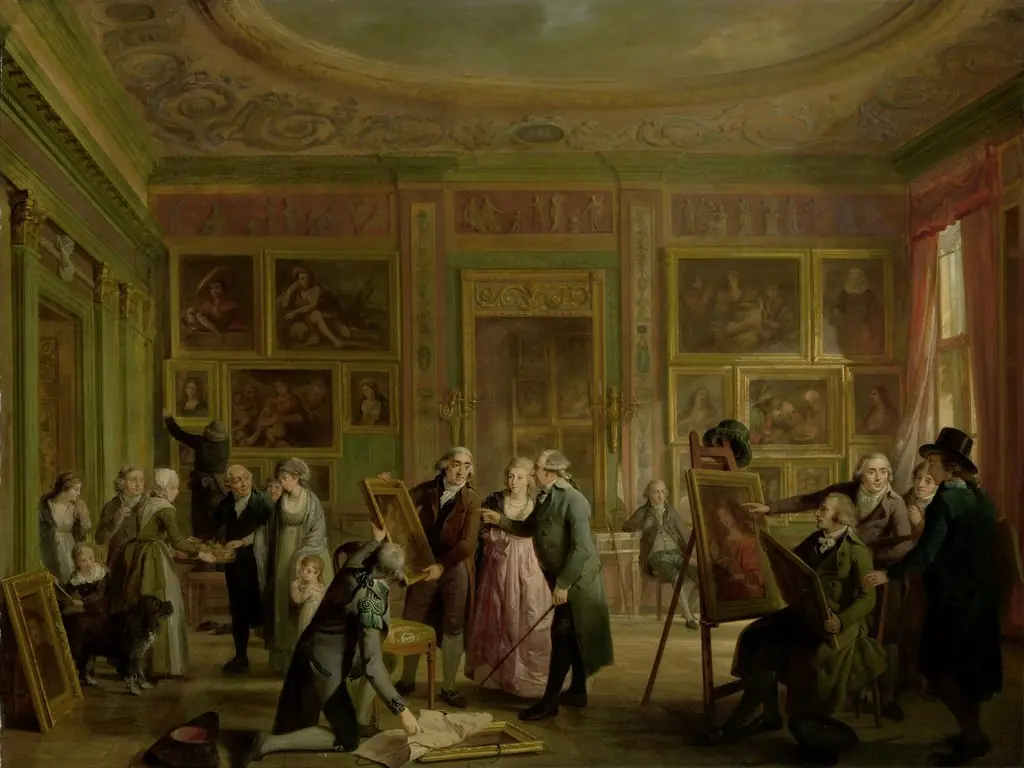 The Art Gallery of Josephus Augustinus Brentano